
Corrensite
A valid IMA mineral species - grandfathered
This page is currently not sponsored. Click here to sponsor this page.


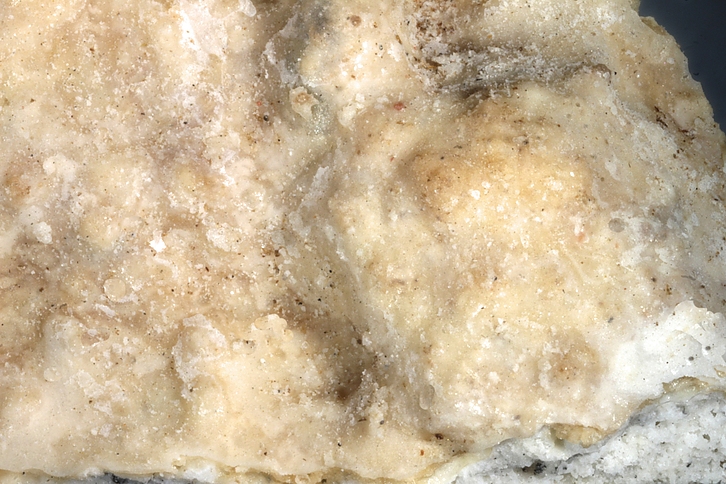


About Corrensite

Carl W. Correns
Formula:
(Mg,Fe)9((Si,Al)8O20)(OH)10 · nH2O
Colour:
Dark green, Yellow green,Blackish green, Brown, Light golden brown, gray white
Lustre:
Waxy, Dull, Earthy
Hardness:
1 - 2
Crystal System:
Orthorhombic
Member of:
Name:
Named by Friedrich Lippmann in 1954 in honor of Carl Wilhelm Correns (19 May 1893, Tübingen, Germany - 29 August 1980, Göttingen, Germany), professor of mineralogy and petrography in the University of Göttingen, Germany and Director of the Sedimentary Petrology Institute. He received the Roebling Medal in 1976.
A 1:1 regular interstratification of a trioctahedral chlorite with either a trioctahedral vermiculite (low layer charge corrensite, LLC) or a trioctahedral smectite (high layer charge corrensite, HLC).
Unique Identifiers
Mindat ID:
1135
Long-form identifier:
mindat:1:1:1135:4
Similar Names
| Torrensite | A mixture of two or more distinct mineral species |
IMA Classification of Corrensite
Approved, 'Grandfathered' (first described prior to 1959)
IMA Formula:
(Ca,Na,K)1-x(Mg,Fe2+,Al)9(Si,Al)8O20(OH)10·nH2O
First published:
1954
Classification of Corrensite
9.EC.60
9 : SILICATES (Germanates)
E : Phyllosilicates
C : Phyllosilicates with mica sheets, composed of tetrahedral and octahedral nets
9 : SILICATES (Germanates)
E : Phyllosilicates
C : Phyllosilicates with mica sheets, composed of tetrahedral and octahedral nets
71.4.2.5
71 : PHYLLOSILICATES Sheets of Six-Membered Rings
4 : Sheets of 6-membered rings interlayered 1:1, 2:1, and octahedra
71 : PHYLLOSILICATES Sheets of Six-Membered Rings
4 : Sheets of 6-membered rings interlayered 1:1, 2:1, and octahedra
16.19.23
16 : Silicates Containing Aluminum and other Metals
19 : Aluminosilicates of Fe and Mg
16 : Silicates Containing Aluminum and other Metals
19 : Aluminosilicates of Fe and Mg
Mineral Symbols
As of 2021 there are now IMA–CNMNC approved mineral symbols (abbreviations) for each mineral species, useful for tables and diagrams.
Please only use the official IMA–CNMNC symbol. Older variants are listed for historical use only.
Please only use the official IMA–CNMNC symbol. Older variants are listed for historical use only.
| Symbol | Source | Reference for Standard |
|---|---|---|
| Crr | IMA–CNMNC | Warr, L.N. (2021). IMA–CNMNC approved mineral symbols. Mineralogical Magazine, 85(3), 291-320. doi:10.1180/mgm.2021.43 |
| Crr | Whitney & Evans (2010) | Whitney, D.L. and Evans, B.W. (2010) Abbreviations for names of rock-forming minerals. American Mineralogist, 95, 185–187 doi:10.2138/am.2010.3371 |
| Crr | The Canadian Mineralogist (2019) | The Canadian Mineralogist (2019) The Canadian Mineralogist list of symbols for rock- and ore-forming minerals (December 30, 2019). download |
| Crr | Warr (2020) | Warr, L.N. (2020) Recommended abbreviations for the names of clay minerals and associated phases. Clay Minerals, 55, 261–264 doi:10.1180/clm.2020.30 |
Physical Properties of Corrensite
Waxy, Dull, Earthy
Transparency:
Translucent
Comment:
Low luster due to fine-grained particles
Colour:
Dark green, Yellow green,Blackish green, Brown, Light golden brown, gray white
Streak:
White to light gray
Hardness:
1 - 2 on Mohs scale
Tenacity:
Flexible
Cleavage:
Perfect
{001} perfect, but rarely visible on casual inspection due to small particle size.
{001} perfect, but rarely visible on casual inspection due to small particle size.
Fracture:
Micaceous
Optical Data of Corrensite
Type:
Biaxial (-)
RI values:
nα = 1.56 - 1.585 nβ = 1.582 - 1.612 nγ = 1.582 - 1.612
Birefringence:
May be 0.01-0.03, but 0.00 reported
Max. Birefringence:
δ = 0.022 - 0.027
Based on recorded range of RI values above.
Based on recorded range of RI values above.
Interference Colours:
The colours simulate birefringence patterns seen in thin section under crossed polars. They do not take into account mineral colouration or opacity.
Michel-Levy Bar The default colours simulate the birefringence range for a 30 µm thin-section thickness. Adjust the slider to simulate a different thickness.
Grain Simulation You can rotate the grain simulation to show how this range might look as you rotated a sample under crossed polars. Each grain retains its interference colour (retardation) while its brightness falls to black at extinction and reaches a maximum between extinction positions.
The colours simulate birefringence patterns seen in thin section under crossed polars. They do not take into account mineral colouration or opacity.
Michel-Levy Bar The default colours simulate the birefringence range for a 30 µm thin-section thickness. Adjust the slider to simulate a different thickness.
Grain Simulation You can rotate the grain simulation to show how this range might look as you rotated a sample under crossed polars. Each grain retains its interference colour (retardation) while its brightness falls to black at extinction and reaches a maximum between extinction positions.
Surface Relief:
Moderate
Dispersion:
r < v strong
Chemistry of Corrensite
Mindat Formula:
(Mg,Fe)9((Si,Al)8O20)(OH)10 · nH2O
Element Weights:
Common Impurities:
Ti,Fe,Mn,K
Crystallography of Corrensite
Crystal System:
Orthorhombic
Cell Parameters:
a = 5.337 Å, b = 9.215 Å, c = 29.0 Å
Ratio:
a:b:c = 0.579 : 1 : 3.147
Unit Cell V:
1,426.23 ų (Calculated from Unit Cell)
Morphology:
Fine-grained, occasionally as barely visible flakes.
Comment:
Various unit cells have been proposed including hexagonal, also monoclinic
X-Ray Powder Diffraction
Powder Diffraction Data:
| d-spacing | Intensity |
|---|---|
| 29.0 Å | (30) |
| 14.0 Å | (100) |
| 7.83 Å | (30) |
| 7.08 Å | (60) |
| 4.72 Å | (30) |
| 4.62 Å | (30) |
| 3.53 Å | (60) |
| 2.57 Å | (30) |
Comments:
LLC d-values (31-794). Basal d-values vary with type of corrensite. LLC usually is 28-29 Angstroms, but HLC ranges up to 32 Angstroms. LLC and HLC corrensite may be present in mixtures, but samples may contain only one type. LLC corrensite is uncommon compared to HLC corrensite. Intercalation with glycerol or ethylene glycol increases HLC basal spacing to 32 Angstroms, while LLC corrensite does not expand.
Geological Environment
Paragenetic Mode(s):
| Paragenetic Mode | Earliest Age (Ga) |
|---|---|
| Near-surface Processes | |
| 22 : Hydration and low-? subsurface aqueous alteration (see also #23) | |
| Stage 7: Great Oxidation Event | <2.4 |
| 47a : [Near-surface hydration of prior minerals] | |
| Stage 10a: Neoproterozoic oxygenation/terrestrial biosphere | <0.6 |
| 48 : Soil leaching zone minerals | <0.6 |
Type Occurrence of Corrensite
General Appearance of Type Material:
Dense fine-grained mixtures, also thin dustings on late minerals in cavities
Place of Conservation of Type Material:
National Museum of Natural History, Washington, D.C., USA, numbers 107373, 162265.
Geological Setting of Type Material:
Found in pelitic sediments, also in evaporites, marbles, also late stage hydrothermal coatings in basalts, etc. Corrensite may persist through chlorite grade metamorphism.
Associated Minerals at Type Locality:
Synonyms of Corrensite
Other Language Names for Corrensite
Relationship of Corrensite to other Species
Member of:
Other Members of Mixed-layer clay minerals:
| Aliettite | Ca0.2Mg6((Si,Al)8O20)(OH)4 · 4H2O | Mon. |
| 'Glaucony' | The term glaucony was defined first by Odin and Létolle (1980) for green minerals in marine sediments formed by ... | |
| Rectorite | (Na,Ca)Al4((Si,Al)8O20)(OH)4 · 2H2O | Mon. |
| Tosudite | Na0.5(Al,Mg)6((Si,Al)8O18)(OH)12 · 5H2O | Mon. 2 : B2 |
Common Associates
Associations Based on Photo Data:
| 5 photos of Corrensite associated with Stilbite Subgroup | M6-7[Al8-9Si27-28O72] · nH2O |
| 4 photos of Corrensite associated with Natrolite | Na2Al2Si3O10 · 2H2O |
| 2 photos of Corrensite associated with Chabazite | |
| 1 photo of Corrensite associated with Quartz | SiO2 |
| 1 photo of Corrensite associated with Albite | Na(AlSi3O8) |
| 1 photo of Corrensite associated with 'Chalcedony' | SiO2 |
| 1 photo of Corrensite associated with Pyrolusite | Mn4+O2 |
| 1 photo of Corrensite associated with Mordenite | (Na2,Ca,K2)4(Al8Si40)O96 · 28H2O |
| 1 photo of Corrensite associated with Calcite | CaCO3 |
| 1 photo of Corrensite associated with Chlorite Group |
Related Minerals - Strunz-mindat Grouping
| 9.EC. | Meifuite | KFe6(Si7Al)O19(OH)4Cl2 |
| 9.EC. | Balestraite | KLi2V5+Si4O12 |
| 9.EC.05 | Talc | Mg3Si4O10(OH)2 |
| 9.EC.05 | Minnesotaite | Fe2+3Si4O10(OH)2 |
| 9.EC.05 | Willemseite | Ni3Si4O10(OH)2 |
| 9.EC.9.EC. | Voloshinite | Rb(LiAl1.5◻0.5)(Al0.5Si3.5)O10F2 |
| 9.EC.10 | Fluorluanshiweiite | KLiAl1.5(Si3.5Al0.5)O10F2 |
| 9.EC.10 | Garmite | CsLiMg2(Si4O10)F2 |
| 9.EC.10 | Gorbunovite | CsLi2(Ti,Fe)Si4O10(F,OH,O)2 |
| 9.EC.10 | Ferripyrophyllite | Fe3+Si2O5(OH) |
| 9.EC.10 | Manganiceladonite | K(MgMn3+◻)(Si4O10)(OH)2 |
| 9.EC.10 | Luanshiweiite | KLiAl1.5(Si3.5Al0.5)O10(OH)2 |
| 9.EC.10 | Pyrophyllite | Al2Si4O10(OH)2 |
| 9.EC.15 | Paragonite | NaAl2(AlSi3O10)(OH)2 |
| 9.EC.15 | Ferroaluminoceladonite | K(Fe2+Al◻)(Si4O10)(OH)2 |
| 9.EC.15 | Nanpingite | CsAl2(AlSi3O10)(OH,F)2 |
| 9.EC.15 | Ferroceladonite | K(Fe2+Fe3+◻)(Si4O10)(OH)2 |
| 9.EC.15 | Ganterite | Ba0.5(Na,K)0.5Al2(Si2.5Al1.5)O10(OH)2 |
| 9.EC.15 | Kreiterite | CsLi2Fe3+(Si4O10)F2 |
| 9.EC.15 | Roscoelite | KV3+2(AlSi3O10)(OH)2 |
| 9.EC.15 | Aluminoceladonite | K(MgAl◻)(Si4O10)(OH)2 |
| 9.EC.15 | Tobelite | (NH4)Al2(AlSi3O10)(OH)2 |
| 9.EC.15 | Tainiolite | KLiMg2(Si4O10)F2 |
| 9.EC.15 | Celadonite | K(MgFe3+◻)(Si4O10)(OH)2 |
| 9.EC.15 | Chromceladonite | K(MgCr◻)(Si4O10)(OH)2 |
| 9.EC.15 | Montdorite | KFe2+1.5Mn2+0.5Mg0.5Si4O10(F,OH)2 |
| 9.EC.15 | Chromphyllite | KCr2(AlSi3O10)(OH)2 |
| 9.EC.15 | Boromuscovite | KAl2(BSi3O10)(OH)2 |
| 9.EC.15 | 'UM1988-22-SiO:AlCaFFeHKLiMg' | KLiMgAl2Si3O10F2 |
| 9.EC.15 | Chernykhite | (Ba,Na)(V3+,Al,Mg)2((Si,Al)4O10)(OH)2 |
| 9.EC.15 | Muscovite | KAl2(AlSi3O10)(OH)2 |
| 9.EC.20 | Masutomilite | K(LiAlMn2+)[AlSi3O10]F2 |
| 9.EC.20 | Oxyphlogopite | K(Mg,Ti,Fe)3[(Si,Al)4O10](O,F)2 |
| 9.EC.20 | 'Chloroferrokinoshitalite' | (Ba,K)(Fe2+,Mg)3(Al2Si2O10)(Cl,OH,F)2 |
| 9.EC.20 | Siderophyllite | KFe2+2Al(Al2Si2O10)(OH)2 |
| 9.EC.20 | Sokolovaite | CsLi2Al(Si4O10)F2 |
| 9.EC.20 | Hendricksite | KZn3(Si3Al)O10(OH)2 |
| 9.EC.20 | Tetraferriphlogopite | KMg3(Si3Fe3+)O10(OH)2 |
| 9.EC.20 | Fluorannite | KFe2+3(Si3Al)O10F2 |
| 9.EC.20 | Aspidolite | NaMg3(AlSi3O10)(OH)2 |
| 9.EC.20 | Suhailite | (NH4)Fe2+3(AlSi3O10)(OH)2 |
| 9.EC.20 | Ephesite | NaLiAl2(Al2Si2O10)(OH)2 |
| 9.EC.20 | Norrishite | KLiMn3+2(Si4O10)O2 |
| 9.EC.20 | Phlogopite | KMg3(AlSi3O10)(OH)2 |
| 9.EC.20 | Yangzhumingite | KMg2.5(Si4O10)F2 |
| 9.EC.20 | Orlovite | KLi2Ti(Si4O10)OF |
| 9.EC.20 | Tetraferriannite | KFe2+3(Si3Fe3+)O10(OH)2 |
| 9.EC.20 | Shirokshinite | K(NaMg2)(Si4O10)F2 |
| 9.EC.20 | Trilithionite | K(Li1.5Al1.5)(AlSi3O10)(F,OH)2 |
| 9.EC.20 | Polylithionite | KLi2Al(Si4O10)(F,OH)2 |
| 9.EC.20 | Shirozulite | KMn2+3(Si3Al)O10(OH)2 |
| 9.EC.20 | Preiswerkite | NaMg2Al(Al2Si2O10)(OH)2 |
| 9.EC.20 | Fluorophlogopite | KMg3(Si3Al)O10F2 |
| 9.EC.20 | Wonesite | (Na,K,◻)(Mg,Fe,Al)6(Si,Al)8O20(OH,F)4 |
| 9.EC.20 | 'UM2004-49-SiO:AlCsFHKLi' | (Cs,K)(Al,Li)2.6((Si,Al)4O10)(F,OH)2 |
| 9.EC.20 | Fluorotetraferriphlogopite | KMg3(Fe3+Si3O10)F2 |
| 9.EC.20 | Annite | KFe2+3(AlSi3O10)(OH)2 |
| 9.EC.20 | Eastonite | KMg2Al(Al2Si2O10)(OH)2 |
| 9.EC.22 | 'Pimelite' | Ni3Si4O10(OH)2 · 4H2O |
| 9.EC.30 | Margarite | CaAl2(Al2Si2O10)(OH)2 |
| 9.EC.35 | Kinoshitalite | (Ba,K)(Mg,Mn2+,Al)3(Al2Si2O10)(OH)2 |
| 9.EC.35 | Ferrokinoshitalite | (Ba,K)(Fe2+,Mg)3(Al2Si2O10)(OH,F)2 |
| 9.EC.35 | Clintonite | CaAlMg2(SiAl3O10)(OH)2 |
| 9.EC.35 | Oxykinoshitalite | (Ba,K)(Mg,Ti,Fe3+,Fe2+)3((Si,Al)4O10)(O,OH,F)2 |
| 9.EC.35 | Fluorokinoshitalite | BaMg3(Al2Si2O10)F2 |
| 9.EC.35 | Bityite | CaLiAl2(AlBeSi2O10)(OH)2 |
| 9.EC.35 | Anandite | (Ba,K)(Fe2+,Mg)3((Si,Al,Fe)4O10)(S,OH)2 |
| 9.EC.40 | Montmorillonite | (Na,Ca)0.33(Al,Mg)2(Si4O10)(OH)2 · nH2O |
| 9.EC.40 | Beidellite | (Na,Ca0.5)0.3Al2((Si,Al)4O10)(OH)2 · nH2O |
| 9.EC.40 | Volkonskoite | Ca0.3(Cr,Mg,Fe)2((Si,Al)4O10)(OH)2 · 4H2O |
| 9.EC.40 | Nontronite | Na0.3Fe2((Si,Al)4O10)(OH)2 · nH2O |
| 9.EC.40 | Kurumsakite | (Zn,Ni,Cu)8Al8V5+2Si5O35 · 27H2O (?) |
| 9.EC.40 | Yakhontovite | (Ca,Na)0.5(Cu,Fe,Mg)2(Si4O10)(OH)2 · 3H2O |
| 9.EC.45 | Swinefordite | Li(Al,Li,Mg)3((Si,Al)4O10)2(OH,F)4 · nH2O |
| 9.EC.45 | Hectorite | Na0.3(Mg,Li)3(Si4O10)(F,OH)2 |
| 9.EC.45 | Zincsilite | Zn3Si4O10(OH)2 · 4H2O (?) |
| 9.EC.45 | Hanjiangite | Ba2CaV3+Al(H2AlSi3O12)(CO3)2F |
| 9.EC.45 | Spadaite | MgSiO2(OH)2 · H2O (?) |
| 9.EC.45 | Ferrosaponite | Ca0.3(Fe2+,Mg,Fe3+)3((Si,Al)4O10)(OH)2 · 4H2O |
| 9.EC.45 | Stevensite | (Ca,Na)xMg3-x(Si4O10)(OH)2 |
| 9.EC.45 | Saponite | Ca0.25(Mg,Fe)3((Si,Al)4O10)(OH)2 · nH2O |
| 9.EC.45 | Sauconite | Na0.3Zn3((Si,Al)4O10)(OH)2 · 4H2O |
| 9.EC.50 | Vermiculite | Mg0.7(Mg,Fe,Al)6(Si,Al)8O20(OH)4 · 8H2O |
| 9.EC.52 | 'Tarasovite' | near NaKAl11Si13O40(OH)9 · 3H2O |
| 9.EC.55 | Clinochlore | Mg5Al(AlSi3O10)(OH)8 |
| 9.EC.55 | Borocookeite | (LiAl4◻)[BSi3O10](OH)8 |
| 9.EC.55 | Franklinfurnaceite | Ca2Fe3+Mn2+3Mn3+(Zn2Si2O10)(OH)8 |
| 9.EC.55 | Pennantite | Mn2+5Al(AlSi3O10)(OH)8 |
| 9.EC.55 | Vakhrushevaite | Mg5Cr(AlSi3O10)(OH)8 |
| 9.EC.55 | Nimite | Ni5Al(AlSi3O10)(OH)8 |
| 9.EC.55 | Cookeite | (LiAl4◻)[AlSi3O10](OH)8 |
| 9.EC.55 | Gonyerite | Mn2+5Fe3+(Fe3+Si3O10)(OH)8 |
| 9.EC.55 | Chamosite | Fe2+5Al(AlSi3O10)(OH)8 |
| 9.EC.55 | 'Orthochamosite' | (Fe2+,Mg,Fe3+)5Al(AlSi3O10)(OH,O)8 |
| 9.EC.55 | Baileychlore | Zn5Al(AlSi3O10)(OH)8 |
| 9.EC.55 | Sudoite | Mg2Al3(AlSi3O10)(OH)8 |
| 9.EC.55 | Glagolevite | Na(Mg,Al)6(AlSi3O10)(OH,O)8 |
| 9.EC.55 | Donbassite | Al4.33(AlSi3O10)(OH)8 |
| 9.EC.60 | Dozyite | Mg7Al2(Al2Si4O15)(OH)12 |
| 9.EC.60 | Rectorite | (Na,Ca)Al4((Si,Al)8O20)(OH)4 · 2H2O |
| 9.EC.60 | Aliettite | Ca0.2Mg6((Si,Al)8O20)(OH)4 · 4H2O |
| 9.EC.60 | Karpinskite | (Ni,Mg)2Si2O5(OH)2 (?) |
| 9.EC.60 | Lunijianlaite | Li0.7Al6.2(AlSi7O20)(OH,O)10 |
| 9.EC.60 | Tosudite | Na0.5(Al,Mg)6((Si,Al)8O18)(OH)12 · 5H2O |
| 9.EC.60 | Hydrobiotite | K(Mg,Fe2+)6((Si,Al)8O20)(OH)4 · nH2O |
| 9.EC.60 | Saliotite | (Li,Na)Al3(AlSi3O10)(OH)5 |
| 9.EC.60 | Kulkeite | Mg8Al(AlSi7O20)(OH)10 |
| 9.EC.60 | Brinrobertsite | Na0.3Al4(Si4O10)2(OH)4 · 3.5 H2O |
| 9.EC.65 | Macaulayite | (Fe,Al)24Si4O43(OH)2 |
| 9.EC.70 | Burckhardtite | Pb2(Fe3+Te6+)[AlSi3O8]O6 |
| 9.EC.75 | Niksergievite | (Ba,Ca)2Al3(AlSi3O10)(CO3)(OH)6 · nH2O |
| 9.EC.75 | Ferrisurite | (Pb,Ca)2.4Fe3+2(Si4O10)(CO3)1.7(OH)3 · nH2O |
| 9.EC.75 | Surite | (Pb,Ca)3(Al,Fe2+,Mg)2((Si,Al)4O10)(CO3)2(OH)2 |
| 9.EC.80 | Kegelite | Pb8Al4(Si8O20)(SO4)2(CO3)4(OH)8 |
Other Information
IR Spectrum:
Clays and Clay Minerals 33:458 (1985).
Thermal Behaviour:
HLC corrensite basal spacings collapse to 24 Angstroms at 500 degrees C.
Health Risks:
No information on health risks for this material has been entered into the database. You should always treat mineral specimens with care.
Internet Links for Corrensite
mindat.org URL:
https://www.mindat.org/min-1135.html
Please feel free to link to this page.
Please feel free to link to this page.
Search Engines:
External Links:
Mineral Dealers:
References for Corrensite
Reference List:
Lippmann, Friedrich (1954) Über einen Keuperton von Zaisersweiher bei Maulbronn. Heidelberger Beiträge zur Mineralogie und Petrographie, 4 (1-2). 130-134 doi:10.1007/bf01111150
Martin Vivaldi, J. L. (1960) Corrensite and Swelling Chlorite. Clay Minerals, 4 (24) 173-181 doi:10.1180/claymin.1960.004.24.02
Kopp, Otto C., Fallis, and Susan M. (1974) Corrensite in the Wellington Formation, Lyons, Kansas. American Mineralogist, 59 (5-6) 623-624
De Kimpe, C. R.; Miles, N.; Kodama, H.; Dejou, J. (1987) Alteration of Phlogopite to Corrensite at Sharbot Lake, Ontario. Clays and Clay Minerals, 35 (2). 150-158 doi:10.1346/ccmn.1987.0350207
MILES, N. M., KIMPE, C. R. De (1988) SIGNIFICANCE OF CORRENSITE IN SOILS OF SOUTHEASTERN ONTARIO. Canadian Journal of Soil Science, 68 (3). 671-681 doi:10.4141/cjss88-060
Shau, Yen-Hong, Peacor, Donald R., Essene, Eric J. (1990) Corrensite and mixed-layer chlorite/corrensite in metabasalt from northern Taiwan: TEM/AEM, EMPA, XRD, and optical studies. Contributions to Mineralogy and Petrology, 105 (2) 123-142 doi:10.1007/bf00678980
Lindqvist, Kristian (1991) Corrensite of Hydrothermal Origin from Veitsivaara, Eastern Finland. Clays and Clay Minerals, 39 (2) 219-223 doi:10.1346/ccmn.1991.0390214
Dubińska, Elżbieta (1995) Corrensite from Nasławice (Lower Silesia, Poland): Some Problems of Mineral Identification and Origin. Clays and Clay Minerals, 43 (5) 630-636 doi:10.1346/ccmn.1995.0430513
Beaufort, Daniel; Baronnet, Alain; Lanson, Bruno; Meunier, Alain (1997) Corrensite; a single phase or a mixed-layer phyllosilicate in saponite-to-chlorite conversion series? A case study of Sancerre-Couy deep drill hole (France). American Mineralogist, 82 (1-2). 109-124 doi:10.2138/am-1997-1-213
Garvie, L. A. J., Metcalfe, R. (1997) A vein occurrence of co-existing talc, saponite, and corrensite, Builth Wells, Wales. Clay Minerals, 32 (2) 223-240 doi:10.1180/claymin.1997.032.2.05
Li, Gejing; Peacor, Donald R.; Essene, Eric J. (1998) The Formation of Sulfides During Alteration of Biotite to Chlorite-Corrensite. Clays and Clay Minerals, 46 (6). 649-657 doi:10.1346/ccmn.1998.0460605
Kogure, T., Drits, V. A., Inoue, S. (2013) Structure of mixed-layer corrensite-chlorite revealed by high-resolution transmission electron microcopy (HRTEM) American Mineralogist, 98 (7) 1253-1260 doi:10.2138/am.2013.4314
Localities for Corrensite
Showing 92 localities.
 symbol to view information about a locality.
The
symbol to view information about a locality.
The Locality List
 - This locality has map coordinates listed.
- This locality has estimated coordinates.
ⓘ - Click for references and further information on this occurrence.
? - Indicates mineral may be doubtful at this locality.
- This locality has map coordinates listed.
- This locality has estimated coordinates.
ⓘ - Click for references and further information on this occurrence.
? - Indicates mineral may be doubtful at this locality.
 - Good crystals or important locality for species.
 - World class for species or very significant.
(TL) - Type Locality for a valid mineral species.
(FRL) - First Recorded Locality for everything else (eg varieties).
- World class for species or very significant.
(TL) - Type Locality for a valid mineral species.
(FRL) - First Recorded Locality for everything else (eg varieties).
All localities listed without proper references should be considered as questionable.
Argentina | |
| Rainoldi et al. (2024) |
Australia | |
| Schmid +2 other references |
| Abeysinghe (1997) |
| Le Gleuher M. (2008) |
Canada | |
| De Kimpe et al. (1987) |
| Geological Survey of Canada |
Chile | |
| WARREN (2005) |
| Reich +3 other references |
| Vidal et al. (2022) |
Czech Republic | |
| Matýsek et al. (2023) |
| Matýsek et al. (2023) |
| Matýsek et al. (2023) |
| Matýsek et al. (2023) | |
| Matýsek et al. (2023) |
| Matýsek et al. (2023) |
| Matýsek et al. (2022) |
| Matýsek et al. (2023) |
| Matýsek et al. (2023) |
Egypt | |
| Harraz +1 other reference |
Estonia | |
| Meteoritics & Planetary Science Volume ... +1 other reference |
Ethiopia | |
| López-García et al. (2020) |
| Li et al. (2022) | |
Fiji | |
| Forsythe et al. (2018) |
Finland | |
| Lindqvist (1991) |
France | |
| Parneix et al. (1982) |
| P.G. Pelisson : "Etude Mineralogique et ... |
| Pélisson (1989) |
| |
| Forestier (1964) |
| Mas et al. (2006) |
| Patureau et al. (2011) |
Germany (TL) | |
| Lippmann (1954) +2 other references |
| Dreizler (1962) |
Ghana | |
| Addae et al. (2026) |
Guyana | |
| Mahdia Gold Corporation |
Hungary | |
| Szakáll & Gatter |
| Sándor et al. (2005) |
| Sándor et al. (2005) |
Iceland | |
| Escobedo et al. (2021) |
Italy | |
| Fulignati et al. (2022) |
| Kiss et al. (2015) |
| Kiss et al. (2015) | |
| Fabrizio Adorni collection +1 other reference |
| Marinoni et al. (2023) |
| Garofalo et al. (2023) |
Japan | |
| INOUE et al. (1991) |
New Zealand | |
| de Ronde +16 other references |
| Li et al. (1997) |
| Singh (2015) |
| Simpson et al. (2007) | |
| Simpson et al. (2011) | |
| Simpson et al. (2001) |
| Simpson et al. (2011) | |
Niger | |
| Pagel et al. (2005) |
| Pagel et al. (2005) | |
North Sea | |
Pacific Ocean | |
| Li et al. (2022) | |
Poland | |
| Clays & Clay Minerals 43:630-636 | |
| Matýsek et al. (2023) |
Russia | |
| Frolova et al. (2010, April) |
| Palyanova +3 other references |
| Spiridonov et al. (2008) |
| Spiridonov et al. (2020) |
| Sokolova et al. (2011) |
| Frolova et al. (2010, April) |
Slovakia | |
| Koděra P. et al. (2008) |
Spain | |
| Suárez et al. (2011) |
| Herrero +4 other references | |
Sweden | |
| Natural History Museum +1 other reference |
| Ljunggren (1958) |
Turkey | |
| Koc et al. (2008) |
| BOZKAYA et al. (2014) |
UK | |
| Stephen et al. (1951) +1 other reference |
| NNational Museum of Wales database +1 other reference |
Ukraine | |
| Spiridonov et al. (2019) |
USA | |
| McKee (1982) +1 other reference |
| |
| Eckel et al. (1997) |
| Eckel et al. (1997) |
| C.R. Carnein collection +1 other reference |
| C.R. Carnein collection | |
| Eckel et al. (1997) |
| Kopp et al. (1974) |
| Kopp et al. (1974) |
| Heinrich et al. (2004) |
| Steven Rust |
| Blount et al. (1983) |
| Furbish (1975) |
| Bargar et al. (1997) |
| Collection of NHM +1 other reference |
| Peterson et al. (1961) |
| Cordua (2011) |
Quick NavTopAbout CorrensiteUnique IdentifiersSimilar NamesIMA Classification Classification Mineral SymbolsPhysical Properties Optical Data Chemistry Crystallography X-Ray Powder DiffractionGeological EnvironmentType Occurrence SynonymsOther LanguagesRelationshipsCommon AssociatesStrunz-MindatOther InformationInternet Links References Localities Locality List

Taberg ore field, Nordmark mining district, Filipstad, Värmland County, Sweden