
Middle Fork of the Snoqualmie River, Snoqualmie Mining District, King County, Washington, USAi
| Regional Level Types | |
|---|---|
| Middle Fork of the Snoqualmie River | River |
| Snoqualmie Mining District | Mining District |
| King County | County (Historical) |
| Washington | State |
| USA | Country |
This page is currently not sponsored. Click here to sponsor this page.



Latitude & Longitude (WGS84):
47° 30' 41'' North , 121° 20' 59'' West
Latitude & Longitude (decimal):
Type:
Köppen climate type:
Placer deposits in the river and Breccia zones in the Surrounding Ridges
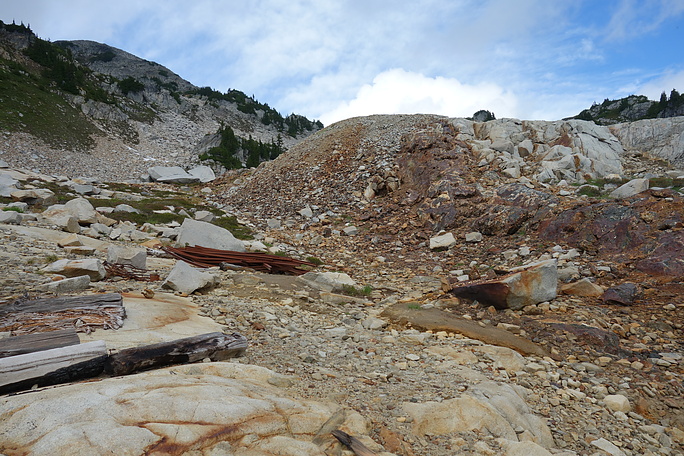
Deposit: From Thurber and others (1989, p. 94-97) The southwest part of the Middle Fork Snoqualmie River area, which includes the Porter, Hemlock, and Condor zones, is considered to have the greatest resource potential (fig. 9). The three zones are along or near the Copper Queen fault and the less well developed faults that intersect it. The Hemlock and Porter zones are believed to be contiguous and are discussed together. The 2380 adit is the main working level for the Hemlock zone. Surface sampling and shallow core holes in the Porter and Hemlock zones indicated areas of copper-rich rock as much as 85 ft (25.9 m) wide, mainly in northeast-trending structures. Drilling results in these zones show that the disseminated copper is mainly below the 3,200-ft (975-m) elevation. Two core drill holes, one from the surface outside the boundary of the Hemlock zone and one from underground in the 2795 adit (fig. 9), penetrated to 2,277-ft and 2,155-ft (694.0- and 656.8-m) elevations, respectively, in the downward projection of the Hemlock zone. Silicified rock and the disseminated sulfide minerals indicate that a deeper zone of copper-rich rock may exist at depth below the bottoms of the holes. Sampling and petrographic studies of rock from the 1,990-ft-long (606.7 m) 2380 arlit confirm the existence of copper there. The Hemlock breccia zone was penetrated from the portal of the adit to the 1,365-ft (416.1-m) point. From that point to the working face, another 625 ft (109.5 m), the rock becomes increasingly brecciated, altered, and mineralized, and the ratio of chalcopyrite to other sulfides becomes greater. Copper content of the wallrock averages approximately 0.44 percent from the 1,400-ft (426.7-m) point to the face and increases to 0.61 percent in the innermost 90 ft (27.4 m). Also, in the innermost 100 ft (30.5 m) of the adit, some 5-ft-long (1.5 m) samples contain as much as 1.14 percent copper. Samples from a 393-ft-Iong (119.8 m) crosscut driven (fig. 9) from the 2380 level toward the center of the Hemlock zone show an overall increase in copper values near the face. Samples taken from a 30-ft-long (9.1 m) interval between 338 and 368 ft (103.0 and 112.2 m) have a weighted average of 0.78 percent copper. The copper minerals and the rock alteration in the crosscut are similar to those in the 2380 adit. A comparison of the rocks observed on the surface of the Hemlock breccia zone with those found approximately 1,650 ft (503 m) vertically below in the workings shows a pronounced increase in intensity of alteration and in the amount of copper with depth. On the surface, intensely altered rock and copper sulfide minerals commonly occur only within or adjacent to fractures; whereas, at the 2380 level, alteration and copper mineralization have been pervasive through large volumes of the brecciated rock (fig. 10). A. R. Grant (written commun., 1971) observed that some large blocks of massive unaltered rock at the surface have graded vertically into mineralized and altered rock at the 2380 level. Further, because the eastern wall of the breccia zone dips steeply eastward, the area of the mineralized zone on the 2380 level is larger than on the surface. The core drilling program by a lessee in 1975 confirmed that the altered and copper-mineralized rock continues to lower elevations in the Hemlock breccia zone. The program explored the Hemlock zone to the 1,000-ft (305-m) elevation. The Middle Fork Snoqualmie contains a series of mineralized highly fractured/brecciated zone along a NNE trend that are intersected by northwesterly trending fault zones. They may be part of one porphyry Cu (Mo) mineralizing event. Each highly fractured zone has a MRDS record. The records can found by searching for "Middle Fork Property" as a Grouping name in the Browser interface Advanced search. The location used is about in the middle of this fractured zone.
Deposit type: Porphyry Cu
Geology: From Derkey and others (1990, p. 111, Condor-Hemlock) Of the numerous mineralized zones in the Middle Fork Snoqualmie system (Livingston, 1971, p. 152-153), the Condor-Hemlock contains the best demonstrated reserves. The deposit is open at depth (below 1,495 ft). The Condor-Hemlock zone is in the Snoqualmie batholith, northern phase granodiorite and tonalite that contains biotite and hornblende; locally it contains clinopyroxene. The rocks are light colored, medium crystalline, mostly equigranular with hypidiomorphic texture, and coarsely jointed. The northern phase is about 25 m.y. old, on the basis of interpretation of numerous discordant K-Ar ages of both hornblende and biotite (Frizzell and others, 1984, p. 18).The Condor-Hemlock is in a northwest-trending mineralized zone. The Condor is located at the center of the zone, and the Hemlock is located at the southeast end of the zone. The mineralization is in shear zones, along fractures, and in veins in granodiorite and tonalite. Hydrothermal alteration grades from propylitic at the surface to quartz-sericite-chlorite to K-feldspar predominating at depth. Pyrrhotite increases and pyrite decreases with depth.
Deposit: From Thurber and others (1989, p. 94-97) The southwest part of the Middle Fork Snoqualmie River area, which includes the Porter, Hemlock, and Condor zones, is considered to have the greatest resource potential (fig. 9). The three zones are along or near the Copper Queen fault and the less well developed faults that intersect it. The Hemlock and Porter zones are believed to be contiguous and are discussed together. The 2380 adit is the main working level for the Hemlock zone. Surface sampling and shallow core holes in the Porter and Hemlock zones indicated areas of copper-rich rock as much as 85 ft (25.9 m) wide, mainly in northeast-trending structures. Drilling results in these zones show that the disseminated copper is mainly below the 3,200-ft (975-m) elevation. Two core drill holes, one from the surface outside the boundary of the Hemlock zone and one from underground in the 2795 adit (fig. 9), penetrated to 2,277-ft and 2,155-ft (694.0- and 656.8-m) elevations, respectively, in the downward projection of the Hemlock zone. Silicified rock and the disseminated sulfide minerals indicate that a deeper zone of copper-rich rock may exist at depth below the bottoms of the holes. Sampling and petrographic studies of rock from the 1,990-ft-long (606.7 m) 2380 arlit confirm the existence of copper there. The Hemlock breccia zone was penetrated from the portal of the adit to the 1,365-ft (416.1-m) point. From that point to the working face, another 625 ft (109.5 m), the rock becomes increasingly brecciated, altered, and mineralized, and the ratio of chalcopyrite to other sulfides becomes greater. Copper content of the wallrock averages approximately 0.44 percent from the 1,400-ft (426.7-m) point to the face and increases to 0.61 percent in the innermost 90 ft (27.4 m). Also, in the innermost 100 ft (30.5 m) of the adit, some 5-ft-long (1.5 m) samples contain as much as 1.14 percent copper. Samples from a 393-ft-Iong (119.8 m) crosscut driven (fig. 9) from the 2380 level toward the center of the Hemlock zone show an overall increase in copper values near the face. Samples taken from a 30-ft-long (9.1 m) interval between 338 and 368 ft (103.0 and 112.2 m) have a weighted average of 0.78 percent copper. The copper minerals and the rock alteration in the crosscut are similar to those in the 2380 adit. A comparison of the rocks observed on the surface of the Hemlock breccia zone with those found approximately 1,650 ft (503 m) vertically below in the workings shows a pronounced increase in intensity of alteration and in the amount of copper with depth. On the surface, intensely altered rock and copper sulfide minerals commonly occur only within or adjacent to fractures; whereas, at the 2380 level, alteration and copper mineralization have been pervasive through large volumes of the brecciated rock (fig. 10). A. R. Grant (written commun., 1971) observed that some large blocks of massive unaltered rock at the surface have graded vertically into mineralized and altered rock at the 2380 level. Further, because the eastern wall of the breccia zone dips steeply eastward, the area of the mineralized zone on the 2380 level is larger than on the surface. The core drilling program by a lessee in 1975 confirmed that the altered and copper-mineralized rock continues to lower elevations in the Hemlock breccia zone. The program explored the Hemlock zone to the 1,000-ft (305-m) elevation. The Middle Fork Snoqualmie contains a series of mineralized highly fractured/brecciated zone along a NNE trend that are intersected by northwesterly trending fault zones. They may be part of one porphyry Cu (Mo) mineralizing event. Each highly fractured zone has a MRDS record. The records can found by searching for "Middle Fork Property" as a Grouping name in the Browser interface Advanced search. The location used is about in the middle of this fractured zone.
Deposit type: Porphyry Cu
Geology: From Derkey and others (1990, p. 111, Condor-Hemlock) Of the numerous mineralized zones in the Middle Fork Snoqualmie system (Livingston, 1971, p. 152-153), the Condor-Hemlock contains the best demonstrated reserves. The deposit is open at depth (below 1,495 ft). The Condor-Hemlock zone is in the Snoqualmie batholith, northern phase granodiorite and tonalite that contains biotite and hornblende; locally it contains clinopyroxene. The rocks are light colored, medium crystalline, mostly equigranular with hypidiomorphic texture, and coarsely jointed. The northern phase is about 25 m.y. old, on the basis of interpretation of numerous discordant K-Ar ages of both hornblende and biotite (Frizzell and others, 1984, p. 18).The Condor-Hemlock is in a northwest-trending mineralized zone. The Condor is located at the center of the zone, and the Hemlock is located at the southeast end of the zone. The mineralization is in shear zones, along fractures, and in veins in granodiorite and tonalite. Hydrothermal alteration grades from propylitic at the surface to quartz-sericite-chlorite to K-feldspar predominating at depth. Pyrrhotite increases and pyrite decreases with depth.
Select Mineral List Type
Standard Detailed Gallery Strunz Chemical ElementsCommodity List
This is a list of exploitable or exploited mineral commodities recorded from this region.Mineral List
Mineral list contains entries from the region specified including sub-localities51 valid minerals.
Rock Types Recorded
Rock list contains entries from the region specified including sub-localities
Select Rock List Type
Alphabetical List Tree DiagramDetailed Mineral List:
Gallery:

List of minerals arranged by Strunz 10th Edition classification
| Group 1 - Elements | |||
|---|---|---|---|
| ⓘ | Native Gold | 1.AA.05 | Au |
| Group 2 - Sulphides and Sulfosalts | |||
| ⓘ | Chalcocite | 2.BA.05 | Cu2S |
| ⓘ | Bornite | 2.BA.15 | Cu5FeS4 |
| ⓘ | Covellite | 2.CA.05a | CuS |
| ⓘ | Sphalerite | 2.CB.05a | ZnS |
| ⓘ | Chalcopyrite | 2.CB.10a | CuFeS2 |
| ⓘ | Pyrrhotite | 2.CC.10 | Fe1-xS |
| ⓘ | Galena | 2.CD.10 | PbS |
| ⓘ | Molybdenite | 2.EA.30 | MoS2 |
| ⓘ | Pyrite var. Bravoite | 2.EB.05a | (Fe,Ni)S2 |
| ⓘ | 2.EB.05a | FeS2 | |
| ⓘ | Arsenopyrite | 2.EB.20 | FeAsS |
| ⓘ | 'Tetrahedrite Subgroup' | 2.GB.05 | Cu6(Cu4C2+2)Sb4S12S |
| ⓘ | Cosalite | 2.JB.10 | Pb2Bi2S5 |
| ⓘ | Vikingite ? | 2.JB.40a | Ag5Pb8Bi13S30 |
| Group 4 - Oxides and Hydroxides | |||
| ⓘ | Magnetite | 4.BB.05 | Fe2+Fe3+2O4 |
| ⓘ | Hematite | 4.CB.05 | Fe2O3 |
| ⓘ | Quartz var. Amethyst | 4.DA.05 | SiO2 |
| ⓘ | var. Citrine | 4.DA.05 | SiO2 |
| ⓘ | 4.DA.05 | SiO2 | |
| ⓘ | var. Smoky Quartz | 4.DA.05 | SiO2 |
| ⓘ | var. Rock Crystal | 4.DA.05 | SiO2 |
| ⓘ | var. Sceptre Quartz | 4.DA.05 | SiO2 |
| ⓘ | Brannerite | 4.DH.05 | UTi2O6 |
| ⓘ | Goethite | 4.FD.10 | Fe3+O(OH) |
| Group 5 - Nitrates and Carbonates | |||
| ⓘ | Calcite | 5.AB.05 | CaCO3 |
| ⓘ | Siderite | 5.AB.05 | FeCO3 |
| ⓘ | Smithsonite | 5.AB.05 | ZnCO3 |
| ⓘ | Ankerite | 5.AB.10 | Ca(Fe2+,Mg)(CO3)2 |
| ⓘ | Aragonite | 5.AB.15 | CaCO3 |
| ⓘ | Cerussite | 5.AB.15 | PbCO3 |
| ⓘ | Azurite | 5.BA.05 | Cu3(CO3)2(OH)2 |
| ⓘ | Malachite | 5.BA.10 | Cu2(CO3)(OH)2 |
| ⓘ | Aurichalcite | 5.BA.15 | (Zn,Cu)5(CO3)2(OH)6 |
| Group 7 - Sulphates, Chromates, Molybdates and Tungstates | |||
| ⓘ | Anglesite | 7.AD.35 | PbSO4 |
| ⓘ | Baryte | 7.AD.35 | BaSO4 |
| ⓘ | Gypsum | 7.CD.40 | CaSO4 · 2H2O |
| ⓘ | var. Selenite | 7.CD.40 | CaSO4 · 2H2O |
| ⓘ | Scheelite | 7.GA.05 | Ca(WO4) |
| Group 8 - Phosphates, Arsenates and Vanadates | |||
| ⓘ | Schulténite | 8.AD.30 | Pb(HAsO4) |
| ⓘ | Beudantite | 8.BL.05 | PbFe3+3(AsO4)(SO4)(OH)6 |
| ⓘ | Mimetite | 8.BN.05 | Pb5(AsO4)3Cl |
| ⓘ | Scorodite | 8.CD.10 | Fe3+AsO4 · 2H2O |
| ⓘ | Autunite | 8.EB.05 | Ca(UO2)2(PO4)2 · 10-12H2O |
| Group 9 - Silicates | |||
| ⓘ | Titanite | 9.AG.15 | CaTiO(SiO4) |
| ⓘ | Dumortierite | 9.AJ.10 | Al(Al2O)(Al2O)2(SiO4)3(BO3) |
| ⓘ | Epidote | 9.BG.05a | (CaCa)(AlAlFe3+)O[Si2O7][SiO4](OH) |
| ⓘ | Dravite ? | 9.CK.05 | NaMg3Al6(Si6O18)(BO3)3(OH)3(OH) |
| ⓘ | Schorl | 9.CK.05 | NaFe2+3Al6(Si6O18)(BO3)3(OH)3(OH) |
| ⓘ | Anthophyllite | 9.DD.05 | ◻Mg2Mg5(Si8O22)(OH)2 |
| ⓘ | Actinolite | 9.DE.10 | ◻Ca2(Mg4.5-2.5Fe0.5-2.5)Si8O22(OH)2 |
| ⓘ | Prehnite | 9.DP.20 | Ca2Al2Si3O10(OH)2 |
| ⓘ | Talc | 9.EC.05 | Mg3Si4O10(OH)2 |
| ⓘ | Muscovite | 9.EC.15 | KAl2(AlSi3O10)(OH)2 |
| ⓘ | var. Sericite | 9.EC.15 | KAl2(AlSi3O10)(OH)2 |
| ⓘ | Clinochlore | 9.EC.55 | Mg5Al(AlSi3O10)(OH)8 |
| ⓘ | Pennantite | 9.EC.55 | Mn2+5Al(AlSi3O10)(OH)8 |
| ⓘ | Clinochlore var. Pennine | 9.EC.55 | Mg5Al(AlSi3O10)(OH)8 |
| ⓘ | Microcline | 9.FA.30 | K(AlSi3O8) |
| ⓘ | Orthoclase | 9.FA.30 | K(AlSi3O8) |
| ⓘ | Natrolite | 9.GA.05 | Na2Al2Si3O10 · 2H2O |
| Unclassified | |||
| ⓘ | 'K Feldspar var. Adularia' | - | KAlSi3O8 |
| ⓘ | 'Aeschynite' | - | |
| ⓘ | 'Amphibole Supergroup' | - | AB2C5(T8O22)W2 |
| ⓘ | 'Biotite' | - | K(Fe2+/Mg)2(Al/Fe3+/Mg/Ti)([Si/Al/Fe]2Si2O10)(OH/F)2 |
| ⓘ | 'Chlorite Group' | - | |
| ⓘ | 'Heulandite Subgroup' | - | (Na/Ca/K)5-6[Al8-9 Si27-28 O72] · nH2O |
| ⓘ | 'Limonite' | - | |
| ⓘ | 'Stilbite Subgroup' | - | M6-7[Al8-9Si27-28O72] · nH2O |
| ⓘ | 'Tourmaline' | - | AD3G6(T6O18)(BO3)3X3Z |
| ⓘ | 'Gustavite-Lillianite Series' | - | |
| ⓘ | 'Plagioclase' | - | (Na,Ca)[(Si,Al)AlSi2]O8 |
| ⓘ | 'Petroleum' | - | |
| ⓘ | 'K Feldspar' | - | |
| ⓘ | 'Garnet Group' | - | X3Z2(SiO4)3 |
| ⓘ | 'Amphibole Supergroup var. Byssolite' | - | AX2Z5((Si,Al,Ti)8O22)(OH,F,Cl,O)2 |
| ⓘ | 'Apatite' | - | Ca5(PO4)3A |
List of minerals for each chemical element
| H | Hydrogen | |
|---|---|---|
| H | ⓘ Actinolite | ◻Ca2(Mg4.5-2.5Fe0.5-2.5)Si8O22(OH)2 |
| H | ⓘ Anthophyllite | ◻Mg2Mg5(Si8O22)(OH)2 |
| H | ⓘ Aurichalcite | (Zn,Cu)5(CO3)2(OH)6 |
| H | ⓘ Autunite | Ca(UO2)2(PO4)2 · 10-12H2O |
| H | ⓘ Azurite | Cu3(CO3)2(OH)2 |
| H | ⓘ Beudantite | PbFe33+(AsO4)(SO4)(OH)6 |
| H | ⓘ Biotite | K(Fe2+/Mg)2(Al/Fe3+/Mg/Ti)([Si/Al/Fe]2Si2O10)(OH/F)2 |
| H | ⓘ Clinochlore | Mg5Al(AlSi3O10)(OH)8 |
| H | ⓘ Dravite | NaMg3Al6(Si6O18)(BO3)3(OH)3(OH) |
| H | ⓘ Epidote | (CaCa)(AlAlFe3+)O[Si2O7][SiO4](OH) |
| H | ⓘ Goethite | Fe3+O(OH) |
| H | ⓘ Gypsum | CaSO4 · 2H2O |
| H | ⓘ Heulandite Subgroup | (Na/Ca/K)5-6[Al8-9 Si27-28 O72] · nH2O |
| H | ⓘ Malachite | Cu2(CO3)(OH)2 |
| H | ⓘ Muscovite | KAl2(AlSi3O10)(OH)2 |
| H | ⓘ Natrolite | Na2Al2Si3O10 · 2H2O |
| H | ⓘ Pennantite | Mn52+Al(AlSi3O10)(OH)8 |
| H | ⓘ Prehnite | Ca2Al2Si3O10(OH)2 |
| H | ⓘ Schorl | NaFe32+Al6(Si6O18)(BO3)3(OH)3(OH) |
| H | ⓘ Schulténite | Pb(HAsO4) |
| H | ⓘ Scorodite | Fe3+AsO4 · 2H2O |
| H | ⓘ Stilbite Subgroup | M6-7[Al8-9Si27-28O72] · nH2O |
| H | ⓘ Talc | Mg3Si4O10(OH)2 |
| H | ⓘ Gypsum var. Selenite | CaSO4 · 2H2O |
| H | ⓘ Muscovite var. Sericite | KAl2(AlSi3O10)(OH)2 |
| H | ⓘ Clinochlore var. Pennine | Mg5Al(AlSi3O10)(OH)8 |
| H | ⓘ Amphibole Supergroup var. Byssolite | AX2Z5((Si,Al,Ti)8O22)(OH,F,Cl,O)2 |
| B | Boron | |
| B | ⓘ Dravite | NaMg3Al6(Si6O18)(BO3)3(OH)3(OH) |
| B | ⓘ Dumortierite | Al(Al2O)(Al2O)2(SiO4)3(BO3) |
| B | ⓘ Schorl | NaFe32+Al6(Si6O18)(BO3)3(OH)3(OH) |
| B | ⓘ Tourmaline | AD3G6(T6O18)(BO3)3X3Z |
| C | Carbon | |
| C | ⓘ Ankerite | Ca(Fe2+,Mg)(CO3)2 |
| C | ⓘ Aragonite | CaCO3 |
| C | ⓘ Aurichalcite | (Zn,Cu)5(CO3)2(OH)6 |
| C | ⓘ Azurite | Cu3(CO3)2(OH)2 |
| C | ⓘ Calcite | CaCO3 |
| C | ⓘ Cerussite | PbCO3 |
| C | ⓘ Malachite | Cu2(CO3)(OH)2 |
| C | ⓘ Siderite | FeCO3 |
| C | ⓘ Smithsonite | ZnCO3 |
| O | Oxygen | |
| O | ⓘ Actinolite | ◻Ca2(Mg4.5-2.5Fe0.5-2.5)Si8O22(OH)2 |
| O | ⓘ K Feldspar var. Adularia | KAlSi3O8 |
| O | ⓘ Quartz var. Amethyst | SiO2 |
| O | ⓘ Amphibole Supergroup | AB2C5(T8O22)W2 |
| O | ⓘ Anglesite | PbSO4 |
| O | ⓘ Ankerite | Ca(Fe2+,Mg)(CO3)2 |
| O | ⓘ Anthophyllite | ◻Mg2Mg5(Si8O22)(OH)2 |
| O | ⓘ Aragonite | CaCO3 |
| O | ⓘ Aurichalcite | (Zn,Cu)5(CO3)2(OH)6 |
| O | ⓘ Autunite | Ca(UO2)2(PO4)2 · 10-12H2O |
| O | ⓘ Azurite | Cu3(CO3)2(OH)2 |
| O | ⓘ Baryte | BaSO4 |
| O | ⓘ Beudantite | PbFe33+(AsO4)(SO4)(OH)6 |
| O | ⓘ Biotite | K(Fe2+/Mg)2(Al/Fe3+/Mg/Ti)([Si/Al/Fe]2Si2O10)(OH/F)2 |
| O | ⓘ Brannerite | UTi2O6 |
| O | ⓘ Calcite | CaCO3 |
| O | ⓘ Cerussite | PbCO3 |
| O | ⓘ Quartz var. Citrine | SiO2 |
| O | ⓘ Clinochlore | Mg5Al(AlSi3O10)(OH)8 |
| O | ⓘ Dravite | NaMg3Al6(Si6O18)(BO3)3(OH)3(OH) |
| O | ⓘ Dumortierite | Al(Al2O)(Al2O)2(SiO4)3(BO3) |
| O | ⓘ Epidote | (CaCa)(AlAlFe3+)O[Si2O7][SiO4](OH) |
| O | ⓘ Goethite | Fe3+O(OH) |
| O | ⓘ Gypsum | CaSO4 · 2H2O |
| O | ⓘ Hematite | Fe2O3 |
| O | ⓘ Heulandite Subgroup | (Na/Ca/K)5-6[Al8-9 Si27-28 O72] · nH2O |
| O | ⓘ Magnetite | Fe2+Fe23+O4 |
| O | ⓘ Malachite | Cu2(CO3)(OH)2 |
| O | ⓘ Microcline | K(AlSi3O8) |
| O | ⓘ Mimetite | Pb5(AsO4)3Cl |
| O | ⓘ Muscovite | KAl2(AlSi3O10)(OH)2 |
| O | ⓘ Natrolite | Na2Al2Si3O10 · 2H2O |
| O | ⓘ Orthoclase | K(AlSi3O8) |
| O | ⓘ Pennantite | Mn52+Al(AlSi3O10)(OH)8 |
| O | ⓘ Prehnite | Ca2Al2Si3O10(OH)2 |
| O | ⓘ Quartz | SiO2 |
| O | ⓘ Scheelite | Ca(WO4) |
| O | ⓘ Schorl | NaFe32+Al6(Si6O18)(BO3)3(OH)3(OH) |
| O | ⓘ Schulténite | Pb(HAsO4) |
| O | ⓘ Scorodite | Fe3+AsO4 · 2H2O |
| O | ⓘ Siderite | FeCO3 |
| O | ⓘ Smithsonite | ZnCO3 |
| O | ⓘ Quartz var. Smoky Quartz | SiO2 |
| O | ⓘ Stilbite Subgroup | M6-7[Al8-9Si27-28O72] · nH2O |
| O | ⓘ Talc | Mg3Si4O10(OH)2 |
| O | ⓘ Titanite | CaTiO(SiO4) |
| O | ⓘ Tourmaline | AD3G6(T6O18)(BO3)3X3Z |
| O | ⓘ Gypsum var. Selenite | CaSO4 · 2H2O |
| O | ⓘ Quartz var. Rock Crystal | SiO2 |
| O | ⓘ Quartz var. Sceptre Quartz | SiO2 |
| O | ⓘ Muscovite var. Sericite | KAl2(AlSi3O10)(OH)2 |
| O | ⓘ Clinochlore var. Pennine | Mg5Al(AlSi3O10)(OH)8 |
| O | ⓘ Plagioclase | (Na,Ca)[(Si,Al)AlSi2]O8 |
| O | ⓘ Garnet Group | X3Z2(SiO4)3 |
| O | ⓘ Amphibole Supergroup var. Byssolite | AX2Z5((Si,Al,Ti)8O22)(OH,F,Cl,O)2 |
| O | ⓘ Apatite | Ca5(PO4)3A |
| F | Fluorine | |
| F | ⓘ Biotite | K(Fe2+/Mg)2(Al/Fe3+/Mg/Ti)([Si/Al/Fe]2Si2O10)(OH/F)2 |
| F | ⓘ Amphibole Supergroup var. Byssolite | AX2Z5((Si,Al,Ti)8O22)(OH,F,Cl,O)2 |
| Na | Sodium | |
| Na | ⓘ Dravite | NaMg3Al6(Si6O18)(BO3)3(OH)3(OH) |
| Na | ⓘ Heulandite Subgroup | (Na/Ca/K)5-6[Al8-9 Si27-28 O72] · nH2O |
| Na | ⓘ Natrolite | Na2Al2Si3O10 · 2H2O |
| Na | ⓘ Schorl | NaFe32+Al6(Si6O18)(BO3)3(OH)3(OH) |
| Na | ⓘ Plagioclase | (Na,Ca)[(Si,Al)AlSi2]O8 |
| Mg | Magnesium | |
| Mg | ⓘ Actinolite | ◻Ca2(Mg4.5-2.5Fe0.5-2.5)Si8O22(OH)2 |
| Mg | ⓘ Ankerite | Ca(Fe2+,Mg)(CO3)2 |
| Mg | ⓘ Anthophyllite | ◻Mg2Mg5(Si8O22)(OH)2 |
| Mg | ⓘ Biotite | K(Fe2+/Mg)2(Al/Fe3+/Mg/Ti)([Si/Al/Fe]2Si2O10)(OH/F)2 |
| Mg | ⓘ Clinochlore | Mg5Al(AlSi3O10)(OH)8 |
| Mg | ⓘ Dravite | NaMg3Al6(Si6O18)(BO3)3(OH)3(OH) |
| Mg | ⓘ Talc | Mg3Si4O10(OH)2 |
| Mg | ⓘ Clinochlore var. Pennine | Mg5Al(AlSi3O10)(OH)8 |
| Al | Aluminium | |
| Al | ⓘ K Feldspar var. Adularia | KAlSi3O8 |
| Al | ⓘ Biotite | K(Fe2+/Mg)2(Al/Fe3+/Mg/Ti)([Si/Al/Fe]2Si2O10)(OH/F)2 |
| Al | ⓘ Clinochlore | Mg5Al(AlSi3O10)(OH)8 |
| Al | ⓘ Dravite | NaMg3Al6(Si6O18)(BO3)3(OH)3(OH) |
| Al | ⓘ Dumortierite | Al(Al2O)(Al2O)2(SiO4)3(BO3) |
| Al | ⓘ Epidote | (CaCa)(AlAlFe3+)O[Si2O7][SiO4](OH) |
| Al | ⓘ Heulandite Subgroup | (Na/Ca/K)5-6[Al8-9 Si27-28 O72] · nH2O |
| Al | ⓘ Microcline | K(AlSi3O8) |
| Al | ⓘ Muscovite | KAl2(AlSi3O10)(OH)2 |
| Al | ⓘ Natrolite | Na2Al2Si3O10 · 2H2O |
| Al | ⓘ Orthoclase | K(AlSi3O8) |
| Al | ⓘ Pennantite | Mn52+Al(AlSi3O10)(OH)8 |
| Al | ⓘ Prehnite | Ca2Al2Si3O10(OH)2 |
| Al | ⓘ Schorl | NaFe32+Al6(Si6O18)(BO3)3(OH)3(OH) |
| Al | ⓘ Stilbite Subgroup | M6-7[Al8-9Si27-28O72] · nH2O |
| Al | ⓘ Muscovite var. Sericite | KAl2(AlSi3O10)(OH)2 |
| Al | ⓘ Clinochlore var. Pennine | Mg5Al(AlSi3O10)(OH)8 |
| Al | ⓘ Plagioclase | (Na,Ca)[(Si,Al)AlSi2]O8 |
| Al | ⓘ Amphibole Supergroup var. Byssolite | AX2Z5((Si,Al,Ti)8O22)(OH,F,Cl,O)2 |
| Si | Silicon | |
| Si | ⓘ Actinolite | ◻Ca2(Mg4.5-2.5Fe0.5-2.5)Si8O22(OH)2 |
| Si | ⓘ K Feldspar var. Adularia | KAlSi3O8 |
| Si | ⓘ Quartz var. Amethyst | SiO2 |
| Si | ⓘ Anthophyllite | ◻Mg2Mg5(Si8O22)(OH)2 |
| Si | ⓘ Biotite | K(Fe2+/Mg)2(Al/Fe3+/Mg/Ti)([Si/Al/Fe]2Si2O10)(OH/F)2 |
| Si | ⓘ Quartz var. Citrine | SiO2 |
| Si | ⓘ Clinochlore | Mg5Al(AlSi3O10)(OH)8 |
| Si | ⓘ Dravite | NaMg3Al6(Si6O18)(BO3)3(OH)3(OH) |
| Si | ⓘ Dumortierite | Al(Al2O)(Al2O)2(SiO4)3(BO3) |
| Si | ⓘ Epidote | (CaCa)(AlAlFe3+)O[Si2O7][SiO4](OH) |
| Si | ⓘ Heulandite Subgroup | (Na/Ca/K)5-6[Al8-9 Si27-28 O72] · nH2O |
| Si | ⓘ Microcline | K(AlSi3O8) |
| Si | ⓘ Muscovite | KAl2(AlSi3O10)(OH)2 |
| Si | ⓘ Natrolite | Na2Al2Si3O10 · 2H2O |
| Si | ⓘ Orthoclase | K(AlSi3O8) |
| Si | ⓘ Pennantite | Mn52+Al(AlSi3O10)(OH)8 |
| Si | ⓘ Prehnite | Ca2Al2Si3O10(OH)2 |
| Si | ⓘ Quartz | SiO2 |
| Si | ⓘ Schorl | NaFe32+Al6(Si6O18)(BO3)3(OH)3(OH) |
| Si | ⓘ Quartz var. Smoky Quartz | SiO2 |
| Si | ⓘ Stilbite Subgroup | M6-7[Al8-9Si27-28O72] · nH2O |
| Si | ⓘ Talc | Mg3Si4O10(OH)2 |
| Si | ⓘ Titanite | CaTiO(SiO4) |
| Si | ⓘ Quartz var. Rock Crystal | SiO2 |
| Si | ⓘ Quartz var. Sceptre Quartz | SiO2 |
| Si | ⓘ Muscovite var. Sericite | KAl2(AlSi3O10)(OH)2 |
| Si | ⓘ Clinochlore var. Pennine | Mg5Al(AlSi3O10)(OH)8 |
| Si | ⓘ Plagioclase | (Na,Ca)[(Si,Al)AlSi2]O8 |
| Si | ⓘ Garnet Group | X3Z2(SiO4)3 |
| Si | ⓘ Amphibole Supergroup var. Byssolite | AX2Z5((Si,Al,Ti)8O22)(OH,F,Cl,O)2 |
| P | Phosphorus | |
| P | ⓘ Autunite | Ca(UO2)2(PO4)2 · 10-12H2O |
| P | ⓘ Apatite | Ca5(PO4)3A |
| S | Sulfur | |
| S | ⓘ Anglesite | PbSO4 |
| S | ⓘ Arsenopyrite | FeAsS |
| S | ⓘ Baryte | BaSO4 |
| S | ⓘ Beudantite | PbFe33+(AsO4)(SO4)(OH)6 |
| S | ⓘ Bornite | Cu5FeS4 |
| S | ⓘ Pyrite var. Bravoite | (Fe,Ni)S2 |
| S | ⓘ Chalcopyrite | CuFeS2 |
| S | ⓘ Chalcocite | Cu2S |
| S | ⓘ Cosalite | Pb2Bi2S5 |
| S | ⓘ Covellite | CuS |
| S | ⓘ Galena | PbS |
| S | ⓘ Gypsum | CaSO4 · 2H2O |
| S | ⓘ Molybdenite | MoS2 |
| S | ⓘ Pyrite | FeS2 |
| S | ⓘ Pyrrhotite | Fe1-xS |
| S | ⓘ Sphalerite | ZnS |
| S | ⓘ Tetrahedrite Subgroup | Cu6(Cu4C22+)Sb4S12S |
| S | ⓘ Vikingite | Ag5Pb8Bi13S30 |
| S | ⓘ Gypsum var. Selenite | CaSO4 · 2H2O |
| S | ⓘ Gustavite-Lillianite Series | |
| Cl | Chlorine | |
| Cl | ⓘ Mimetite | Pb5(AsO4)3Cl |
| Cl | ⓘ Amphibole Supergroup var. Byssolite | AX2Z5((Si,Al,Ti)8O22)(OH,F,Cl,O)2 |
| K | Potassium | |
| K | ⓘ K Feldspar var. Adularia | KAlSi3O8 |
| K | ⓘ Biotite | K(Fe2+/Mg)2(Al/Fe3+/Mg/Ti)([Si/Al/Fe]2Si2O10)(OH/F)2 |
| K | ⓘ Heulandite Subgroup | (Na/Ca/K)5-6[Al8-9 Si27-28 O72] · nH2O |
| K | ⓘ Microcline | K(AlSi3O8) |
| K | ⓘ Muscovite | KAl2(AlSi3O10)(OH)2 |
| K | ⓘ Orthoclase | K(AlSi3O8) |
| K | ⓘ Muscovite var. Sericite | KAl2(AlSi3O10)(OH)2 |
| Ca | Calcium | |
| Ca | ⓘ Actinolite | ◻Ca2(Mg4.5-2.5Fe0.5-2.5)Si8O22(OH)2 |
| Ca | ⓘ Ankerite | Ca(Fe2+,Mg)(CO3)2 |
| Ca | ⓘ Aragonite | CaCO3 |
| Ca | ⓘ Autunite | Ca(UO2)2(PO4)2 · 10-12H2O |
| Ca | ⓘ Calcite | CaCO3 |
| Ca | ⓘ Epidote | (CaCa)(AlAlFe3+)O[Si2O7][SiO4](OH) |
| Ca | ⓘ Gypsum | CaSO4 · 2H2O |
| Ca | ⓘ Heulandite Subgroup | (Na/Ca/K)5-6[Al8-9 Si27-28 O72] · nH2O |
| Ca | ⓘ Prehnite | Ca2Al2Si3O10(OH)2 |
| Ca | ⓘ Scheelite | Ca(WO4) |
| Ca | ⓘ Titanite | CaTiO(SiO4) |
| Ca | ⓘ Gypsum var. Selenite | CaSO4 · 2H2O |
| Ca | ⓘ Plagioclase | (Na,Ca)[(Si,Al)AlSi2]O8 |
| Ca | ⓘ Apatite | Ca5(PO4)3A |
| Ti | Titanium | |
| Ti | ⓘ Biotite | K(Fe2+/Mg)2(Al/Fe3+/Mg/Ti)([Si/Al/Fe]2Si2O10)(OH/F)2 |
| Ti | ⓘ Brannerite | UTi2O6 |
| Ti | ⓘ Titanite | CaTiO(SiO4) |
| Ti | ⓘ Amphibole Supergroup var. Byssolite | AX2Z5((Si,Al,Ti)8O22)(OH,F,Cl,O)2 |
| Mn | Manganese | |
| Mn | ⓘ Pennantite | Mn52+Al(AlSi3O10)(OH)8 |
| Fe | Iron | |
| Fe | ⓘ Actinolite | ◻Ca2(Mg4.5-2.5Fe0.5-2.5)Si8O22(OH)2 |
| Fe | ⓘ Ankerite | Ca(Fe2+,Mg)(CO3)2 |
| Fe | ⓘ Arsenopyrite | FeAsS |
| Fe | ⓘ Beudantite | PbFe33+(AsO4)(SO4)(OH)6 |
| Fe | ⓘ Biotite | K(Fe2+/Mg)2(Al/Fe3+/Mg/Ti)([Si/Al/Fe]2Si2O10)(OH/F)2 |
| Fe | ⓘ Bornite | Cu5FeS4 |
| Fe | ⓘ Pyrite var. Bravoite | (Fe,Ni)S2 |
| Fe | ⓘ Chalcopyrite | CuFeS2 |
| Fe | ⓘ Epidote | (CaCa)(AlAlFe3+)O[Si2O7][SiO4](OH) |
| Fe | ⓘ Goethite | Fe3+O(OH) |
| Fe | ⓘ Hematite | Fe2O3 |
| Fe | ⓘ Magnetite | Fe2+Fe23+O4 |
| Fe | ⓘ Pyrite | FeS2 |
| Fe | ⓘ Pyrrhotite | Fe1-xS |
| Fe | ⓘ Schorl | NaFe32+Al6(Si6O18)(BO3)3(OH)3(OH) |
| Fe | ⓘ Scorodite | Fe3+AsO4 · 2H2O |
| Fe | ⓘ Siderite | FeCO3 |
| Ni | Nickel | |
| Ni | ⓘ Pyrite var. Bravoite | (Fe,Ni)S2 |
| Cu | Copper | |
| Cu | ⓘ Aurichalcite | (Zn,Cu)5(CO3)2(OH)6 |
| Cu | ⓘ Azurite | Cu3(CO3)2(OH)2 |
| Cu | ⓘ Bornite | Cu5FeS4 |
| Cu | ⓘ Chalcopyrite | CuFeS2 |
| Cu | ⓘ Chalcocite | Cu2S |
| Cu | ⓘ Covellite | CuS |
| Cu | ⓘ Malachite | Cu2(CO3)(OH)2 |
| Cu | ⓘ Tetrahedrite Subgroup | Cu6(Cu4C22+)Sb4S12S |
| Zn | Zinc | |
| Zn | ⓘ Aurichalcite | (Zn,Cu)5(CO3)2(OH)6 |
| Zn | ⓘ Smithsonite | ZnCO3 |
| Zn | ⓘ Sphalerite | ZnS |
| As | Arsenic | |
| As | ⓘ Arsenopyrite | FeAsS |
| As | ⓘ Beudantite | PbFe33+(AsO4)(SO4)(OH)6 |
| As | ⓘ Mimetite | Pb5(AsO4)3Cl |
| As | ⓘ Schulténite | Pb(HAsO4) |
| As | ⓘ Scorodite | Fe3+AsO4 · 2H2O |
| Mo | Molybdenum | |
| Mo | ⓘ Molybdenite | MoS2 |
| Ag | Silver | |
| Ag | ⓘ Vikingite | Ag5Pb8Bi13S30 |
| Ag | ⓘ Gustavite-Lillianite Series | |
| Sb | Antimony | |
| Sb | ⓘ Tetrahedrite Subgroup | Cu6(Cu4C22+)Sb4S12S |
| Ba | Barium | |
| Ba | ⓘ Baryte | BaSO4 |
| W | Tungsten | |
| W | ⓘ Scheelite | Ca(WO4) |
| Au | Gold | |
| Au | ⓘ Native Gold | Au |
| Pb | Lead | |
| Pb | ⓘ Anglesite | PbSO4 |
| Pb | ⓘ Beudantite | PbFe33+(AsO4)(SO4)(OH)6 |
| Pb | ⓘ Cerussite | PbCO3 |
| Pb | ⓘ Cosalite | Pb2Bi2S5 |
| Pb | ⓘ Galena | PbS |
| Pb | ⓘ Mimetite | Pb5(AsO4)3Cl |
| Pb | ⓘ Schulténite | Pb(HAsO4) |
| Pb | ⓘ Vikingite | Ag5Pb8Bi13S30 |
| Pb | ⓘ Gustavite-Lillianite Series | |
| Bi | Bismuth | |
| Bi | ⓘ Cosalite | Pb2Bi2S5 |
| Bi | ⓘ Vikingite | Ag5Pb8Bi13S30 |
| Bi | ⓘ Gustavite-Lillianite Series | |
| U | Uranium | |
| U | ⓘ Autunite | Ca(UO2)2(PO4)2 · 10-12H2O |
| U | ⓘ Brannerite | UTi2O6 |
Other Databases
| Link to USGS MRDS: | 10131061 |
|---|
Localities in this Region
- Washington
- King County
- Snoqualmie Mining District
- Middle Fork of the Snoqualmie River
- Snoqualmie Mining District
- King County
- Washington
- King County
- Snoqualmie Mining District
- Middle Fork of the Snoqualmie River
- Snoqualmie Mining District
- King County
Other Regions, Features and Areas containing this locality
North AmericaContinent
- Cascade RangeMountain Range
North America PlateTectonic Plate
- Cascade ArcVolcanic Arc
- Franciscan DomainDomain
This page contains all mineral locality references listed on mindat.org. This does not claim to be a complete list. If you know of more minerals from this site, please register so you can add to our database. This locality information is for reference purposes only. You should never attempt to
visit any sites listed in mindat.org without first ensuring that you have the permission of the land and/or mineral rights holders
for access and that you are aware of all safety precautions necessary.

Goldmyer Hot Springs, Middle Fork of the Snoqualmie River, Snoqualmie Mining District, King County, Washington, USA