
Park City Mining District, Summit County, Utah, USAi
| Regional Level Types | |
|---|---|
| Park City Mining District | City |
| Summit County | County |
| Utah | State |
| USA | Country |
This page is currently not sponsored. Click here to sponsor this page.




Latitude & Longitude (WGS84):
40° North , 110° West (est.)
Estimate based on other nearby localities or region boundaries.
Margin of Error:
~82km
Type:
Köppen climate type:
Other/historical names associated with this locality:
Uintah Mining District; Snake Creek Mining District
Manto-type ore deposits.
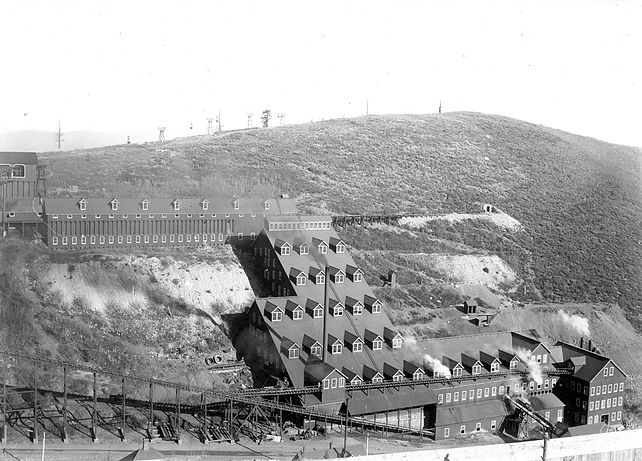
The Park City (Uintah, Snake Creek) mining district lies in the Wasatch Range of Summit and Wasatch Counties about 22 mi east of Salt Lake City. The district is essentially tied with the greater Tintic district for the second largest mining district in the state in terms of total metal production value. The principal metals produced are Ag, Pb, Au, and Zn, in decreasing order of importance. Park City is the second largest Pb, Zn, and Ag producer in the state. Total district metal production at modern metal prices is estimated at $10 billion. The largest producers in the district are the Daly West, Mayflower, Ontario, Park Utah, and Silver King Coalition underground mines (John, 2006).
The Park City district is part of the Bingham–Park City mineral belt in the Middle Rocky Mountain province. The district is underlain by a sequence of Mississippian- to Triassic-age interbedded carbonate rocks, sandstone, and shale folded along the gentle, north-plunging, open, upright, asymmetrical, Park City anticline and cut by gently west-dipping thrust faults. These older structures are cut by a series of east-northeast-trending, steeply dipping, normal faults which extend eastward from the Clayton Peak stock across the Park City anticline. A number of diorite to granodiorite porphyry stocks (34–33 Ma) intrude the south end of the anticline (John, 2006).
The vast majority of the Park City district’s production is from sedimentary rock-hosted vein and replacement ores. These ores primarily occur along the east-northeast-trending faults producing veins in the relatively non-reactive Pennsylvanian- Permian Weber Sandstone in the core of the anticline and mantos in the adjoining favorable limestones. The most important ore host is the Jenny horizon, about 100 ft above the base of the Permian Park City Group and just above the Weber Sandstone. Only the Mayflower veins in the southeastern end of the district are important intrusive-hosted (granodiorite) ores. The Mayflower veins were productive over a vertical distance of nearly 3300 ft and had the highest Cu and Au grades in the district. Bromfield (1989) maps a central zone of hydrothermal biotite surrounded by quartz-sericite-pyrite at the surface near the Mayflower mine. Pebble dikes and a breccia pipe were also reported from the Ontario and Mayflower mines in the southern section of the district.
The Park City district appears to be zoned from intrusive-hosted, enargite-bearing Cu-Au-rich ores near the Mayflower in the southeast, through Ag-Pb-Zn replacement ores in the central and western parts of the district (USGS Model 19A), to distal Ag- dominant ores at the Park City Consolidated mine in the northeast near Deer Valley (John, 2006).
The Park City district is part of the Bingham–Park City mineral belt in the Middle Rocky Mountain province. The district is underlain by a sequence of Mississippian- to Triassic-age interbedded carbonate rocks, sandstone, and shale folded along the gentle, north-plunging, open, upright, asymmetrical, Park City anticline and cut by gently west-dipping thrust faults. These older structures are cut by a series of east-northeast-trending, steeply dipping, normal faults which extend eastward from the Clayton Peak stock across the Park City anticline. A number of diorite to granodiorite porphyry stocks (34–33 Ma) intrude the south end of the anticline (John, 2006).
The vast majority of the Park City district’s production is from sedimentary rock-hosted vein and replacement ores. These ores primarily occur along the east-northeast-trending faults producing veins in the relatively non-reactive Pennsylvanian- Permian Weber Sandstone in the core of the anticline and mantos in the adjoining favorable limestones. The most important ore host is the Jenny horizon, about 100 ft above the base of the Permian Park City Group and just above the Weber Sandstone. Only the Mayflower veins in the southeastern end of the district are important intrusive-hosted (granodiorite) ores. The Mayflower veins were productive over a vertical distance of nearly 3300 ft and had the highest Cu and Au grades in the district. Bromfield (1989) maps a central zone of hydrothermal biotite surrounded by quartz-sericite-pyrite at the surface near the Mayflower mine. Pebble dikes and a breccia pipe were also reported from the Ontario and Mayflower mines in the southern section of the district.
The Park City district appears to be zoned from intrusive-hosted, enargite-bearing Cu-Au-rich ores near the Mayflower in the southeast, through Ag-Pb-Zn replacement ores in the central and western parts of the district (USGS Model 19A), to distal Ag- dominant ores at the Park City Consolidated mine in the northeast near Deer Valley (John, 2006).
From 1875 to 1982, the Park City mines produced 16.7 million tons of ore recovering 1.45 million ounces of gold, 253 million ounces of silver, 2.7 billion pounds of lead, 1.5 billion pounds of zinc, and 129 million pounds of copper. With these totals, the Park City mining district is the third-leading non-ferrous metal producer in the state.
The Park City district comprises three former districts (Uinta, Snake Creek, and Blue Ledge), and who made the first mineral discovery in the district is unknown. The first claims recorded were the Young America in 1868 and the Green Monster in 1869. A short time later Rufus Walker located the Walker and Webster claim and exploration began in earnest. With an increasing number of discoveries, the Uinta district was organized in 1869. The Snake Creek and Blue Ledge districts were established in the spring of 1870. The first recorded production of lead-silver ore in the Park City district was from the Flagstaff mine in 1871. The discovery of the Ontario vein in 1872 by Rector Steen, John Kain, and Gus McDowell catapulted the district into prominence. The vein was exposed on the surface as a knob, protruding two inches out of the ground. The first ore mined from this property averaged $200 dollars of silver per ton. These prospectors subsequently sold the mineral rights to George Hearst and partners in 1872 for the amount of $27,000.
In 1881, a Cornish pump was installed in the Ontario mine to pump out ground water. The pump had a wheel that was 30 feet in diameter, weighed 70 tons, and pumped 2560 gallons of water per minute. As the mine became deeper, the Cornish pump became inefficient at handling the excessive amount of water.
In 1888, excavation work began on the 3-mile long Ontario drain tunnel to eliminate water from the lower workings of the mine. The tunnel took six years to complete at a cost of $400,000. The tunnel linked up with the 1500-foot level of the mine and was capable of draining up to 13,000 gallons of water per minute. In its lifetime, the Ontario produced ore worth over $50 million, making this property one of the best land purchases of all time. The Ontario was mined from the surface to a depth of 2000 feet, and was highly productive in the upper 1500 feet. The ore averaged 21 ounces of silver per ton and approximately 3 percent lead. Other major mines in the district include the Daly West, Daly-Judge, Park-Utah, Mayflower, Park City Consolidated, and Silver King.
During World War II, metal production from the mines decreased dramatically. Many of the skilled workers were sent to the war and government restrictions prevented the search for new mineral deposits.
In 1958, the United Park City Mines, the last surviving mining company in Park City, looked closely at their property for other ways to generate money. Because the silver market was on the downside, the company turned to skiing with assistance from the federal government. With a federal loan of $1.2 million and land ownership of the surface rights to approximately 10,000 acres of mountainside, the mining company created Park City’s first ski resort. In 1963, Treasure Mountain, now known as the Park City Mountain Resort, opened to the public.
Mining continued at the Mayflower mine, where the ore contained higher gold and copper values per ton than any of the other mines in the district. In 1966, the Mayflower mine ranked sixth in gold production in the United States, and in 1967 the mine produced 72,000 ounces of gold. The Mayflower mine closed in 1972.
After a period of inactivity, mining resumed at the Ontario mine in the spring of 1975. For three years, the Ontario mine produced ore until its closure in 1978. The Noranda Mining Company leased the mine from 1979 to 1982. In 1995, the Ontario mine was opened for the first time to tourists. Called the Park City Mine Adventure, tourists could descend 1500 feet underground to view the Cornish pump, minerals, and old mine workings. Unfortunately, this latest venture lasted only several years.
The Park City district comprises three former districts (Uinta, Snake Creek, and Blue Ledge), and who made the first mineral discovery in the district is unknown. The first claims recorded were the Young America in 1868 and the Green Monster in 1869. A short time later Rufus Walker located the Walker and Webster claim and exploration began in earnest. With an increasing number of discoveries, the Uinta district was organized in 1869. The Snake Creek and Blue Ledge districts were established in the spring of 1870. The first recorded production of lead-silver ore in the Park City district was from the Flagstaff mine in 1871. The discovery of the Ontario vein in 1872 by Rector Steen, John Kain, and Gus McDowell catapulted the district into prominence. The vein was exposed on the surface as a knob, protruding two inches out of the ground. The first ore mined from this property averaged $200 dollars of silver per ton. These prospectors subsequently sold the mineral rights to George Hearst and partners in 1872 for the amount of $27,000.
In 1881, a Cornish pump was installed in the Ontario mine to pump out ground water. The pump had a wheel that was 30 feet in diameter, weighed 70 tons, and pumped 2560 gallons of water per minute. As the mine became deeper, the Cornish pump became inefficient at handling the excessive amount of water.
In 1888, excavation work began on the 3-mile long Ontario drain tunnel to eliminate water from the lower workings of the mine. The tunnel took six years to complete at a cost of $400,000. The tunnel linked up with the 1500-foot level of the mine and was capable of draining up to 13,000 gallons of water per minute. In its lifetime, the Ontario produced ore worth over $50 million, making this property one of the best land purchases of all time. The Ontario was mined from the surface to a depth of 2000 feet, and was highly productive in the upper 1500 feet. The ore averaged 21 ounces of silver per ton and approximately 3 percent lead. Other major mines in the district include the Daly West, Daly-Judge, Park-Utah, Mayflower, Park City Consolidated, and Silver King.
During World War II, metal production from the mines decreased dramatically. Many of the skilled workers were sent to the war and government restrictions prevented the search for new mineral deposits.
In 1958, the United Park City Mines, the last surviving mining company in Park City, looked closely at their property for other ways to generate money. Because the silver market was on the downside, the company turned to skiing with assistance from the federal government. With a federal loan of $1.2 million and land ownership of the surface rights to approximately 10,000 acres of mountainside, the mining company created Park City’s first ski resort. In 1963, Treasure Mountain, now known as the Park City Mountain Resort, opened to the public.
Mining continued at the Mayflower mine, where the ore contained higher gold and copper values per ton than any of the other mines in the district. In 1966, the Mayflower mine ranked sixth in gold production in the United States, and in 1967 the mine produced 72,000 ounces of gold. The Mayflower mine closed in 1972.
After a period of inactivity, mining resumed at the Ontario mine in the spring of 1975. For three years, the Ontario mine produced ore until its closure in 1978. The Noranda Mining Company leased the mine from 1979 to 1982. In 1995, the Ontario mine was opened for the first time to tourists. Called the Park City Mine Adventure, tourists could descend 1500 feet underground to view the Cornish pump, minerals, and old mine workings. Unfortunately, this latest venture lasted only several years.
Select Mineral List Type
Standard Detailed Gallery Strunz Chemical ElementsCommodity List
This is a list of exploitable or exploited mineral commodities recorded from this region.Mineral List
Mineral list contains entries from the region specified including sub-localities61 valid minerals.
Rock Types Recorded
Rock list contains entries from the region specified including sub-localities
Select Rock List Type
Alphabetical List Tree DiagramDetailed Mineral List:
Gallery:

List of minerals arranged by Strunz 10th Edition classification
| Group 1 - Elements | |||
|---|---|---|---|
| ⓘ | Native Gold | 1.AA.05 | Au |
| ⓘ | Native Silver | 1.AA.05 | Ag |
| Group 2 - Sulphides and Sulfosalts | |||
| ⓘ | Chalcocite | 2.BA.05 | Cu2S |
| ⓘ | Bornite | 2.BA.15 | Cu5FeS4 |
| ⓘ | Acanthite | 2.BA.35 | Ag2S |
| ⓘ | 'Argentite' | 2.BA.52 | Ag2S |
| ⓘ | Covellite | 2.CA.05a | CuS |
| ⓘ | Sphalerite | 2.CB.05a | ZnS |
| ⓘ | Chalcopyrite | 2.CB.10a | CuFeS2 |
| ⓘ | Galena | 2.CD.10 | PbS |
| ⓘ | Metastibnite | 2.DB.05 | Sb2S3 |
| ⓘ | Stibnite | 2.DB.05 | Sb2S3 |
| ⓘ | Calaverite | 2.EA.10 | AuTe2 |
| ⓘ | Pyrite | 2.EB.05a | FeS2 |
| ⓘ | Arsenopyrite | 2.EB.20 | FeAsS |
| ⓘ | Pyrargyrite | 2.GA.05 | Ag3SbS3 |
| ⓘ | Bournonite | 2.GA.50 | PbCuSbS3 |
| ⓘ | 'Tetrahedrite Subgroup' | 2.GB.05 | Cu6(Cu4C2+2)Sb4S12S |
| ⓘ | Tennantite-(Zn) | 2.GB.05 | Cu6(Cu4Zn2)As4S12S |
| ⓘ | Jamesonite | 2.HB.15 | Pb4FeSb6S14 |
| ⓘ | Boulangerite | 2.HC.15 | Pb5Sb4S11 |
| ⓘ | Geocronite | 2.JB.30a | Pb14Sb6S23 |
| ⓘ | Zinkenite | 2.JB.35a | Pb9Sb22S42 |
| ⓘ | Enargite | 2.KA.05 | Cu3AsS4 |
| Group 3 - Halides | |||
| ⓘ | Chlorargyrite | 3.AA.15 | AgCl |
| ⓘ | Fluorite | 3.AB.25 | CaF2 |
| Group 4 - Oxides and Hydroxides | |||
| ⓘ | Quartz | 4.00.05 | SiO2 |
| ⓘ | Cuprite | 4.AA.10 | Cu2O |
| ⓘ | Zincite | 4.AB.20 | ZnO |
| ⓘ | Massicot | 4.AC.25 | PbO |
| ⓘ | Magnesioferrite | 4.BB.05 | MgFe3+2O4 |
| ⓘ | Magnetite | 4.BB.05 | Fe2+Fe3+2O4 |
| ⓘ | Spinel | 4.BB.05 | MgAl2O4 |
| ⓘ | Hematite | 4.CB.05 | Fe2O3 |
| ⓘ | var. Specularite | 4.CB.05 | Fe2O3 |
| ⓘ | Pyrolusite | 4.DB.05 | Mn4+O2 |
| ⓘ | Bindheimite | 4.DH.20 | Pb2Sb2O6O |
| Group 5 - Nitrates and Carbonates | |||
| ⓘ | Calcite | 5.AB.05 | CaCO3 |
| ⓘ | var. Manganese-bearing Calcite | 5.AB.05 | (Ca,Mn)CO3 |
| ⓘ | Rhodochrosite | 5.AB.05 | MnCO3 |
| ⓘ | Siderite | 5.AB.05 | FeCO3 |
| ⓘ | Dolomite | 5.AB.10 | CaMg(CO3)2 |
| ⓘ | Cerussite | 5.AB.15 | PbCO3 |
| ⓘ | Azurite | 5.BA.05 | Cu3(CO3)2(OH)2 |
| ⓘ | Malachite | 5.BA.10 | Cu2(CO3)(OH)2 |
| Group 7 - Sulphates, Chromates, Molybdates and Tungstates | |||
| ⓘ | Anglesite | 7.AD.35 | PbSO4 |
| ⓘ | Baryte | 7.AD.35 | BaSO4 |
| ⓘ | Brochantite | 7.BB.25 | Cu4(SO4)(OH)6 |
| ⓘ | Linarite | 7.BC.65 | PbCu(SO4)(OH)2 |
| ⓘ | Chalcanthite | 7.CB.20 | CuSO4 · 5H2O |
| ⓘ | Goslarite | 7.CB.40 | ZnSO4 · 7H2O |
| ⓘ | Gypsum | 7.CD.40 | CaSO4 · 2H2O |
| ⓘ | Thaumasite | 7.DG.15 | Ca3(SO4)[Si(OH)6](CO3) · 12H2O |
| ⓘ | Wulfenite | 7.GA.05 | Pb(MoO4) |
| Group 8 - Phosphates, Arsenates and Vanadates | |||
| ⓘ | Olivenite | 8.BB.30 | Cu2(AsO4)(OH) |
| ⓘ | Bayldonite | 8.BH.45 | PbCu3(AsO4)2(OH)2 |
| ⓘ | Mimetite | 8.BN.05 | Pb5(AsO4)3Cl |
| ⓘ | Pyromorphite | 8.BN.05 | Pb5(PO4)3Cl |
| Group 9 - Silicates | |||
| ⓘ | Hemimorphite | 9.BD.10 | Zn4Si2O7(OH)2 · H2O |
| ⓘ | Epidote | 9.BG.05a | (CaCa)(AlAlFe3+)O[Si2O7][SiO4](OH) |
| ⓘ | Rhodonite | 9.DK.05 | CaMn3Mn[Si5O15] |
| ⓘ | Muscovite | 9.EC.15 | KAl2(AlSi3O10)(OH)2 |
| ⓘ | var. Sericite | 9.EC.15 | KAl2(AlSi3O10)(OH)2 |
| ⓘ | Montmorillonite | 9.EC.40 | (Na,Ca)0.33(Al,Mg)2(Si4O10)(OH)2 · nH2O |
| ⓘ | Halloysite | 9.ED.10 | Al2Si2O5(OH)4 · n(H2O) |
| ⓘ | Chrysocolla | 9.ED.20 | Cu2-xAlx(H2-xSi2O5)(OH)4 · nH2O, x < 1 |
| Unclassified | |||
| ⓘ | 'Alisonite' ? | - | Cu6PbS4 |
| ⓘ | 'Chabazite' | - | |
| ⓘ | 'Chlorite Group' | - | |
| ⓘ | 'Limonite' | - | |
| ⓘ | 'Garnet Group' | - | X3Z2(SiO4)3 |
| ⓘ | 'Serpentine Subgroup' | - | D3[Si2O5](OH)4 |
| ⓘ | 'Apatite' | - | Ca5(PO4)3A |
List of minerals for each chemical element
| H | Hydrogen | |
|---|---|---|
| H | ⓘ Azurite | Cu3(CO3)2(OH)2 |
| H | ⓘ Bayldonite | PbCu3(AsO4)2(OH)2 |
| H | ⓘ Brochantite | Cu4(SO4)(OH)6 |
| H | ⓘ Chalcanthite | CuSO4 · 5H2O |
| H | ⓘ Chrysocolla | Cu2-xAlx(H2-xSi2O5)(OH)4 · nH2O, x < 1 |
| H | ⓘ Epidote | (CaCa)(AlAlFe3+)O[Si2O7][SiO4](OH) |
| H | ⓘ Goslarite | ZnSO4 · 7H2O |
| H | ⓘ Gypsum | CaSO4 · 2H2O |
| H | ⓘ Halloysite | Al2Si2O5(OH)4 · n(H2O) |
| H | ⓘ Hemimorphite | Zn4Si2O7(OH)2 · H2O |
| H | ⓘ Linarite | PbCu(SO4)(OH)2 |
| H | ⓘ Malachite | Cu2(CO3)(OH)2 |
| H | ⓘ Muscovite | KAl2(AlSi3O10)(OH)2 |
| H | ⓘ Montmorillonite | (Na,Ca)0.33(Al,Mg)2(Si4O10)(OH)2 · nH2O |
| H | ⓘ Olivenite | Cu2(AsO4)(OH) |
| H | ⓘ Thaumasite | Ca3(SO4)[Si(OH)6](CO3) · 12H2O |
| H | ⓘ Muscovite var. Sericite | KAl2(AlSi3O10)(OH)2 |
| H | ⓘ Serpentine Subgroup | D3[Si2O5](OH)4 |
| C | Carbon | |
| C | ⓘ Azurite | Cu3(CO3)2(OH)2 |
| C | ⓘ Calcite | CaCO3 |
| C | ⓘ Cerussite | PbCO3 |
| C | ⓘ Dolomite | CaMg(CO3)2 |
| C | ⓘ Calcite var. Manganese-bearing Calcite | (Ca,Mn)CO3 |
| C | ⓘ Malachite | Cu2(CO3)(OH)2 |
| C | ⓘ Rhodochrosite | MnCO3 |
| C | ⓘ Siderite | FeCO3 |
| C | ⓘ Thaumasite | Ca3(SO4)[Si(OH)6](CO3) · 12H2O |
| O | Oxygen | |
| O | ⓘ Anglesite | PbSO4 |
| O | ⓘ Azurite | Cu3(CO3)2(OH)2 |
| O | ⓘ Baryte | BaSO4 |
| O | ⓘ Bayldonite | PbCu3(AsO4)2(OH)2 |
| O | ⓘ Bindheimite | Pb2Sb2O6O |
| O | ⓘ Brochantite | Cu4(SO4)(OH)6 |
| O | ⓘ Calcite | CaCO3 |
| O | ⓘ Cerussite | PbCO3 |
| O | ⓘ Chalcanthite | CuSO4 · 5H2O |
| O | ⓘ Chrysocolla | Cu2-xAlx(H2-xSi2O5)(OH)4 · nH2O, x < 1 |
| O | ⓘ Cuprite | Cu2O |
| O | ⓘ Dolomite | CaMg(CO3)2 |
| O | ⓘ Epidote | (CaCa)(AlAlFe3+)O[Si2O7][SiO4](OH) |
| O | ⓘ Goslarite | ZnSO4 · 7H2O |
| O | ⓘ Gypsum | CaSO4 · 2H2O |
| O | ⓘ Halloysite | Al2Si2O5(OH)4 · n(H2O) |
| O | ⓘ Hematite | Fe2O3 |
| O | ⓘ Hemimorphite | Zn4Si2O7(OH)2 · H2O |
| O | ⓘ Linarite | PbCu(SO4)(OH)2 |
| O | ⓘ Magnesioferrite | MgFe23+O4 |
| O | ⓘ Calcite var. Manganese-bearing Calcite | (Ca,Mn)CO3 |
| O | ⓘ Magnetite | Fe2+Fe23+O4 |
| O | ⓘ Malachite | Cu2(CO3)(OH)2 |
| O | ⓘ Massicot | PbO |
| O | ⓘ Mimetite | Pb5(AsO4)3Cl |
| O | ⓘ Muscovite | KAl2(AlSi3O10)(OH)2 |
| O | ⓘ Montmorillonite | (Na,Ca)0.33(Al,Mg)2(Si4O10)(OH)2 · nH2O |
| O | ⓘ Olivenite | Cu2(AsO4)(OH) |
| O | ⓘ Pyrolusite | Mn4+O2 |
| O | ⓘ Pyromorphite | Pb5(PO4)3Cl |
| O | ⓘ Quartz | SiO2 |
| O | ⓘ Rhodochrosite | MnCO3 |
| O | ⓘ Rhodonite | CaMn3Mn[Si5O15] |
| O | ⓘ Siderite | FeCO3 |
| O | ⓘ Spinel | MgAl2O4 |
| O | ⓘ Thaumasite | Ca3(SO4)[Si(OH)6](CO3) · 12H2O |
| O | ⓘ Wulfenite | Pb(MoO4) |
| O | ⓘ Zincite | ZnO |
| O | ⓘ Hematite var. Specularite | Fe2O3 |
| O | ⓘ Muscovite var. Sericite | KAl2(AlSi3O10)(OH)2 |
| O | ⓘ Garnet Group | X3Z2(SiO4)3 |
| O | ⓘ Serpentine Subgroup | D3[Si2O5](OH)4 |
| O | ⓘ Apatite | Ca5(PO4)3A |
| F | Fluorine | |
| F | ⓘ Fluorite | CaF2 |
| Na | Sodium | |
| Na | ⓘ Montmorillonite | (Na,Ca)0.33(Al,Mg)2(Si4O10)(OH)2 · nH2O |
| Mg | Magnesium | |
| Mg | ⓘ Dolomite | CaMg(CO3)2 |
| Mg | ⓘ Magnesioferrite | MgFe23+O4 |
| Mg | ⓘ Montmorillonite | (Na,Ca)0.33(Al,Mg)2(Si4O10)(OH)2 · nH2O |
| Mg | ⓘ Spinel | MgAl2O4 |
| Al | Aluminium | |
| Al | ⓘ Chrysocolla | Cu2-xAlx(H2-xSi2O5)(OH)4 · nH2O, x < 1 |
| Al | ⓘ Epidote | (CaCa)(AlAlFe3+)O[Si2O7][SiO4](OH) |
| Al | ⓘ Halloysite | Al2Si2O5(OH)4 · n(H2O) |
| Al | ⓘ Muscovite | KAl2(AlSi3O10)(OH)2 |
| Al | ⓘ Montmorillonite | (Na,Ca)0.33(Al,Mg)2(Si4O10)(OH)2 · nH2O |
| Al | ⓘ Spinel | MgAl2O4 |
| Al | ⓘ Muscovite var. Sericite | KAl2(AlSi3O10)(OH)2 |
| Si | Silicon | |
| Si | ⓘ Chrysocolla | Cu2-xAlx(H2-xSi2O5)(OH)4 · nH2O, x < 1 |
| Si | ⓘ Epidote | (CaCa)(AlAlFe3+)O[Si2O7][SiO4](OH) |
| Si | ⓘ Halloysite | Al2Si2O5(OH)4 · n(H2O) |
| Si | ⓘ Hemimorphite | Zn4Si2O7(OH)2 · H2O |
| Si | ⓘ Muscovite | KAl2(AlSi3O10)(OH)2 |
| Si | ⓘ Montmorillonite | (Na,Ca)0.33(Al,Mg)2(Si4O10)(OH)2 · nH2O |
| Si | ⓘ Quartz | SiO2 |
| Si | ⓘ Rhodonite | CaMn3Mn[Si5O15] |
| Si | ⓘ Thaumasite | Ca3(SO4)[Si(OH)6](CO3) · 12H2O |
| Si | ⓘ Muscovite var. Sericite | KAl2(AlSi3O10)(OH)2 |
| Si | ⓘ Garnet Group | X3Z2(SiO4)3 |
| Si | ⓘ Serpentine Subgroup | D3[Si2O5](OH)4 |
| P | Phosphorus | |
| P | ⓘ Pyromorphite | Pb5(PO4)3Cl |
| P | ⓘ Apatite | Ca5(PO4)3A |
| S | Sulfur | |
| S | ⓘ Acanthite | Ag2S |
| S | ⓘ Alisonite | Cu6PbS4 |
| S | ⓘ Anglesite | PbSO4 |
| S | ⓘ Arsenopyrite | FeAsS |
| S | ⓘ Argentite | Ag2S |
| S | ⓘ Baryte | BaSO4 |
| S | ⓘ Bornite | Cu5FeS4 |
| S | ⓘ Boulangerite | Pb5Sb4S11 |
| S | ⓘ Bournonite | PbCuSbS3 |
| S | ⓘ Brochantite | Cu4(SO4)(OH)6 |
| S | ⓘ Chalcopyrite | CuFeS2 |
| S | ⓘ Chalcanthite | CuSO4 · 5H2O |
| S | ⓘ Chalcocite | Cu2S |
| S | ⓘ Covellite | CuS |
| S | ⓘ Enargite | Cu3AsS4 |
| S | ⓘ Galena | PbS |
| S | ⓘ Geocronite | Pb14Sb6S23 |
| S | ⓘ Goslarite | ZnSO4 · 7H2O |
| S | ⓘ Gypsum | CaSO4 · 2H2O |
| S | ⓘ Jamesonite | Pb4FeSb6S14 |
| S | ⓘ Linarite | PbCu(SO4)(OH)2 |
| S | ⓘ Metastibnite | Sb2S3 |
| S | ⓘ Pyrargyrite | Ag3SbS3 |
| S | ⓘ Pyrite | FeS2 |
| S | ⓘ Sphalerite | ZnS |
| S | ⓘ Stibnite | Sb2S3 |
| S | ⓘ Tetrahedrite Subgroup | Cu6(Cu4C22+)Sb4S12S |
| S | ⓘ Thaumasite | Ca3(SO4)[Si(OH)6](CO3) · 12H2O |
| S | ⓘ Zinkenite | Pb9Sb22S42 |
| S | ⓘ Tennantite-(Zn) | Cu6(Cu4Zn2)As4S12S |
| Cl | Chlorine | |
| Cl | ⓘ Chlorargyrite | AgCl |
| Cl | ⓘ Mimetite | Pb5(AsO4)3Cl |
| Cl | ⓘ Pyromorphite | Pb5(PO4)3Cl |
| K | Potassium | |
| K | ⓘ Muscovite | KAl2(AlSi3O10)(OH)2 |
| K | ⓘ Muscovite var. Sericite | KAl2(AlSi3O10)(OH)2 |
| Ca | Calcium | |
| Ca | ⓘ Calcite | CaCO3 |
| Ca | ⓘ Dolomite | CaMg(CO3)2 |
| Ca | ⓘ Epidote | (CaCa)(AlAlFe3+)O[Si2O7][SiO4](OH) |
| Ca | ⓘ Fluorite | CaF2 |
| Ca | ⓘ Gypsum | CaSO4 · 2H2O |
| Ca | ⓘ Calcite var. Manganese-bearing Calcite | (Ca,Mn)CO3 |
| Ca | ⓘ Montmorillonite | (Na,Ca)0.33(Al,Mg)2(Si4O10)(OH)2 · nH2O |
| Ca | ⓘ Rhodonite | CaMn3Mn[Si5O15] |
| Ca | ⓘ Thaumasite | Ca3(SO4)[Si(OH)6](CO3) · 12H2O |
| Ca | ⓘ Apatite | Ca5(PO4)3A |
| Mn | Manganese | |
| Mn | ⓘ Calcite var. Manganese-bearing Calcite | (Ca,Mn)CO3 |
| Mn | ⓘ Pyrolusite | Mn4+O2 |
| Mn | ⓘ Rhodochrosite | MnCO3 |
| Mn | ⓘ Rhodonite | CaMn3Mn[Si5O15] |
| Fe | Iron | |
| Fe | ⓘ Arsenopyrite | FeAsS |
| Fe | ⓘ Bornite | Cu5FeS4 |
| Fe | ⓘ Chalcopyrite | CuFeS2 |
| Fe | ⓘ Epidote | (CaCa)(AlAlFe3+)O[Si2O7][SiO4](OH) |
| Fe | ⓘ Hematite | Fe2O3 |
| Fe | ⓘ Jamesonite | Pb4FeSb6S14 |
| Fe | ⓘ Magnesioferrite | MgFe23+O4 |
| Fe | ⓘ Magnetite | Fe2+Fe23+O4 |
| Fe | ⓘ Pyrite | FeS2 |
| Fe | ⓘ Siderite | FeCO3 |
| Fe | ⓘ Hematite var. Specularite | Fe2O3 |
| Cu | Copper | |
| Cu | ⓘ Alisonite | Cu6PbS4 |
| Cu | ⓘ Azurite | Cu3(CO3)2(OH)2 |
| Cu | ⓘ Bayldonite | PbCu3(AsO4)2(OH)2 |
| Cu | ⓘ Bornite | Cu5FeS4 |
| Cu | ⓘ Bournonite | PbCuSbS3 |
| Cu | ⓘ Brochantite | Cu4(SO4)(OH)6 |
| Cu | ⓘ Chalcopyrite | CuFeS2 |
| Cu | ⓘ Chalcanthite | CuSO4 · 5H2O |
| Cu | ⓘ Chalcocite | Cu2S |
| Cu | ⓘ Chrysocolla | Cu2-xAlx(H2-xSi2O5)(OH)4 · nH2O, x < 1 |
| Cu | ⓘ Covellite | CuS |
| Cu | ⓘ Cuprite | Cu2O |
| Cu | ⓘ Enargite | Cu3AsS4 |
| Cu | ⓘ Linarite | PbCu(SO4)(OH)2 |
| Cu | ⓘ Malachite | Cu2(CO3)(OH)2 |
| Cu | ⓘ Olivenite | Cu2(AsO4)(OH) |
| Cu | ⓘ Tetrahedrite Subgroup | Cu6(Cu4C22+)Sb4S12S |
| Cu | ⓘ Tennantite-(Zn) | Cu6(Cu4Zn2)As4S12S |
| Zn | Zinc | |
| Zn | ⓘ Goslarite | ZnSO4 · 7H2O |
| Zn | ⓘ Hemimorphite | Zn4Si2O7(OH)2 · H2O |
| Zn | ⓘ Sphalerite | ZnS |
| Zn | ⓘ Zincite | ZnO |
| Zn | ⓘ Tennantite-(Zn) | Cu6(Cu4Zn2)As4S12S |
| As | Arsenic | |
| As | ⓘ Arsenopyrite | FeAsS |
| As | ⓘ Bayldonite | PbCu3(AsO4)2(OH)2 |
| As | ⓘ Enargite | Cu3AsS4 |
| As | ⓘ Mimetite | Pb5(AsO4)3Cl |
| As | ⓘ Olivenite | Cu2(AsO4)(OH) |
| As | ⓘ Tennantite-(Zn) | Cu6(Cu4Zn2)As4S12S |
| Mo | Molybdenum | |
| Mo | ⓘ Wulfenite | Pb(MoO4) |
| Ag | Silver | |
| Ag | ⓘ Acanthite | Ag2S |
| Ag | ⓘ Argentite | Ag2S |
| Ag | ⓘ Chlorargyrite | AgCl |
| Ag | ⓘ Pyrargyrite | Ag3SbS3 |
| Ag | ⓘ Native Silver | Ag |
| Sb | Antimony | |
| Sb | ⓘ Bindheimite | Pb2Sb2O6O |
| Sb | ⓘ Boulangerite | Pb5Sb4S11 |
| Sb | ⓘ Bournonite | PbCuSbS3 |
| Sb | ⓘ Geocronite | Pb14Sb6S23 |
| Sb | ⓘ Jamesonite | Pb4FeSb6S14 |
| Sb | ⓘ Metastibnite | Sb2S3 |
| Sb | ⓘ Pyrargyrite | Ag3SbS3 |
| Sb | ⓘ Stibnite | Sb2S3 |
| Sb | ⓘ Tetrahedrite Subgroup | Cu6(Cu4C22+)Sb4S12S |
| Sb | ⓘ Zinkenite | Pb9Sb22S42 |
| Te | Tellurium | |
| Te | ⓘ Calaverite | AuTe2 |
| Ba | Barium | |
| Ba | ⓘ Baryte | BaSO4 |
| Au | Gold | |
| Au | ⓘ Calaverite | AuTe2 |
| Au | ⓘ Native Gold | Au |
| Pb | Lead | |
| Pb | ⓘ Alisonite | Cu6PbS4 |
| Pb | ⓘ Anglesite | PbSO4 |
| Pb | ⓘ Bayldonite | PbCu3(AsO4)2(OH)2 |
| Pb | ⓘ Bindheimite | Pb2Sb2O6O |
| Pb | ⓘ Boulangerite | Pb5Sb4S11 |
| Pb | ⓘ Bournonite | PbCuSbS3 |
| Pb | ⓘ Cerussite | PbCO3 |
| Pb | ⓘ Galena | PbS |
| Pb | ⓘ Geocronite | Pb14Sb6S23 |
| Pb | ⓘ Jamesonite | Pb4FeSb6S14 |
| Pb | ⓘ Linarite | PbCu(SO4)(OH)2 |
| Pb | ⓘ Massicot | PbO |
| Pb | ⓘ Mimetite | Pb5(AsO4)3Cl |
| Pb | ⓘ Pyromorphite | Pb5(PO4)3Cl |
| Pb | ⓘ Wulfenite | Pb(MoO4) |
| Pb | ⓘ Zinkenite | Pb9Sb22S42 |
Localities in this Region
- Utah
- Summit County
- Park City Mining District
- Alliance Tunnel (Silver King Coalition Mine)
- American Flag Mine
- American Flag Shaft No. 2 (American Flag Group)
- Anchor Tunnel Portal (Silver King Coalition Group)
- Apex Mine (Silver King Coalition Group; Kearns and Keith Mine; United Park City Mines)
- Balmount Atlanta Tunnel (Balmount-Atlanta Tunnel; Silver King Coalition Group; United Park City Mines)
- Balmount Shaft (United Park City Mines; Silver Hill Shaft; Silver King Coalition Group)
- Brighton
- California Mine
- Clegg Adit Occurrence
- Columbia Raise (Silver King Coalition Group; United Park City Mines)
- Comstock Mine (Silver King Coalition Group; United Park City Mines)
- Constellation Shaft and Prospects (American Flag Group)
- Creole Tunnel (Silver King Coalition Mine)
- Crescent Tunnel (Silver King Coalition Group)
- Daly-Judge Mine
- Daly Mine
- Daly West Mine
- Dority Spring Prospects
- Emily Prospect (Emily Claim)
- Garey Shaft and Prospects (Garey Group; Silver King Consolidated Group)
- Hanauer Tunnel (Walker and Webster Mine; Silver King Coalition Group; Kearns-Keith Mine; United Park City Mines)
- Iron Canyon Shaft Occurrence
- J.A.C. tunnel
- John O. Donovan Claim
- Judge Tunnel
- Jupiter Mine (Silver King Coalition Group; Council Bluffs Mine; United Park City Mines)
- Kearns-Keith Mine (Silver King Coalition Mines; Buckeye; Rebellion; United Park City Mines; Climax; Boss; Sampson; Pinon; Walker and Webster Apex)
- Keetley Unit
- Keystone Mine
- Little Bell Mine (Daly West Group; Park Utah Consolidated Mines; United Park City Mines)
- Lucky Bill Shaft (United Park City Mines; Lucky Bill Group)
- Mayflower Mine
- Mazepah Shaft (Park Utah Consolidated Mines; United Park City Mines; Daly Group; Mazeppa Shaft)
- Park City Mining District
- Summit County
- Utah
- Summit County
- Park City Mining District
- Monarch Claim (Calumet; J.C.I.D. No. 1; Ina Claims)
- Nail Driver Mine
- New Quincy
- New York Mine
- North Iron Mt. Quarries
- North Snyderville Quarry No. 2
- Ontario Mine
- Park-Bingham tunnel
- Park City Cemetery Prospects
- Park City Consolidated Mine
- Queen Ester Shaft and Prospects (Queen Ester Group)
- Queen Ester Tunnel (Queen Ester Group)
- Quincy Shaft (Putnam Mining Company; Park Utah Consolidated Mines; Daly West Group; United Park City Mines)
- Round Valley South Prospect
- Scottish Chief Mine
- Scrip Shaft Occurrence
- Silver Creek Prospect
- Silver King Consolidated Mine
- Silver King Extension Mine and Prospects (Silver King Coalition Group)
- Silver King Mine (Coalition Mine)
- Silver King Property-Park City District Prospect
- Spiro Tunnel (Silver King Coalition Mine)
- Summit Extension (Summit Extension Incline; Silver King Western; Summit Extension Shaft; Silver King Coalition Mines Company)
- Surprise Group
- Thaynes Mine
- Thaynes Shaft (Silver King Coalition Group; United Park City Mines)
- Three Kings Shaft (Silver King Coalition Mine)
- Unknown Shaft (Ontario Group; MRDS - 10011503)
- Unknown Tunnel Occurrence (New Park Group; MRDS - 10011508)
- Unknown Tunnels and Prospects (Silver King Coalition Group; MRDS - 10087284)
- Velvet Group
- Wabash property
- Walker and Webster Mine
- Weber Quartzite Road Cut
- West Ontario Shaft Occurrence (Daly West Group; Park Utah Consolidated Mines; United Park City Mines)
- Western Monitor Shaft Occurrence
- Western Monitor Tunnel Occurrence
- White Pine Mine (Park Utah Consolidated Mines; United Park City Mines Property; Judge Group)
- Woodside Mine
- Park City Mining District
- Summit County
Other Regions, Features and Areas containing this locality
North AmericaContinent
- Rocky MountainsMountain Range
North America PlateTectonic Plate
- Chugar Group Area BasinBasin
- Idaho-Wyoming Thrust Belt–Greater Green River BasinBasin
- Middle Rocky MountainsOrogenic Belt
- Mojave DomainDomain
USA
- Western Phosphate fieldMineral Province
This page contains all mineral locality references listed on mindat.org. This does not claim to be a complete list. If you know of more minerals from this site, please register so you can add to our database. This locality information is for reference purposes only. You should never attempt to
visit any sites listed in mindat.org without first ensuring that you have the permission of the land and/or mineral rights holders
for access and that you are aware of all safety precautions necessary.
References

Mayflower Mine, Park City Mining District, Summit County, Utah, USA