
Monetite
A valid IMA mineral species - grandfathered
This page is currently not sponsored. Click here to sponsor this page.


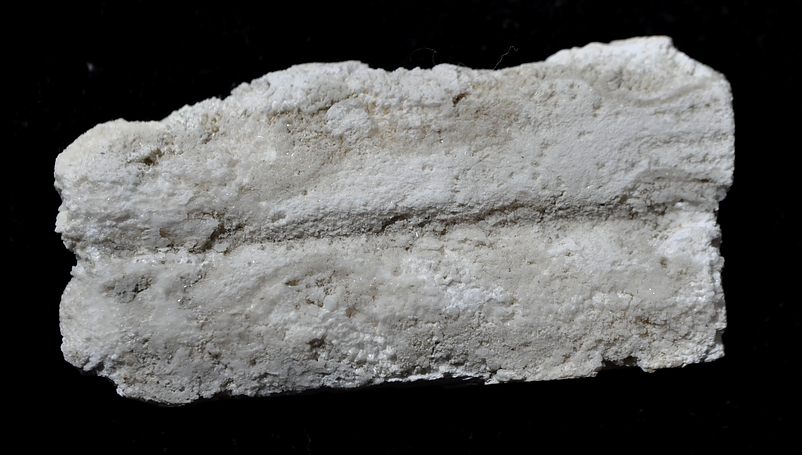

About Monetite

Formula:
Ca(PO3OH)
Colour:
White, yellow or colorless; colorless in transmitted light.
Lustre:
Sub-Vitreous, Resinous, Waxy
Hardness:
3½
Specific Gravity:
2.929
Crystal System:
Triclinic
Name:
Named by Charles Upham Shepard in 1882 for the type locality of Moneto Island, near Puerto Rico, Caribbean, one of the two islands where it was initially found. The locality name is sometimes given as Moneta Island or currently Monito Island.
This page provides mineralogical data about Monetite.
Unique Identifiers
Mindat ID:
2755
Long-form identifier:
mindat:1:1:2755:3
Similar Names
| Mundite | A valid IMA mineral species | Al(UO2)3(PO4)2(OH)3 · 5.5H2O |
IMA Classification of Monetite
Approved, 'Grandfathered' (first described prior to 1959)
Classification of Monetite
8.AD.10
8 : PHOSPHATES, ARSENATES, VANADATES
A : Phosphates, etc. without additional anions, without H2O
D : With only large cations
8 : PHOSPHATES, ARSENATES, VANADATES
A : Phosphates, etc. without additional anions, without H2O
D : With only large cations
Dana 7th ed.:
37.1.1.1
37.1.1.1
37 : ANHYDROUS ACID PHOSPHATES, ARSENATES AND VANADATES
1 : Miscellaneous
37 : ANHYDROUS ACID PHOSPHATES, ARSENATES AND VANADATES
1 : Miscellaneous
19.4.1
19 : Phosphates
4 : Phosphates of Ca
19 : Phosphates
4 : Phosphates of Ca
Mineral Symbols
As of 2021 there are now IMA–CNMNC approved mineral symbols (abbreviations) for each mineral species, useful for tables and diagrams.
| Symbol | Source | Reference for Standard |
|---|---|---|
| Mnti | IMA–CNMNC | Warr, L.N. (2021). IMA–CNMNC approved mineral symbols. Mineralogical Magazine, 85(3), 291-320. doi:10.1180/mgm.2021.43 |
Physical Properties of Monetite
Sub-Vitreous, Resinous, Waxy
Transparency:
Translucent
Comment:
Formerly given inaccurately as vitreous
Colour:
White, yellow or colorless; colorless in transmitted light.
Streak:
Colorless to white
Hardness:
3½ on Mohs scale
Tenacity:
Brittle
Cleavage:
Imperfect/Fair
On three unspecified planes.
On three unspecified planes.
Fracture:
Irregular/Uneven
Density:
2.929 g/cm3 (Measured) 2.924 g/cm3 (Calculated)
Comment:
Measured value on artificial material.
Optical Data of Monetite
Type:
Biaxial (+/-)
RI values:
nα = 1.587 - 1.6 nβ = 1.615 nγ = 1.631 - 1.64
2V:
Measured: 70° , Calculated: 74°
Birefringence:
0.043
Max. Birefringence:
δ = 0.040 - 0.044
Based on recorded range of RI values above.
Based on recorded range of RI values above.
Interference Colours:
The colours simulate birefringence patterns seen in thin section under crossed polars. They do not take into account mineral colouration or opacity.
Michel-Levy Bar The default colours simulate the birefringence range for a 30 µm thin-section thickness. Adjust the slider to simulate a different thickness.
Grain Simulation You can rotate the grain simulation to show how this range might look as you rotated a sample under crossed polars. Each grain retains its interference colour (retardation) while its brightness falls to black at extinction and reaches a maximum between extinction positions.
The colours simulate birefringence patterns seen in thin section under crossed polars. They do not take into account mineral colouration or opacity.
Michel-Levy Bar The default colours simulate the birefringence range for a 30 µm thin-section thickness. Adjust the slider to simulate a different thickness.
Grain Simulation You can rotate the grain simulation to show how this range might look as you rotated a sample under crossed polars. Each grain retains its interference colour (retardation) while its brightness falls to black at extinction and reaches a maximum between extinction positions.
Surface Relief:
Moderate
Dispersion:
r > v strong
Optical Extinction:
Inclined
Chemistry of Monetite
Mindat Formula:
Ca(PO3OH)
Element Weights:
Elements listed:
Crystallography of Monetite
Crystal System:
Triclinic
Class (H-M):
1 - Pinacoidal
Cell Parameters:
a = 6.91 Å, b = 6.627 Å, c = 6.998 Å
α = 96.34°, β = 103.82°, γ = 88.33°
α = 96.34°, β = 103.82°, γ = 88.33°
Ratio:
a:b:c = 1.043 : 1 : 1.056
Unit Cell V:
309.28 ų (Calculated from Unit Cell)
Z:
4
Morphology:
Minute crystals forming massive aggregates; crusts, stalactites with rough crystalline surfaces. Crystals have rough surfaces and are frequently configured in interpenetrating groups; commonly flattened {010} with a rhombohedral outline.
Comment:
AC(B) 33:1223 (1977), also JCPDS 9-80 (synthetic)
Crystal Structure
Load
Unit Cell | Unit Cell Packed
2x2x2 | 3x3x3 | 4x4x4
Unit Cell | Unit Cell Packed
2x2x2 | 3x3x3 | 4x4x4
Show
Big Balls | Small Balls | Just Balls | Spacefill
Polyhedra Off | Si Polyhedra | All Polyhedra
Remove metal-metal sticks
Big Balls | Small Balls | Just Balls | Spacefill
Polyhedra Off | Si Polyhedra | All Polyhedra
Remove metal-metal sticks
Display Options
Black Background | White Background
Perspective On | Perspective Off
2D | Stereo | Red-Blue | Red-Cyan
Black Background | White Background
Perspective On | Perspective Off
2D | Stereo | Red-Blue | Red-Cyan
View
CIF File Best | x | y | z | a | b | c
CIF File Best | x | y | z | a | b | c
Rotation
Stop | Start
Stop | Start
Labels
Console Off | On | Grey | Yellow
Console Off | On | Grey | Yellow
Data courtesy of the American Mineralogist Crystal Structure Database. Click on an AMCSD ID to view structure
| ID | Species | Reference | Link | Year | Locality | Pressure (GPa) | Temp (K) |
|---|---|---|---|---|---|---|---|
| 0009584 | Monetite | Catti M, Ferraris G, Filhol A (1977) Hydrogen bonding in the crystalline state. CaHPO4 (monetite), P-1 or P1? A novel neutron diffraction study Acta Crystallographica B33 1223-1229 |  | 1977 | Synthetic | 0 | 293 |
CIF Raw Data - click here to close
X-Ray Powder Diffraction
Loading XRD data...
Data courtesy of RRUFF project at University of Arizona, used with permission.
Powder Diffraction Data:
| d-spacing | Intensity |
|---|---|
| 3.37 Å | (70) |
| 3.35 Å | (80) |
| 3.13 Å | (20) |
| 2.96 Å | (100) |
| 2.94 Å | (40) |
| 2.75 Å | (20) |
| 2.72 Å | (40) |
| 1.850 Å | (20) |
Comments:
JCPDS 9-80 (synthetic)
Geological Environment
Paragenetic Mode(s):
| Paragenetic Mode | Earliest Age (Ga) |
|---|---|
| Stage 7: Great Oxidation Event | <2.4 |
| 47a : [Near-surface hydration of prior minerals] | |
| 47c : [Carbonates, phosphates, borates, nitrates] | |
| Stage 10a: Neoproterozoic oxygenation/terrestrial biosphere | <0.6 |
| 49 : Oxic cellular biomineralization (see also #44) | <0.54 |
| 52 : Guano- and urine-derived minerals | <0.4 |
Type Occurrence of Monetite
Geological Setting of Type Material:
Formed by the interaction of bird guano in a limestone cave.
Synonyms of Monetite
Glaubapatite (in part)
Other Language Names for Monetite
Common Associates
Associations Based on Photo Data:
| 1 photo of Monetite associated with Newberyite | Mg(PO3OH) · 3H2O |
Related Minerals - Strunz-mindat Grouping
| 8.AD. | 'Unnamed (Monoclinic polymorph of ximengite)' | Bi(PO4) |
| 8.AD. | Keplerite | Ca9(Ca0.5◻0.5)Mg(PO4)7 |
| 8.AD. | Mazorite | Ba3(PO4)2 |
| 8.AD. | Deynekoite | Ca9◻Fe3+(PO4)7 |
| 8.AD. | Monazite-(Gd) | Gd(PO4) |
| 8.AD.05 | Nahpoite | Na2(PO3OH) |
| 8.AD.10 | Weilite | Ca(HAsO4) |
| 8.AD.10 | Švenekite | Ca(H2AsO4)2 |
| 8.AD.15 | Archerite | (K,NH4)(H2PO4) |
| 8.AD.15 | Biphosphammite | NH4(H2PO4) |
| 8.AD.20 | Phosphammite | (NH4)2(PO3OH) |
| 8.AD.25 | Buchwaldite | NaCa(PO4) |
| 8.AD.30 | Schulténite | Pb(HAsO4) |
| 8.AD.35 | Dreyerite | Bi(VO4) |
| 8.AD.35 | Wakefieldite-(La) | La(VO4) |
| 8.AD.35 | Anningite-(Ce) | (Ca0.5Ce4+0.5)(VO4) |
| 8.AD.35 | Pretulite | Sc(PO4) |
| 8.AD.35 | Wakefieldite-(Ce) | Ce(VO4) |
| 8.AD.35 | Wakefieldite-(Y) | Y(VO4) |
| 8.AD.35 | Xenotime-(Yb) | Yb(PO4) |
| 8.AD.35 | 'Chernovite-(Ce)' | (Ce,Y)(AsO4) |
| 8.AD.35 | Xenotime-(Gd) | Gd(PO4) |
| 8.AD.35 | Chernovite-(Y) | Y(AsO4) |
| 8.AD.35 | Xenotime-(Y) | Y(PO4) |
| 8.AD.35 | Wakefieldite-(Nd) | Nd(VO4) |
| 8.AD.40 | Pucherite | Bi(VO4) |
| 8.AD.45 | Ximengite | Bi(PO4) |
| 8.AD.50 | 'UM2005-35-VO:CaFePSiTh' | (Th,Ca)(VO4,SiO4,PO4) |
| 8.AD.50 | Rooseveltite | Bi(AsO4) |
| 8.AD.50 | Gasparite-(Ce) | Ce(AsO4) |
| 8.AD.50 | Monazite-(Sm) | Sm(PO4) |
| 8.AD.50 | Monazite-(Ce) | Ce(PO4) |
| 8.AD.50 | Monazite-(La) | La(PO4) |
| 8.AD.50 | Monazite-(Nd) | Nd(PO4) |
| 8.AD.50 | Gasparite-(La) | La(AsO4) |
| 8.AD.50 | Cheralite | CaTh(PO4)2 |
| 8.AD.55 | Tetrarooseveltite | Bi(AsO4) |
| 8.AD.60 | Chursinite | [Hg2]2+Hg2+2[AsO4]2 |
| 8.AD.65 | Clinobisvanite | Bi(VO4) |
| 8.AD.70 | Gurimite | Ba3(VO4)2 |
| 8.AD.75 | Picaite | NaCa[AsO3OH][AsO2(OH)2] |
Fluorescence of Monetite
Not fluorescent
Other Information
Notes:
Powdered material takes up water from the atmosphere and forms Brushite.
Health Risks:
No information on health risks for this material has been entered into the database. You should always treat mineral specimens with care.
Internet Links for Monetite
mindat.org URL:
https://www.mindat.org/min-2755.html
Please feel free to link to this page.
Please feel free to link to this page.
Search Engines:
External Links:
Mineral Dealers:
References for Monetite
Reference List:
Larsen, E.S.; Berman, H. (1934) The microscopic determination of the nonopaque minerals. Bulletin of the US Geological Survey Vol. 848. US Geological Survey p.1-266. doi:10.3133/b848 p.111
Frondel, Clifford (1943) Mineralogy of the calcium phosphates in insular phosphate rock. American Mineralogist, 28 (4) 215-232
Murdoch, J. (1958) Phosphate minerals of the Borborema Pegmatites: II-Boqueirao. American Mineralogist, 43 (11-12) 1148-1156
Catherine, H., Skinner, W. (1970) Transition of calcium orthophosphate to pyrophosphate at elevated pressures. Materials Research Bulletin, 5 (6). 437-447 doi:10.1016/0025-5408(70)90083-8
Localities for Monetite
Showing 28 localities.
 symbol to view information about a locality.
The
symbol to view information about a locality.
The Locality List
 - This locality has map coordinates listed.
- This locality has estimated coordinates.
ⓘ - Click for references and further information on this occurrence.
? - Indicates mineral may be doubtful at this locality.
- This locality has map coordinates listed.
- This locality has estimated coordinates.
ⓘ - Click for references and further information on this occurrence.
? - Indicates mineral may be doubtful at this locality.
 - Good crystals or important locality for species.
 - World class for species or very significant.
(TL) - Type Locality for a valid mineral species.
(FRL) - First Recorded Locality for everything else (eg varieties).
- World class for species or very significant.
(TL) - Type Locality for a valid mineral species.
(FRL) - First Recorded Locality for everything else (eg varieties).
All localities listed without proper references should be considered as questionable.
Argentina | |
| Benedetto et al. (1998) |
Aruba | |
| Stienstra (1985) |
Australia | |
| Caves: processes +1 other reference |
Bahamas | |
| Onac B.P. et al. (2009) |
Brazil | |
| Piló et al. (2023) |
Chile | |
| XRD by Gerhard Möhn and Joy Desor |
China | |
| Xiyue Wang et al. (1987) |
Greece | |
| Skarpelis et al. (2009) |
Hungary | |
| |
Kazakhstan | |
| Sharygin (2022) |
Kiribati | |
| Gaines et al. (1997) | |
| Gaines et al. (1997) | |
Malaysia | |
| Bridge et al. (1983) |
Namibia | |
| von Bezing (2007) |
| U. Kolitsch (single-crystal X-ray diffraction) | |
Romania | |
| Dumitras D et al. (2004) |
| Onac et al. (2002) |
| Marincea et al. (2004) +1 other reference |
| Onac et al. (2003) |
Russia | |
| Sokol et al. (2022) |
Saint Helena, Ascension and Tristan da Cunha | |
| Frondel (1943) | |
South Korea | |
| Jun +4 other references |
Spain | |
| Muñoz-García |
USA | |
| Cohen et al. (1966) +4 other references |
| Bortolozzi (n.d.) |
| Shepard (1882) +3 other references |
| Palache et al. (1951) | |
Venezuela | |
| Frondel (1943) +1 other reference |
Quick NavTopAbout MonetiteUnique IdentifiersSimilar NamesIMA Classification Classification Mineral SymbolsPhysical Properties Optical Data Chemistry Crystallography Crystal StructureX-Ray Powder DiffractionGeological EnvironmentType Occurrence SynonymsOther LanguagesCommon AssociatesStrunz-MindatFluorescence Other InformationInternet Links References Localities Locality List

Mono Lake, Mono County, California, USA