
Foshagite
A valid IMA mineral species - grandfathered
This page is currently not sponsored. Click here to sponsor this page.
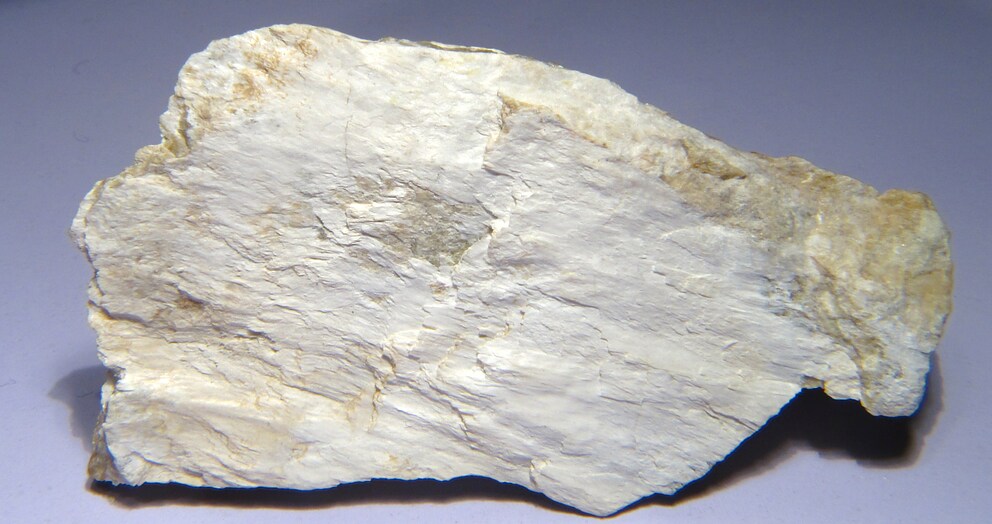


About Foshagite

William Frederick Foshag
Formula:
Ca4(Si3O9)(OH)2
Colour:
White
Lustre:
Silky
Hardness:
3
Specific Gravity:
2.73
Crystal System:
Triclinic
Name:
Named in 1925 by Arthur S. Eakle in honor of William Frederick Foshag [March 17, 1894 Sag Harbor, New York, USA - May 21, 1956 Westmoreland Hills, Maryland, USA], chemist and mineralogist, curator of minerals at the Smithsonian Institution.
Co-Type Localities:
Dimorph of:
This page provides mineralogical data about Foshagite.
Unique Identifiers
Mindat ID:
1585
Long-form identifier:
mindat:1:1:1585:7
IMA Classification of Foshagite
Approved, 'Grandfathered' (first described prior to 1959)
IMA Formula:
Ca4(SiO3)3(OH)2
First published:
1925
Classification of Foshagite
9.DG.15
9 : SILICATES (Germanates)
D : Inosilicates
G : Inosilicates with 3-periodic single and multiple chains
9 : SILICATES (Germanates)
D : Inosilicates
G : Inosilicates with 3-periodic single and multiple chains
65.2.2.1
65 : INOSILICATES Single-Width,Unbranched Chains,(W=1)
2 : Single-Width Unbranched Chains, W=1 with chains P=3
65 : INOSILICATES Single-Width,Unbranched Chains,(W=1)
2 : Single-Width Unbranched Chains, W=1 with chains P=3
14.5.13
14 : Silicates not Containing Aluminum
5 : Silicates of Ca
14 : Silicates not Containing Aluminum
5 : Silicates of Ca
Mineral Symbols
As of 2021 there are now IMA–CNMNC approved mineral symbols (abbreviations) for each mineral species, useful for tables and diagrams.
Please only use the official IMA–CNMNC symbol. Older variants are listed for historical use only.
Please only use the official IMA–CNMNC symbol. Older variants are listed for historical use only.
| Symbol | Source | Reference for Standard |
|---|---|---|
| Fos | IMA–CNMNC | Warr, L.N. (2021). IMA–CNMNC approved mineral symbols. Mineralogical Magazine, 85(3), 291-320. doi:10.1180/mgm.2021.43 |
| Siivolam & Schmid (2007) | Siivolam, J. and Schmid, R. (2007) Recommendations by the IUGS Subcommission on the Systematics of Metamorphic Rocks: List of mineral abbreviations. Web-version 01.02.07. IUGS Commission on the Systematics in Petrology. download | |
| Fos | Whitney & Evans (2010) | Whitney, D.L. and Evans, B.W. (2010) Abbreviations for names of rock-forming minerals. American Mineralogist, 95, 185–187 doi:10.2138/am.2010.3371 |
| Fos | The Canadian Mineralogist (2019) | The Canadian Mineralogist (2019) The Canadian Mineralogist list of symbols for rock- and ore-forming minerals (December 30, 2019). download |
| Fos | Warr (2020) | Warr, L.N. (2020) Recommended abbreviations for the names of clay minerals and associated phases. Clay Minerals, 55, 261–264 doi:10.1180/clm.2020.30 |
Physical Properties of Foshagite
Silky
Transparency:
Translucent
Colour:
White
Streak:
White
Hardness:
3 on Mohs scale
Tenacity:
Brittle
Cleavage:
Distinct/Good
Distinct {001}
Distinct {001}
Density:
2.73 g/cm3 (Measured) 2.74 g/cm3 (Calculated)
Comment:
Measured with a pycnometer
Optical Data of Foshagite
Type:
Biaxial (+)
RI values:
nα = 1.594 nβ = 1.594 nγ = 1.598
Max. Birefringence:
δ = 0.004
Based on recorded range of RI values above.
Based on recorded range of RI values above.
Interference Colours:
The colours simulate birefringence patterns seen in thin section under crossed polars. They do not take into account mineral colouration or opacity.
Michel-Levy Bar The default colours simulate the birefringence range for a 30 µm thin-section thickness. Adjust the slider to simulate a different thickness.
Grain Simulation You can rotate the grain simulation to show how this range might look as you rotated a sample under crossed polars. Each grain retains its interference colour (retardation) while its brightness falls to black at extinction and reaches a maximum between extinction positions.
The colours simulate birefringence patterns seen in thin section under crossed polars. They do not take into account mineral colouration or opacity.
Michel-Levy Bar The default colours simulate the birefringence range for a 30 µm thin-section thickness. Adjust the slider to simulate a different thickness.
Grain Simulation You can rotate the grain simulation to show how this range might look as you rotated a sample under crossed polars. Each grain retains its interference colour (retardation) while its brightness falls to black at extinction and reaches a maximum between extinction positions.
Surface Relief:
Moderate
Dispersion:
r > v strong
Chemistry of Foshagite
Mindat Formula:
Ca4(Si3O9)(OH)2
Element Weights:
Elements listed:
Common Impurities:
Al,Fe,Mg
Crystallography of Foshagite
Crystal System:
Triclinic
Class (H-M):
1 - Pinacoidal
Space Group:
P1
Cell Parameters:
a = 10.32 Å, b = 7.36 Å, c = 14.07 Å
β = 106.4°
β = 106.4°
Ratio:
a:b:c = 1.402 : 1 : 1.912
Unit Cell V:
nan ų (Calculated from Unit Cell)
Z:
2
Comment:
Monoclinic. Point Group: 2/m; 2; or m: Space Group: A-centered.
Crystal Structure
Load
Unit Cell | Unit Cell Packed
2x2x2 | 3x3x3 | 4x4x4
Unit Cell | Unit Cell Packed
2x2x2 | 3x3x3 | 4x4x4
Show
Big Balls | Small Balls | Just Balls | Spacefill
Polyhedra Off | Si Polyhedra | All Polyhedra
Remove metal-metal sticks
Big Balls | Small Balls | Just Balls | Spacefill
Polyhedra Off | Si Polyhedra | All Polyhedra
Remove metal-metal sticks
Display Options
Black Background | White Background
Perspective On | Perspective Off
2D | Stereo | Red-Blue | Red-Cyan
Black Background | White Background
Perspective On | Perspective Off
2D | Stereo | Red-Blue | Red-Cyan
View
CIF File Best | x | y | z | a | b | c
CIF File Best | x | y | z | a | b | c
Rotation
Stop | Start
Stop | Start
Labels
Console Off | On | Grey | Yellow
Console Off | On | Grey | Yellow
Data courtesy of the American Mineralogist Crystal Structure Database. Click on an AMCSD ID to view structure
| ID | Species | Reference | Link | Year | Locality | Pressure (GPa) | Temp (K) |
|---|---|---|---|---|---|---|---|
| 0009245 | Foshagite | Gard J A, Taylor H F W (1960) The crystal structure of foshagite Acta Crystallographica 13 785-793 |  | 1960 | Crestmore, California, USA | 0 | 293 |
CIF Raw Data - click here to close
X-Ray Powder Diffraction
Powder Diffraction Data:
| d-spacing | Intensity |
|---|---|
| 2.92 Å | (very very strong) |
| 1.74 Å | (very strong and broad) |
| 6.8 Å | (medium strong) |
| 4.95 Å | (medium strong) |
| 3.37 Å | (medium strong) |
| 2.30 Å | (medium strong) |
| 2.16 Å | (medium strong) |
Geological Environment
Paragenetic Mode(s):
| Paragenetic Mode | Earliest Age (Ga) |
|---|---|
| High-? alteration and/or metamorphism | |
| 31 : Thermally altered carbonate, phosphate, and iron formations | |
| Stage 10a: Neoproterozoic oxygenation/terrestrial biosphere | <0.6 |
| 51 : Pyrometamorphic minerals (see also #54 and #56) | <0.36 |
Type Occurrence of Foshagite
Co-Type Localities:
General Appearance of Type Material:
White veins of very compact fibrous structure with the fibers perfectly parallel and several inches long
Place of Conservation of Type Material:
National Museum of Natural History, Washington, D.C., USA, 95229
Geological Setting of Type Material:
Thermally altered limestone
Associated Minerals at Type Locality:
Other Language Names for Foshagite
Common Associates
Associations Based on Photo Data:
| 12 photos of Foshagite associated with Vesuvianite | Ca19Fe3+Al4(Al6Mg2)(◻4)◻[Si2O7]4[(SiO4)10]O(OH)9 |
| 5 photos of Foshagite associated with Calcite | CaCO3 |
| 3 photos of Foshagite associated with 'Blue Diopside' | CaMgSi2O6 |
| 3 photos of Foshagite associated with Monticellite | CaMg(SiO4) |
| 2 photos of Foshagite associated with Tilleyite | Ca5(Si2O7)(CO3)2 |
| 2 photos of Foshagite associated with Merwinite | Ca3Mg(SiO4)2 |
| 2 photos of Foshagite associated with Hillebrandite | Ca2(SiO3)(OH)2 |
| 2 photos of Foshagite associated with Grossular | Ca3Al2(SiO4)3 |
| 1 photo of Foshagite associated with Xonotlite | Ca6(Si6O17)(OH)2 |
Related Minerals - Strunz-mindat Grouping
| 9.DG. | Barrydawsonite-(Y) | Na1.5Y0.5CaSi3O8(OH) |
| 9.DG. | Paratobermorite | Ca5AlSi5O16(OH) · 5H2O |
| 9.DG. | Calcinaksite | KNaCa(Si4O10) · H2O |
| 9.DG. | Alvesite | NaKZrSi6O15 · 2H2O |
| 9.DG.02 | Steedeite | NaMn2[Si3BO9](OH)2 |
| 9.DG.02 | Nolzeite | NaMn2[Si3BO9](OH)2 · 2H2O |
| 9.DG.05 | Murakamiite | LiCa2Si3O8(OH) |
| 9.DG.05 | Serandite | NaMn2+2Si3O8(OH) |
| 9.DG.05 | Bustamite | CaMn2+(Si2O6) |
| 9.DG.05 | Pectolite | NaCa2Si3O8(OH) |
| 9.DG.05 | Tanohataite | LiMn2Si3O8(OH) |
| 9.DG.05 | Dalnegorskite | Ca5Mn2+(Si3O9)2 |
| 9.DG.05 | 'Wollastonite-1A' | CaSiO3 |
| 9.DG.05 | Wollastonite | Ca3(Si3O9) |
| 9.DG.05 | Ferrobustamite | CaFe2+(Si2O6) |
| 9.DG.05 | Schizolite | NaCaMnSi3O8(OH) |
| 9.DG.07 | Cascandite | CaScSi3O8(OH) |
| 9.DG.08 | Plombièrite | Ca5Si6O16(OH)2 · 7H2O |
| 9.DG.10 | Clinotobermorite | Ca5Si6O17 · 5H2O |
| 9.DG.10 | Riversideite | Ca5Si6O16(OH)2 · 2H2O |
| 9.DG.10 | Tobermorite | Ca5Si6O17 · 5H2O |
| 9.DG.12 | Jusite | Na2Ca15Al4Si16O54 · 17H2O |
| 9.DG.12 | Kenotobermorite | Ca4Si6O15(OH)2 · 5H2O |
| 9.DG.20 | Jennite | Ca9(Si3O9)2(OH)8 · 8H2O |
| 9.DG.20 | Kamenevite | K2TiSi3O9 · H2O |
| 9.DG.25 | Paraumbite | K3Zr2H(Si3O9)2 · nH2O |
| 9.DG.25 | Umbite | K2(Zr,Ti)Si3O9 · H2O |
| 9.DG.30 | Sørensenite | Na4SnBe2Si6O16(OH)4 |
| 9.DG.32 | Escheite | Ca2NaMnTi5[Si12O34]O2(OH)3 · 12H2O |
| 9.DG.35 | Xonotlite | Ca6(Si6O17)(OH)2 |
| 9.DG.40 | Hillebrandite | Ca2(SiO3)(OH)2 |
| 9.DG.45 | Zorite | Na8(Ti,Nb)5(Si6O17)2(OH,O)5 · 14H2O |
| 9.DG.45 | Chivruaiite | Ca4(Ti,Nb)5(Si6O17)2(OH,O)5 · 13-14H2O |
| 9.DG.50 | Haineaultite | (Na,Ca)5Ca(Ti,Nb)5(Si6O17)2(OH,F)8 · 5H2O |
| 9.DG.55 | Epididymite | Na2Be2Si6O15 · H2O |
| 9.DG.60 | Eudidymite | Na2Be2Si6O15 · H2O |
| 9.DG.65 | Elpidite | Na2ZrSi6O15 · 3H2O |
| 9.DG.65 | Patynite | NaKCa4[Si9O23] |
| 9.DG.67 | Whelanite | Cu2+2Ca6[Si6O17(OH)](CO3)(OH)3 · 2H2O |
| 9.DG.70 | Enricofrancoite | KNaCaSi4O10 |
| 9.DG.70 | Yusupovite | Na2Zr(Si6O15) · 2.5H2O |
| 9.DG.70 | Litidionite | KNaCuSi4O10 |
| 9.DG.70 | Fenaksite | (K,Na)4(Fe,Mn)2(Si4O10)2(OH,F) |
| 9.DG.70 | Manaksite | KNaMnSi4O10 |
| 9.DG.75 | Senkevichite | CsKNaCa2TiO[Si7O18](OH) |
| 9.DG.75 | Tinaksite | K2Na(Ca,Mn2+)2TiO[Si7O18(OH)] |
| 9.DG.75 | Tokkoite | K2Ca4[Si7O18(OH)](OH,F) |
| 9.DG.80 | Fluorcanasite | K3Na3Ca5Si12O30F4 · H2O |
| 9.DG.80 | Canasite | K3Na3Ca5Si12O30(OH)4 |
| 9.DG.85 | Miserite | K1.5-x(Ca,Y,REE)5(Si6O15)(Si2O7)(OH,F)2 · yH2O |
| 9.DG.90 | Frankamenite | K3Na3Ca5(Si12O30)(F,OH)4 · H2O |
| 9.DG.92 | Charoite | (K,Sr)15-16(Ca,Na)32[Si6O11(O,OH)6]2[Si12O18(O,OH)12]2[Si17O25(O,OH)18]2(OH,F)4 · ~3H2O |
| 9.DG.95 | Yuksporite | K4(Ca,Na)14(Sr,Ba)2(◻,Mn,Fe)(Ti,Nb)4(O,OH)4(Si6O17)2(Si2O7)3(H2O,OH)3 |
| 9.DG.97 | Eveslogite | (Na,K,Ca,Sr,Ba)48 [(Ti,Nb,Mn,Fe2+)12Si48O144(OH)12](F,OH,Cl)14 |
Other Information
Notes:
When the mineral is ignited to expel water it becomes a pale blue. Heated with the blowpipe it becomes incandescent and converted into a vitrified mass which is infusible. Easily soluble in HCl with abundant gelatinization.
Health Risks:
No information on health risks for this material has been entered into the database. You should always treat mineral specimens with care.
Foshagite in petrology
An essential component of rock names highlighted in red, an accessory component in rock names highlighted in green.
Internet Links for Foshagite
mindat.org URL:
https://www.mindat.org/min-1585.html
Please feel free to link to this page.
Please feel free to link to this page.
Search Engines:
External Links:
Mineral Dealers:
References for Foshagite
Reference List:
Eakle, Arthur S. (1925) Foshagite, a new silicate from Crestmore, California. American Mineralogist, 10 (4) 97-99
Gard, J. A., Taylor, H. F. W. (1958) Foshagite: composition, unit cell and dehydration. American Mineralogist, 43 (1-2) 1-15
GARD, J. A., TAYLOR, H. F. W. (1959) Crystal Structure of Foshagite (Ca4Si3O9(OH)2). Nature, 183 (4655). 171-173 doi:10.1038/183171b0
Gard, J. A., Taylor, H. F. W. (1960) The crystal structure of foshagite. Acta Crystallographica, 13 (10) 785-793 doi:10.1107/s0365110x60001898
Bailey, S. W. (1977) Report of the I.M.A.-I. U.Cr. Joint Committee on Nomenclature. American Mineralogist, 62 (5-6) 411-415
Localities for Foshagite
Showing 26 localities.
 symbol to view information about a locality.
The
symbol to view information about a locality.
The Locality List
 - This locality has map coordinates listed.
- This locality has estimated coordinates.
ⓘ - Click for references and further information on this occurrence.
? - Indicates mineral may be doubtful at this locality.
- This locality has map coordinates listed.
- This locality has estimated coordinates.
ⓘ - Click for references and further information on this occurrence.
? - Indicates mineral may be doubtful at this locality.
 - Good crystals or important locality for species.
 - World class for species or very significant.
(TL) - Type Locality for a valid mineral species.
(FRL) - First Recorded Locality for everything else (eg varieties).
- World class for species or very significant.
(TL) - Type Locality for a valid mineral species.
(FRL) - First Recorded Locality for everything else (eg varieties).
All localities listed without proper references should be considered as questionable.
Australia | |
| Analyses in prep |
| Henry (1999) |
Iraq | |
| Al-Hermezi et al. (1986) |
Israel | |
| Galuskin et al. (2015) |
Italy | |
| Zordan et al. (2008) |
Japan | |
| 3 +1 other reference |
| - (n.d.) |
| Bunno et al. (1982) |
| Harada et al. (2016) | |
| Henmi et al. (1978) +1 other reference |
Jordan | |
| Galuskina et al. (2019) |
Middle East | |
| Gross (1977) | |
New Zealand | |
| Baker et al. (1980) |
Palestine | |
| Galuskin et al. (2015) |
Romania | |
| Pascal et al. (2001) |
Russia | |
| Galuskin (2007) |
| Kislov +1 other reference | |
| Kislov +1 other reference | |
| American Mineralogist +1 other reference |
South Africa | |
| Buick (2000) | |
| Pohl et al. (1991) |
Turkey | |
| Armbruster et al. (2012) +1 other reference |
UK | |
| Agrell (1965) +1 other reference |
USA (TL) | |
| Eakle (1925) |
| Woodford et al. (1941) +5 other references |
| Wilson (1995) |
Quick NavTopAbout FoshagiteUnique IdentifiersIMA Classification Classification Mineral SymbolsPhysical Properties Optical Data Chemistry Crystallography Crystal StructureX-Ray Powder DiffractionGeological EnvironmentType Occurrence Other LanguagesCommon AssociatesStrunz-MindatOther InformationFoshagite in petrologyInternet Links References Localities Locality List

Crestmore quarries, Crestmore, Jurupa Valley, Riverside County, California, USA