
Steward Mine, Butte Mining District (Summit Valley Mining District), Silver Bow County, Montana, USAi
| Regional Level Types | |
|---|---|
| Steward Mine | Mine |
| Butte Mining District (Summit Valley Mining District) | Mining District |
| Silver Bow County | County |
| Montana | State |
| USA | Country |
This page is currently not sponsored. Click here to sponsor this page.

Latitude & Longitude (WGS84):
46° 1' 5'' North , 112° 32' 6'' West
Latitude & Longitude (decimal):
Type:
Köppen climate type:
Nearest Settlements:
| Place | Population | Distance |
|---|---|---|
| Butte | 34,190 (2011) | 1.6km |
| Walkerville | 700 (2017) | 1.8km |
| Butte-Silver Bow (Balance) | 33,525 (2013) | 16.0km |
| Warm Springs | 3,000 (2013) | 26.4km |
| Anaconda | 9,417 (2011) | 33.7km |
Other/historical names associated with this locality:
Stewart Mine
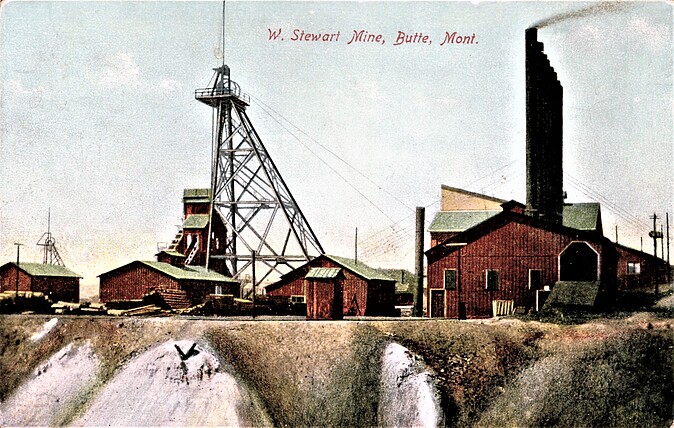
Located within the Butte National Landmark District, the Stewart (or Steward) is approximately 200 feet north of the intersection of North Main and Woolman Streets on the east side of the street. The headframe, main hoist house, and auxiliary hoist house remain on the Stewart mine site. The mine was one of the major mines on Butte Hill and had extensive surface facilities, most of which have been removed.
Erected in 1898, the headframe at West Stewart constitutes one of Butte's earliest examples of the larger headframes; the 126-foot headframe permitted the use of five-ton skips and a ten-foot diameter sheave wheel. The construction of this headframe resembles the one erected at the Original mine in 1902; the Gillette-Herzog Mfg. Co. of Minneapolis manufactured both headframes. The headframe was designed so ore could be shunted directly from ore cars via a tramway into loading bins, from which rail cars could be loaded. In later years the Anaconda Company abandoned this rail line and used trucks to haul ore to the Weed Concentrator (Harrier and Farnham 1930; Piper 1987).
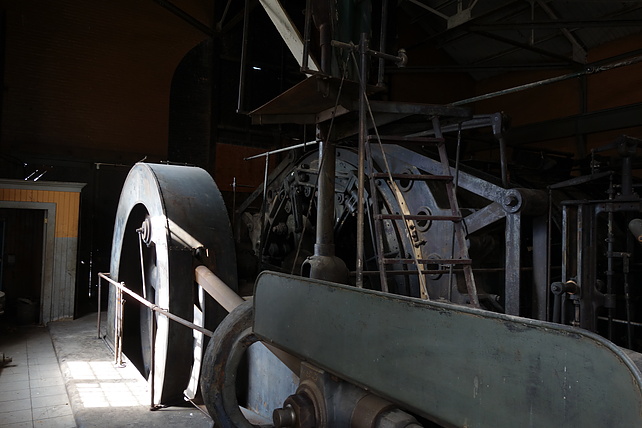
With the exception of the Original mine, the Stewart has the only remaining brick hoist house on the Butte hill. This brick hoist house was built between 1891 and 1906. In 1906 Clark replaced the steam hoist with one operated with compressed air. This became common practice on the Butte hill during the first decade of the twentieth century, and this retrofit could be accomplished with several minor adjustments, which included enlarging the engine cylinders. The tower at the rear of the hoist house contains a steam line (Shovers 1984; Piper 1987; Sanborn 1891; 1900; 1914).
The auxiliary hoist house contained the Bowser steam hoist, which was converted to operate on compressed air early in the twentieth century. The steel tank and smokestack located adjacent to the auxiliary hoist house on the west served as an exhaust for the steam-powered hoisting engine. Clark erected this building sometime between 1891 and 1906 (Piper 1987; Sanborn 1891; 1900; 1914).
The Stewart mine (aka West Stewart or Steward) was one of Butte's deepest and most productive copper-silver mines from the late 1890s until its closure in 1973. Although large-scale development did not begin at the West Stewart until the turn of the century, the original mining claim was actually patented several decades earlier. On August 9, 1877, William A. Clark, John W. Steward, Samuel F. Larabie, and Clark's brother, Joseph, filed on 10 acres known as the Steward lode. The Stewart vein, rich in silver ore, branches both east and west of the original lode, encompassing the Gagnon, Original and Parrot mine sites. The Clark Brothers initially developed the Steward lode from the East Stewart shaft beginning in the 1880s, working the vein sporadically with 10 to 30 men and reaching a depth of 330 feet by 1894. The miners worked the 2-compartment shaft using a Ledgerwood steam hoist.
Within the next six years, the Stewart grew from a small, insignificant operation into one of Butte's premier copper-silver mines. By 1895 W. A. Clark and his brothers, J. Ross and Joseph, operated the Original and the Colusa-Parrot, both located along the Stewart vein .
The miners made great advances in the Stewart shaft during the last years of the nineteenth century, reaching a depth of 600 feet in 1895, 800 feet in 1898, and 1000 feet in 1900, and a powerful E. P. Allis hoisting engine replaced the old engine. By 1900 Clark employed 140 men in the mine.
The first years of the twentieth century marked noticeable changes both above and below ground at the Stewart. In 1898 the 126-foot-tall steel headframe replaced the wooden one over the 1,300-foot-deep, 3-compartment shaft. Connections were driven between the Stewart and the other Clark mines, the Nipper, Parrot, and Original. That same year work continued on a shaft several hundred feet to the west, a mine that came to be known as the West Stewart. Clark employed 114 men to work this mine, who in one year's time advanced the shaft 650 feet, creating a shaft 1,100 feet deep that was served by a compressed air Nordberg hoist.
By 1905 the number of miners working underground had risen to 235, and the shaft reached a depth of 1,900 feet. Tunnels were driven, connecting the West Stewart with the Clear Grit and the Mountain Con. Trammers at the West Stewart still relied on horses to move ore from the stope to the shaft, while some of the Amalgamated mines had already shifted to electric locomotives. By this time work in the East Stewart had subsided, and the shaft was relegated to serve as a ventilation shaft for the more productive West Stewart. Even with improved ventilation, the Stewart remained one of the two hottest mines on the Butte hill (the Belmont being the worst), with temperatures as high as 1300°F in certain deep-level stopes.
On June 1, 1910, ownership transferred from W. A. Clark to the ACM Co. During the last months of Clark's dominion, ore hoisting was transferred from the Stewart to the Original mine. Six months later hoisting resumed at the Stewart, and ore mined at the Little Minah and the Clear Grit was hoisted through the Stewart shaft. In 1911 the ACM found a vein of high-grade ore on the 2,300-foot level and set their workforce of 479 men to the task of drifting in both directions from the shaft along the vein. By 1912 miners at the Stewart reached a depth of 2,500 feet using a hoisting system of three double-decked cages and 7-ton ore skips. The same year fire ravaged workings at the 1,700-foot level, but damage was confined to that single level, and work continued in stopes above and below. Although copper production fell off at the end of World War I, by 1920 the Stewart shaft reached a depth of 3,633 feet, making it ACM's deepest Butte mine.
During the next two decades low metal prices, strikes, and a nationwide economic depression temporarily halted mining at the Stewart mine. World War II demands for copper reactivated the Stewart, and for the next 20 years, the Stewart was a major producer. After the war, copper continued to be hoisted through the modern Kelley shaft located to the northeast. Miners connected the Stewart underground to the Kelley on the 3000-foot level so that ore mined in the Stewart could be raised through the Kelley, taking advantage of its larger skips and more powerful hoisting engine. Even after A. C. M. halted block caving in 1955 and turned to pit mining, miners continued to extract copper ore selectively in the Stewart underground until 1973, when underground operations ceased. Some experimental mining occurred in the Stewart until 1980. The Stewart shaft eventually reached a depth of 4,400 feet, making it one of Butte's longest operating and deepest copper mines (Shovers 1987).
Erected in 1898, the headframe at West Stewart constitutes one of Butte's earliest examples of the larger headframes; the 126-foot headframe permitted the use of five-ton skips and a ten-foot diameter sheave wheel. The construction of this headframe resembles the one erected at the Original mine in 1902; the Gillette-Herzog Mfg. Co. of Minneapolis manufactured both headframes. The headframe was designed so ore could be shunted directly from ore cars via a tramway into loading bins, from which rail cars could be loaded. In later years the Anaconda Company abandoned this rail line and used trucks to haul ore to the Weed Concentrator (Harrier and Farnham 1930; Piper 1987).
With the exception of the Original mine, the Stewart has the only remaining brick hoist house on the Butte hill. This brick hoist house was built between 1891 and 1906. In 1906 Clark replaced the steam hoist with one operated with compressed air. This became common practice on the Butte hill during the first decade of the twentieth century, and this retrofit could be accomplished with several minor adjustments, which included enlarging the engine cylinders. The tower at the rear of the hoist house contains a steam line (Shovers 1984; Piper 1987; Sanborn 1891; 1900; 1914).
The auxiliary hoist house contained the Bowser steam hoist, which was converted to operate on compressed air early in the twentieth century. The steel tank and smokestack located adjacent to the auxiliary hoist house on the west served as an exhaust for the steam-powered hoisting engine. Clark erected this building sometime between 1891 and 1906 (Piper 1987; Sanborn 1891; 1900; 1914).
The Stewart mine (aka West Stewart or Steward) was one of Butte's deepest and most productive copper-silver mines from the late 1890s until its closure in 1973. Although large-scale development did not begin at the West Stewart until the turn of the century, the original mining claim was actually patented several decades earlier. On August 9, 1877, William A. Clark, John W. Steward, Samuel F. Larabie, and Clark's brother, Joseph, filed on 10 acres known as the Steward lode. The Stewart vein, rich in silver ore, branches both east and west of the original lode, encompassing the Gagnon, Original and Parrot mine sites. The Clark Brothers initially developed the Steward lode from the East Stewart shaft beginning in the 1880s, working the vein sporadically with 10 to 30 men and reaching a depth of 330 feet by 1894. The miners worked the 2-compartment shaft using a Ledgerwood steam hoist.
Within the next six years, the Stewart grew from a small, insignificant operation into one of Butte's premier copper-silver mines. By 1895 W. A. Clark and his brothers, J. Ross and Joseph, operated the Original and the Colusa-Parrot, both located along the Stewart vein .
The miners made great advances in the Stewart shaft during the last years of the nineteenth century, reaching a depth of 600 feet in 1895, 800 feet in 1898, and 1000 feet in 1900, and a powerful E. P. Allis hoisting engine replaced the old engine. By 1900 Clark employed 140 men in the mine.
The first years of the twentieth century marked noticeable changes both above and below ground at the Stewart. In 1898 the 126-foot-tall steel headframe replaced the wooden one over the 1,300-foot-deep, 3-compartment shaft. Connections were driven between the Stewart and the other Clark mines, the Nipper, Parrot, and Original. That same year work continued on a shaft several hundred feet to the west, a mine that came to be known as the West Stewart. Clark employed 114 men to work this mine, who in one year's time advanced the shaft 650 feet, creating a shaft 1,100 feet deep that was served by a compressed air Nordberg hoist.
By 1905 the number of miners working underground had risen to 235, and the shaft reached a depth of 1,900 feet. Tunnels were driven, connecting the West Stewart with the Clear Grit and the Mountain Con. Trammers at the West Stewart still relied on horses to move ore from the stope to the shaft, while some of the Amalgamated mines had already shifted to electric locomotives. By this time work in the East Stewart had subsided, and the shaft was relegated to serve as a ventilation shaft for the more productive West Stewart. Even with improved ventilation, the Stewart remained one of the two hottest mines on the Butte hill (the Belmont being the worst), with temperatures as high as 1300°F in certain deep-level stopes.
On June 1, 1910, ownership transferred from W. A. Clark to the ACM Co. During the last months of Clark's dominion, ore hoisting was transferred from the Stewart to the Original mine. Six months later hoisting resumed at the Stewart, and ore mined at the Little Minah and the Clear Grit was hoisted through the Stewart shaft. In 1911 the ACM found a vein of high-grade ore on the 2,300-foot level and set their workforce of 479 men to the task of drifting in both directions from the shaft along the vein. By 1912 miners at the Stewart reached a depth of 2,500 feet using a hoisting system of three double-decked cages and 7-ton ore skips. The same year fire ravaged workings at the 1,700-foot level, but damage was confined to that single level, and work continued in stopes above and below. Although copper production fell off at the end of World War I, by 1920 the Stewart shaft reached a depth of 3,633 feet, making it ACM's deepest Butte mine.
During the next two decades low metal prices, strikes, and a nationwide economic depression temporarily halted mining at the Stewart mine. World War II demands for copper reactivated the Stewart, and for the next 20 years, the Stewart was a major producer. After the war, copper continued to be hoisted through the modern Kelley shaft located to the northeast. Miners connected the Stewart underground to the Kelley on the 3000-foot level so that ore mined in the Stewart could be raised through the Kelley, taking advantage of its larger skips and more powerful hoisting engine. Even after A. C. M. halted block caving in 1955 and turned to pit mining, miners continued to extract copper ore selectively in the Stewart underground until 1973, when underground operations ceased. Some experimental mining occurred in the Stewart until 1980. The Stewart shaft eventually reached a depth of 4,400 feet, making it one of Butte's longest operating and deepest copper mines (Shovers 1987).
Ref.: Rocks & Min.: 16:247.; Ore Deposits at Butte, Montana, R. H. Sales, 1914; Guidebook for the Butte Field Meeting of the Society Of Economic Geologists, 1973.
Select Mineral List Type
Standard Detailed Gallery Strunz Chemical ElementsDetailed Mineral List:
| ⓘ Aikinite Formula: CuPbBiS3 |
| ⓘ Albite Formula: Na(AlSi3O8) |
| ⓘ Albite var. Oligoclase Formula: (Na,Ca)[Al(Si,Al)Si2O8] |
| ⓘ Andalusite Formula: Al2(SiO4)O |
| ⓘ Anhydrite Formula: CaSO4 |
| ⓘ Ankerite Formula: Ca(Fe2+,Mg)(CO3)2 |
| ⓘ 'Apatite' Formula: Ca5(PO4)3A |
| ⓘ Baryte Formula: BaSO4 |
| ⓘ Betekhtinite Formula: Pb2(Cu,Fe)22-24S15 |
| ⓘ 'Biotite' Formula: K(Fe2+/Mg)2(Al/Fe3+/Mg/Ti)([Si/Al/Fe]2Si2O10)(OH/F)2 |
| ⓘ Bornite Formula: Cu5FeS4 Description: The Stewart is probably most famous for the bornite and tennatite specimens found there. I have one very interesting specimen consisting of a single needle of betekthinite to 1.5cm included within a translucent, doubly terminated calcite scalenohedron to |
| ⓘ Calcite Formula: CaCO3 Description: The Stewart is probably most famous for the bornite and tennatite specimens found there. I have one very interesting specimen consisting of a single needle of betekthinite to 1.5cm included within a translucent, doubly terminated calcite scalenohedron to References: |
| ⓘ Chalcocite Formula: Cu2S |
| ⓘ Chalcopyrite Formula: CuFeS2 |
| ⓘ 'Chlorite Group' |
| ⓘ Colusite Formula: Cu13VAs3S16 |
| ⓘ Corundum Formula: Al2O3 |
| ⓘ Corundum var. Sapphire Formula: Al2O3 |
| ⓘ Covellite Formula: CuS |
| ⓘ Digenite Formula: Cu9S5 |
| ⓘ Dolomite Formula: CaMg(CO3)2 |
| ⓘ Enargite Formula: Cu3AsS4 |
| ⓘ Fluorite Formula: CaF2 |
| ⓘ Galena Formula: PbS |
| ⓘ Hinsdalite Formula: PbAl3(PO4)(SO4)(OH)6 References: Guilbert, J., Zeihen, L.G. (1964) The mineralogy of the Butte district, Montana. Open-File Report 268. Montana Bureau of Mines and GeologyHinsdalite is permissable in the Intermediate Zone (includes the Steward Mine), Table 3-1. |
| ⓘ Hübnerite Formula: MnWO4 |
| ⓘ Magnetite Formula: Fe2+Fe3+2O4 |
| ⓘ Molybdenite Formula: MoS2 |
| ⓘ Muscovite Formula: KAl2(AlSi3O10)(OH)2 |
| ⓘ Muscovite var. Sericite Formula: KAl2(AlSi3O10)(OH)2 |
| ⓘ Native Silver Formula: Ag |
| ⓘ Orthoclase Formula: K(AlSi3O8) |
| ⓘ Pyrite Formula: FeS2 Description: The Stewart is probably most famous for the bornite and tennatite specimens found there. I have one very interesting specimen consisting of a single needle of betekthinite to 1.5cm included within a translucent, doubly terminated calcite scalenohedron to |
| ⓘ Quartz Formula: SiO2 Description: The Stewart is probably most famous for the bornite and tennatite specimens found there. I have one very interesting specimen consisting of a single needle of betekthinite to 1.5cm included within a translucent, doubly terminated calcite scalenohedron to |
| ⓘ Rhodochrosite Formula: MnCO3 |
| ⓘ Scheelite Formula: Ca(WO4) |
| ⓘ Siderite Formula: FeCO3 |
| ⓘ Sphalerite Formula: ZnS |
| ⓘ Stromeyerite Formula: AgCuS |
| ⓘ 'Tennantite Subgroup' Formula: Cu6(Cu4C2+2)As4S12S Description: The Stewart is probably most famous for the bornite and tennatite specimens found there. I have one very interesting specimen consisting of a single needle of betekthinite to 1.5cm included within a translucent, doubly terminated calcite scalenohedron to |
| ⓘ 'Tetrahedrite Subgroup' Formula: Cu6(Cu4C2+2)Sb4S12S |
| ⓘ Titanite Formula: CaTiO(SiO4) |
| ⓘ Uraninite ? Formula: UO2 |
| ⓘ Wittichenite Formula: Cu3BiS3 |
| ⓘ Wurtzite Formula: (Zn,Fe)S References: Daniel J. Evanich CollectionIdentification: Visual Identification |
Gallery:

List of minerals arranged by Strunz 10th Edition classification
| Group 1 - Elements | |||
|---|---|---|---|
| ⓘ | Native Silver | 1.AA.05 | Ag |
| Group 2 - Sulphides and Sulfosalts | |||
| ⓘ | Chalcocite | 2.BA.05 | Cu2S |
| ⓘ | Digenite | 2.BA.10 | Cu9S5 |
| ⓘ | Bornite | 2.BA.15 | Cu5FeS4 |
| ⓘ | Stromeyerite | 2.BA.40 | AgCuS |
| ⓘ | Betekhtinite | 2.BE.05 | Pb2(Cu,Fe)22-24S15 |
| ⓘ | Covellite | 2.CA.05a | CuS |
| ⓘ | Sphalerite | 2.CB.05a | ZnS |
| ⓘ | Chalcopyrite | 2.CB.10a | CuFeS2 |
| ⓘ | Colusite | 2.CB.30 | Cu13VAs3S16 |
| ⓘ | Wurtzite | 2.CB.45 | (Zn,Fe)S |
| ⓘ | Galena | 2.CD.10 | PbS |
| ⓘ | Molybdenite | 2.EA.30 | MoS2 |
| ⓘ | Pyrite | 2.EB.05a | FeS2 |
| ⓘ | Wittichenite | 2.GA.20 | Cu3BiS3 |
| ⓘ | 'Tennantite Subgroup' | 2.GB.05 | Cu6(Cu4C2+2)As4S12S |
| ⓘ | 'Tetrahedrite Subgroup' | 2.GB.05 | Cu6(Cu4C2+2)Sb4S12S |
| ⓘ | Aikinite | 2.HB.05a | CuPbBiS3 |
| ⓘ | Enargite | 2.KA.05 | Cu3AsS4 |
| Group 3 - Halides | |||
| ⓘ | Fluorite | 3.AB.25 | CaF2 |
| Group 4 - Oxides and Hydroxides | |||
| ⓘ | Magnetite | 4.BB.05 | Fe2+Fe3+2O4 |
| ⓘ | Corundum | 4.CB.05 | Al2O3 |
| ⓘ | var. Sapphire | 4.CB.05 | Al2O3 |
| ⓘ | Quartz | 4.DA.05 | SiO2 |
| ⓘ | Hübnerite | 4.DB.30 | MnWO4 |
| ⓘ | Uraninite ? | 4.DL.05 | UO2 |
| Group 5 - Nitrates and Carbonates | |||
| ⓘ | Calcite | 5.AB.05 | CaCO3 |
| ⓘ | Rhodochrosite | 5.AB.05 | MnCO3 |
| ⓘ | Siderite | 5.AB.05 | FeCO3 |
| ⓘ | Ankerite | 5.AB.10 | Ca(Fe2+,Mg)(CO3)2 |
| ⓘ | Dolomite | 5.AB.10 | CaMg(CO3)2 |
| Group 7 - Sulphates, Chromates, Molybdates and Tungstates | |||
| ⓘ | Anhydrite | 7.AD.30 | CaSO4 |
| ⓘ | Baryte | 7.AD.35 | BaSO4 |
| ⓘ | Scheelite | 7.GA.05 | Ca(WO4) |
| Group 8 - Phosphates, Arsenates and Vanadates | |||
| ⓘ | Hinsdalite | 8.BL.05 | PbAl3(PO4)(SO4)(OH)6 |
| Group 9 - Silicates | |||
| ⓘ | Andalusite | 9.AF.10 | Al2(SiO4)O |
| ⓘ | Titanite | 9.AG.15 | CaTiO(SiO4) |
| ⓘ | Muscovite | 9.EC.15 | KAl2(AlSi3O10)(OH)2 |
| ⓘ | var. Sericite | 9.EC.15 | KAl2(AlSi3O10)(OH)2 |
| ⓘ | Orthoclase | 9.FA.30 | K(AlSi3O8) |
| ⓘ | Albite | 9.FA.35 | Na(AlSi3O8) |
| ⓘ | var. Oligoclase | 9.FA.35 | (Na,Ca)[Al(Si,Al)Si2O8] |
| Unclassified | |||
| ⓘ | 'Biotite' | - | K(Fe2+/Mg)2(Al/Fe3+/Mg/Ti)([Si/Al/Fe]2Si2O10)(OH/F)2 |
| ⓘ | 'Chlorite Group' | - | |
| ⓘ | 'Apatite' | - | Ca5(PO4)3A |
List of minerals for each chemical element
| H | Hydrogen | |
|---|---|---|
| H | ⓘ Biotite | K(Fe2+/Mg)2(Al/Fe3+/Mg/Ti)([Si/Al/Fe]2Si2O10)(OH/F)2 |
| H | ⓘ Hinsdalite | PbAl3(PO4)(SO4)(OH)6 |
| H | ⓘ Muscovite | KAl2(AlSi3O10)(OH)2 |
| H | ⓘ Muscovite var. Sericite | KAl2(AlSi3O10)(OH)2 |
| C | Carbon | |
| C | ⓘ Ankerite | Ca(Fe2+,Mg)(CO3)2 |
| C | ⓘ Calcite | CaCO3 |
| C | ⓘ Dolomite | CaMg(CO3)2 |
| C | ⓘ Rhodochrosite | MnCO3 |
| C | ⓘ Siderite | FeCO3 |
| O | Oxygen | |
| O | ⓘ Albite | Na(AlSi3O8) |
| O | ⓘ Andalusite | Al2(SiO4)O |
| O | ⓘ Anhydrite | CaSO4 |
| O | ⓘ Ankerite | Ca(Fe2+,Mg)(CO3)2 |
| O | ⓘ Baryte | BaSO4 |
| O | ⓘ Biotite | K(Fe2+/Mg)2(Al/Fe3+/Mg/Ti)([Si/Al/Fe]2Si2O10)(OH/F)2 |
| O | ⓘ Calcite | CaCO3 |
| O | ⓘ Corundum | Al2O3 |
| O | ⓘ Dolomite | CaMg(CO3)2 |
| O | ⓘ Hinsdalite | PbAl3(PO4)(SO4)(OH)6 |
| O | ⓘ Hübnerite | MnWO4 |
| O | ⓘ Magnetite | Fe2+Fe23+O4 |
| O | ⓘ Muscovite | KAl2(AlSi3O10)(OH)2 |
| O | ⓘ Albite var. Oligoclase | (Na,Ca)[Al(Si,Al)Si2O8] |
| O | ⓘ Orthoclase | K(AlSi3O8) |
| O | ⓘ Quartz | SiO2 |
| O | ⓘ Rhodochrosite | MnCO3 |
| O | ⓘ Corundum var. Sapphire | Al2O3 |
| O | ⓘ Scheelite | Ca(WO4) |
| O | ⓘ Siderite | FeCO3 |
| O | ⓘ Titanite | CaTiO(SiO4) |
| O | ⓘ Uraninite | UO2 |
| O | ⓘ Muscovite var. Sericite | KAl2(AlSi3O10)(OH)2 |
| O | ⓘ Apatite | Ca5(PO4)3A |
| F | Fluorine | |
| F | ⓘ Biotite | K(Fe2+/Mg)2(Al/Fe3+/Mg/Ti)([Si/Al/Fe]2Si2O10)(OH/F)2 |
| F | ⓘ Fluorite | CaF2 |
| Na | Sodium | |
| Na | ⓘ Albite | Na(AlSi3O8) |
| Na | ⓘ Albite var. Oligoclase | (Na,Ca)[Al(Si,Al)Si2O8] |
| Mg | Magnesium | |
| Mg | ⓘ Ankerite | Ca(Fe2+,Mg)(CO3)2 |
| Mg | ⓘ Biotite | K(Fe2+/Mg)2(Al/Fe3+/Mg/Ti)([Si/Al/Fe]2Si2O10)(OH/F)2 |
| Mg | ⓘ Dolomite | CaMg(CO3)2 |
| Al | Aluminium | |
| Al | ⓘ Albite | Na(AlSi3O8) |
| Al | ⓘ Andalusite | Al2(SiO4)O |
| Al | ⓘ Biotite | K(Fe2+/Mg)2(Al/Fe3+/Mg/Ti)([Si/Al/Fe]2Si2O10)(OH/F)2 |
| Al | ⓘ Corundum | Al2O3 |
| Al | ⓘ Hinsdalite | PbAl3(PO4)(SO4)(OH)6 |
| Al | ⓘ Muscovite | KAl2(AlSi3O10)(OH)2 |
| Al | ⓘ Albite var. Oligoclase | (Na,Ca)[Al(Si,Al)Si2O8] |
| Al | ⓘ Orthoclase | K(AlSi3O8) |
| Al | ⓘ Corundum var. Sapphire | Al2O3 |
| Al | ⓘ Muscovite var. Sericite | KAl2(AlSi3O10)(OH)2 |
| Si | Silicon | |
| Si | ⓘ Albite | Na(AlSi3O8) |
| Si | ⓘ Andalusite | Al2(SiO4)O |
| Si | ⓘ Biotite | K(Fe2+/Mg)2(Al/Fe3+/Mg/Ti)([Si/Al/Fe]2Si2O10)(OH/F)2 |
| Si | ⓘ Muscovite | KAl2(AlSi3O10)(OH)2 |
| Si | ⓘ Albite var. Oligoclase | (Na,Ca)[Al(Si,Al)Si2O8] |
| Si | ⓘ Orthoclase | K(AlSi3O8) |
| Si | ⓘ Quartz | SiO2 |
| Si | ⓘ Titanite | CaTiO(SiO4) |
| Si | ⓘ Muscovite var. Sericite | KAl2(AlSi3O10)(OH)2 |
| P | Phosphorus | |
| P | ⓘ Hinsdalite | PbAl3(PO4)(SO4)(OH)6 |
| P | ⓘ Apatite | Ca5(PO4)3A |
| S | Sulfur | |
| S | ⓘ Aikinite | CuPbBiS3 |
| S | ⓘ Anhydrite | CaSO4 |
| S | ⓘ Baryte | BaSO4 |
| S | ⓘ Betekhtinite | Pb2(Cu,Fe)22-24S15 |
| S | ⓘ Bornite | Cu5FeS4 |
| S | ⓘ Chalcopyrite | CuFeS2 |
| S | ⓘ Chalcocite | Cu2S |
| S | ⓘ Colusite | Cu13VAs3S16 |
| S | ⓘ Covellite | CuS |
| S | ⓘ Digenite | Cu9S5 |
| S | ⓘ Enargite | Cu3AsS4 |
| S | ⓘ Galena | PbS |
| S | ⓘ Hinsdalite | PbAl3(PO4)(SO4)(OH)6 |
| S | ⓘ Molybdenite | MoS2 |
| S | ⓘ Pyrite | FeS2 |
| S | ⓘ Sphalerite | ZnS |
| S | ⓘ Stromeyerite | AgCuS |
| S | ⓘ Tennantite Subgroup | Cu6(Cu4C22+)As4S12S |
| S | ⓘ Tetrahedrite Subgroup | Cu6(Cu4C22+)Sb4S12S |
| S | ⓘ Wittichenite | Cu3BiS3 |
| S | ⓘ Wurtzite | (Zn,Fe)S |
| K | Potassium | |
| K | ⓘ Biotite | K(Fe2+/Mg)2(Al/Fe3+/Mg/Ti)([Si/Al/Fe]2Si2O10)(OH/F)2 |
| K | ⓘ Muscovite | KAl2(AlSi3O10)(OH)2 |
| K | ⓘ Orthoclase | K(AlSi3O8) |
| K | ⓘ Muscovite var. Sericite | KAl2(AlSi3O10)(OH)2 |
| Ca | Calcium | |
| Ca | ⓘ Anhydrite | CaSO4 |
| Ca | ⓘ Ankerite | Ca(Fe2+,Mg)(CO3)2 |
| Ca | ⓘ Calcite | CaCO3 |
| Ca | ⓘ Dolomite | CaMg(CO3)2 |
| Ca | ⓘ Fluorite | CaF2 |
| Ca | ⓘ Albite var. Oligoclase | (Na,Ca)[Al(Si,Al)Si2O8] |
| Ca | ⓘ Scheelite | Ca(WO4) |
| Ca | ⓘ Titanite | CaTiO(SiO4) |
| Ca | ⓘ Apatite | Ca5(PO4)3A |
| Ti | Titanium | |
| Ti | ⓘ Biotite | K(Fe2+/Mg)2(Al/Fe3+/Mg/Ti)([Si/Al/Fe]2Si2O10)(OH/F)2 |
| Ti | ⓘ Titanite | CaTiO(SiO4) |
| V | Vanadium | |
| V | ⓘ Colusite | Cu13VAs3S16 |
| Mn | Manganese | |
| Mn | ⓘ Hübnerite | MnWO4 |
| Mn | ⓘ Rhodochrosite | MnCO3 |
| Fe | Iron | |
| Fe | ⓘ Ankerite | Ca(Fe2+,Mg)(CO3)2 |
| Fe | ⓘ Betekhtinite | Pb2(Cu,Fe)22-24S15 |
| Fe | ⓘ Biotite | K(Fe2+/Mg)2(Al/Fe3+/Mg/Ti)([Si/Al/Fe]2Si2O10)(OH/F)2 |
| Fe | ⓘ Bornite | Cu5FeS4 |
| Fe | ⓘ Chalcopyrite | CuFeS2 |
| Fe | ⓘ Magnetite | Fe2+Fe23+O4 |
| Fe | ⓘ Pyrite | FeS2 |
| Fe | ⓘ Siderite | FeCO3 |
| Fe | ⓘ Wurtzite | (Zn,Fe)S |
| Cu | Copper | |
| Cu | ⓘ Aikinite | CuPbBiS3 |
| Cu | ⓘ Betekhtinite | Pb2(Cu,Fe)22-24S15 |
| Cu | ⓘ Bornite | Cu5FeS4 |
| Cu | ⓘ Chalcopyrite | CuFeS2 |
| Cu | ⓘ Chalcocite | Cu2S |
| Cu | ⓘ Colusite | Cu13VAs3S16 |
| Cu | ⓘ Covellite | CuS |
| Cu | ⓘ Digenite | Cu9S5 |
| Cu | ⓘ Enargite | Cu3AsS4 |
| Cu | ⓘ Stromeyerite | AgCuS |
| Cu | ⓘ Tennantite Subgroup | Cu6(Cu4C22+)As4S12S |
| Cu | ⓘ Tetrahedrite Subgroup | Cu6(Cu4C22+)Sb4S12S |
| Cu | ⓘ Wittichenite | Cu3BiS3 |
| Zn | Zinc | |
| Zn | ⓘ Sphalerite | ZnS |
| Zn | ⓘ Wurtzite | (Zn,Fe)S |
| As | Arsenic | |
| As | ⓘ Colusite | Cu13VAs3S16 |
| As | ⓘ Enargite | Cu3AsS4 |
| As | ⓘ Tennantite Subgroup | Cu6(Cu4C22+)As4S12S |
| Mo | Molybdenum | |
| Mo | ⓘ Molybdenite | MoS2 |
| Ag | Silver | |
| Ag | ⓘ Native Silver | Ag |
| Ag | ⓘ Stromeyerite | AgCuS |
| Sb | Antimony | |
| Sb | ⓘ Tetrahedrite Subgroup | Cu6(Cu4C22+)Sb4S12S |
| Ba | Barium | |
| Ba | ⓘ Baryte | BaSO4 |
| W | Tungsten | |
| W | ⓘ Hübnerite | MnWO4 |
| W | ⓘ Scheelite | Ca(WO4) |
| Pb | Lead | |
| Pb | ⓘ Aikinite | CuPbBiS3 |
| Pb | ⓘ Betekhtinite | Pb2(Cu,Fe)22-24S15 |
| Pb | ⓘ Galena | PbS |
| Pb | ⓘ Hinsdalite | PbAl3(PO4)(SO4)(OH)6 |
| Bi | Bismuth | |
| Bi | ⓘ Aikinite | CuPbBiS3 |
| Bi | ⓘ Wittichenite | Cu3BiS3 |
| U | Uranium | |
| U | ⓘ Uraninite | UO2 |
Other Regions, Features and Areas containing this locality
North AmericaContinent
- Rocky MountainsMountain Range
North America PlateTectonic Plate
- Great Falls DomainDomain
- Northern Rocky MountainsWide Rift
USA
- Western Phosphate fieldMineral Province
This page contains all mineral locality references listed on mindat.org. This does not claim to be a complete list. If you know of more minerals from this site, please register so you can add to our database. This locality information is for reference purposes only. You should never attempt to
visit any sites listed in mindat.org without first ensuring that you have the permission of the land and/or mineral rights holders
for access and that you are aware of all safety precautions necessary.

Steward Mine, Butte Mining District, Silver Bow County, Montana, USA