
Yoshimuraite
A valid IMA mineral species
This page is currently not sponsored. Click here to sponsor this page.


About Yoshimuraite

Toyofumi Yoshimura
Formula:
Ba2Mn2Ti(Si2O7)(PO4)O(OH)
Colour:
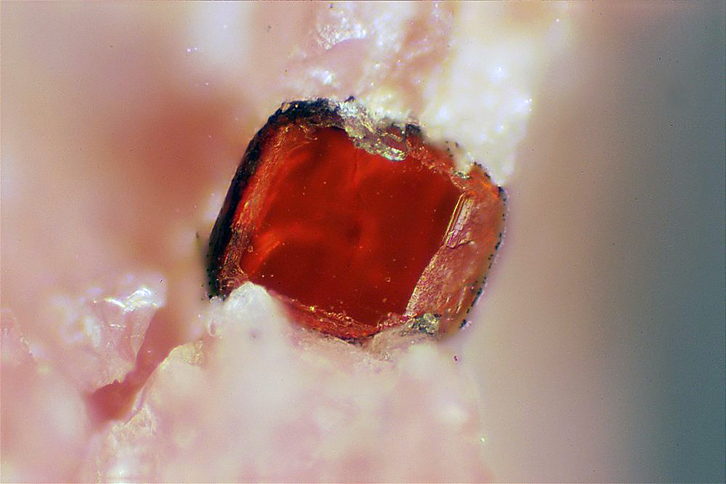
Orange-brown, red, dark brown
Hardness:
4½
Specific Gravity:
4.13 - 4.2
Crystal System:
Triclinic
Member of:
Name:
Named in 1961 by Takeo Watanabe, Yoshio Takeuchi, and Jun Ito in honor of Toyofumi Yoshimura (吉村 豊文) (19 August 1905, Nara Prefecture - 25 November 1990), Professor of Mineralogy, Kyushu University, Japan. He specialized in manganese deposits of Japan.
Compositionally related to zinkgruvanite, i.e., close to being its TiP-, or Ti-PO4-analogue, but with different type of linkages.
Unique Identifiers
Mindat ID:
4365
Long-form identifier:
mindat:1:1:4365:2
IMA Classification of Yoshimuraite
Classification of Yoshimuraite
9.BE.42
9 : SILICATES (Germanates)
B : Sorosilicates
E : Si2O7 groups, with additional anions; cations in octahedral [6] and greater coordination
9 : SILICATES (Germanates)
B : Sorosilicates
E : Si2O7 groups, with additional anions; cations in octahedral [6] and greater coordination
58.2.6.1
58 : SOROSILICATES Insular, Mixed, Single, and Larger Tetrahedral Groups
2 : Insular, Mixed, Single, and Larger Tetrahedral Groups with cations in [6] and higher coordination; single and double groups (n = 1, 2)
58 : SOROSILICATES Insular, Mixed, Single, and Larger Tetrahedral Groups
2 : Insular, Mixed, Single, and Larger Tetrahedral Groups with cations in [6] and higher coordination; single and double groups (n = 1, 2)
17.10.26
17 : Silicates Containing other Anions
10 : Silicates with sulphate, molybdate or tungstate
17 : Silicates Containing other Anions
10 : Silicates with sulphate, molybdate or tungstate
Mineral Symbols
As of 2021 there are now IMA–CNMNC approved mineral symbols (abbreviations) for each mineral species, useful for tables and diagrams.
| Symbol | Source | Reference for Standard |
|---|---|---|
| Ysh | IMA–CNMNC | Warr, L.N. (2021). IMA–CNMNC approved mineral symbols. Mineralogical Magazine, 85(3), 291-320. doi:10.1180/mgm.2021.43 |
Physical Properties of Yoshimuraite
Transparency:
Translucent
Colour:
Orange-brown, red, dark brown
Hardness:
4½ on Mohs scale
Hardness Data:
Measured
Tenacity:
Brittle
Density:
4.13 - 4.2 g/cm3 (Measured) 4.21 g/cm3 (Calculated)
Optical Data of Yoshimuraite
Type:
Biaxial (+)
RI values:
nα = 1.763 nβ = 1.777 nγ = 1.785
2V:
Measured: 85° to 90°, Calculated: 72°
Max. Birefringence:
δ = 0.022
Based on recorded range of RI values above.
Based on recorded range of RI values above.
Interference Colours:
The colours simulate birefringence patterns seen in thin section under crossed polars. They do not take into account mineral colouration or opacity.
Michel-Levy Bar The default colours simulate the birefringence range for a 30 µm thin-section thickness. Adjust the slider to simulate a different thickness.
Grain Simulation You can rotate the grain simulation to show how this range might look as you rotated a sample under crossed polars. Each grain retains its interference colour (retardation) while its brightness falls to black at extinction and reaches a maximum between extinction positions.
The colours simulate birefringence patterns seen in thin section under crossed polars. They do not take into account mineral colouration or opacity.
Michel-Levy Bar The default colours simulate the birefringence range for a 30 µm thin-section thickness. Adjust the slider to simulate a different thickness.
Grain Simulation You can rotate the grain simulation to show how this range might look as you rotated a sample under crossed polars. Each grain retains its interference colour (retardation) while its brightness falls to black at extinction and reaches a maximum between extinction positions.
Surface Relief:
Very High (positive)
Relative to Canada balsam mounting medium (n ≈ 1.537).
Relative to Canada balsam mounting medium (n ≈ 1.537).
This shows the grain boundary and Becke line effect under plane-polarised
light, based on the contrast between this mineral's average refractive
index and the mounting medium. It does not take into account mineral
colouration.
In focus
Interference Figure:
This shows the idealized biaxial acute bisectrix (Bxa) interference figure
- the conoscopic view for a grain cut perpendicular to the acute bisectrix, using
this mineral's 2V. The two small white dots mark the melatopes - the points
where the two optic axes emerge - and are shown only when they fall within the
field of view. The coloured bands are isochromatics, and the dark bands are
isogyres.
Rotate the stage: at 0°/90° the isogyres form a cross through the melatopes; at 45° they pull apart into curved hyperbolas. That splitting on rotation - absent in a uniaxial figure - is the standard diagnostic test for telling biaxial minerals from uniaxial ones. If 2V is large, the melatopes may fall outside the field of view, as they often do at the microscope too.
Rotate the stage: at 0°/90° the isogyres form a cross through the melatopes; at 45° they pull apart into curved hyperbolas. That splitting on rotation - absent in a uniaxial figure - is the standard diagnostic test for telling biaxial minerals from uniaxial ones. If 2V is large, the melatopes may fall outside the field of view, as they often do at the microscope too.
Dispersion:
very strong
Comments:
X = bright yellow
Y = orange-brown
Z = brown
Y = orange-brown
Z = brown
Chemistry of Yoshimuraite
Mindat Formula:
Ba2Mn2Ti(Si2O7)(PO4)O(OH)
Element Weights:
Common Impurities:
Al,Fe,Zn,Mg,Ca,Na,K,H2O
Crystallography of Yoshimuraite
Crystal System:
Triclinic
Class (H-M):
1 - Pinacoidal
Space Group:
P1
Cell Parameters:
a = 7(1) Å, b = 14.71(2) Å, c = 5.39(1) Å
α = 93.52(2)°, β = 90.2(2)°, γ = 95.3(2)°
α = 93.52(2)°, β = 90.2(2)°, γ = 95.3(2)°
Ratio:
a:b:c = 0.476 : 1 : 0.366
Unit Cell V:
551.57 ų (Calculated from Unit Cell)
Z:
2
Twinning:
Polysynthetic on {010}, common.
Crystal Structure
Load
Unit Cell | Unit Cell Packed
2x2x2 | 3x3x3 | 4x4x4
Unit Cell | Unit Cell Packed
2x2x2 | 3x3x3 | 4x4x4
Show
Big Balls | Small Balls | Just Balls | Spacefill
Polyhedra Off | Si Polyhedra | All Polyhedra
Remove metal-metal sticks
Big Balls | Small Balls | Just Balls | Spacefill
Polyhedra Off | Si Polyhedra | All Polyhedra
Remove metal-metal sticks
Display Options
Black Background | White Background
Perspective On | Perspective Off
2D | Stereo | Red-Blue | Red-Cyan
Black Background | White Background
Perspective On | Perspective Off
2D | Stereo | Red-Blue | Red-Cyan
View
CIF File Best | x | y | z | a | b | c
CIF File Best | x | y | z | a | b | c
Rotation
Stop | Start
Stop | Start
Labels
Console Off | On | Grey | Yellow
Console Off | On | Grey | Yellow
Data courtesy of the American Mineralogist Crystal Structure Database. Click on an AMCSD ID to view structure
| ID | Species | Reference | Link | Year | Locality | Pressure (GPa) | Temp (K) |
|---|---|---|---|---|---|---|---|
| 0005651 | Yoshimuraite | McDonald A M, Grice J D, Chao G Y (2000) The crystal structure of yoshimuraite, a layered Ba-Mn-Ti silicophosphate, with comments on five-coordinated Ti The Canadian Mineralogist 38 649-656 |  | 2000 | 0 | 293 |
CIF Raw Data - click here to close
X-Ray Powder Diffraction
Powder Diffraction Data:
| d-spacing | Intensity |
|---|---|
| 4.90 Å | (60) |
| 4.11 Å | (40) |
| 3.40 Å | (100) |
| 3.24 Å | (60) |
| 3.13 Å | (40) |
| 2.94 Å | (100) |
| 2.78 Å | (60) |
Geological Environment
Paragenetic Mode(s):
| Paragenetic Mode | Earliest Age (Ga) |
|---|---|
| Stage 4b: Highly evolved igneous rocks | >3.0 |
| 35 : Ultra-alkali and agpaitic igneous rocks |
Type Occurrence of Yoshimuraite
General Appearance of Type Material:
Platy to bladed or tabular crystals, to 5 cm; in stellate groups and platy masses.
Place of Conservation of Type Material:
National Science Museum, Tokyo, Japan; The Natural History Museum, London, England; Harvard University, Cambridge, Massachusetts, USA; National Museum of Natural History, Washinton, DC, USA
Geological Setting of Type Material:
In the border facies of an alkalic pegmatite cutting a stratiform manganese deposit.
Associated Minerals at Type Locality:
Other Language Names for Yoshimuraite
Relationship of Yoshimuraite to other Species
Member of:
Other Members of Bafertisite Group:
| Bafertisite | Ba2Fe2+4Ti2(Si2O7)2O2(OH)2F2 | Tric. |
| Bobshannonite | Na2KBa(Mn,Na)8(Nb,Ti)4(Si2O7)4O4(OH)4(O,F)2 | Tric. |
| Bussenite | Na2Ba2Fe2+Ti(Si2O7)(CO3)(OH)3F | Tric. 1 : P1 |
| Cámaraite | Ba3Na(Fe2+,Mn)8Ti4(Si2O7)4O4(OH,F)7 | Tric. 1 |
| Hejtmanite | Ba2Mn2+4Ti2(Si2O7)2O2(OH)2F2 | Tric. 1 |
| Horiite | Ba2Mn2Mn4Ti2(Si2O7)2(PO4)2O2(OH)2 | Tric. 1 : P1 |
| Jinshajiangite | BaNaFe2+4Ti2(Si2O7)2O2(OH)2F | Tric. 1 : P1 |
| Perraultite | BaNaMn2+4Ti2(Si2O7)2O2(OH)2F | Tric. 1 |
Common Associates
Associations Based on Photo Data:
| 11 photos of Yoshimuraite associated with Rhodonite | CaMn3Mn[Si5O15] |
| 6 photos of Yoshimuraite associated with Richterite | Na(CaNa)Mg5(Si8O22)(OH)2 |
| 1 photo of Yoshimuraite associated with Rhodochrosite | MnCO3 |
| 1 photo of Yoshimuraite associated with Quartz | SiO2 |
| 1 photo of Yoshimuraite associated with Serandite | NaMn2+2Si3O8(OH) |
Related Minerals - Strunz-mindat Grouping
| 9.BE. | Zinkgruvanite | Ba4Mn2+4Fe3+2(Si2O7)2(SO4)2O2(OH)2 |
| 9.BE. | Calciomurmanite | (Na,◻)2Ca(Ti,Mg,Nb)4[Si2O7]2O2(OH,O)2(H2O)4 |
| 9.BE. | Cámaraite | Ba3Na(Fe2+,Mn)8Ti4(Si2O7)4O4(OH,F)7 |
| 9.BE. | Alfredcasparite | Sr2TiO(Si2O7) |
| 9.BE. | Batievaite-(Y) | Y2Ca2Ti(Si2O7)2(OH)2(H2O)4 |
| 9.BE. | Nacareniobsite-(Y) | Na3Ca3YNb(Si2O7)2OF3 |
| 9.BE. | Alexkuznetsovite-(Ce) | Ce2Mn(CO3)(Si2O7) |
| 9.BE. | Bobshannonite | Na2KBa(Mn,Na)8(Nb,Ti)4(Si2O7)4O4(OH)4(O,F)2 |
| 9.BE. | Paralomonosovite | Na6◻4Ti4(Si2O7)2[PO3OH][PO2(OH)2]O2(OF) |
| 9.BE. | Madeiraite | Na2Ca2Fe2Zr2(Si2O7)2O2F2 |
| 9.BE. | Bortolanite | Ca2(Ca1.5Zr0.5)Na(NaCa)Ti(Si2O7)2(OF)F2 |
| 9.BE. | Longshoushanite-(Ce) | Ce4MgAl2Ti2(Si2O7)2O8 |
| 9.BE. | Moxuanxueite | NaCa6Zr(Si2O7)2OF3 |
| 9.BE. | Delhuyarite-(Ce) | Ce4Mg(Fe3+,W)3◻(Si2O7)2O6(OH)2 |
| 9.BE. | Christofschäferite-(Ce) | Ce3CaMnTiFe3+Ti2(Si2O7)2O8 |
| 9.BE.X | Asimowite | Fe2+4O(Si2O7) |
| 9.BE. | Biraite-(La) | La2Fe2+(CO3)(Si2O7) |
| 9.BE. | Pilanesbergite | Na2Ca2Fe2Ti2(Si2O7)2O2F2 |
| 9.BE.02 | Wadsleyite | Mg4O(Si2O7) |
| 9.BE.02 | Ohtaniite | Mg3(Si0.5◻0.5)Si2O8 |
| 9.BE.05 | Lawsonite | CaAl2(Si2O7)(OH)2 · H2O |
| 9.BE.05 | Hennomartinite | SrMn3+2(Si2O7)(OH)2 · H2O |
| 9.BE.05 | Cortesognoite | CaV2(Si2O7)(OH)2 · H2O |
| 9.BE.05 | Noelbensonite | BaMn3+2(Si2O7)(OH)2 · H2O |
| 9.BE.05 | Itoigawaite | SrAl2(Si2O7)(OH)2 · H2O |
| 9.BE.07 | Ilvaite | CaFe3+Fe2+2(Si2O7)O(OH) |
| 9.BE.07 | Amamoorite | CaMn2+2Mn3+(Si2O7)O(OH) |
| 9.BE.07 | Manganilvaite | CaFe2+Fe3+Mn2+(Si2O7)O(OH) |
| 9.BE.10 | Suolunite | Ca2(H2Si2O7) · H2O |
| 9.BE.12 | Jaffeite | Ca6(Si2O7)(OH)6 |
| 9.BE.15 | Fresnoite | Ba2Ti(Si2O7)O |
| 9.BE.17 | Janhaugite | (Na,Ca)3(Mn2+,Fe2+)3(Ti,Zr,Nb)2(Si2O7)2O2(OH,F)2 |
| 9.BE.17 | Burpalite | Na2CaZr(Si2O7)F2 |
| 9.BE.17 | Niocalite | (Ca,Nb)4(Si2O7)(O,OH,F)2 |
| 9.BE.17 | Normandite | NaCa(Mn,Fe)(Ti,Nb,Zr)(Si2O7)OF |
| 9.BE.17 | Hiortdahlite | Na2Ca4(Ca0.5Zr0.5)Zr(Si2O7)2OF3 |
| 9.BE.17 | Låvenite | Na2Ca2Mn2Zr2(Si2O7)2O2F2 |
| 9.BE.17 | Cuspidine | Ca8(Si2O7)2F4 |
| 9.BE.17 | Wöhlerite | Na2Ca4ZrNb(Si2O7)2O3F |
| 9.BE.17 | Baghdadite | Ca6Zr2(Si2O7)2O4 |
| 9.BE.20 | Nacareniobsite-(Ce) | Na3Ca3(Ce,REE)Nb(Si2O7)2OF3 |
| 9.BE.20 | Roumaite | (Ca,Na,REE,◻)7(Nb,Ti)[Si2O7]2OF3 |
| 9.BE.20 | Rinkite-(Ce) | (Ca3Ce)Na(NaCa)Ti(Si2O7)2(OF)F2 |
| 9.BE.20 | Nacareniobsite-(Nd) | Ca2(CaNd)Na3Nb(Si2O7)2(OF)F2 |
| 9.BE.20 | Rinkite-(Y) | Na2Ca4YTi(Si2O7)2OF3 |
| 9.BE.20 | Mosandrite-(Ce) | (Ca3REE)[(H2O)2Ca0.5◻0.5]Ti(Si2O7)2(OH)2(H2O)2 |
| 9.BE.22 | Hainite-(Y) | Na2Ca4(Y,REE)Ti(Si2O7)2OF3 |
| 9.BE.22 | Rosenbuschite | Na6Ca6Zr3Ti(Si2O7)4O2F6 |
| 9.BE.22 | Götzenite | NaCa6Ti(Si2O7)2OF3 |
| 9.BE.22 | Fogoite-(Y) | Na3Ca2Y2Ti(Si2O7)2OF3 |
| 9.BE.22 | Kochite | Na3Ca2MnZrTi(Si2O7)2OF3 |
| 9.BE.23 | Dovyrenite | Ca6Zr(Si2O7)2(OH)4 |
| 9.BE.25 | Lamprophyllite | (Na,Mn2+)3(Sr,Na)2(Ti,Fe3+)3(Si2O7)2O2(OH,O,F)2 |
| 9.BE.25 | Seidozerite | Na4MnZr2Ti(Si2O7)2O2F2 |
| 9.BE.25 | Nabalamprophyllite | (BaNa)Ti2Na3Ti(Si2O7)2O2(OH)2 |
| 9.BE.25 | Schüllerite | Ba2Na(Mn,Ca)(Fe3+,Mg,Fe2+)2Ti2(Si2O7)2(O,F)4 |
| 9.BE.25 | Ericssonite | BaMn2+2Fe3+(Si2O7)O(OH) |
| 9.BE.25 | Grenmarite | Na4MnZr3(Si2O7)2O2F2 |
| 9.BE.25 | Kazanskyite | BaNa3Ti2Nb(Si2O7)2O2(OH)2(H2O)4 |
| 9.BE.25 | Saamite | Ba◻Na3Ti2Nb(Si2O7)2O2(OH)F(H2O)2 |
| 9.BE.25 | Emmerichite | Ba2Na(Na,Fe2+)2(Fe3+,Mg)Ti2(Si2O7)2O2F2 |
| 9.BE.25 | Barytolamprophyllite | (Ba,Na)2(Na,Ti,Fe3+)4Ti2(Si2O7)2O(OH,F) |
| 9.BE.25 | 'Ericssonite-2O' | BaMn2+2Fe3+(Si2O7)O(OH) |
| 9.BE.25 | Fluorbarytolamprophyllite | (Ba,Sr)2[(Na,Fe2+)3(Ti,Mg)F2][Ti2(Si2O7)2O2] |
| 9.BE.25 | Fluorlamprophyllite | Na3(SrNa)Ti3(Si2O7)2O2F2 |
| 9.BE.25 | Lileyite | Ba2(Na,Fe,Ca)3MgTi2(Si2O7)2O2F2 |
| 9.BE.27 | Kolskyite | CaNa2Ti4(Si2O7)2O4(H2O)7 |
| 9.BE.27 | Vigrishinite | NaZnTi4(Si2O7)2O3(OH)(H2O)4 |
| 9.BE.27 | Selivanovaite | NaFe3+Ti4(Si2O7)2O4(H2O)4 |
| 9.BE.27 | Murmanite | Na2Ti2(Si2O7)O2 · 2H2O |
| 9.BE.30 | Epistolite | (Na◻)Nb2Na3Ti(Si2O7)2O2(OH)2(H2O)4 |
| 9.BE.32 | Lomonosovite | Na5Ti2(Si2O7)(PO4)O2 |
| 9.BE.35 | Vuonnemite | Na11Ti4+Nb2(Si2O7)2(PO4)2O3(F,OH) |
| 9.BE.37 | Sobolevite | Na13Ca2Mn2Ti3(Si2O7)2(PO4)4O3F3 |
| 9.BE.40 | Ferroinnelite | Ba4Ti2Na(NaFe2+)Ti(Si2O7)2[(SO4)(PO4)]O2[O(OH)] |
| 9.BE.40 | Phosphoinnelite | Na3Ba4Ti3(Si2O7)2(PO4,SO4)2O2F |
| 9.BE.40 | Innelite | Ba4Ti2Na(NaMn2+)Ti(Si2O7)2[(SO4)(PO4)]O2[O(OH)] |
| 9.BE.42 | Horiite | Ba2Mn2Mn4Ti2(Si2O7)2(PO4)2O2(OH)2 |
| 9.BE.45 | Quadruphite | Na6Na2(CaNa)2Na2Ti2Na2Ti2(Si2O7)2(PO4)4O4F2 |
| 9.BE.47 | Polyphite | Na5(Na4Ca2)Ti2(Si2O7)(PO4)3O2F2 |
| 9.BE.50 | Shkatulkalite | Na2Nb2Na3Ti(Si2O7)2O2(FO)(H2O)4(H2O)3 |
| 9.BE.50 | Bornemanite | Na6BaTi2Nb(Si2O7)2(PO4)O2(OH)F |
| 9.BE.55 | Hejtmanite | Ba2Mn2+4Ti2(Si2O7)2O2(OH)2F2 |
| 9.BE.55 | Bykovaite | (Ba,Na,K)2(Na,Ti,Mn)4(Ti,Nb)2(Si2O7)2O2(H2O,F,OH)2 · 3.5H2O |
| 9.BE.55 | Nechelyustovite | (Ba,Sr,K)2(Na,Ti,Mn)4(Ti,Nb)2(Si2O7)2O2(O,H2O,F)2 · 4.5H2O |
| 9.BE.55 | Bafertisite | Ba2Fe2+4Ti2(Si2O7)2O2(OH)2F2 |
| 9.BE.60 | Delindeite | (Na,K)2(Ba,Ca)2(Ti,Fe,Al)3(Si2O7)2O2(OH)2 · 2H2O |
| 9.BE.62 | 'Orthochevkinite' | (Ce,La,Ca,Na,Th)4(Fe2+,Mg)2(Ti,Fe3+)3Si4O22 |
| 9.BE.62 va | 'Strontium Perrierite' | (Ce,Sr,La,Ca)4Fe2+(Ti,Zr,Fe)2Ti2(Si2O7)2O8 |
| 9.BE.62 | 'Chevkinite-(Nd)' | (Nd,REE)4(Fe2+,Mg)(Fe2+,Ti,Fe3+)2(Ti,Fe3+)2(Si2O7)2O8 ? |
| 9.BE.62 | 'Perrierite-(Nd)' | Nd4MgFe3+2Ti2(Si2O7)2O8 ? |
| 9.BE.65 | Bussenite | Na2Ba2Fe2+Ti(Si2O7)(CO3)(OH)3F |
| 9.BE.67 | Jinshajiangite | BaNaFe2+4Ti2(Si2O7)2O2(OH)2F |
| 9.BE.67 | Perraultite | BaNaMn2+4Ti2(Si2O7)2O2(OH)2F |
| 9.BE.70 | Dingdaohengite-(Ce) | (Ce,La)4Fe2+(Ti,Fe2+,Mg,Fe3+)2Ti2(Si2O7)2O8 |
| 9.BE.70 | Perrierite-(Ce) | Ce4MgFe3+2Ti2(Si2O7)2O8 |
| 9.BE.70 | Karnasurtite-(Ce) | (Ce,La,Th)(Ti,Nb)(Al,Fe)(Si2O7)(OH)4 · 3H2O |
| 9.BE.70 | Maoniupingite-(Ce) | (Ce,Ca)4(Fe3+,Ti,Fe2+,◻)(Ti,Fe3+,Fe2+,Nb)4(Si2O7)2O8 |
| 9.BE.70 | Matsubaraite | Sr4Ti5(Si2O7)2O8 |
| 9.BE.70 | Rengeite | Sr4ZrTi4(Si2O7)2O8 |
| 9.BE.70 | Polyakovite-(Ce) | (Ce,Ca)4(Mg,Fe2+)(Cr3+,Fe3+)2(Ti,Nb)2(Si2O7)2O8 |
| 9.BE.70 | Hezuolinite | (Sr,REE)4Zr(Ti,Fe3+)4(Si2O7)2O8 |
| 9.BE.70 | 'UM2008-53-SiO:SrTiZr' | Sr4ZrTi4(Si2O7)2O8 |
| 9.BE.70 | Chevkinite-(Ce) | Ce4(Ti,Fe2+,Fe3+)5O8(Si2O7)2 |
| 9.BE.70 | Perrierite-(La) | (La,Ce,Ca)4(Fe2+,Mn)(Ti,Fe3+,Al)4[(Si2O7)O4]2 |
| 9.BE.70 | Strontiochevkinite | (Sr,La,Ce,Ca)4Fe2+(Ti,Zr)2Ti2(Si2O7)2O8 |
| 9.BE.72 | Fersmanite | Ca4(Na,Ca)4(Ti,Nb)4(Si2O7)2O8F3 |
| 9.BE.75 | Belkovite | Ba3(Nb,Ti)6(Si2O7)2O12 |
| 9.BE.77 | Nasonite | Pb6Ca4(Si2O7)3Cl2 |
| 9.BE.80 | Melanotekite | Pb2Fe3+2(Si2O7)O2 |
| 9.BE.80 | Kentrolite | Pb2Mn3+2(Si2O7)O2 |
| 9.BE.82 | Alexkuznetsovite-(La) | La2Mn(CO3)(Si2O7) |
| 9.BE.82 | Tilleyite | Ca5(Si2O7)(CO3)2 |
| 9.BE.85 | Killalaite | Ca6.4(H0.6Si2O7)2(OH)2 |
| 9.BE.87 | Stavelotite-(La) | (La,Nd,Ca)3Mn2+3Cu(Mn3+,Fe3+,Mn4+)26(Si2O7)6O30 |
| 9.BE.90 | Magnesiorowlandite-(Y) | Y4(Mg,Fe)(Si2O7)2F2 |
| 9.BE.90 | Biraite-(Ce) | Ce2Fe2+(Si2O7)(CO3) |
| 9.BE.92 | Cervandonite-(Ce) | (Ce,Nd,La)(Fe3+,Fe2+,Ti,Al)3O2(Si2O7)(As3+O3)(OH) |
| 9.BE.92 | Chirvinskyite | (Na,Ca)13(Fe,Mn,◻)2(Ti,Zr)5(Si2O7)4(OH,O)12 · 2H2O |
| 9.BE.95 | Rusinovite | Ca10(Si2O7)3Cl2 |
| 9.BE.95 | Batisivite | BaV3+8Ti6(Si2O7)O22 |
| 9.BE.97 | Schlüterite-(Y) | (Y,REE)2AlSi2O7(OH)2F |
Other Information
Health Risks:
No information on health risks for this material has been entered into the database. You should always treat mineral specimens with care.
Internet Links for Yoshimuraite
mindat.org URL:
https://www.mindat.org/min-4365.html
Please feel free to link to this page.
Please feel free to link to this page.
Search Engines:
External Links:
Mineral Dealers:
References for Yoshimuraite
Reference List:
Watanabe, Takeo (1959) The minerals of the Noda-Tamagawa Mine, Iwate Prefecture, Japan. I. Notes on Geology and Parageneses of Minerals. Mineralogical Journal, 2 (6). 408-421 doi:10.2465/minerj1953.2.408
WATANABE, TAKEO, TAKÉUCHI, YOSHIO, ITO, JUN (1961) The minerals of the Noda-Tamagawa mine, Iwaté Prefecture, Japan. III. Yoshimuraite, a new barium-titanium-manganese silicate mineral. Mineralogical Journal, 3 (3). 156-167 doi:10.2465/minerj1953.3.156
IMA (1967) International Mineralogical Association: Commission on New Minerals and Mineral Names. Mineralogical Magazine and Journal of the Mineralogical Society, 36 (277) 131-136 doi:10.1180/minmag.1967.036.277.20
McDonald, A. M., Grice, J. D., Chao, G. Y. (2000) The crystal structure of yoshimuraite, a layered Ba–Mn–Ti silicophosphate, with comments on five–coordinated Ti4+. The Canadian Mineralogist, 38 (3). 649-656 doi:10.2113/gscanmin.38.3.649
Sokolova, E. (2006) From structure topology to chemical composition. I. Structural hierarchy and stereochemistry in titanium disilicate minerals. The Canadian Mineralogist, 44 (6) 1273-1330 doi:10.2113/gscanmin.44.6.1273
Sokolova, Elena, Cámara, Fernando (2014) From structure topology to chemical composition. XVII. Fe3+ versus Ti4+: The topology of the HOH layer in ericssonite-2O, Ba2Fe3+2Mn4(Si2O7)2O2(OH)2, ferroericssonite, Ba2Fe3+2Fe2+4(Si2O7)2O2(OH)2, and yoshimuraite, Ba4Ti4+2Mn4(Si2O7)2(PO4)2O2(OH)2. The Canadian Mineralogist, 52 (3) 569-576 doi:10.3749/canmin.52.3.569
Sokolova, E.; Cámara, F. (2017) The seidozerite supergroup of TS-block minerals: nomenclature and classification, with change of the following names: rinkite to rinkite-(Ce), mosandrite to mosandrite-(Ce), hainite to hainite-(Y) and innelite-1T to innelite-1A. Mineralogical Magazine, 81 (6). p.1457-1484. doi:10.1180/minmag.2017.081.010
Localities for Yoshimuraite
Showing 6 localities.
 symbol to view information about a locality.
The
symbol to view information about a locality.
The Locality List
 - This locality has map coordinates listed.
- This locality has estimated coordinates.
ⓘ - Click for references and further information on this occurrence.
? - Indicates mineral may be doubtful at this locality.
- This locality has map coordinates listed.
- This locality has estimated coordinates.
ⓘ - Click for references and further information on this occurrence.
? - Indicates mineral may be doubtful at this locality.
 - Good crystals or important locality for species.
 - World class for species or very significant.
(TL) - Type Locality for a valid mineral species.
(FRL) - First Recorded Locality for everything else (eg varieties).
- World class for species or very significant.
(TL) - Type Locality for a valid mineral species.
(FRL) - First Recorded Locality for everything else (eg varieties).
All localities listed without proper references should be considered as questionable.
Japan | |
| American Mineralogist: 85: 201. +1 other reference |
| Watanabe (1959) +3 other references |
| Pinch (1977) |
| luigi chiappino specimen | |
Romania | |
| Hirtopanu (2006) | |
| Paulina HIRTOPANU & Gheorghe UDUBASA (2015) +2 other references |
Quick NavTopAbout YoshimuraiteUnique IdentifiersIMA Classification Classification Mineral SymbolsPhysical Properties Optical Data Chemistry Crystallography Crystal StructureX-Ray Powder DiffractionGeological EnvironmentType Occurrence Other LanguagesRelationshipsCommon AssociatesStrunz-MindatOther InformationInternet Links References Localities Locality List

Taguchi mine, Shitara, Kitashitara County, Aichi Prefecture, Japan