
Florencite-(Sm)
A valid IMA mineral species
This page is currently not sponsored. Click here to sponsor this page.


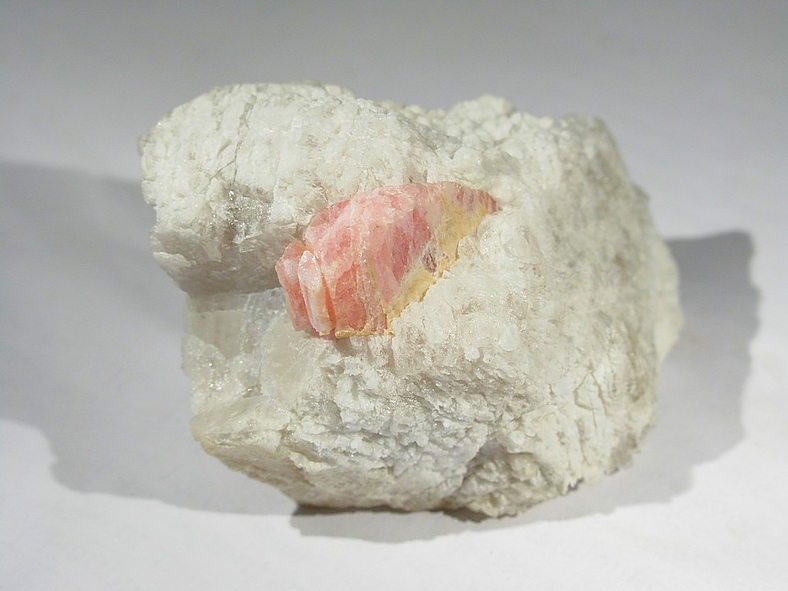


About Florencite-(Sm)
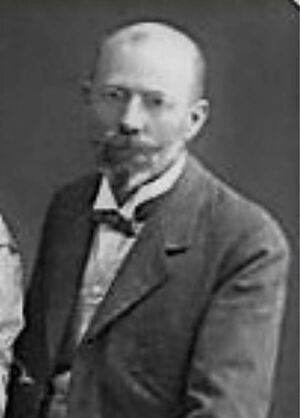
Guilherme Florence
Formula:
SmAl3(PO4)2(OH)6
Colour:
Colourless
Lustre:
Greasy
Hardness:
5½ - 6
Specific Gravity:
3.70
Crystal System:
Trigonal
Member of:
Name:
Named for its relationship to florencite (now florencite-(Ce)). The root name florencite is in honour of Dr. Guilherme (William) Florence (19 June 1864 - 5 October 1942), Brazilian mineralogist with the São Paulo Geographic and Geological Commission. He made a preliminary chemical examination of the mineral. The "-(Sm)" suffix was added in 1987 (Nickel and Mandarino), in allusion to samarium being the dominant REE in the composition.
Sm-analogue of Florencite-(Ce) and waylandite. Unique combination of elements. The first samarium-dominant mineral described, before the approval of monazite-(Sm) and allanite-(Sm).
Unique Identifiers
Mindat ID:
42495
Long-form identifier:
mindat:1:1:42495:0
Similar Names
| Florencite | A synonym | |
| Florencite-(Ce) | A valid IMA mineral species - grandfathered | CeAl3(PO4)2(OH)6 |
| Florencite-(La) | A valid IMA mineral species | LaAl3(PO4)2(OH)6 |
| Florencite-(Nd) | A valid IMA mineral species | NdAl3(PO4)2(OH)6 |
IMA Classification of Florencite-(Sm)
Classification of Florencite-(Sm)
8.BL.13
8 : PHOSPHATES, ARSENATES, VANADATES
B : Phosphates, etc., with additional anions, without H2O
L : With medium-sized and large cations, (OH, etc.):RO4 = 3:1
8 : PHOSPHATES, ARSENATES, VANADATES
B : Phosphates, etc., with additional anions, without H2O
L : With medium-sized and large cations, (OH, etc.):RO4 = 3:1
Mineral Symbols
As of 2021 there are now IMA–CNMNC approved mineral symbols (abbreviations) for each mineral species, useful for tables and diagrams.
| Symbol | Source | Reference for Standard |
|---|---|---|
| Flo-Sm | IMA–CNMNC | Warr, L.N. (2021). IMA–CNMNC approved mineral symbols. Mineralogical Magazine, 85(3), 291-320. doi:10.1180/mgm.2021.43 |
Physical Properties of Florencite-(Sm)
Greasy
Transparency:
Transparent
Colour:
Colourless
Comment:
Pale pink to pale yellow in aggregates.
Streak:
White
Hardness:
5½ - 6 on Mohs scale
Tenacity:
Brittle
Cleavage:
Distinct/Good
on {0001}
on {0001}
Parting:
Observed parallel to {1120}.
Fracture:
Irregular/Uneven
Density:
3.70(1) g/cm3 (Measured) 3.743 g/cm3 (Calculated)
Optical Data of Florencite-(Sm)
Type:
Uniaxial (+)
RI values:
nω = 1.704(2) nε = 1.713(2)
Max. Birefringence:
δ = 0.009
Based on recorded range of RI values above.
Based on recorded range of RI values above.
Interference Colours:
The colours simulate birefringence patterns seen in thin section under crossed polars. They do not take into account mineral colouration or opacity.
Michel-Levy Bar The default colours simulate the birefringence range for a 30 µm thin-section thickness. Adjust the slider to simulate a different thickness.
Grain Simulation You can rotate the grain simulation to show how this range might look as you rotated a sample under crossed polars. Each grain retains its interference colour (retardation) while its brightness falls to black at extinction and reaches a maximum between extinction positions.
The colours simulate birefringence patterns seen in thin section under crossed polars. They do not take into account mineral colouration or opacity.
Michel-Levy Bar The default colours simulate the birefringence range for a 30 µm thin-section thickness. Adjust the slider to simulate a different thickness.
Grain Simulation You can rotate the grain simulation to show how this range might look as you rotated a sample under crossed polars. Each grain retains its interference colour (retardation) while its brightness falls to black at extinction and reaches a maximum between extinction positions.
Surface Relief:
Very High (positive)
Relative to Canada balsam mounting medium (n ≈ 1.537).
Relative to Canada balsam mounting medium (n ≈ 1.537).
This shows the grain boundary and Becke line effect under plane-polarised
light, based on the contrast between this mineral's average refractive
index and the mounting medium. It does not take into account mineral
colouration.
In focus
Interference Figure:
This shows the idealized uniaxial interference figure - the conoscopic
(convergent-light, Bertrand-lens-in) view, for a grain cut with the optic axis
centred and vertical. The coloured rings are isochromatics, computed with the
same physics as the Michel-Lévy bar above; the dark cross is the isogyre.
For a genuinely uniaxial mineral viewed this way, that cross stays perfectly stationary if you rotate the stage - unlike a biaxial mineral, where it splits apart on rotation. That invariance is itself the standard diagnostic test for telling uniaxial and biaxial minerals apart at the microscope.
For a genuinely uniaxial mineral viewed this way, that cross stays perfectly stationary if you rotate the stage - unlike a biaxial mineral, where it splits apart on rotation. That invariance is itself the standard diagnostic test for telling uniaxial and biaxial minerals apart at the microscope.
Pleochroism:
Non-pleochroic
Chemistry of Florencite-(Sm)
Mindat Formula:
SmAl3(PO4)2(OH)6
Element Weights:
Crystallography of Florencite-(Sm)
Crystal System:
Trigonal
Class (H-M):
3m(32/m) - Hexagonal Scalenohedral
Space Group:
R3m
Cell Parameters:
a = 6.972(4) Å, c = 16.182(7) Å
Ratio:
a:c = 1 : 2.321
Unit Cell V:
681.2 ų
Z:
3
Morphology:
In the inner part of acute rhombohedral florencite-(Ce) crystals.
X-Ray Powder Diffraction
Powder Diffraction Data:
| d-spacing | Intensity |
|---|---|
| 5.65 Å | (43) |
| 3.479 Å | (37) |
| 2.925 Å | (100) |
| 2.191 Å | (22) |
| 2.161 Å | (46) |
| 1.881 Å | (58) |
| 1.738 Å | (20) |
Geological Environment
Paragenetic Mode(s):
| Paragenetic Mode | Earliest Age (Ga) |
|---|---|
| Stage 7: Great Oxidation Event | <2.4 |
| 47a : [Near-surface hydration of prior minerals] | |
| 47c : [Carbonates, phosphates, borates, nitrates] |
Type Occurrence of Florencite-(Sm)
General Appearance of Type Material:
Thin zones within rhombohedral crystals of florencite-(Ce). The thickness of particular florencite-(Sm) zones is 0.01–0.1 mm, and the total thickness of a series of such zones is 1–3 mm.
Place of Conservation of Type Material:
Natural Science Museum, Ilmen State Reserve, Miass, Russia.
Geological Setting of Type Material:
In quartz veins cutting quartz meta-conglomerate beds near the contact with underlying Al-enriched metasomatites.
Associated Minerals at Type Locality:
Synonyms of Florencite-(Sm)
Other Language Names for Florencite-(Sm)
Dutch:Florenciet-(Sm)
German:Florencit-(Sm)
Relationship of Florencite-(Sm) to other Species
Member of:
Other Members of Plumbogummite Group:
| Arsenobenauite | SrFe3+3(AsO4)(AsO3OH)(OH)6 | Trig. 3m(32/m) : R3m |
| Benauite | SrFe3+3(PO4)(PO3OH)(OH)6 | Trig. 3m(32/m) : R3m |
| Crandallite | CaAl3(PO4)(PO3OH)(OH)6 | Trig. 3m(32/m) : R3m |
| Eylettersite | Th0.75Al3(PO4)2(OH)6 | Trig. 3m(32/m) : R3m |
| Florencite-(Ce) | CeAl3(PO4)2(OH)6 | Trig. 3m(32/m) : R3m |
| Florencite-(La) | LaAl3(PO4)2(OH)6 | Trig. 3m(32/m) : R3m |
| Florencite-(Nd) | NdAl3(PO4)2(OH)6 | Trig. 3m(32/m) : R3m |
| Galloplumbogummite | Pb(Ga,Al,Ge)3(PO4)2(OH)6 | Trig. 3m : R3m |
| Gorceixite | BaAl3(PO4)(PO3OH)(OH)6 | Mon. m : Bm |
| Goyazite | SrAl3(PO4)(PO3OH)(OH)6 | Trig. 3m(32/m) : R3m |
| Kintoreite | PbFe3(PO4)(PO3OH)(OH)6 | Trig. 3m(32/m) : R3m |
| 'Kintoreite-2c' | PbFe3+3(PO4)2(OH,H2O)6 | |
| Plumbogummite | PbAl3(PO4)(PO3OH)(OH)6 | Trig. 3m(32/m) : R3m |
| Springcreekite | BaV3+3(PO4)2(OH,H2O)6 | Trig. 3m(32/m) : R3m |
| 'UM2006-23-PO:AlBiCaFeH' | (Ca,Bi)(Fe,Al)3(PO4)(PO3OH)(OH)6 | |
| 'Unnamed (As-analogue of Zaïrite)' | (Bi,Pb)Fe3+3(AsO4)2(OH)6 | |
| Waylandite | BiAl3(PO4)2(OH)6 | Trig. 3m(32/m) : R3m |
| Zaïrite | BiFe3+3(PO4)2(OH)6 | Trig. 3m(32/m) : R3m |
Common Associates
Associations Based on Photo Data:
| 8 photos of Florencite-(Sm) associated with Florencite-(Ce) | CeAl3(PO4)2(OH)6 |
| 8 photos of Florencite-(Sm) associated with Florencite-(Nd) | NdAl3(PO4)2(OH)6 |
| 3 photos of Florencite-(Sm) associated with Quartz | SiO2 |
Related Minerals - Strunz-mindat Grouping
| 8.BL. | Kiryuite | NaMnAl(PO4)F3 |
| 8.BL. | Metaheimite | PbCu2(AsO4)(OH)3 |
| 8.BL. | Graulichite-(La) | LaFe3+3(AsO4)2(OH)6 |
| 8.BL. | Cloudite | BaFe3+3(PO4)(SO4)(OH)6 |
| 8.BL. | Oberwolfachite | SrFe3+3(AsO4)(SO4)(OH)6 |
| 8.BL. | Arsenobenauite | SrFe3+3(AsO4)(AsO3OH)(OH)6 |
| 8.BL.05 | Gallobeudantite | PbGa3(AsO4)(SO4)(OH)6 |
| 8.BL.05 | Slottaite | SrFe3+3(PO4)(SO4)(OH)6 |
| 8.BL.05 | Corkite | PbFe3+3(PO4)(SO4)(OH)6 |
| 8.BL.05 | Hidalgoite | PbAl3(AsO4)(SO4)(OH)6 |
| 8.BL.05 | Hinsdalite | PbAl3(PO4)(SO4)(OH)6 |
| 8.BL.05 | 'UM2011-07-POSO:AlBaH' | BaAl3(PO4)(SO4)(OH)6 |
| 8.BL.05 | Kemmlitzite | SrAl3(AsO4)(SO4)(OH)6 |
| 8.BL.05 | Beudantite | PbFe3+3(AsO4)(SO4)(OH)6 |
| 8.BL.05 | Weilerite | BaAl3(AsO4)(SO4)(OH)6 |
| 8.BL.05 | Woodhouseite | CaAl3(PO4)(SO4)(OH)6 |
| 8.BL.05 | Svanbergite | SrAl3(PO4)(SO4)(OH)6 |
| 8.BL.10 | Segnitite | PbFe3+3AsO4(AsO3OH)(OH)6 |
| 8.BL.10 | Arsenogoyazite | SrAl3(AsO4)(AsO3OH)(OH)6 |
| 8.BL.10 | Arsenogorceixite | BaAl3(AsO4)(AsO3OH)(OH)6 |
| 8.BL.10 | Dussertite | BaFe3+3(AsO4)(AsO3OH)(OH)6 |
| 8.BL.10 | Galloplumbogummite | Pb(Ga,Al,Ge)3(PO4)2(OH)6 |
| 8.BL.10 | Stibiosegnitite | Pb(Fe3+2.5Sb5+0.5)(AsO4)2(OH)6 |
| 8.BL.10 va | 'Viséite' | |
| 8.BL.10 | Arsenocrandallite | CaAl3(AsO4)(AsO3OH)(OH)6 |
| 8.BL.10 | Benauite | SrFe3+3(PO4)(PO3OH)(OH)6 |
| 8.BL.10 | Philipsbornite | PbAl3(AsO4)(AsO3OH)(OH)6 |
| 8.BL.10 | Crandallite | CaAl3(PO4)(PO3OH)(OH)6 |
| 8.BL.10 | Springcreekite | BaV3+3(PO4)2(OH,H2O)6 |
| 8.BL.10 | Eylettersite | Th0.75Al3(PO4)2(OH)6 |
| 8.BL.10 | Kintoreite | PbFe3(PO4)(PO3OH)(OH)6 |
| 8.BL.10 | Plumbogummite | PbAl3(PO4)(PO3OH)(OH)6 |
| 8.BL.10 | Gorceixite | BaAl3(PO4)(PO3OH)(OH)6 |
| 8.BL.10 | Goyazite | SrAl3(PO4)(PO3OH)(OH)6 |
| 8.BL.13 | Florencite-(Ce) | CeAl3(PO4)2(OH)6 |
| 8.BL.13 | Florencite-(La) | LaAl3(PO4)2(OH)6 |
| 8.BL.13 | Florencite-(Nd) | NdAl3(PO4)2(OH)6 |
| 8.BL.13 | Zaïrite | BiFe3+3(PO4)2(OH)6 |
| 8.BL.13 | Arsenoflorencite-(La) | LaAl3(AsO4)2(OH)6 |
| 8.BL.13 | 'Arsenoflorencite-(Nd)' | NdAl3(AsO4)2(OH)6 |
| 8.BL.13 | 'Unnamed (As-analogue of Zaïrite)' | (Bi,Pb)Fe3+3(AsO4)2(OH)6 |
| 8.BL.13 | Arsenoflorencite-(Ce) | CeAl3(AsO4)2(OH)6 |
| 8.BL.13 | Graulichite-(Ce) | CeFe3+3(AsO4)2(OH)6 |
| 8.BL.13 | 'Arsenowaylandite' | BiAl3(AsO4)2(OH)6 |
| 8.BL.13 | Waylandite | BiAl3(PO4)2(OH)6 |
| 8.BL.15 | Viitaniemiite | Na(Ca,Mn2+)Al(PO4)(F,OH)3 |
| 8.BL.25 | Pattersonite | PbFe3+3(PO4)2(OH)5 · H2O |
Other Information
Health Risks:
No information on health risks for this material has been entered into the database. You should always treat mineral specimens with care.
Internet Links for Florencite-(Sm)
mindat.org URL:
https://www.mindat.org/min-42495.html
Please feel free to link to this page.
Please feel free to link to this page.
Search Engines:
External Links:
Mineral Dealers:
References for Florencite-(Sm)
Localities for Florencite-(Sm)
Showing 1 localities.
 symbol to view information about a locality.
The
symbol to view information about a locality.
The Locality List
 - This locality has map coordinates listed.
- This locality has estimated coordinates.
ⓘ - Click for references and further information on this occurrence.
? - Indicates mineral may be doubtful at this locality.
- This locality has map coordinates listed.
- This locality has estimated coordinates.
ⓘ - Click for references and further information on this occurrence.
? - Indicates mineral may be doubtful at this locality.
 - Good crystals or important locality for species.
 - World class for species or very significant.
(TL) - Type Locality for a valid mineral species.
(FRL) - First Recorded Locality for everything else (eg varieties).
- World class for species or very significant.
(TL) - Type Locality for a valid mineral species.
(FRL) - First Recorded Locality for everything else (eg varieties).
All localities listed without proper references should be considered as questionable.
Russia (TL) | |
| Repina et al. (2010) |
Quick NavTopAbout Florencite-(Sm)Unique IdentifiersSimilar NamesIMA Classification Classification Mineral SymbolsPhysical Properties Optical Data Chemistry Crystallography X-Ray Powder DiffractionGeological EnvironmentType Occurrence SynonymsOther LanguagesRelationshipsCommon AssociatesStrunz-MindatOther InformationInternet Links References Localities Locality List

Svodovyi area, Grubependity Lake, Maldynyrd range, Kozhim River Basin, Komi Republic, Russia