
Riebeckite
A valid IMA mineral species - grandfathered
This page is currently not sponsored. Click here to sponsor this page.

About Riebeckite

Emil Riebeck
Formula:
◻Na2(Fe2+3Fe3+2)Si8O22(OH)2
Riebeckite is defined as a member of the riebeckite group with Fe2+>Mg in the C2+ position and (OH) dominant in the W position.
Colour:
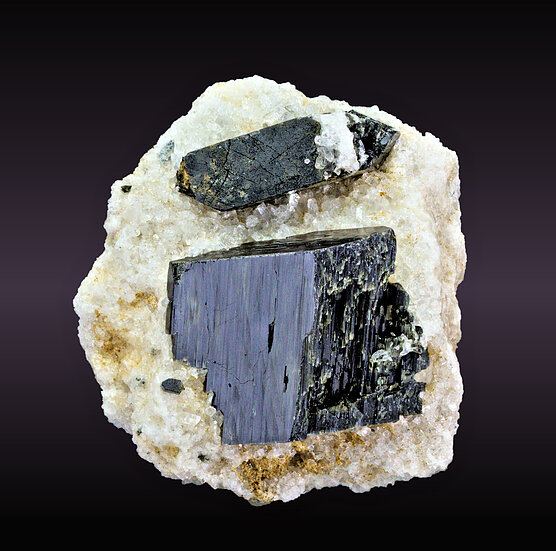
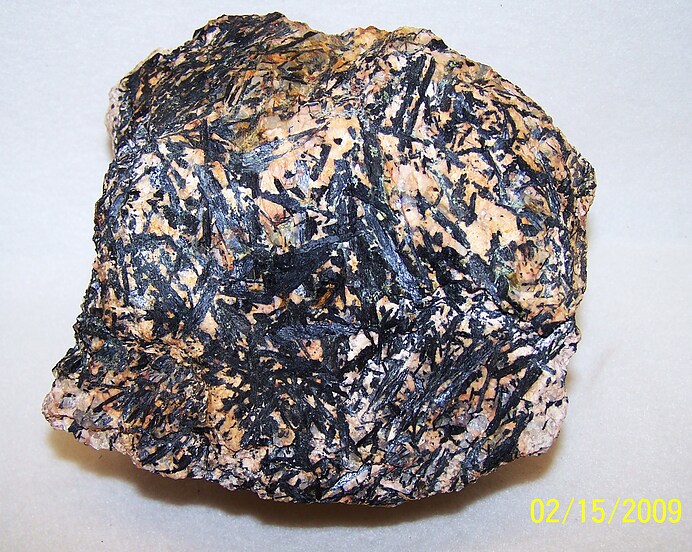
Usually black, also commonly light blue to blue-black, gray-blue, gray, brown
Lustre:
Vitreous, Sub-Vitreous
Hardness:
5 - 5½
Crystal System:
Monoclinic
Member of:
Name:
For Emil Riebeck (June 11, 1853 Preuslitz, Germany - June 22, 1885 Feldkirch, Vorarlberg, Austria), German explorer, ethnologist, and mineralogist. Noted author and field collector of artifacts.
Type Locality:
Forms a series with magnesio-riebeckite, ferro-glaucophane and glaucophane.
Chemically closely related to arfvedsonite.
Chemically closely related to arfvedsonite.
Unique Identifiers
Mindat ID:
3418
Long-form identifier:
mindat:1:1:3418:6
IMA Classification of Riebeckite
Approved, 'Grandfathered' (first described prior to 1959)
Classification of Riebeckite
9.DE.25
9 : SILICATES (Germanates)
D : Inosilicates
E : Inosilicates with 2-periodic double chains, Si4O11; Clinoamphiboles
9 : SILICATES (Germanates)
D : Inosilicates
E : Inosilicates with 2-periodic double chains, Si4O11; Clinoamphiboles
14.20.6
14 : Silicates not Containing Aluminum
20 : Silicates of Fe and alkali metals
14 : Silicates not Containing Aluminum
20 : Silicates of Fe and alkali metals
Mineral Symbols
As of 2021 there are now IMA–CNMNC approved mineral symbols (abbreviations) for each mineral species, useful for tables and diagrams.
Please only use the official IMA–CNMNC symbol. Older variants are listed for historical use only.
Please only use the official IMA–CNMNC symbol. Older variants are listed for historical use only.
| Symbol | Source | Reference for Standard |
|---|---|---|
| Rbk | IMA–CNMNC | Warr, L.N. (2021). IMA–CNMNC approved mineral symbols. Mineralogical Magazine, 85(3), 291-320. doi:10.1180/mgm.2021.43 |
| Rnk | Kretz (1983) | Kretz, R. (1983) Symbols of rock-forming minerals. American Mineralogist, 68, 277–279. |
| Rbk | Siivolam & Schmid (2007) | Siivolam, J. and Schmid, R. (2007) Recommendations by the IUGS Subcommission on the Systematics of Metamorphic Rocks: List of mineral abbreviations. Web-version 01.02.07. IUGS Commission on the Systematics in Petrology. download |
| Rbk | Whitney & Evans (2010) | Whitney, D.L. and Evans, B.W. (2010) Abbreviations for names of rock-forming minerals. American Mineralogist, 95, 185–187 doi:10.2138/am.2010.3371 |
| Rbk | The Canadian Mineralogist (2019) | The Canadian Mineralogist (2019) The Canadian Mineralogist list of symbols for rock- and ore-forming minerals (December 30, 2019). download |
Physical Properties of Riebeckite
Vitreous, Sub-Vitreous
Transparency:
Translucent, Opaque
Colour:
Usually black, also commonly light blue to blue-black, gray-blue, gray, brown
Streak:
Pale gray to bluish-grey.
Hardness:
5 - 5½ on Mohs scale
Tenacity:
Brittle
Cleavage:
Perfect
Perfect on {110}
Perfect on {110}
Fracture:
Splintery
Optical Data of Riebeckite
Type:
Biaxial (-)
RI values:
nα = 1.68 - 1.698 nβ = 1.683 - 1.7 nγ = 1.685 - 1.706
2V:
Measured: 68° to 85°, Calculated: 62° to 78°
Birefringence:
0.008
Max. Birefringence:
δ = 0.005 - 0.008
Based on recorded range of RI values above.
Based on recorded range of RI values above.
Interference Colours:
The colours simulate birefringence patterns seen in thin section under crossed polars. They do not take into account mineral colouration or opacity.
Michel-Levy Bar The default colours simulate the birefringence range for a 30 µm thin-section thickness. Adjust the slider to simulate a different thickness.
Grain Simulation You can rotate the grain simulation to show how this range might look as you rotated a sample under crossed polars. Each grain retains its interference colour (retardation) while its brightness falls to black at extinction and reaches a maximum between extinction positions.
The colours simulate birefringence patterns seen in thin section under crossed polars. They do not take into account mineral colouration or opacity.
Michel-Levy Bar The default colours simulate the birefringence range for a 30 µm thin-section thickness. Adjust the slider to simulate a different thickness.
Grain Simulation You can rotate the grain simulation to show how this range might look as you rotated a sample under crossed polars. Each grain retains its interference colour (retardation) while its brightness falls to black at extinction and reaches a maximum between extinction positions.
Surface Relief:
Very High (positive)
Relative to Canada balsam mounting medium (n ≈ 1.537).
Relative to Canada balsam mounting medium (n ≈ 1.537).
This shows the grain boundary and Becke line effect under plane-polarised
light, based on the contrast between this mineral's average refractive
index and the mounting medium. It does not take into account mineral
colouration.
In focus
Interference Figure:
This shows the idealized biaxial acute bisectrix (Bxa) interference figure
- the conoscopic view for a grain cut perpendicular to the acute bisectrix, using
this mineral's 2V. The two small white dots mark the melatopes - the points
where the two optic axes emerge - and are shown only when they fall within the
field of view. The coloured bands are isochromatics, and the dark bands are
isogyres.
Rotate the stage: at 0°/90° the isogyres form a cross through the melatopes; at 45° they pull apart into curved hyperbolas. That splitting on rotation - absent in a uniaxial figure - is the standard diagnostic test for telling biaxial minerals from uniaxial ones. If 2V is large, the melatopes may fall outside the field of view, as they often do at the microscope too.
Rotate the stage: at 0°/90° the isogyres form a cross through the melatopes; at 45° they pull apart into curved hyperbolas. That splitting on rotation - absent in a uniaxial figure - is the standard diagnostic test for telling biaxial minerals from uniaxial ones. If 2V is large, the melatopes may fall outside the field of view, as they often do at the microscope too.
Dispersion:
strong
Pleochroism:
Strong
Comments:
X dark blue Z blue gray to yellow green
Chemistry of Riebeckite
Mindat Formula:
◻Na2(Fe2+3Fe3+2)Si8O22(OH)2
Riebeckite is defined as a member of the riebeckite group with Fe2+>Mg in the C2+ position and (OH) dominant in the W position.
Riebeckite is defined as a member of the riebeckite group with Fe2+>Mg in the C2+ position and (OH) dominant in the W position.
Element Weights:
Common Impurities:
Fe,Ti,Mg,Al,Mn
Age distribution
Recorded ages:
Neoproterozoic to Paleogene : 551 Ma to 41 Ma - based on 8 recorded ages.
Sample ages:
| Sample ID | Recorded age | Geologic Time | Dating method |
|---|---|---|---|
| 1 | 41 Ma | Eocene | K-Ar |
| 2 | 51 Ma | Eocene | K-Ar |
| 3 | 212 Ma | Late/Upper Triassic | K-Ar |
| 4 | 226 ± 1.1 Ma | Late/Upper Triassic | K-Ar |
| 5 | 239.2 ± 0.4 Ma | Middle Triassic | SHRIMP zircon U-Pb dating of riebeckite granite |
| 6 | 377 ± 7 Ma | Late/Upper Devonian | K-Ar |
| 7 | 551 Ma | Ediacaran | K-Ar |
Sample references:
Chemical Analysis
Oxide wt%:
| 1 | |
|---|---|
| SiO2 | 49.74 % |
| TiO2 | 0.63 % |
| Al2O3 | 2.04 % |
| Fe2O3 | 0.0 % |
| FeO | 33.36 % |
| MnO | 1.36 % |
| MgO | 0.99 % |
| CaO | 0.80 % |
| Na2O | 6.56 % |
| K2O | 1.50 % |
| ZrO2 | 0.0 % |
| Total: | 96.98 % |
Sample references:
| ID | Locality | Reference | Notes |
|---|---|---|---|
| 1 | Motzfeldt Centre, Igaliku Complex, Kujalleq, Greenland | Sample from an alkali-rich syenite |
Crystallography of Riebeckite
Crystal System:
Monoclinic
Class (H-M):
2/m - Prismatic
Space Group:
B2/m
Setting:
C2/m
Cell Parameters:
a = 9.76 Å, b = 18.04 Å, c = 5.33 Å
β = 103.59°
β = 103.59°
Ratio:
a:b:c = 0.541 : 1 : 0.295
Unit Cell V:
912.18 ų (Calculated from Unit Cell)
Z:
2
Morphology:
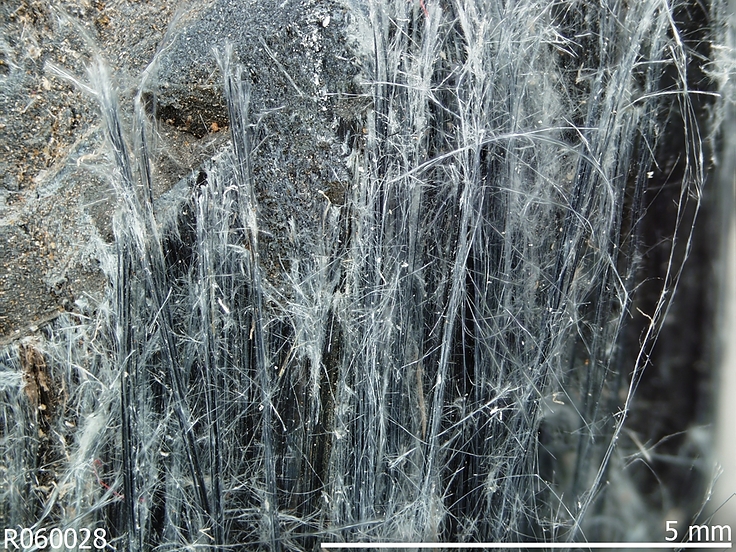
Prismatic {110}, frequently very elongated. May be acicular, especially in late cavities. Sometimes is very acicular in fine-grained, light colored aggregates. Well-terminated crystals are uncommon.
X-Ray Powder Diffraction
Powder Diffraction Data:
| d-spacing | Intensity |
|---|---|
| 8.40 Å | (100) |
| 4.51 Å | (20) |
| 3.42 Å | (10) |
| 3.27 Å | (10) |
| 3.12 Å | (60) |
| 2.80 Å | (20) |
| 2.73 Å | (40) |
| 2.18 Å | (20) |
Comments:
ICDD 19-1061
Geological Environment
Paragenetic Mode(s):
| Paragenetic Mode | Earliest Age (Ga) |
|---|---|
| Stage 4a: Earth’s earliest continental crust | >4.4-3.0 |
| 19 : Granitic intrusive rocks | |
| Stage 4b: Highly evolved igneous rocks | >3.0 |
| 34 : Complex granite pegmatites | |
| 35 : Ultra-alkali and agpaitic igneous rocks | |
| Stage 5: Initiation of plate tectonics | <3.5-2.5 |
| 40 : Regional metamorphism (greenschist, amphibolite, granulite facies) |
Geological Setting:
Alcalic granites, syenite and undersaturated rocks. Rarer in felsic volcanics and granite pegmatites; also in some schists. In iron formations as asbestiform "crocidolite".
Type Occurrence of Riebeckite
Synonyms of Riebeckite
Other Language Names for Riebeckite
Relationship of Riebeckite to other Species
Member of:
Other Members of Riebeckite Root Name Group:
| Fluoro-riebeckite | ◻Na2(Fe2+3Fe3+2)(Si8O22)F2 | Mon. 2/m : B2/m |
| Magnesio-fluoro-riebeckite | ◻Na2(Mg3Fe3+2)(Si8O22)F2 | Mon. 2/m : B2/m |
| Magnesio-riebeckite | ◻Na2(Mg3Fe3+2)(Si8O22)(OH)2 | Mon. |
Common Associates
Associations Based on Photo Data:
| 72 photos of Riebeckite associated with Quartz | SiO2 |
| 29 photos of Riebeckite associated with 'Riebeckite-quartz-feldspar gneiss' | |
| 19 photos of Riebeckite associated with Zircon | Zr(SiO4) |
| 19 photos of Riebeckite associated with Microcline | K(AlSi3O8) |
| 19 photos of Riebeckite associated with 'Smoky Quartz' | SiO2 |
| 15 photos of Riebeckite associated with Rutile | TiO2 |
| 15 photos of Riebeckite associated with Titanite | CaTiO(SiO4) |
| 14 photos of Riebeckite associated with Astrophyllite | K2NaFe2+7Ti2[Si4O12]2O2(OH)4F |
| 14 photos of Riebeckite associated with Albite | Na(AlSi3O8) |
| 12 photos of Riebeckite associated with Feldspar Group |
Related Minerals - Strunz-mindat Grouping
| 9.DE. | Shojiite | Na(NaMg)Mg5Si8O22(OH)2 |
| 9.DE. | Clino-suenoite | ◻Mn2+2(Mg5)(Si8O22)(OH)2 |
| 9.DE. | Mangani-eckermannite | NaNa2(Mg4Mn3+)Si8O22(OH)2 |
| 9.DE.05 | 'Permanganogrunerite' | ◻{Mn2+2}{Mn2+5}(Si8O22)(OH)2 |
| 9.DE.05 | Cummingtonite | ◻Mg2Mg5(Si8O22)(OH)2 |
| 9.DE.05 | Ferri-fluoro-leakeite | NaNa2(Mg2Fe3+2Li)(Si8O22)F2 |
| 9.DE.05 | Grunerite | ◻Fe2+2Fe2+5(Si8O22)(OH)2 |
| 9.DE.05 | Clino-holmquistite Root Name Group | ◻Li2(C2+3C3+2)(Si8O22)w2 |
| 9.DE.10 | Actinolite | ◻Ca2(Mg4.5-2.5Fe0.5-2.5)Si8O22(OH)2 |
| 9.DE.10 | Fluoro-cannilloite | CaCa2(Mg4Al)(Si5Al3)O22F2 |
| 9.DE.10 | Joesmithite | Pb2+Ca2(Mg3Fe3+2)(Si6Be2)O22(OH)2 |
| 9.DE.10 | Clino-ferro-suenoite | ◻Mn2+2(Fe2+5)(Si8O22)(OH)2 |
| 9.DE.10 | Fluoro-tremolite | ◻Ca2Mg5(Si8O22)F2 |
| 9.DE.10 | 'Parvo-manganotremolite' | ◻{CaMn2+}{Mg5}(Si8O22)(OH)2 |
| 9.DE.10 | Magnesio-ferri-hornblende | ◻Ca2(Mg4Fe3+)[(Si7Al)O22](OH)2 |
| 9.DE.10 | Ferro-ferri-hornblende | ◻Ca2(Fe2+4Fe3+)(AlSi7O22)(OH)2 |
| 9.DE.10 | 'Ferro-cannilloite' | CaCa2(Fe2+4Al)(Si5Al3O22)OH2 |
| 9.DE.10 | 'Ferro-ferri-cannilloite' | CaCa2(Fe2+4Fe3+)(Si5Al3O22)OH2 |
| 9.DE.10 | 'Ferro-fluoro-actinolite' | ◻{Ca2}{Fe5}(Si8O22)F2 |
| 9.DE.10 | 'Ferro-fluoro-hornblende' | ◻Ca2(Fe2+4Al)(AlSi7O22)F2 |
| 9.DE.10 | Magnesio-ferri-fluoro-hornblende | ◻Ca2(Mg4Fe3+)(AlSi7O22)F2 |
| 9.DE.10 | 'Ferro-ferri-fluoro-hornblende' | ◻Ca2(Fe2+4Fe3+)(AlSi7O22)F2 |
| 9.DE.10 | 'Ferri-fluoro-tschermakite' | ◻{Ca2}{Mg3Fe3+2}(Al2Si6O22)F2 |
| 9.DE.10 | 'Ferro-ferri-fluoro-tschermakite' | ◻{Ca2}{Fe2+3Fe3+2}(Al2Si6O22)F2 |
| 9.DE.10 | 'Ferro-fluoro-tschermakite' | ◻{Ca2}{Fe2+3Al2}(Al2Si6O22)F2 |
| 9.DE.10 | 'Fluoro-tschermakite' | ◻{Ca2}{Mg3Al2}(Al2Si6O22)F2 |
| 9.DE.10 | 'Magnesio-fluoro-hornblende' | ◻Ca2(Mg4Al)(AlSi7O22)F2 |
| 9.DE.10 | Tremolite | ◻Ca2Mg5(Si8O22)(OH)2 |
| 9.DE.10 | 'Ferro-ferri-tschermakite' | ◻{Ca2}{Fe2+3Fe3+2}(Al2Si6O22)(OH)2 |
| 9.DE.10 | 'Cannilloite' | CaCa2(Mg4Al)(Si5Al3O22)OH2 |
| 9.DE.10 | Tschermakite | ◻Ca2(Mg3Al2)(Al2Si6O22)(OH)2 |
| 9.DE.10 | Magnesio-hornblende | ◻Ca2(Mg4Al)(Si7Al)O22(OH)2 |
| 9.DE.10 | 'Ferri-tschermakite' | ◻Ca2(Mg3Fe3+2)(Al2Si6O22)(OH)2 |
| 9.DE.10 | Ferro-actinolite | ◻Ca2Fe2+5(Si8O22)(OH)2 |
| 9.DE.10 | Ferro-hornblende | ◻Ca2(Fe2+4Al)(Si7Al)O22(OH)2 |
| 9.DE.10 | Ferro-tschermakite | ◻Ca2(Fe2+3Al2)(Al2Si6O22)(OH)2 |
| 9.DE.15 | Potassic-chloro-pargasite | KCa2(Mg4Al)(Si6Al2)O22Cl2 |
| 9.DE.15 | 'Ferro-fluoro-pargasite' | (Na)(Ca2)(Fe2+4Al)(Al2Si6O22)F2 |
| 9.DE.15 | 'Potassic-ferro-chloro-edenite' | KCa2Fe2+5(AlSi7O22)Cl2 |
| 9.DE.15 | 'Ferro-ferri-sadanagaite' | NaCa2(Fe2+3Fe3+2)(Al3Si5O22)(OH)2 |
| 9.DE.15 | Hastingsite | NaCa2(Fe2+4Fe3+)(Si6Al2)O22(OH)2 |
| 9.DE.15 | Fluoro-edenite | NaCa2Mg5(Si7Al)O22F2 |
| 9.DE.15 | Pargasite | NaCa2(Mg4Al)(Si6Al2)O22(OH)2 |
| 9.DE.15 | Magnesio-fluoro-hastingsite | NaCa2(Mg4Fe3+)(Si6Al2)O22F2 |
| 9.DE.15 | Potassic-fluoro-hastingsite | KCa2(Fe2+4Fe3+)(Si6Al2)O22F2 |
| 9.DE.15 | Potassic-chloro-hastingsite | KCa2(Fe2+4Fe3+)(Si6Al2)O22Cl2 |
| 9.DE.15 | 'Unnamed (F-dominant analogue of Ferri-kaersutite)' | (Na,K)Ca2[Mg3(Fe3+,Fe2+)Ti](Si6Al2O22)(F,O)2 |
| 9.DE.15 | Edenite | NaCa2Mg5(Si7Al)O22(OH)2 |
| 9.DE.15 | Potassic-sadanagaite | KCa2(Mg3Al2)(Al3Si5O22)(OH)2 |
| 9.DE.15 | Ferri-kaersutite | NaCa2(Mg3Fe3+Ti)(Si6Al2O22)O2 |
| 9.DE.15 | Potassic-pargasite | KCa2(Mg4Al)(Si6Al2)O22(OH)2 |
| 9.DE.15 | Potassic-ferro-sadanagaite | KCa2(Fe2+3Al2)(Al3Si5O22)(OH)2 |
| 9.DE.15 | Kaersutite | NaCa2(Mg3AlTi4+)(Si6Al2)O22O2 |
| 9.DE.15 | 'Ferro-chloro-pargasite' | NaCa2(Fe2+4Al)(Al2Si6O22)Cl2 |
| 9.DE.15 | Potassic-fluoro-pargasite | KCa2(Mg4Al)(Si6Al2)O22F2 |
| 9.DE.15 | Potassic-ferro-ferri-sadanagaite | KCa2(Fe2+3Fe3+2)(Al3Si5O22)(OH)2 |
| 9.DE.15 | Fluoro-pargasite | NaCa2(Mg4Al)(Si6Al2)O22F2 |
| 9.DE.15 | 'Parvo-mangano-edenite' | {Na}{CaMn2+}{Mg5}(AlSi7O22)(OH)2 |
| 9.DE.15 | Ferro-fluoro-edenite | NaCa2Fe2+5(AlSi7O22)F2 |
| 9.DE.15 | Mangani-pargasite | NaCa2(Mg4Mn3+)(Si6Al2)O22(OH)2 |
| 9.DE.15 | Sadanagaite | NaCa2(Mg3Al2)(Si5Al3O22)(OH)2 |
| 9.DE.15 | Magnesio-hastingsite | NaCa2(Mg4Fe3+)(Si6Al2)O22(OH)2 |
| 9.DE.15 | 'Ferri-sadanagaite' | NaCa2(Mg3Fe3+2)(Al3Si5O22)(OH)2 |
| 9.DE.15 | 'Ferro-sadanagaite' | NaCa2(Fe3Al2)(Al3Si5O22)(OH)2 |
| 9.DE.15 | 'Ferri-fluoro-sadanagaite' | {Na}{Ca2}{Mg3Fe3+2}(Al3Si5O22)F2 |
| 9.DE.15 | 'Ferro-ferri-fluoro-sadanagaite' | {Na}{Ca2}{Fe2+3Fe3+2}(Al3Si5O22)F2 |
| 9.DE.15 | 'Ferro-fluoro-sadanagaite' | {Na}{Ca2}{Fe2+3Al2}(Al3Si5O22)F2 |
| 9.DE.15 | 'Fluoro-sadanagaite' | {Na}{Ca2}{Mg3Al2}(Al3Si5O22)F2 |
| 9.DE.15 | 'Potassic-chloro-sadanagaite' | KCa2(Mg3Al2)(Al3Si5O22)Cl2 |
| 9.DE.15 | 'Potassic-ferro-chloro-sadanagaite' | KCa2(Fe2+3Al2)(Al3Si5O22)Cl2 |
| 9.DE.15 | Ferro-edenite | NaCa2Fe2+5(Si7Al)O22(OH)2 |
| 9.DE.15 | Oxo-magnesio-hastingsite | NaCa2(Mg3(Fe3+2-x,Tix))5(Si6Al2O22)O2 |
| 9.DE.15 | Potassic-ferro-pargasite | KCa2(Fe2+4Al)(Si6Al2)O22(OH)2 |
| 9.DE.15 | Potassic-hastingsite | KCa2(Fe2+4Fe3+)(Al2Si6O22)(OH)2 |
| 9.DE.15 | 'Fluoro-hastingsite' | NaCa2(Fe2+4Fe3+)(Al2Si6O22)F2 |
| 9.DE.15 | Potassic-magnesio-hastingsite | KCa2(Mg4Fe3+)(Si6Al2)O22(OH)2 |
| 9.DE.15 | Vanadio-pargasite | NaCa2(Mg3+4V)(Al2Si6)O22(OH)2 |
| 9.DE.15 | 'Ferro-kaersutite' | NaCa2(Fe2+3AlTi)(Si6Al2O22)O2 |
| 9.DE.15 | Chromio-pargasite | NaCa2(Mg4Cr)(Si6Al2)O22(OH)2 |
| 9.DE.15 | Ferro-pargasite | NaCa2(Fe2+4Al)(Si6Al2)O22(OH)2 |
| 9.DE.20 | 'Ghoseite' | ◻[Mn2+Na][Mg4Al]Si8O22(OH)2 |
| 9.DE.20 | Potassic-ferro-taramite | K(CaNa)(Fe2+3Al2)(Si6Al2)O22(OH)2 |
| 9.DE.20 | Ferri-fluoro-katophorite | Na(CaNa)(Mg4Fe3+)(AlSi7O22)F2 |
| 9.DE.20 | Barroisite | ◻(CaNa)(Mg3Al2)(AlSi7O22)(OH)2 |
| 9.DE.20 | Fluoro-richterite | Na(CaNa)Mg5(Si8O22)F2 |
| 9.DE.20 | Potassic-ferro-ferri-taramite | K(CaNa)(Fe2+3Fe3+2)(Al2Si6O22)(OH)2 |
| 9.DE.20 | 'Potassic-ferri-katophorite' | K(CaNa)(Mg4Fe3+)(AlSi7O22)(OH)2 |
| 9.DE.20 | 'Potassic-ferro-richterite' | K(CaNa)Fe2+5(Si8O22)(OH)2 |
| 9.DE.20 | Potassic-fluoro-richterite | K(CaNa)Mg5(Si8O22)F2 |
| 9.DE.20 | Potassic-richterite | K(CaNa)Mg5(Si8O22)(OH)2 |
| 9.DE.20 | Ferri-ghoseite | ◻(Mn2+Na)(Mg4Fe3+)Si8O22(OH)2 |
| 9.DE.20 | Fluoro-taramite | Na(CaNa)(Mg3Al2)(Al2Si6O22)F2 |
| 9.DE.20 | 'Ferro-ferri-fluoro-katophorite' | Na(CaNa)(Fe2+4Fe3+)(AlSi7O22)F2 |
| 9.DE.20 | Richterite | Na(CaNa)Mg5(Si8O22)(OH)2 |
| 9.DE.20 | Ferri-winchite | ◻(NaCa)(Mg4Fe3+)Si8O22(OH)2 |
| 9.DE.20 | 'Fluoro-katophorite' | Na(CaNa)(Mg4Al)(AlSi7O22)F2 |
| 9.DE.20 | Hjalmarite | Na(NaMn)Mg5(Si8O22)(OH)2 |
| 9.DE.20 | Ferro-taramite | Na(CaNa)(Fe2+3Al2)(Al2Si6O22)(OH)2 |
| 9.DE.20 | 'Clinoferroholmquistite' | ◻Li2[Fe2+3Al2]Si8O22(OH,F)2 |
| 9.DE.20 | Ferro-katophorite | Na(CaNa)(Fe2+4Al)(AlSi7O22)(OH)2 |
| 9.DE.20 | Taramite | Na(CaNa)(Mg3Al2)(Al2Si6O22)(OH)2 |
| 9.DE.20 | 'Potassic-fluoro-katophorite' | K(CaNa)(Mg4Al)(AlSi7O22)F2 |
| 9.DE.20 | 'Ferro-fluoro-katophorite' | Na(CaNa)(Fe2+4Al)(AlSi7O22)F2 |
| 9.DE.20 | Ferri-katophorite | Na(CaNa)(Mg4Fe3+)(AlSi7O22)(OH)2 |
| 9.DE.20 | 'Ferro-ferri-barroisite' | ◻(CaNa)(Fe2+3Fe3+2)(AlSi7O22)(OH)2 |
| 9.DE.20 | Ferri-taramite | Na(CaNa)(Mg3Fe3+2)(Al2Si6O22)(OH)2 |
| 9.DE.20 | 'Potassic-ferro-ferri-katophorite' | K(CaNa)(Fe2+4Fe3+)(AlSi7O22)(OH)2 |
| 9.DE.20 | 'Ferro-ferri-winchite' | ◻(CaNa)(Fe2+4Fe3+)Si8O22(OH)2 |
| 9.DE.20 | Winchite | ◻(CaNa)(Mg4Al)(Si8O22)(OH)2 |
| 9.DE.20 | 'Ferro-fluoro-richterite' | {Na}{CaNa}{Fe2+5}(Si8O22)F2 |
| 9.DE.20 | 'Fluoro-winchite' | ◻(CaNa)(Mg4Al)(Si8O22)F2 |
| 9.DE.20 | 'Ferro-fluoro-winchite' | ◻{CaNa}{Fe2+4Al}(Si8O22)F2 |
| 9.DE.20 | 'Ferri-barroisite' | ◻(CaNa)(Mg3Fe3+2)(AlSi7O22)(OH)2 |
| 9.DE.20 | 'Ferro-ferri-taramite' | Na(CaNa)(Fe2+3Fe3+2)(Al2Si6O22)(OH)2 |
| 9.DE.20 | 'Ferri-fluoro-barroisite' | ◻{CaNa}{Mg3Fe3+2}(AlSi7O22)F2 |
| 9.DE.20 | 'Ferro-fluoro-barroisite' | ◻{CaNa}{Fe2+3Al2}(AlSi7O22)F2 |
| 9.DE.20 | 'Ferro-ferri-fluoro-barroisite' | ◻{CaNa}{Fe2+3Fe3+2}(AlSi7O22)F2 |
| 9.DE.20 | 'Fluoro-barroisite' | ◻{CaNa}{Mg3Al2}(AlSi7O22)F2 |
| 9.DE.20 | Ferro-ferri-katophorite | Na(NaCa)(Fe2+4Fe3+)(Si7Al)O22(OH)2 |
| 9.DE.20 | 'Ferri-fluoro-taramite' | Na(CaNa)(Mg3Fe3+2)(Al2Si6O22)F2 |
| 9.DE.20 | 'Ferro-ferri-fluoro-taramite' | Na(CaNa)(Fe2+3Fe3+2)(Al2Si6O22)F2 |
| 9.DE.20 | 'Ferro-fluoro-taramite' | Na(CaNa)(Fe2+3Al2)(Al2Si6O22)F2 |
| 9.DE.20 | 'Potassic-ferri-taramite' | K(CaNa)(Mg3Fe3+2)(Al2Si6O22)(OH)2 |
| 9.DE.20 | 'Magnesiotaramite' | {Na}{CaNa}{Mg3AlFe3+}(Al2Si6O22)(OH)2 |
| 9.DE.20 | 'Ferro-barroisite' | ◻(CaNa)(Fe2+3Al2)(AlSi7O22)(OH)2 |
| 9.DE.20 | Scandio-winchite | ◻(NaCa)(Mg4Sc)(Si8O22)(OH)2 |
| 9.DE.20 | Ferro-richterite | Na(CaNa)Fe2+5(Si8O22)(OH)2 |
| 9.DE.20 | Katophorite | Na(CaNa){Mg4Al)(AlSi7O22)(OH)2 |
| 9.DE.20 | 'Ferro-winchite' | ◻(CaNa)(Fe2+4Al)(Si8O22)(OH)2 |
| 9.DE.25 | 'Clino-sodic-fluoro-holmquistite' | {Na}{Li2}{Mg4Al}(Si8O22)F2 |
| 9.DE.25 | Ferro-ferri-nybøite | NaNa2(Fe2+3,Mg)Fe3+2)(AlSi7O22)(OH)2 |
| 9.DE.25 | Clino-ferro-ferri-holmquistite | ◻Li2(Fe2+3Fe3+2)(Si8O22)(OH)2 |
| 9.DE.25 | 'Oxo-pargasite' | NaCa2(Mg3(Al2-xTix))5(Si6Al2O22)O2 |
| 9.DE.25 | 'Ferri-nybøite' | NaNa2(Mg3Fe3+2)(AlSi7O22)(OH)2 |
| 9.DE.25 | 'Ferro-ferri-leakeite' | NaNa2(Fe2+2Fe3+2Li)Si8O22(OH)2 |
| 9.DE.25 | Ferro-ferri-fluoro-leakeite | NaNa2(Fe2+2Fe3+2Li)(Si8O22)F2 |
| 9.DE.25 | Ferri-leakeite | NaNa2(Mg2Fe3+2Li)Si8O22(OH)2 |
| 9.DE.25 | Fluoro-pedrizite | NaLi2(Mg2Al2Li)(Si8O22)F2 |
| 9.DE.25 | Eckermannite | NaNa2(Mg4Al}Si8O22(OH)2 |
| 9.DE.25 | Arfvedsonite | NaNa2(Fe2+4Fe3+)Si8O22(OH)2 |
| 9.DE.25 | 'Mangano-ferri-fluoro-leakeite' | NaNa2(Mn2+2Fe3+2Li)(Si8O22)F2 |
| 9.DE.25 | Ferri-obertiite | NaNa2(Mg3Fe3+Ti)Si8O22O2 |
| 9.DE.25 | 'Unnamed (Possible K-analogue of Ferri-obertiite)' | KNa2((Mg,Fe,Na)3Fe3+(Ti,Fe))Si8O22(O,F)2 |
| 9.DE.25 | Magnesio-fluoro-arfvedsonite | NaNa2(Mg4Fe3+)[Si8O22]F2 |
| 9.DE.25 | 'Ferro-fluoro-glaucophane' | ◻[Na2][Fe2+3Al2]Si8O22F2 |
| 9.DE.25 | Oxo-mangani-leakeite | NaNa2(Mn3+4Li)Si8O22O2 |
| 9.DE.25 | Fluoro-leakeite | NaNa2(Mg2Al2Li)(Si8O22)F2 |
| 9.DE.25 | Nybøite | NaNa2(Mg3Al2)(AlSi7O22)(OH)2 |
| 9.DE.25 | 'Sodic-ferri-clinoferroholmquistite' | Na0.5{Li2}{Fe2+3Fe3+2}(Si8O22)(OH)2 |
| 9.DE.25 | Potassic-arfvedsonite | KNa2(Fe2+4Fe3+)(Si8O22)(OH)2 |
| 9.DE.25 | 'Potassic-mangano-mangani-ungarettiite' | KNa2(Mn2+2Mn3+3)Si8O22O2 |
| 9.DE.25 | Potassic-jeanlouisite | K(NaCa)(Mg4Ti)Si8O22O2 |
| 9.DE.25 | Ferri-pedrizite | NaLi2(Mg2Fe3+2Li)Si8O22(OH)2 |
| 9.DE.25 | Glaucophane | ◻Na2(Mg3Al2)Si8O22(OH)2 |
| 9.DE.25 | Ferro-fluoro-pedrizite | NaLi2(Fe2+2Al2Li)[Si8O22]F2 |
| 9.DE.25 | Potassic-ferri-leakeite | KNa2(Mg2Fe3+2Li)(Si8O22)(OH)2 |
| 9.DE.25 | Potassic-magnesio-fluoro-arfvedsonite | KNa2(Mg4Fe3+)(Si8O22)F2 |
| 9.DE.25 | Mangani-obertiite | NaNa2(Mg3Mn3+Ti4+)Si8O22O2 |
| 9.DE.25 | Scandio-fluoro-eckermannite | NaNa2(Mg4Sc)(Si8O22)F2 |
| 9.DE.25 | 'Ferro-eckermannite' | NaNa2(Fe2+4Al)Si8O22(OH)2 |
| 9.DE.25 | Ferro-ferri-pedrizite | NaLi2(Fe2+2Fe3+2Li)Si8O22(OH)2 |
| 9.DE.25 | 'Pedrizite' | NaLi2(LiMg2Al2)(Si8O22)(OH)2 |
| 9.DE.25 | Ferro-pedrizite | NaLi2(Fe2+2Al2Li)Si8O22(OH)2 |
| 9.DE.25 | Potassic-mangani-leakeite | KNa2(Mg2Mn3+2Li)(Si8O22)(OH)2 |
| 9.DE.25 | 'Clino-fluoro-holmquistite' | ◻{Li2}{Mg3Al2}(Si8O22)F2 |
| 9.DE.25 | Ferro-ferri-obertiite | NaNa2(Fe2+3Fe3+Ti)Si8O22O2 |
| 9.DE.25 | Magnesio-riebeckite | ◻Na2(Mg3Fe3+2)(Si8O22)(OH)2 |
| 9.DE.25 | Potassic-magnesio-arfvedsonite | KNa2(Mg4Fe3+)(Si8O22)(OH)2 |
| 9.DE.25 | Fluoro-nybøite | NaNa2(Mg3Al2)(AlSi7O22)(F,OH)2 |
| 9.DE.25 | Mangano-ferri-eckermannite | NaNa2(Mn2+4Fe3+)Si8O22(OH)2 |
| 9.DE.25 | 'Fluoro-glaucophane' | ◻[Na2][Mg3Al2]Si8O22F2 |
| 9.DE.25 | Fluoro-riebeckite | ◻Na2(Fe2+3Fe3+2)(Si8O22)F2 |
| 9.DE.25 | Magnesio-fluoro-riebeckite | ◻Na2(Mg3Fe3+2)(Si8O22)F2 |
| 9.DE.25 | 'Fluoro-eckermannite' | NaNa2(Mg4Al}Si8O22F2 |
| 9.DE.25 | 'Ferro-fluoro-eckermannite' | NaNa2(Fe2+4Al}Si8O22F2 |
| 9.DE.25 | 'Fluoro-arfvedsonite' | NaNa2(Fe2+4Fe3+)Si8O22F2 |
| 9.DE.25 | Magnesio-arfvedsonite | NaNa2(Mg4Fe3+)(Si8O22)(OH)2 |
| 9.DE.25 | 'Ferri-fluoro-nybøite' | NaNa2(Mg3Fe3+2)(AlSi7O22)F2 |
| 9.DE.25 | 'Ferro-ferri-fluoro-nybøite' | NaNa2(Fe2+3Fe3+2)(AlSi7O22)F2 |
| 9.DE.25 | Ferro-glaucophane | ◻Na2(Fe2+3Al2)Si8O22(OH)2 |
| 9.DE.25 | 'Ferro-fluoro-nybøite' | NaNa2(Fe2+3Al2)(AlSi7O22)F2 |
| 9.DE.25 | Mangani-dellaventuraite | NaNa2(MgMn3+2Ti4+Li)Si8O22O2 |
| 9.DE.25 | 'Ferro-leakeite' | NaNa2(Fe2+2Al2Li)(Si8O22)(OH)2 |
| 9.DE.25 | 'Leakeite' | NaNa2(Mg2Al2Li)(Si8O22)(OH)2 |
| 9.DE.25 | 'Potassic-leakeite' | KNa2(Mg2Al2Li)(Si8O22)(OH)2 |
| 9.DE.25 | 'Ferri-fluoro-pedrizite' | NaLi2(LiMg2Fe3+2)(Si8O22)F2 |
| 9.DE.25 | 'Ferro-ferri-fluoro-pedrizite' | NaLi2(LiFe2+2Fe3+2)(Si8O22)F2 |
| 9.DE.25 | 'Ferro-nybøite' | NaNa2(Fe2+3Al2)(AlSi7O22)(OH)2 |
| 9.DE.25 | 'Clino-ferro-ferri-fluoro-holmquistite' | ◻{Li2}{Fe2+3Fe3+2}(Si8O22)F2 |
| 9.DE.25 | Mangano-mangani-ungarettiite | NaNa2(Mn2+2Mn3+3)(Si8O22)O2 |
| 9.DE.25 | 'Clino-ferri-fluoro-holmquistite' | ◻{Li2}{Mg3Fe3+2}(Si8O22)F2 |
| 9.DE.25 | 'Clino-ferro-fluoro-holmquistite' | ◻{Li2}{Fe2+3Al2}(Si8O22)F2 |
Fluorescence of Riebeckite
Not fluorescent
Other Information
Health Risks:
If in fibrous form the fibers, if breathed in, can cause serious and irreversable lung damage. Avoid exposure to dust.
Riebeckite in petrology
An essential component of rock names highlighted in red, an accessory component in rock names highlighted in green.
Internet Links for Riebeckite
mindat.org URL:
https://www.mindat.org/min-3418.html
Please feel free to link to this page.
Please feel free to link to this page.
Search Engines:
External Links:
Mineral Dealers:
References for Riebeckite
Reference List:
Ernst, W. G. (1963) Polymorphism in alkali amphiboles. American Mineralogist, 48 (3-4) 241-260 (synthetic material)
Borg, I. Y. (1967) Optical properties and cell parameters in the glaucophane-riebeckite series. Contributions to Mineralogy and Petrology, 15 (1) 67-92 doi:10.1007/bf01167215
Burns, Roger G., Prentice, F. J. (1968) Distribution of iron cations in the crocidolite structure. American Mineralogist, 53 (5-6) 770-776
COLEMAN, R. G.; PAPIKE, J. J. (1968) Alkali amphiboles from the blueschists of Cazadero, California. Journal of Petrology, 9 (1). p.105-122. doi:10.1093/petrology/9.1.105(complete miscibility between glaucophane and riebeckite in blueschists)
Muir Wood, Robert (1980) Compositional zoning in sodic amphiboles from the blueschist facies. Mineralogical Magazine, 43 (330) 741-752 doi:10.1180/minmag.1980.043.330.07
Hawthorne, F. C., Oberti, R. (2006) On the classification of amphiboles. The Canadian Mineralogist, 44 (1) 1-21 doi:10.2113/gscanmin.44.1.1
Hawthorne, F. C., Oberti, R., Harlow, G. E., Maresch, W. V., Martin, R. F., Schumacher, J. C., Welch, M. D. (2012) Nomenclature of the amphibole supergroup. American Mineralogist, 97 (11) 2031-2048 doi:10.2138/am.2012.4276
Susta, Umberto, Della Ventura, Giancarlo, Hawthorne, Frank C., Abdu, Yassir A., Day, Maxwell C., Mihailova, Boriana, Oberti, Roberta (2018) The crystal-chemistry of riebeckite, ideally Na2Fe32+ Fe23+Si8O22(OH)2: a multi-technique study. Mineralogical Magazine, 82 (4) 837-852 doi:10.1180/minmag.2017.081.064
Della Ventura, Giancarlo, Mihailova, Boriana, Susta, Umberto, Cestelli Guidi, Mariangela, Marcelli, Augusto, Schlüter, Jochen, Oberti, Roberta (2018) The dynamics of Fe oxidation in riebeckite: A model for amphiboles. American Mineralogist, 103 (7) 1103-1111 doi:10.2138/am-2018-6382
Ventura, Giancarlo Della, Radica, Francesco, Galdenzi, Federico, Susta, Umberto, Cinque, Gianfelice, Cestelli-Guidi, Mariangela, Mihailova, Boriana, Marcelli, Augusto (2022) Kinetics of dehydrogenation of riebeckite Na2Fe23+Fe32+Si8O22(OH)2: An HT-FTIR study. American Mineralogist, 107 (4) 754-764 doi:10.2138/am-2022-8021
Ventura, Giancarlo Della, Redhammer, Günther J., Galdenzi, Federico, Ventruti, Gennaro, Susta, Umberto, Oberti, Roberta, Radica, Francesco, Marcelli, Augusto (2023) Oxidation or cation re-arrangement? Distinct behavior of riebeckite at high temperature. American Mineralogist, 108 (1) 59-69 doi:10.2138/am-2022-8073
Localities for Riebeckite
Showing 712 localities.
 symbol to view information about a locality.
The
symbol to view information about a locality.
The Locality List
 - This locality has map coordinates listed.
- This locality has estimated coordinates.
ⓘ - Click for references and further information on this occurrence.
? - Indicates mineral may be doubtful at this locality.
- This locality has map coordinates listed.
- This locality has estimated coordinates.
ⓘ - Click for references and further information on this occurrence.
? - Indicates mineral may be doubtful at this locality.
 - Good crystals or important locality for species.
 - World class for species or very significant.
(TL) - Type Locality for a valid mineral species.
(FRL) - First Recorded Locality for everything else (eg varieties).
- World class for species or very significant.
(TL) - Type Locality for a valid mineral species.
(FRL) - First Recorded Locality for everything else (eg varieties).
All localities listed without proper references should be considered as questionable.
Quick NavTopAbout RiebeckiteUnique IdentifiersIMA Classification Classification Mineral SymbolsPhysical Properties Optical Data Chemistry Age distributionChemical AnalysisCrystallography X-Ray Powder DiffractionGeological EnvironmentType Occurrence SynonymsOther LanguagesRelationshipsCommon AssociatesStrunz-MindatFluorescence Other InformationRiebeckite in petrologyInternet Links References Localities Locality List

Zagi Mountain, Hameed Abad Kafoor Dheri, Peshawar District, Khyber Pakhtunkhwa Province, Pakistan