
Ferrovalleriite
A valid IMA mineral species
This page is currently not sponsored. Click here to sponsor this page.


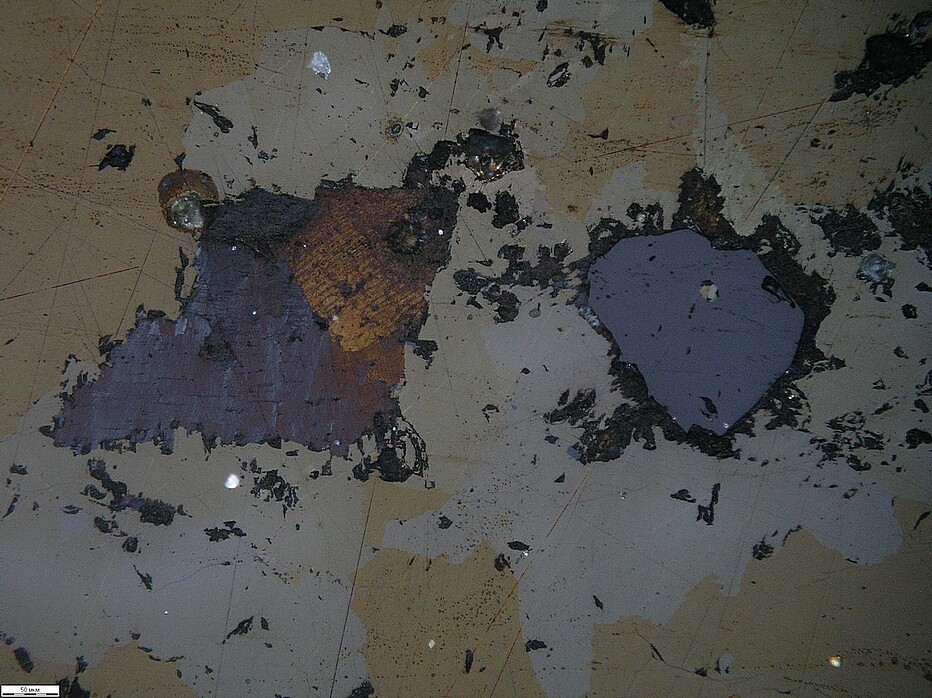


About Ferrovalleriite
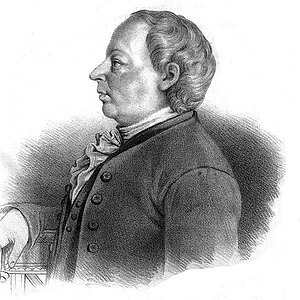
Johan G. Wallerius
Formula:
2(Fe,Cu)S · 1.5Fe(OH)2
Colour:
Dark bronze
Lustre:
Metallic
Hardness:
1
Specific Gravity:
3.72 (Calculated)
Crystal System:
Trigonal
Member of:
Name:
Named for being the ferrous-iron analogue of valleriite. The root name is for Johan Gottschalk Wallerius (Vallerius) (11 July 1709, Närke, Sweden – 16 November 1785, Uppsala, Sweden), chemist and mineralogist at the University of Uppsala, Sweden. He was the first chair of chemistry, medicine, and pharmacy in 1750. He had numerous publications on chemical, mineralogical, and geological subjects.
Unique Identifiers
Mindat ID:
42850
Long-form identifier:
mindat:1:1:42850:3
IMA Classification of Ferrovalleriite
Approved
IMA Formula:
2(Fe,Cu)S·1.53[(Fe2+,Al,Mg)(OH)2]
Approval year:
2011
First published:
2013
Classification of Ferrovalleriite
2.FD.
2 : SULFIDES and SULFOSALTS (sulfides, selenides, tellurides; arsenides, antimonides, bismuthides; sulfarsenites, sulfantimonites, sulfbismuthites, etc.)
F : Sulfides of arsenic, alkalies; sulfides with halide, oxide, hydroxide, H2O
D : With O, OH, H2O
2 : SULFIDES and SULFOSALTS (sulfides, selenides, tellurides; arsenides, antimonides, bismuthides; sulfarsenites, sulfantimonites, sulfbismuthites, etc.)
F : Sulfides of arsenic, alkalies; sulfides with halide, oxide, hydroxide, H2O
D : With O, OH, H2O
Mineral Symbols
As of 2021 there are now IMA–CNMNC approved mineral symbols (abbreviations) for each mineral species, useful for tables and diagrams.
| Symbol | Source | Reference for Standard |
|---|---|---|
| Fval | IMA–CNMNC | Warr, L.N. (2021). IMA–CNMNC approved mineral symbols. Mineralogical Magazine, 85(3), 291-320. doi:10.1180/mgm.2021.43 |
Physical Properties of Ferrovalleriite
Metallic
Transparency:
Opaque
Colour:
Dark bronze
Comment:
It darkens, dulls, and is coated by goldish-brown or iridescent tarnish over time.
Streak:
Black
Hardness:
1 on Mohs scale
Hardness:
VHN10=35 kg/mm2 - Vickers
Tenacity:
Flexible
Cleavage:
Perfect
parallel to {001}
parallel to {001}
Fracture:
Step-Like
Density:
3.72 g/cm3 (Calculated)
Optical Data of Ferrovalleriite
Anisotropism:
Strong bluish to yellowish beige
Bireflectance:
moderate
Pleochroism:
Visible
Comments:
yellowish to gray
Chemistry of Ferrovalleriite
Mindat Formula:
2(Fe,Cu)S · 1.5Fe(OH)2
Element Weights:
Crystallography of Ferrovalleriite
Crystal System:
Trigonal
Cell Parameters:
a = 3.792(2) Å, c = 34.06(3) Å
Ratio:
a:c = 1 : 8.982
Unit Cell V:
424.14 ų (Calculated from Unit Cell)
Z:
3
Morphology:
Hexagonal lamellar or tabular crystals (up to 2 mm across and 0.3 mm thick, which are slightly curved and divergent like an open book)
Comment:
Space group: R3¯ m, R3m or R32 - single crystals are curved and split
X-Ray Powder Diffraction
Powder Diffraction Data:
| d-spacing | Intensity |
|---|---|
| 11.42 Å | (18) |
| 5.69 Å | (100) |
| 3.784 Å | (17) |
| 3.268 Å | (58) |
| 2.370 Å | (9) |
| 1.894 Å | (34) |
| 1.871 Å | (45) |
| 1.593 Å | (13) |
Geological Environment
Paragenetic Mode(s):
| Paragenetic Mode | Earliest Age (Ga) |
|---|---|
| Stage 3b: Earth’s earliest hydrosphere | >4.45 |
| 13 : Hadean serpentinization | |
| Stage 7: Great Oxidation Event | <2.4 |
| 47a : [Near-surface hydration of prior minerals] |
Type Occurrence of Ferrovalleriite
General Appearance of Type Material:
holotype - (panel 5, belt 102)
Two additional locations in mine were sampled for cotypes for XRPD and electron microprobe data.
Two additional locations in mine were sampled for cotypes for XRPD and electron microprobe data.
Place of Conservation of Type Material:
Fersman Mineralogical Museum of the Russian Academy of Sciences, Moscow,Russia, registration number 4108/1
Associated Minerals at Type Locality:
Synonyms of Ferrovalleriite
Other Language Names for Ferrovalleriite
Relationship of Ferrovalleriite to other Species
Member of:
Other Members of Valleriite Group:
| Ekplexite | (Nb,Mo,W)S2 · (Mg1-xAlx)(OH)2+x | Trig. |
| Ferrotochilinite | Fe2+6(Fe2+,Mg)5S6(OH)10 | Mon. |
| Haapalaite | (Fe2+,Ni)2(Mg,Fe2+)1.61S2(OH)3.22 | Hex. |
| Tochilinite | Fe2+5-6(Mg,Fe2+)5S6(OH)10 | Mon. |
| Valleriite | (Fe2+,Cu)4(Mg,Al)3S4(OH,O)6 | Trig. |
| Yushkinite | (Mg,Al)V4+S2(OH)2 | Trig. 3m(32/m) : P3m1 |
Common Associates
Associations Based on Photo Data:
| 22 photos of Ferrovalleriite associated with Cubanite | CuFe2S3 |
| 17 photos of Ferrovalleriite associated with Mooihoekite | Cu9Fe9S16 |
| 15 photos of Ferrovalleriite associated with Magnetite | Fe2+Fe3+2O4 |
| 14 photos of Ferrovalleriite associated with Talnakhite | Cu9(Fe,Ni)8S16 |
| 5 photos of Ferrovalleriite associated with Hisingerite | Fe3+2(Si2O5)(OH)4 · 2H2O |
| 3 photos of Ferrovalleriite associated with Chalcopyrite | CuFeS2 |
| 3 photos of Ferrovalleriite associated with Altaite | PbTe |
| 2 photos of Ferrovalleriite associated with Hawleyite | CdS |
| 2 photos of Ferrovalleriite associated with Goethite | Fe3+O(OH) |
Related Minerals - Strunz-mindat Grouping
| 2.FD.05 | Kermesite | Sb2S2O |
| 2.FD.10 | Viaeneite | (Fe,Pb)4S8O |
| 2.FD.20 | Erdite | NaFeS2 · 2H2O |
| 2.FD.25 | Coyoteite | NaFe3S5 · 2H2O |
| 2.FD.30 | Yushkinite | (Mg,Al)V4+S2(OH)2 |
| 2.FD.30 | Valleriite | (Fe2+,Cu)4(Mg,Al)3S4(OH,O)6 |
| 2.FD.30 | Ekplexite | (Nb,Mo,W)S2 · (Mg1-xAlx)(OH)2+x |
| 2.FD.30 | Haapalaite | (Fe2+,Ni)2(Mg,Fe2+)1.61S2(OH)3.22 |
| 2.FD.35 | Kaskasite | (Mo,Nb)S2 · (Mg1-xAlx)(OH)2+x |
| 2.FD.35 | Manganokaskasite | (Mo,Nb)S2 · (Mn1-xAlx)(OH)2+x |
| 2.FD.35 | Tochilinite | Fe2+5-6(Mg,Fe2+)5S6(OH)10 |
| 2.FD.35 | Ferrotochilinite | Fe2+6(Fe2+,Mg)5S6(OH)10 |
| 2.FD.40 | Wilhelmramsayite | Cu3FeS3 · 2H2O |
| 2.FD.45 | Vyalsovite | FeCaAlS(OH)5 |
| 2.FD.50 | Bazhenovite | Ca8S2(S3)(S2O3)(OH)12 · 20H2O |
| 2.FD.55 | 'UM2004-56-OS:BiCuPb' | PbCu4Bi4S2(O,OH,H2O)16 (?) |
Other Information
Health Risks:
No information on health risks for this material has been entered into the database. You should always treat mineral specimens with care.
Internet Links for Ferrovalleriite
mindat.org URL:
https://www.mindat.org/min-42850.html
Please feel free to link to this page.
Please feel free to link to this page.
Search Engines:
External Links:
Mineral Dealers:
References for Ferrovalleriite
Reference List:
Williams, P. A., Hatert, F., Pasero, M., Mills, S. J. (2011) New minerals and nomenclature modifications approved in 2011. CNMNC Newsletter No 11. Mineralogical Magazine, 75 (6) 2887-2893 doi:10.1180/minmag.2011.075.6.2887
Localities for Ferrovalleriite
Showing 1 localities.
 symbol to view information about a locality.
The
symbol to view information about a locality.
The Locality List
 - This locality has map coordinates listed.
- This locality has estimated coordinates.
ⓘ - Click for references and further information on this occurrence.
? - Indicates mineral may be doubtful at this locality.
- This locality has map coordinates listed.
- This locality has estimated coordinates.
ⓘ - Click for references and further information on this occurrence.
? - Indicates mineral may be doubtful at this locality.
 - Good crystals or important locality for species.
 - World class for species or very significant.
(TL) - Type Locality for a valid mineral species.
(FRL) - First Recorded Locality for everything else (eg varieties).
- World class for species or very significant.
(TL) - Type Locality for a valid mineral species.
(FRL) - First Recorded Locality for everything else (eg varieties).
All localities listed without proper references should be considered as questionable.
Russia (TL) | |
| Williams et al. (2011) +2 other references |
Quick NavTopAbout FerrovalleriiteUnique IdentifiersIMA Classification Classification Mineral SymbolsPhysical Properties Optical Data Chemistry Crystallography X-Ray Powder DiffractionGeological EnvironmentType Occurrence SynonymsOther LanguagesRelationshipsCommon AssociatesStrunz-MindatOther InformationInternet Links References Localities Locality List

Oktyabrsky Mine, Talnakh Cu-Ni Deposit, Norilsk-Talnakh Mining Region, Taimyr Peninsula, Taymyrskiy Autonomous Okrug, Krasnoyarsk Krai, Russia