
Humboldtine
A valid IMA mineral species - grandfathered
This page is currently not sponsored. Click here to sponsor this page.


About Humboldtine
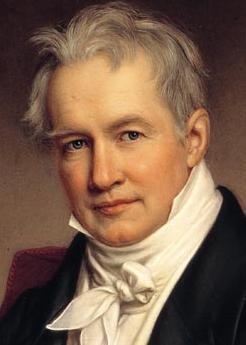
Friedrich Wilhelm Heinrich Alexander Freiherr von Humboldt
Formula:
Fe2+(C2O4) · 2H2O
Colour:
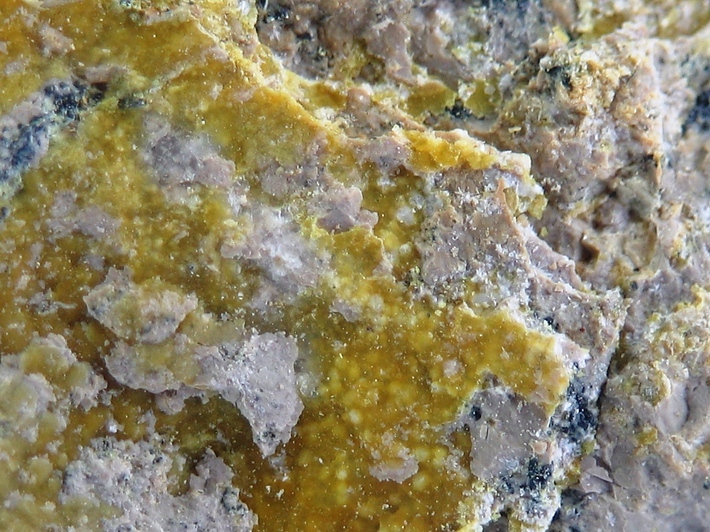
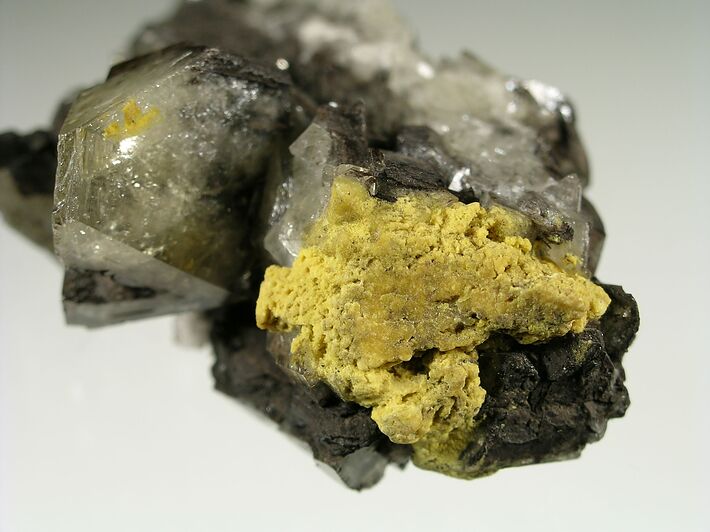
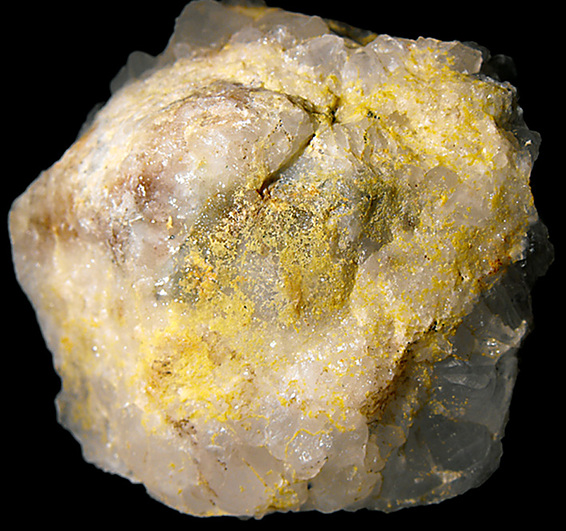
Yellow to amber-yellow; lemon-yellow
Lustre:
Resinous, Dull
Hardness:
1½ - 2
Specific Gravity:
2.28
Crystal System:
Monoclinic
Member of:
Name:
Named after Friedrich Heinrich Alexander von Humboldt (14 September 1769, Berlin, Kingdom of Prussia - 6 May 1859, Berlin, Kingdom of Prussia, German Confederation), naturalist, explorer, and scientist. Between 1799 and 1804, Humboldt traveled through South and Central America, the first European scientist to do so. His report of the trip was highly influential. He was one of the first people to propose that South America and Africa were once joined. He also has more species of life named after him than any other person.
The Fe analogue of lindbergite, glushinskite, andreybulakhite, and katsarosite.
A rare authigenic organic mineral occurring on fracture surfaces in coal deposits and rarely in granitic pegmatites and hydrothermal mineral deposits.
Note that cleaning of specimens with oxalic acid may produce anthropogenic coatings of humboldtine on such specimens.
Common biomineral formed by the action of lichens (e.g., Acarospora smargdula) on Fe-rich limestones and Cu-bearing rocks (vide Burford et al., 2003).
Not to be confused with Humboldtite (of Levy).
A rare authigenic organic mineral occurring on fracture surfaces in coal deposits and rarely in granitic pegmatites and hydrothermal mineral deposits.
Note that cleaning of specimens with oxalic acid may produce anthropogenic coatings of humboldtine on such specimens.
Common biomineral formed by the action of lichens (e.g., Acarospora smargdula) on Fe-rich limestones and Cu-bearing rocks (vide Burford et al., 2003).
Not to be confused with Humboldtite (of Levy).
Unique Identifiers
Mindat ID:
1946
Long-form identifier:
mindat:1:1:1946:6
IMA Classification of Humboldtine
Approved, 'Grandfathered' (first described prior to 1959)
IMA Formula:
Fe2+(C2)6+O4·2H2O
Classification of Humboldtine
10.AB.05
10 : ORGANIC COMPOUNDS
A : Salts of organic acids
B : Oxalates
10 : ORGANIC COMPOUNDS
A : Salts of organic acids
B : Oxalates
50.1.3.1
50 : ORGANIC COMPOUNDS
1 : Oxalates
50 : ORGANIC COMPOUNDS
1 : Oxalates
31.1.7
31 : Oxalates, Citrates, Mellitates and Acetates
1 : Oxalates
31 : Oxalates, Citrates, Mellitates and Acetates
1 : Oxalates
Mineral Symbols
As of 2021 there are now IMA–CNMNC approved mineral symbols (abbreviations) for each mineral species, useful for tables and diagrams.
| Symbol | Source | Reference for Standard |
|---|---|---|
| Hbd | IMA–CNMNC | Warr, L.N. (2021). IMA–CNMNC approved mineral symbols. Mineralogical Magazine, 85(3), 291-320. doi:10.1180/mgm.2021.43 |
Physical Properties of Humboldtine
Resinous, Dull
Transparency:
Transparent, Translucent
Colour:
Yellow to amber-yellow; lemon-yellow
Hardness:
1½ - 2 on Mohs scale
Cleavage:
Perfect
On {110},perfect; on {100} and {010}, imperfect.
On {110},perfect; on {100} and {010}, imperfect.
Density:
2.28 g/cm3 (Measured) 2.307 g/cm3 (Calculated)
Optical Data of Humboldtine
Type:
Biaxial (+)
RI values:
nα = 1.494 nβ = 1.561 nγ = 1.692
Max. Birefringence:
δ = 0.198
Based on recorded range of RI values above.
Based on recorded range of RI values above.
Interference Colours:
The colours simulate birefringence patterns seen in thin section under crossed polars. They do not take into account mineral colouration or opacity.
Michel-Levy Bar The default colours simulate the birefringence range for a 30 µm thin-section thickness. Adjust the slider to simulate a different thickness.
Grain Simulation You can rotate the grain simulation to show how this range might look as you rotated a sample under crossed polars. Each grain retains its interference colour (retardation) while its brightness falls to black at extinction and reaches a maximum between extinction positions.
The colours simulate birefringence patterns seen in thin section under crossed polars. They do not take into account mineral colouration or opacity.
Michel-Levy Bar The default colours simulate the birefringence range for a 30 µm thin-section thickness. Adjust the slider to simulate a different thickness.
Grain Simulation You can rotate the grain simulation to show how this range might look as you rotated a sample under crossed polars. Each grain retains its interference colour (retardation) while its brightness falls to black at extinction and reaches a maximum between extinction positions.
Surface Relief:
Moderate (positive)
Relative to Canada balsam mounting medium (n ≈ 1.537).
Relative to Canada balsam mounting medium (n ≈ 1.537).
This shows the grain boundary and Becke line effect under plane-polarised
light, based on the contrast between this mineral's average refractive
index and the mounting medium. It does not take into account mineral
colouration.
In focus
Interference Figure:
This shows the idealized biaxial acute bisectrix (Bxa) interference figure
- the conoscopic view for a grain cut perpendicular to the acute bisectrix, using
this mineral's 2V. The two small white dots mark the melatopes - the points
where the two optic axes emerge - and are shown only when they fall within the
field of view. The coloured bands are isochromatics, and the dark bands are
isogyres.
Rotate the stage: at 0°/90° the isogyres form a cross through the melatopes; at 45° they pull apart into curved hyperbolas. That splitting on rotation - absent in a uniaxial figure - is the standard diagnostic test for telling biaxial minerals from uniaxial ones. If 2V is large, the melatopes may fall outside the field of view, as they often do at the microscope too.
No measured or calculated 2V is on file for this mineral, so the value used here (76°) is estimated from its recorded refractive indices and optic sign, not from a direct 2V measurement.
Rotate the stage: at 0°/90° the isogyres form a cross through the melatopes; at 45° they pull apart into curved hyperbolas. That splitting on rotation - absent in a uniaxial figure - is the standard diagnostic test for telling biaxial minerals from uniaxial ones. If 2V is large, the melatopes may fall outside the field of view, as they often do at the microscope too.
No measured or calculated 2V is on file for this mineral, so the value used here (76°) is estimated from its recorded refractive indices and optic sign, not from a direct 2V measurement.
Dispersion:
weak
Pleochroism:
Visible
Comments:
X = Very pale yellowish green
Y = Pale greenish yellow
Z = Intense yellow
Y = Pale greenish yellow
Z = Intense yellow
Comments:
2V = Large.
Chemistry of Humboldtine
Mindat Formula:
Fe2+(C2O4) · 2H2O
Element Weights:
Elements listed:
Crystallography of Humboldtine
Crystal System:
Monoclinic
Class (H-M):
2/m - Prismatic
Cell Parameters:
a = 12.011(11) Å, b = 5.557(5) Å, c = 9.920(9) Å
β = 128.53(3)°
β = 128.53(3)°
Ratio:
a:b:c = 2.161 : 1 : 1.785
Unit Cell V:
517.96 ų (Calculated from Unit Cell)
Z:
4
Morphology:
Crystals small, rare, prismatic [001], or platy, exhibiting forms {100},{001},{110}, and {101}; commonly botryoidal incrusting masses with a fibrous to earthy internal structure; fine-granular to earthy and compact.
Comment:
Space group C2/c. Reduced cell: 9.707, 5.556, 9.921 A, 104.5°
Crystal Structure
Load
Unit Cell | Unit Cell Packed
2x2x2 | 3x3x3 | 4x4x4
Unit Cell | Unit Cell Packed
2x2x2 | 3x3x3 | 4x4x4
Show
Big Balls | Small Balls | Just Balls | Spacefill
Polyhedra Off | Si Polyhedra | All Polyhedra
Remove metal-metal sticks
Big Balls | Small Balls | Just Balls | Spacefill
Polyhedra Off | Si Polyhedra | All Polyhedra
Remove metal-metal sticks
Display Options
Black Background | White Background
Perspective On | Perspective Off
2D | Stereo | Red-Blue | Red-Cyan
Black Background | White Background
Perspective On | Perspective Off
2D | Stereo | Red-Blue | Red-Cyan
View
CIF File Best | x | y | z | a | b | c
CIF File Best | x | y | z | a | b | c
Rotation
Stop | Start
Stop | Start
Labels
Console Off | On | Grey | Yellow
Console Off | On | Grey | Yellow
Data courtesy of the American Mineralogist Crystal Structure Database. Click on an AMCSD ID to view structure
| ID | Species | Reference | Link | Year | Locality | Pressure (GPa) | Temp (K) |
|---|---|---|---|---|---|---|---|
| 0019940 | Humboldtine | Echigo T, Kimata M (2008) Single-crystal X-ray diffraction and spectroscopic studies on humboldtine and lindbergite: weak Jahn-Teller effect of Fe2+ ion Physics and Chemistry of Minerals 35 467-475 | 2008 | synthetic | 0 | 293 |
CIF Raw Data - click here to close
X-Ray Powder Diffraction
Powder Diffraction Data:
| d-spacing | Intensity |
|---|---|
| 4.80 Å | (100) |
| 4.70 Å | (65) |
| 3.880 Å | (25) |
| 3.597 Å | (25) |
| 3.004 Å | (50) |
| 2.654 Å | (30) |
| 2.616 Å | (25) |
Geological Environment
Paragenetic Mode(s):
| Paragenetic Mode | Earliest Age (Ga) |
|---|---|
| Stage 4b: Highly evolved igneous rocks | >3.0 |
| 34 : Complex granite pegmatites | |
| Stage 10a: Neoproterozoic oxygenation/terrestrial biosphere | <0.6 |
| 50 : Coal and/or oil shale minerals | <0.36 |
Geological Setting:
Coal deposits; granitic pegmatites and hydrothermal mineral deposits (rare).
Type Occurrence of Humboldtine
Synonyms of Humboldtine
Other Language Names for Humboldtine
Relationship of Humboldtine to other Species
Member of:
Other Members of Humboldtine Group:
| Andreybulakhite | Ni(C2O4) · 2H2O | Mon. 2/m : B2/b |
| Glushinskite | Mg(C2O4) · 2H2O | Mon. 2/m : B2/b |
| Katsarosite | Zn(C2O4) · 2H2O | Mon. 2/m : B2/b |
| Lindbergite | Mn2+(C2O4) · 2H2O | Mon. 2/m |
Common Associates
Associations Based on Photo Data:
| 20 photos of Humboldtine associated with Moolooite | Cu(C2O4) · nH2O |
| 20 photos of Humboldtine associated with Native Copper | Cu |
| 8 photos of Humboldtine associated with Quartz | SiO2 |
| 7 photos of Humboldtine associated with Epidote | (CaCa)(AlAlFe3+)O[Si2O7][SiO4](OH) |
| 6 photos of Humboldtine associated with Analcime | Na(AlSi2O6) · H2O |
| 6 photos of Humboldtine associated with Malachite | Cu2(CO3)(OH)2 |
| 6 photos of Humboldtine associated with 'Amazonite' | K(AlSi3O8) |
| 5 photos of Humboldtine associated with 'Cleavelandite' | Na(AlSi3O8) |
| 5 photos of Humboldtine associated with Jarosite | KFe3+3(SO4)2(OH)6 |
| 4 photos of Humboldtine associated with Whewellite | Ca(C2O4) · H2O |
Related Minerals - Strunz-mindat Grouping
| 10.AB. | Deveroite-(Ce) | Ce2(C2O4)3 · 10H2O |
| 10.AB. | Edwindavisite | Cu(C2O4)(NH3) |
| 10.AB.X | Falottaite | MnC2O4 · 3H2O |
| 10.AB. | Uroxite | [(UO2)2(C2O4)(OH)2(H2O)2] · H2O |
| 10.AB.05 | Katsarosite | Zn(C2O4) · 2H2O |
| 10.AB.05 | Andreybulakhite | Ni(C2O4) · 2H2O |
| 10.AB.05 | Lindbergite | Mn2+(C2O4) · 2H2O |
| 10.AB.10 | Glushinskite | Mg(C2O4) · 2H2O |
| 10.AB.15 | Moolooite | Cu(C2O4) · nH2O |
| 10.AB.20 | Stepanovite | NaMgFe3+(C2O4)3 · 8-9H2O |
| 10.AB.25 | Minguzzite | K3Fe3+(C2O4)3 · 3H2O |
| 10.AB.30 | Wheatleyite | Na2Cu(C2O4)2 · 2H2O |
| 10.AB.35 | Zhemchuzhnikovite | NaMgAl(C2O4)3 · 8H2O |
| 10.AB.40 | Weddellite | Ca(C2O4) · (2.5-x)H2O |
| 10.AB.45 | Whewellite | Ca(C2O4) · H2O |
| 10.AB.47 | Fiemmeite | Cu2(C2O4)(OH)2 · 2H2O |
| 10.AB.50 | Caoxite | Ca(C2O4) · 3H2O |
| 10.AB.50 | Middlebackite | Cu2C2O4(OH)2 |
| 10.AB.52 | Metauroxite | (UO2)2(C2O4)(OH)2(H2O)2 |
| 10.AB.55 | Oxammite | (NH4)2(C2O4) · H2O |
| 10.AB.60 | Natroxalate | Na2(C2O4) |
| 10.AB.60 | Phoxite | (NH4)2Mg2(C2O4)(PO3OH)2(H2O)4 |
| 10.AB.60 | Carboferriphoxite | [(NH4)K(H2CO3)][Fe3+(HPO4)(H2PO4)(C2O4)] |
| 10.AB.60 | Ferriphoxite | [(NH4)2K(H2O)][Fe3+(HPO4)2(C2O4)] |
| 10.AB.65 | Coskrenite-(Ce) | Ce2(SO4)2(C2O4) · 8H2O |
| 10.AB.70 | Levinsonite-(Y) | (Y,Nd,La)Al(C2O4)(SO4)2 · 12H2O |
| 10.AB.75 | Zugshunstite-(Ce) | (Ce,Nd,La)Al(C2O4)(SO4)2 · 12H2O |
| 10.AB.80 | Novgorodovaite | Ca2(C2O4)Cl2 · 2H2O |
Other Information
Notes:
Soluble in acids.
Health Risks:
No information on health risks for this material has been entered into the database. You should always treat mineral specimens with care.
Internet Links for Humboldtine
mindat.org URL:
https://www.mindat.org/min-1946.html
Please feel free to link to this page.
Please feel free to link to this page.
Search Engines:
External Links:
Mineral Dealers:
References for Humboldtine
Reference List:
Carić, S. (1959) Amélioration de la structure de la humboldtine FeC2O4. 2 H2O. Bulletin de la Société française de Minéralogie et de Cristallographie, 82 (1). 50-55 doi:10.3406/bulmi.1959.5304
Frost, Ray L., Weier, Matt L. (2003) Raman spectroscopy of natural oxalates at 298 and 77 K. Journal of Raman Spectroscopy, 34 (10). 776-785 doi:10.1002/jrs.1052
BURFORD, EUAN P., KIERANS, MARTIN, GADD, GEOFFREY M. (2003) Geomycology: fungi in mineral substrata. Mycologist, 17 (3). 98-107 doi:10.1017/s0269915x03003112
Frost, R.L (2004) Raman spectroscopy of natural oxalates. Analytica Chimica Acta, 517 (1). 207-214 doi:10.1016/j.aca.2004.04.036
Echigo, Takuya, Kimata, Mitsuyoshi (2008) Single-crystal X-ray diffraction and spectroscopic studies on humboldtine and lindbergite: weak Jahn–Teller effect of Fe2+ ion. Physics and Chemistry of Minerals, 35 (8). 467-475 doi:10.1007/s00269-008-0241-7
Echigo, T., Kimata, M. (2010) Crystal Chemistry and Genesis of Organic Minerals: a Review of Oxalate and Polycyclic Aromatic Hydrocarbon Minerals. The Canadian Mineralogist, 48 (6) 1329-1357 doi:10.3749/canmin.48.5.1329
Localities for Humboldtine
Showing 37 localities.
 symbol to view information about a locality.
The
symbol to view information about a locality.
The Locality List
 - This locality has map coordinates listed.
- This locality has estimated coordinates.
ⓘ - Click for references and further information on this occurrence.
? - Indicates mineral may be doubtful at this locality.
- This locality has map coordinates listed.
- This locality has estimated coordinates.
ⓘ - Click for references and further information on this occurrence.
? - Indicates mineral may be doubtful at this locality.
 - Good crystals or important locality for species.
 - World class for species or very significant.
(TL) - Type Locality for a valid mineral species.
(FRL) - First Recorded Locality for everything else (eg varieties).
- World class for species or very significant.
(TL) - Type Locality for a valid mineral species.
(FRL) - First Recorded Locality for everything else (eg varieties).
All localities listed without proper references should be considered as questionable.
Austria | |
| Brandstätter F. et al. (2015) |
| Walter et al. (2018) |
| Kolitsch (2016) +1 other reference |
| Kolitsch et al. (2012) |
| Neschen (n.d.) +2 other references |
| Kolitsch et al. (2016) | |
Brazil | |
| Sergio Varvello collection +1 other reference |
| de Santa Maria de Itabira +4 other references | |
Canada | |
| Palache et al. (1951) |
| 176-178. +2 other references |
Colombia | |
| John Rakovan--see photo 875255 +1 other reference | |
| www.mindat.org (n.d.) |
Czech Republic | |
| |
| Bouška +1 other reference |
| Mariano de Rivero (1821) +2 other references |
| Palache et al. (1951) | |
Germany | |
| Walenta (2003) |
| |
| 70. +1 other reference |
| Palache et al. (1951) +1 other reference |
| Palache et al. (1951) |
| Witzke et al. (1998) |
Greece | |
| Rieck et al. (2020) |
| Rieck et al. (2020) | |
Hungary | |
| Szakáll et al. (1996) |
Italy | |
| A.Guastoni et al. (2015) |
| Infrared Spectroscopy at Zannato Museum ... +1 other reference |
| Garavelli C.L. (1955) |
| Marco Bonifazi collection |
| Libvrna N°6 - october 2022 EDS/Raman ... |
| Manasse E. (1910) |
Madagascar | |
Sweden | |
| Taddei et al. (2025) |
UK | |
| Golley et al. (1995) |
USA | |
| Pemberton (1983) +1 other reference |
| Heinrich et al. (2004) |
| Kearns et al. (2016) |
Quick NavTopAbout HumboldtineUnique IdentifiersIMA Classification Classification Mineral SymbolsPhysical Properties Optical Data Chemistry Crystallography Crystal StructureX-Ray Powder DiffractionGeological EnvironmentType Occurrence SynonymsOther LanguagesRelationshipsCommon AssociatesStrunz-MindatOther InformationInternet Links References Localities Locality List

Csordakúti Mine, Bicske-Csordakút, Bicskei District, Fejér County, Hungary