
Whewellite
A valid IMA mineral species - grandfathered
This page is currently not sponsored. Click here to sponsor this page.


About Whewellite

William Whewell
Formula:
Ca(C2O4) · H2O
Colour:
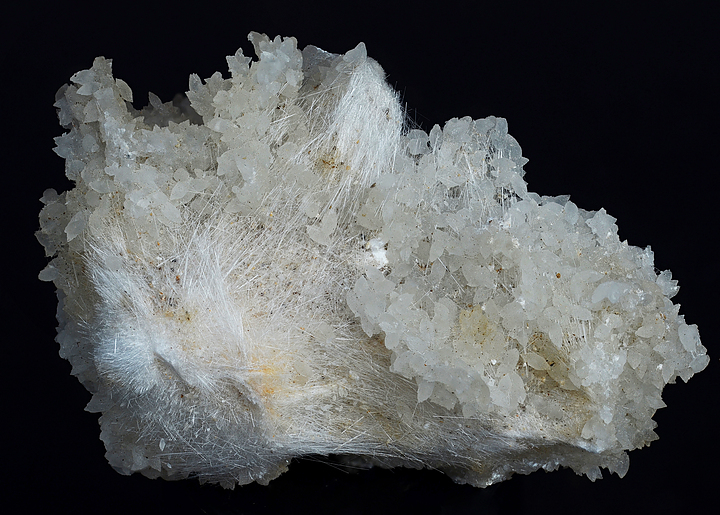
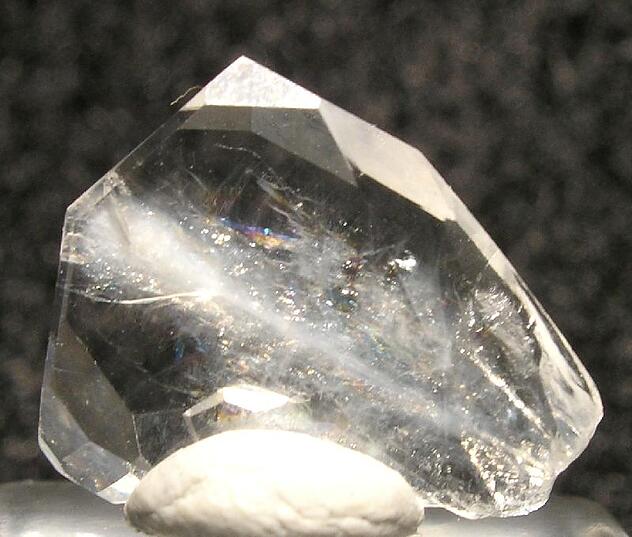
White, yellow, brown, colourless; colourless in transmitted light.
Lustre:
Vitreous, Pearly
Hardness:
2½ - 3
Specific Gravity:
2.21 - 2.23
Crystal System:
Monoclinic
Name:
Named in honour of William Whewell (24 May 1794, Lancaster, Lancashire, England - 6 March 1866, Cambridge, Cambridgeshire, England), naturalist and scientist, Professor of Moral Philosophy and inventor of the system of crystallographic indexing. He coined the words 'scientist', 'physicist', and many others.
The type locality is uncertain, however, the most likely type locality is Cavnic, Romania (Papp, G. (2004) History of minerals, rocks and fossil resins discovered in the Carpathian Region. Hungarian Natural History Museum publ., Studia Naturalia 15, 215 p.)
The type locality is uncertain, however, the most likely type locality is Cavnic, Romania (Papp, G. (2004) History of minerals, rocks and fossil resins discovered in the Carpathian Region. Hungarian Natural History Museum publ., Studia Naturalia 15, 215 p.)
A rare low-temperature primary hydrothermal mineral in carbonate-sulphide veins; also occurs in geodes, or septarian nodules; associated with coal measures and surrounding rocks with organic material; in some uranium deposits. As microscopic crystals in living plant cells and as calculi or as a sediment in the human urinary tract. Also described as a product of fungal activity (e.g., Burford et al., 2003; compare 'Unnamed (Pb Oxalate Dihydrate)'), e.g. in Nali Limecrusts, some calcretes, leaf litter and soils in forests; also formed by lichen on various rocks (basalts, serpentinites, Cu-bearing rocks, gabbros, dolerites, andesites); many organisms produce the mineral (e.g., Acarospora, Aspicilia, Lecanora, Lecidea, Parmelia).
Note: Cleaning any specimen containing Ca-bearing soluble species with oxalic acid will lead to crystallisation of whewellite or weddellite.
Note: Cleaning any specimen containing Ca-bearing soluble species with oxalic acid will lead to crystallisation of whewellite or weddellite.
Unique Identifiers
Mindat ID:
4276
Long-form identifier:
mindat:1:1:4276:1
IMA Classification of Whewellite
Approved, 'Grandfathered' (first described prior to 1959)
IMA Formula:
Ca(C2)6+O4·H2O
First published:
1840
Classification of Whewellite
10.AB.45
10 : ORGANIC COMPOUNDS
A : Salts of organic acids
B : Oxalates
10 : ORGANIC COMPOUNDS
A : Salts of organic acids
B : Oxalates
50.1.1.1
50 : ORGANIC COMPOUNDS
1 : Oxalates
50 : ORGANIC COMPOUNDS
1 : Oxalates
31.1.5
31 : Oxalates, Citrates, Mellitates and Acetates
1 : Oxalates
31 : Oxalates, Citrates, Mellitates and Acetates
1 : Oxalates
Mineral Symbols
As of 2021 there are now IMA–CNMNC approved mineral symbols (abbreviations) for each mineral species, useful for tables and diagrams.
| Symbol | Source | Reference for Standard |
|---|---|---|
| Whe | IMA–CNMNC | Warr, L.N. (2021). IMA–CNMNC approved mineral symbols. Mineralogical Magazine, 85(3), 291-320. doi:10.1180/mgm.2021.43 |
Physical Properties of Whewellite
Vitreous, Pearly
Transparency:
Transparent, Translucent
Comment:
Lustre pearly on {010} and on some cleavages.
Colour:
White, yellow, brown, colourless; colourless in transmitted light.
Hardness:
2½ - 3 on Mohs scale
Tenacity:
Brittle
Cleavage:
Very Good
On {101} very good; on {010}, imperfect; on {001}, {110}, indistinct.
On {101} very good; on {010}, imperfect; on {001}, {110}, indistinct.
Fracture:
Conchoidal
Density:
2.21 - 2.23 g/cm3 (Measured) 2.22 g/cm3 (Calculated)
Optical Data of Whewellite
Type:
Biaxial (+)
RI values:
nα = 1.489 - 1.491 nβ = 1.553 - 1.554 nγ = 1.649 - 1.650
2V:
Measured: 80° to 84°, Calculated: 84°
Max. Birefringence:
δ = 0.159 - 0.160
Based on recorded range of RI values above.
Based on recorded range of RI values above.
Interference Colours:
The colours simulate birefringence patterns seen in thin section under crossed polars. They do not take into account mineral colouration or opacity.
Michel-Levy Bar The default colours simulate the birefringence range for a 30 µm thin-section thickness. Adjust the slider to simulate a different thickness.
Grain Simulation You can rotate the grain simulation to show how this range might look as you rotated a sample under crossed polars. Each grain retains its interference colour (retardation) while its brightness falls to black at extinction and reaches a maximum between extinction positions.
The colours simulate birefringence patterns seen in thin section under crossed polars. They do not take into account mineral colouration or opacity.
Michel-Levy Bar The default colours simulate the birefringence range for a 30 µm thin-section thickness. Adjust the slider to simulate a different thickness.
Grain Simulation You can rotate the grain simulation to show how this range might look as you rotated a sample under crossed polars. Each grain retains its interference colour (retardation) while its brightness falls to black at extinction and reaches a maximum between extinction positions.
Surface Relief:
Low (positive)
Relative to Canada balsam mounting medium (n ≈ 1.537).
Relative to Canada balsam mounting medium (n ≈ 1.537).
This shows the grain boundary and Becke line effect under plane-polarised
light, based on the contrast between this mineral's average refractive
index and the mounting medium. It does not take into account mineral
colouration.
In focus
Interference Figure:
This shows the idealized biaxial acute bisectrix (Bxa) interference figure
- the conoscopic view for a grain cut perpendicular to the acute bisectrix, using
this mineral's 2V. The two small white dots mark the melatopes - the points
where the two optic axes emerge - and are shown only when they fall within the
field of view. The coloured bands are isochromatics, and the dark bands are
isogyres.
Rotate the stage: at 0°/90° the isogyres form a cross through the melatopes; at 45° they pull apart into curved hyperbolas. That splitting on rotation - absent in a uniaxial figure - is the standard diagnostic test for telling biaxial minerals from uniaxial ones. If 2V is large, the melatopes may fall outside the field of view, as they often do at the microscope too.
Rotate the stage: at 0°/90° the isogyres form a cross through the melatopes; at 45° they pull apart into curved hyperbolas. That splitting on rotation - absent in a uniaxial figure - is the standard diagnostic test for telling biaxial minerals from uniaxial ones. If 2V is large, the melatopes may fall outside the field of view, as they often do at the microscope too.
Dispersion:
none
Optical Extinction:
X = b; Z ∧ c = 30°.
Chemistry of Whewellite
Mindat Formula:
Ca(C2O4) · H2O
Element Weights:
Elements listed:
CAS Registry number:
Crystallography of Whewellite
Crystal System:
Monoclinic
Class (H-M):
2/m - Prismatic
Space Group:
P21/b
Setting:
P21/c
Cell Parameters:
a = 6.290 Å, b = 14.583 Å, c = 10.116 Å
β = 109.46°
β = 109.46°
Ratio:
a:b:c = 0.431 : 1 : 0.694
Unit Cell V:
874.90 ų (Calculated from Unit Cell)
Z:
2
Morphology:
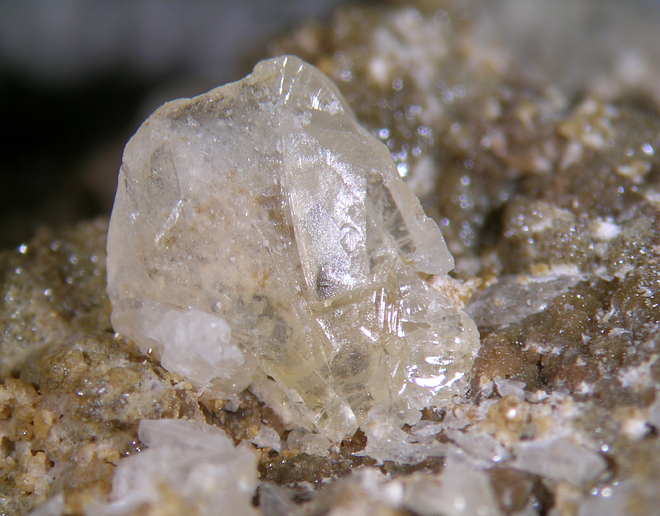
Crystals equant to short prismatic [001], typically distorted with faces commonly irregularly developed, exhibiting forms {001}, {011}, {010}, {110}, {120}, {132}, {101}, plus several additional. Cleavable massive.
Twinning:
Very common on {101} as twin and contact plane, with or without reentrant angles, yielding heart-shaped or prismatic, and of pseudo-orthorhombic appearance.
Comment:
Other (standard) setting in space group: P21/n, with 6.29, 14.58, 9.97 Å, 107°.
Crystallographic forms of Whewellite
Crystal Atlas:
Image Loading
Click on an icon to view

Whewellite no.7 - {110} - Goldschmidt (1913-1926)
3d models and HTML5 code kindly provided by
www.smorf.nl.
Toggle
Edge Lines | Miller Indices | Axes
Transparency
Opaque | Translucent | Transparent
View
Along a-axis | Along b-axis | Along c-axis | Start rotation | Stop rotation
Edge Lines | Miller Indices | Axes
Transparency
Opaque | Translucent | Transparent
View
Along a-axis | Along b-axis | Along c-axis | Start rotation | Stop rotation
Crystal Structure
Load
Unit Cell | Unit Cell Packed
2x2x2 | 3x3x3 | 4x4x4
Unit Cell | Unit Cell Packed
2x2x2 | 3x3x3 | 4x4x4
Show
Big Balls | Small Balls | Just Balls | Spacefill
Polyhedra Off | Si Polyhedra | All Polyhedra
Remove metal-metal sticks
Big Balls | Small Balls | Just Balls | Spacefill
Polyhedra Off | Si Polyhedra | All Polyhedra
Remove metal-metal sticks
Display Options
Black Background | White Background
Perspective On | Perspective Off
2D | Stereo | Red-Blue | Red-Cyan
Black Background | White Background
Perspective On | Perspective Off
2D | Stereo | Red-Blue | Red-Cyan
View
CIF File Best | x | y | z | a | b | c
CIF File Best | x | y | z | a | b | c
Rotation
Stop | Start
Stop | Start
Labels
Console Off | On | Grey | Yellow
Console Off | On | Grey | Yellow
Data courtesy of the American Mineralogist Crystal Structure Database. Click on an AMCSD ID to view structure
| ID | Species | Reference | Link | Year | Locality | Pressure (GPa) | Temp (K) |
|---|---|---|---|---|---|---|---|
| 0000776 | Whewellite | Tazzoli V, Domeneghetti M C (1980) The crystal structures of whewellite and weddellite: re-examination and comparison American Mineralogist 65 327-334 |  | 1980 | 0 | 293 |
CIF Raw Data - click here to close
X-Ray Powder Diffraction
Loading XRD data...
Data courtesy of RRUFF project at University of Arizona, used with permission.
Powder Diffraction Data:
| d-spacing | Intensity |
|---|---|
| 5.95 Å | (100) |
| 3.652 Å | (90) |
| 2.971 Å | (50) |
| 2.906 Å | (10) |
| 2.497 Å | (20) |
| 2.357 Å | (80) |
| 2.262 Å | (20) |
Comments:
Near Havre, Montana, USA. Data from Pecora and Kerr (1954).
Geological Environment
Paragenetic Mode(s):
| Paragenetic Mode | Earliest Age (Ga) |
|---|---|
| Stage 2: Planetesimal differentiation and alteration | 4.566-4.550 |
| 6 : Secondary asteroid phases | 4.566-4.560 |
| Near-surface Processes | |
| 21 : Chemically precipitated carbonate, phosphate, iron formations | |
| 23 : Subaerial aqueous alteration by non-redox-sensitive fluids (see also #47) | |
| Stage 4b: Highly evolved igneous rocks | >3.0 |
| 35 : Ultra-alkali and agpaitic igneous rocks | |
| 36 : Carbonatites, kimberlites, and related igneous rocks | |
| Stage 10a: Neoproterozoic oxygenation/terrestrial biosphere | <0.6 |
| 49 : Oxic cellular biomineralization (see also #44) | <0.54 |
| 50 : Coal and/or oil shale minerals | <0.36 |
Geological Setting:
In carbonate-sulphide veins, geodes, or septarian nodules; associated with coal measures or in surrounding rock containing organic matter; in some uranium deposits.
Synonyms of Whewellite
Other Language Names for Whewellite
Common Associates
Associations Based on Photo Data:
| 35 photos of Whewellite associated with Calcite | CaCO3 |
| 22 photos of Whewellite associated with Siderite | FeCO3 |
| 22 photos of Whewellite associated with Moolooite | Cu(C2O4) · nH2O |
| 22 photos of Whewellite associated with Native Copper | Cu |
| 15 photos of Whewellite associated with Smythite | (Fe,Ni)3+xS4 (x=0-0.3) |
| 13 photos of Whewellite associated with 'Chalcedony' | SiO2 |
| 5 photos of Whewellite associated with Epidote | (CaCa)(AlAlFe3+)O[Si2O7][SiO4](OH) |
| 5 photos of Whewellite associated with Dolomite | CaMg(CO3)2 |
| 4 photos of Whewellite associated with Dawsonite | NaAlCO3(OH)2 |
| 4 photos of Whewellite associated with Humboldtine | Fe2+(C2O4) · 2H2O |
Related Minerals - Strunz-mindat Grouping
| 10.AB. | Deveroite-(Ce) | Ce2(C2O4)3 · 10H2O |
| 10.AB. | Edwindavisite | Cu(C2O4)(NH3) |
| 10.AB.X | Falottaite | MnC2O4 · 3H2O |
| 10.AB. | Uroxite | [(UO2)2(C2O4)(OH)2(H2O)2] · H2O |
| 10.AB.05 | Katsarosite | Zn(C2O4) · 2H2O |
| 10.AB.05 | Andreybulakhite | Ni(C2O4) · 2H2O |
| 10.AB.05 | Humboldtine | Fe2+(C2O4) · 2H2O |
| 10.AB.05 | Lindbergite | Mn2+(C2O4) · 2H2O |
| 10.AB.10 | Glushinskite | Mg(C2O4) · 2H2O |
| 10.AB.15 | Moolooite | Cu(C2O4) · nH2O |
| 10.AB.20 | Stepanovite | NaMgFe3+(C2O4)3 · 8-9H2O |
| 10.AB.25 | Minguzzite | K3Fe3+(C2O4)3 · 3H2O |
| 10.AB.30 | Wheatleyite | Na2Cu(C2O4)2 · 2H2O |
| 10.AB.35 | Zhemchuzhnikovite | NaMgAl(C2O4)3 · 8H2O |
| 10.AB.40 | Weddellite | Ca(C2O4) · (2.5-x)H2O |
| 10.AB.47 | Fiemmeite | Cu2(C2O4)(OH)2 · 2H2O |
| 10.AB.50 | Caoxite | Ca(C2O4) · 3H2O |
| 10.AB.50 | Middlebackite | Cu2C2O4(OH)2 |
| 10.AB.52 | Metauroxite | (UO2)2(C2O4)(OH)2(H2O)2 |
| 10.AB.55 | Oxammite | (NH4)2(C2O4) · H2O |
| 10.AB.60 | Natroxalate | Na2(C2O4) |
| 10.AB.60 | Phoxite | (NH4)2Mg2(C2O4)(PO3OH)2(H2O)4 |
| 10.AB.60 | Carboferriphoxite | [(NH4)K(H2CO3)][Fe3+(HPO4)(H2PO4)(C2O4)] |
| 10.AB.60 | Ferriphoxite | [(NH4)2K(H2O)][Fe3+(HPO4)2(C2O4)] |
| 10.AB.65 | Coskrenite-(Ce) | Ce2(SO4)2(C2O4) · 8H2O |
| 10.AB.70 | Levinsonite-(Y) | (Y,Nd,La)Al(C2O4)(SO4)2 · 12H2O |
| 10.AB.75 | Zugshunstite-(Ce) | (Ce,Nd,La)Al(C2O4)(SO4)2 · 12H2O |
| 10.AB.80 | Novgorodovaite | Ca2(C2O4)Cl2 · 2H2O |
Other Information
Notes:
Soluble in acids. Insoluble in water.
Health Risks:
No information on health risks for this material has been entered into the database. You should always treat mineral specimens with care.
Internet Links for Whewellite
mindat.org URL:
https://www.mindat.org/min-4276.html
Please feel free to link to this page.
Please feel free to link to this page.
Search Engines:
External Links:
Mineral Dealers:
References for Whewellite
Reference List:
Ungemach, Henri (1909) Note sur des cristaux de whewellite rencontrés dans un filon métallifère alsacien. Bulletin de Minéralogie, 32 (1) 20-34 doi:10.3406/bulmi.1909.3340
Pecora, W. T., Kerr, J. H. (1954) Whewellite from a septarian limestone concretion in marine shale near Havre, Montana. American Mineralogist, 39 (3-4) 208-214
ARNOTT, H. J., PAUTARD, F. G. E., STEINFINK, H. (1965) Structure of Calcium Oxalate Monohydrate. Nature, 208 (5016). 1197-1198 doi:10.1038/2081197b0
IMA (1967) International Mineralogical Association: Commission on New Minerals and Mineral Names. Mineralogical Magazine and Journal of the Mineralogical Society, 36 (277) 131-136 doi:10.1180/minmag.1967.036.277.20
Shippey, T.A. (1980) Vibrational studies of calcium oxalate monohydrate (whewellite) and an anhydrous phase of calcium oxalate. Journal of Molecular Structure, 63 (2) 157-166 doi:10.1016/0022-2860(80)80323-1
Tazzoli, Vittorio, Domeneghetti, Chiara (1980) The crystal structures of whewellite and weddellite: re-examination and comparison. American Mineralogist, 65 (3-4) 327-334
Aquilano, Dino, Franchini-Angela, Marinella (1981) Twin laws of whewellite, CaC2O4.H2O. A structural and growth approach. Physics and Chemistry of Minerals, 7 (3). 124-129 doi:10.1007/bf00308228
Cody, A.M., Cody, R.D. (1987) Contact and penetration twinning of calcium oxalate monohydrate (CaC2O4·H2O). Journal of Crystal Growth, 83 (4). 485-498 doi:10.1016/0022-0248(87)90242-9
Frost, Ray L., Weier, Matt L. (2003) Raman spectroscopy of natural oxalates at 298 and 77 K. Journal of Raman Spectroscopy, 34 (10). 776-785 doi:10.1002/jrs.1052
BURFORD, EUAN P., KIERANS, MARTIN, GADD, GEOFFREY M. (2003) Geomycology: fungi in mineral substrata. Mycologist, 17 (3). 98-107 doi:10.1017/s0269915x03003112
Frost, R.L (2004) Raman spectroscopy of natural oxalates. Analytica Chimica Acta, 517 (1). 207-214 doi:10.1016/j.aca.2004.04.036
Piilonen, P. C. (2005) New Mineral Names. American Mineralogist, 90 (8) 1466-1469 doi:10.2138/am.2005.448
Echigo, T., Kimata, M., Kyono, A., Shimizu, M., Hatta, T. (2005) Re-investigation of the crystal structure of whewellite [Ca(C2O4)·H2O] and the dehydration mechanism of caoxite [Ca(C2O4)·3H2O]. Mineralogical Magazine, 69 (1) 77-88 doi:10.1180/0026461056910235
Echigo, T., Kimata, M. (2010) Crystal Chemistry and Genesis of Organic Minerals: a Review of Oxalate and Polycyclic Aromatic Hydrocarbon Minerals. The Canadian Mineralogist, 48 (6) 1329-1357 doi:10.3749/canmin.48.5.1329
Sturm (née Rosseeva), Elena V., Frank-Kamenetskaya, Olga, Vlasov, Dmitry, Zelenskaya, Marina, Sazanova, Katerina, Rusakov, Alexey, Kniep, Rüdiger (2015) Crystallization of calcium oxalate hydrates by interaction of calcite marble with fungusAspergillus niger. American Mineralogist, 100 (11) 2559-2565 doi:10.2138/am-2015-5104
Localities for Whewellite
Showing 90 localities.
 symbol to view information about a locality.
The
symbol to view information about a locality.
The Locality List
 - This locality has map coordinates listed.
- This locality has estimated coordinates.
ⓘ - Click for references and further information on this occurrence.
? - Indicates mineral may be doubtful at this locality.
- This locality has map coordinates listed.
- This locality has estimated coordinates.
ⓘ - Click for references and further information on this occurrence.
? - Indicates mineral may be doubtful at this locality.
 - Good crystals or important locality for species.
 - World class for species or very significant.
(TL) - Type Locality for a valid mineral species.
(FRL) - First Recorded Locality for everything else (eg varieties).
- World class for species or very significant.
(TL) - Type Locality for a valid mineral species.
(FRL) - First Recorded Locality for everything else (eg varieties).
All localities listed without proper references should be considered as questionable.
Australia | |
| Keith F Compton collection |
| Snow et al. (2014) |
| www.crocoite.com (2003) |
| Fuchs et al. (1970) |
| Clarke et al. (1986) |
| Clarke et al. (1986) | |
Austria | |
| Niedermayr et al. (2006) |
| Kolitsch (2017) |
Brazil | |
| Menezes (n.d.) |
Chile | |
| Kampf et al. (2025) |
| Cheng +9 other references | |
China | |
| Fei et al. (2022) |
Czech Republic | |
| Duda +2 other references |
| Šarf (1979) |
| Palache et al. (1951) |
| Litochleb et al. (2005) |
| Svejkovský +1 other reference |
| RnDr.Zdeněk Dvořák +1 other reference |
| www.mindat.org (n.d.) +1 other reference |
| Bouška +1 other reference | |
| Palache et al. (1951) |
Ethiopia | |
| Tribolo et al. (2017) |
Finland | |
| Vartiainen (1980) |
France | |
| Martin (1989) +2 other references |
| Bariand et al. (n.d.) |
| P.-C. Guiollard (2002) | |
| J.-J. Périchaud: "Où trouver les minéraux d'Auvergne" et al. (Clermont-Ferrand) | |
| Palache et al. (1951) |
Germany | |
| Aufschluss 1986 (8+9) |
| Blaß et al. (2021) |
| Weiß (1990) |
| Hentschel (1987) |
| |
| Thomas Witzke analysis and collection | |
| Leon Hupperichs collection |
| Roger Lang collection |
| Palache et al. (1951) +1 other reference |
| Palache et al. (1951) +2 other references |
| Palache et al. (1951) +1 other reference | |
| Schüler (1991) |
| Witzke et al. (1998) |
| Witzke et al. (1998) | |
| Witzke et al. (1998) |
| Wittern (2001) |
Greenland | |
| Sørensen (2001) +1 other reference |
Hungary | |
| |
| Zsivny |
| Mecsek-Oko | |
| Szakáll et al. (1996) | |
| Sándor et al. (2005) |
| Szakáll et al. (1996) | |
Israel | |
| Cowgill (1989) |
| Galuskin et al. (2025) |
Italy | |
| Tirelli (1976-77) +1 other reference |
| Tirelli (1976-77) +1 other reference |
| Tirelli (1976-77) +2 other references | |
| Rendiconti della Società Mineralogica Italiana et al. (abstract) +1 other reference |
| Vergani F. et al. (2018) |
| A.Guastoni et al. (2015) |
| Guastoni et al. (2022) | |
| Kolitsch et al. (2008) | |
Mexico | |
| Forti (2006) |
Poland | |
| Smieja-Król (2013) |
Romania | |
| Palache et al. (1951) |
| Cooper (1997) | |
Russia | |
| Pavel M. Kartashov (n.d.) |
| Grant et al. (2001) |
| Pekov (1998) |
| Pekov (1998) | |
| Pavel M. Kartashov (n.d.) |
Slovakia | |
| Bačo |
| Števko M. et al. (Slovenská republika) |
Spain | |
| Iriarte et al. (2013) |
UK | |
| |
Ukraine | |
| World of Stones v.9 | |
USA | |
| Luetcke (n.d.) |
| Jerry Cone Collection |
| Marc V. Hurst (2012) |
| Heinrich et al. (2004) |
| Am Min 39:208-214 |
| Carlson (1991) |
| Carlson (2015) | |
| American Mineralogist |
| Roberts et al. (1986) |
| Weiner et al. (1996) |
| Anthony et al. (2016) | |
| Smith (1991) |
| AmMin 45:1257 |
| Joe Marty Collection |
| Bullock (1981) |
Quick NavTopAbout WhewelliteUnique IdentifiersIMA Classification Classification Mineral SymbolsPhysical Properties Optical Data Chemistry Crystallography Crystallographic forms Crystal StructureX-Ray Powder DiffractionGeological EnvironmentSynonymsOther LanguagesCommon AssociatesStrunz-MindatOther InformationInternet Links References Localities Locality List

Bílina coal mine, Bílina, Teplice District, Ústí nad Labem Region, Czech Republic