
Copper Cities Mine, Copper Cities Mine area, Sleeping Beauty Peak, Miami, Miami-Inspiration Mining District, Globe-Miami Mining District, Gila County, Arizona, USAi
| Regional Level Types | |
|---|---|
| Copper Cities Mine | Mine |
| Copper Cities Mine area | Area |
| Sleeping Beauty Peak | Peak |
| Miami | - not defined - |
| Miami-Inspiration Mining District | - not defined - |
| Globe-Miami Mining District | Mining District |
| Gila County | County |
| Arizona | State |
| USA | Country |
This page is currently not sponsored. Click here to sponsor this page.


Latitude & Longitude (WGS84):
33° 26' 30'' North , 110° 52' 28'' West
Latitude & Longitude (decimal):
Type:
Köppen climate type:
Nearest Settlements:
| Place | Population | Distance |
|---|---|---|
| Claypool | 1,538 (2011) | 4.5km |
| Miami | 1,783 (2017) | 4.8km |
| Central Heights-Midland City | 2,534 (2011) | 6.9km |
| Globe | 7,396 (2017) | 9.7km |
| Copper Hill | 108 (2011) | 10.3km |
Nearest Clubs:
Local clubs are the best way to get access to collecting localities
Local clubs are the best way to get access to collecting localities
| Club | Location | Distance |
|---|---|---|
| Gila County Gem & Mineral Society | Miami, Arizona | 5km |
Other/historical names associated with this locality:
Sleeping Beauty Mine; Lost Gulch Mine; Yellow Metal Mine; Diamond-H Mine
A former surface and underground Cu-Mo-Ag-Au-gemstone-Zn-U-Pb mine located on the south flank of Sleeping Beauty Peak, 3½ miles north of Miami, straddling the middle part of the common boundary between the Globe and Inspiration quadrangles. Discovered 1896 and produced 1896-1982. Additional names which apply to this property: Porphyry Reserves.
Gold mining here started in 1896 by the Girard Mining Co. (Lost Gulch Mining Co. later). The Lost Gulch United Mines Co. was organized in 1909 to operate the properties of the Lost Gulch Mining Co.; reorganized as the Louis d-Or Gold Mining Co. in 1912 that worked the Bonanza, Badger & Cedar Tree claims for Au-Ag-Pb. About 1913 the Baldwin Syndicate of Chicago dispatched Charles E. Hart to examine these gold deposits. He concluded that a porphyry copper deposit was involved. The firm was reorganized as the Louis d'Or Mining and Milling Co. The Gila Monster, Bessie, and Sarah groups of claims covering the porphyry outcrops were optioned from J.W. Bennet. Exploration drilling began in 1917 and exploration continued until 1922 when the Louis d'Or shaft was sunk to the 360 level. The Bradley group of 5 patented claims was acquired in February, 1923. The company became insolvent in 1928 and the noteholders formed a new company jointly with the Pinto Valley Co., which was the Porphyry Reserve Copper Co. The company defaulted on bond interest payments in 1934. Copper Cities Mining Co., a new subsidiary iof the Miami Copper Co., purchased the surviving claims at sheriff's auction. Systematic exploration commenced in 1943 and was completed in 1948, confirming the extent of the orebody.
Mineralization is a porphyry copper deposit. Ore concentration was secondary enrichment. Alteration included quartz-sericite, argillic and weak propylitic processes.
This deposit is in a body of Lost Gulch quartz monzonite that has been intruded by several smaller bodies of granite porphyry. The outcrop of this quartz monzonite is a northeastward-trending horst block that is bounded on three sides by faults, the Sleeping Beauty fault on the NW side, the Ben Hur fault on the NE side, and the Miami fault on the east side. The south boundary of the mass is a steep intrusive contact with Pinal schist and the various rocks of the lower Precambrian dioritic complex.
The structures that are most important in their relation to the orebody are the Coronado and Drummond fault zones, which limit the copper orebody on the west and east sides, respectively.
The Coronado fault which strikes north and dips steeply west for a distance of 2,000 feet along the west side of the orebody, is a sheared, brecciated, and silicified zone, 100 to 300 feet wide. At the north and south ends of this broad part, the zone, trends westward and, in a distance of a few hundred feet, appears to contract to such a minor fissure that its outcrop is scarcely recognizable, but mining has exposed a strong gouge zone extending to the Sleeping Beauty fault. Where the fault zone is widest and most prominent, it is the boundary between the two facies of the quartz monzonite, the porphyritic quartz monzonite on the east, or footwall side, and the quartz monzonite porphyry on the west side. Small lenticular bodies of fine-grained diabase have been intruded along the fault zone.
The Drummond fault zone is much less prominent than the Coronado, but in other respects they are similar. The outcrop is a narrow zone of silicified breccia generally less than 25 feet wide. It strikes N.45ºW. and dips 60ºNE. It similarly forms the boundary between the two facies of the quartz monzonite along most of its recognizable length. Northeast of the Drummond fault zone, the quartz monzonite is traversed by many faults that strike north to NW and dip 50ºE. to vertical. Most of these faults are older than the diabase, and many of them have thin, discontinuous stringers or small irregular bodies of diabase intruded along them, particularly at the intersection of faults.
The mineralized quartz monzonite is intricately dissected by joints, fractures, and minor faults, some older and some younger than the period of mineralization. The older, or premineralization, fractures are now occupied by quartz-pyrite and chalcopyrite veinlets.
Select Mineral List Type
Standard Detailed Gallery Strunz Chemical ElementsMineral List
Mineral list contains entries from the region specified including sub-localities25 valid minerals.
Detailed Mineral List:

List of minerals arranged by Strunz 10th Edition classification
| Group 2 - Sulphides and Sulfosalts | |||
|---|---|---|---|
| ⓘ | Chalcocite | 2.BA.05 | Cu2S |
| ⓘ | Covellite | 2.CA.05a | CuS |
| ⓘ | Sphalerite | 2.CB.05a | ZnS |
| ⓘ | Chalcopyrite | 2.CB.10a | CuFeS2 |
| ⓘ | Galena | 2.CD.10 | PbS |
| ⓘ | Molybdenite | 2.EA.30 | MoS2 |
| ⓘ | Pyrite | 2.EB.05a | FeS2 |
| Group 4 - Oxides and Hydroxides | |||
| ⓘ | Quartz | 4.DA.05 | SiO2 |
| Group 5 - Nitrates and Carbonates | |||
| ⓘ | Calcite | 5.AB.05 | CaCO3 |
| ⓘ | Azurite | 5.BA.05 | Cu3(CO3)2(OH)2 |
| ⓘ | Malachite | 5.BA.10 | Cu2(CO3)(OH)2 |
| ⓘ | Likasite | 5.ND.05 | Cu3(NO3)(OH)5 · 2H2O |
| Group 7 - Sulphates, Chromates, Molybdates and Tungstates | |||
| ⓘ | Anglesite | 7.AD.35 | PbSO4 |
| ⓘ | Jarosite | 7.BC.10 | KFe3+3(SO4)2(OH)6 |
| ⓘ | Gypsum | 7.CD.40 | CaSO4 · 2H2O |
| ⓘ | var. Selenite | 7.CD.40 | CaSO4 · 2H2O |
| ⓘ | Ferrimolybdite | 7.GB.30 | Fe2(MoO4)3 · nH2O |
| Group 8 - Phosphates, Arsenates and Vanadates | |||
| ⓘ | Plumbogummite | 8.BL.10 | PbAl3(PO4)(PO3OH)(OH)6 |
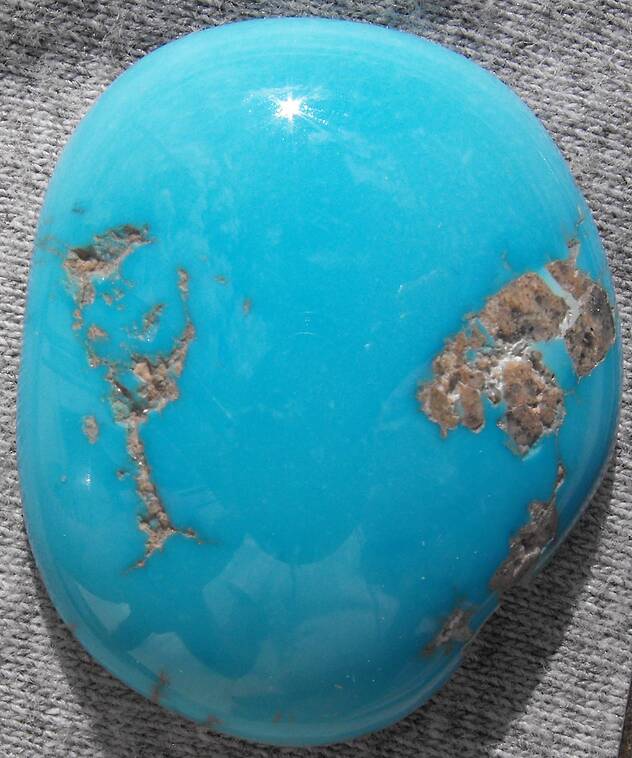
| ⓘ | Turquoise | 8.DD.15 | CuAl6(PO4)4(OH)8 · 4H2O |
| ⓘ | Metatorbernite | 8.EB.10 | Cu(UO2)2(PO4)2 · 8H2O |
| Group 9 - Silicates | |||
| ⓘ | Clinozoisite | 9.BG.05a | (CaCa)(AlAlAl)O[Si2O7][SiO4](OH) |
| ⓘ | Epidote | 9.BG.05a | (CaCa)(AlAlFe3+)O[Si2O7][SiO4](OH) |
| ⓘ | Muscovite | 9.EC.15 | KAl2(AlSi3O10)(OH)2 |
| ⓘ | var. Sericite | 9.EC.15 | KAl2(AlSi3O10)(OH)2 |
| ⓘ | Montmorillonite | 9.EC.40 | (Na,Ca)0.33(Al,Mg)2(Si4O10)(OH)2 · nH2O |
| ⓘ | Orthoclase | 9.FA.30 | K(AlSi3O8) |
| ⓘ | Albite | 9.FA.35 | Na(AlSi3O8) |
| ⓘ | var. Oligoclase | 9.FA.35 | (Na,Ca)[Al(Si,Al)Si2O8] |
| Unclassified | |||
| ⓘ | 'Biotite' | - | K(Fe2+/Mg)2(Al/Fe3+/Mg/Ti)([Si/Al/Fe]2Si2O10)(OH/F)2 |
| ⓘ | 'Chlorite Group' | - | |
| ⓘ | 'Limonite' | - | |
List of minerals for each chemical element
| H | Hydrogen | |
|---|---|---|
| H | ⓘ Azurite | Cu3(CO3)2(OH)2 |
| H | ⓘ Biotite | K(Fe2+/Mg)2(Al/Fe3+/Mg/Ti)([Si/Al/Fe]2Si2O10)(OH/F)2 |
| H | ⓘ Clinozoisite | (CaCa)(AlAlAl)O[Si2O7][SiO4](OH) |
| H | ⓘ Epidote | (CaCa)(AlAlFe3+)O[Si2O7][SiO4](OH) |
| H | ⓘ Ferrimolybdite | Fe2(MoO4)3 · nH2O |
| H | ⓘ Gypsum | CaSO4 · 2H2O |
| H | ⓘ Jarosite | KFe33+(SO4)2(OH)6 |
| H | ⓘ Likasite | Cu3(NO3)(OH)5 · 2H2O |
| H | ⓘ Malachite | Cu2(CO3)(OH)2 |
| H | ⓘ Metatorbernite | Cu(UO2)2(PO4)2 · 8H2O |
| H | ⓘ Muscovite | KAl2(AlSi3O10)(OH)2 |
| H | ⓘ Montmorillonite | (Na,Ca)0.33(Al,Mg)2(Si4O10)(OH)2 · nH2O |
| H | ⓘ Plumbogummite | PbAl3(PO4)(PO3OH)(OH)6 |
| H | ⓘ Turquoise | CuAl6(PO4)4(OH)8 · 4H2O |
| H | ⓘ Gypsum var. Selenite | CaSO4 · 2H2O |
| H | ⓘ Muscovite var. Sericite | KAl2(AlSi3O10)(OH)2 |
| C | Carbon | |
| C | ⓘ Azurite | Cu3(CO3)2(OH)2 |
| C | ⓘ Calcite | CaCO3 |
| C | ⓘ Malachite | Cu2(CO3)(OH)2 |
| N | Nitrogen | |
| N | ⓘ Likasite | Cu3(NO3)(OH)5 · 2H2O |
| O | Oxygen | |
| O | ⓘ Albite | Na(AlSi3O8) |
| O | ⓘ Anglesite | PbSO4 |
| O | ⓘ Azurite | Cu3(CO3)2(OH)2 |
| O | ⓘ Biotite | K(Fe2+/Mg)2(Al/Fe3+/Mg/Ti)([Si/Al/Fe]2Si2O10)(OH/F)2 |
| O | ⓘ Calcite | CaCO3 |
| O | ⓘ Clinozoisite | (CaCa)(AlAlAl)O[Si2O7][SiO4](OH) |
| O | ⓘ Epidote | (CaCa)(AlAlFe3+)O[Si2O7][SiO4](OH) |
| O | ⓘ Ferrimolybdite | Fe2(MoO4)3 · nH2O |
| O | ⓘ Gypsum | CaSO4 · 2H2O |
| O | ⓘ Jarosite | KFe33+(SO4)2(OH)6 |
| O | ⓘ Likasite | Cu3(NO3)(OH)5 · 2H2O |
| O | ⓘ Malachite | Cu2(CO3)(OH)2 |
| O | ⓘ Metatorbernite | Cu(UO2)2(PO4)2 · 8H2O |
| O | ⓘ Muscovite | KAl2(AlSi3O10)(OH)2 |
| O | ⓘ Montmorillonite | (Na,Ca)0.33(Al,Mg)2(Si4O10)(OH)2 · nH2O |
| O | ⓘ Albite var. Oligoclase | (Na,Ca)[Al(Si,Al)Si2O8] |
| O | ⓘ Orthoclase | K(AlSi3O8) |
| O | ⓘ Plumbogummite | PbAl3(PO4)(PO3OH)(OH)6 |
| O | ⓘ Quartz | SiO2 |
| O | ⓘ Turquoise | CuAl6(PO4)4(OH)8 · 4H2O |
| O | ⓘ Gypsum var. Selenite | CaSO4 · 2H2O |
| O | ⓘ Muscovite var. Sericite | KAl2(AlSi3O10)(OH)2 |
| F | Fluorine | |
| F | ⓘ Biotite | K(Fe2+/Mg)2(Al/Fe3+/Mg/Ti)([Si/Al/Fe]2Si2O10)(OH/F)2 |
| Na | Sodium | |
| Na | ⓘ Albite | Na(AlSi3O8) |
| Na | ⓘ Montmorillonite | (Na,Ca)0.33(Al,Mg)2(Si4O10)(OH)2 · nH2O |
| Na | ⓘ Albite var. Oligoclase | (Na,Ca)[Al(Si,Al)Si2O8] |
| Mg | Magnesium | |
| Mg | ⓘ Biotite | K(Fe2+/Mg)2(Al/Fe3+/Mg/Ti)([Si/Al/Fe]2Si2O10)(OH/F)2 |
| Mg | ⓘ Montmorillonite | (Na,Ca)0.33(Al,Mg)2(Si4O10)(OH)2 · nH2O |
| Al | Aluminium | |
| Al | ⓘ Albite | Na(AlSi3O8) |
| Al | ⓘ Biotite | K(Fe2+/Mg)2(Al/Fe3+/Mg/Ti)([Si/Al/Fe]2Si2O10)(OH/F)2 |
| Al | ⓘ Clinozoisite | (CaCa)(AlAlAl)O[Si2O7][SiO4](OH) |
| Al | ⓘ Epidote | (CaCa)(AlAlFe3+)O[Si2O7][SiO4](OH) |
| Al | ⓘ Muscovite | KAl2(AlSi3O10)(OH)2 |
| Al | ⓘ Montmorillonite | (Na,Ca)0.33(Al,Mg)2(Si4O10)(OH)2 · nH2O |
| Al | ⓘ Albite var. Oligoclase | (Na,Ca)[Al(Si,Al)Si2O8] |
| Al | ⓘ Orthoclase | K(AlSi3O8) |
| Al | ⓘ Plumbogummite | PbAl3(PO4)(PO3OH)(OH)6 |
| Al | ⓘ Turquoise | CuAl6(PO4)4(OH)8 · 4H2O |
| Al | ⓘ Muscovite var. Sericite | KAl2(AlSi3O10)(OH)2 |
| Si | Silicon | |
| Si | ⓘ Albite | Na(AlSi3O8) |
| Si | ⓘ Biotite | K(Fe2+/Mg)2(Al/Fe3+/Mg/Ti)([Si/Al/Fe]2Si2O10)(OH/F)2 |
| Si | ⓘ Clinozoisite | (CaCa)(AlAlAl)O[Si2O7][SiO4](OH) |
| Si | ⓘ Epidote | (CaCa)(AlAlFe3+)O[Si2O7][SiO4](OH) |
| Si | ⓘ Muscovite | KAl2(AlSi3O10)(OH)2 |
| Si | ⓘ Montmorillonite | (Na,Ca)0.33(Al,Mg)2(Si4O10)(OH)2 · nH2O |
| Si | ⓘ Albite var. Oligoclase | (Na,Ca)[Al(Si,Al)Si2O8] |
| Si | ⓘ Orthoclase | K(AlSi3O8) |
| Si | ⓘ Quartz | SiO2 |
| Si | ⓘ Muscovite var. Sericite | KAl2(AlSi3O10)(OH)2 |
| P | Phosphorus | |
| P | ⓘ Metatorbernite | Cu(UO2)2(PO4)2 · 8H2O |
| P | ⓘ Plumbogummite | PbAl3(PO4)(PO3OH)(OH)6 |
| P | ⓘ Turquoise | CuAl6(PO4)4(OH)8 · 4H2O |
| S | Sulfur | |
| S | ⓘ Anglesite | PbSO4 |
| S | ⓘ Chalcopyrite | CuFeS2 |
| S | ⓘ Chalcocite | Cu2S |
| S | ⓘ Covellite | CuS |
| S | ⓘ Galena | PbS |
| S | ⓘ Gypsum | CaSO4 · 2H2O |
| S | ⓘ Jarosite | KFe33+(SO4)2(OH)6 |
| S | ⓘ Molybdenite | MoS2 |
| S | ⓘ Pyrite | FeS2 |
| S | ⓘ Sphalerite | ZnS |
| S | ⓘ Gypsum var. Selenite | CaSO4 · 2H2O |
| K | Potassium | |
| K | ⓘ Biotite | K(Fe2+/Mg)2(Al/Fe3+/Mg/Ti)([Si/Al/Fe]2Si2O10)(OH/F)2 |
| K | ⓘ Jarosite | KFe33+(SO4)2(OH)6 |
| K | ⓘ Muscovite | KAl2(AlSi3O10)(OH)2 |
| K | ⓘ Orthoclase | K(AlSi3O8) |
| K | ⓘ Muscovite var. Sericite | KAl2(AlSi3O10)(OH)2 |
| Ca | Calcium | |
| Ca | ⓘ Calcite | CaCO3 |
| Ca | ⓘ Clinozoisite | (CaCa)(AlAlAl)O[Si2O7][SiO4](OH) |
| Ca | ⓘ Epidote | (CaCa)(AlAlFe3+)O[Si2O7][SiO4](OH) |
| Ca | ⓘ Gypsum | CaSO4 · 2H2O |
| Ca | ⓘ Montmorillonite | (Na,Ca)0.33(Al,Mg)2(Si4O10)(OH)2 · nH2O |
| Ca | ⓘ Albite var. Oligoclase | (Na,Ca)[Al(Si,Al)Si2O8] |
| Ca | ⓘ Gypsum var. Selenite | CaSO4 · 2H2O |
| Ti | Titanium | |
| Ti | ⓘ Biotite | K(Fe2+/Mg)2(Al/Fe3+/Mg/Ti)([Si/Al/Fe]2Si2O10)(OH/F)2 |
| Fe | Iron | |
| Fe | ⓘ Biotite | K(Fe2+/Mg)2(Al/Fe3+/Mg/Ti)([Si/Al/Fe]2Si2O10)(OH/F)2 |
| Fe | ⓘ Chalcopyrite | CuFeS2 |
| Fe | ⓘ Epidote | (CaCa)(AlAlFe3+)O[Si2O7][SiO4](OH) |
| Fe | ⓘ Ferrimolybdite | Fe2(MoO4)3 · nH2O |
| Fe | ⓘ Jarosite | KFe33+(SO4)2(OH)6 |
| Fe | ⓘ Pyrite | FeS2 |
| Cu | Copper | |
| Cu | ⓘ Azurite | Cu3(CO3)2(OH)2 |
| Cu | ⓘ Chalcopyrite | CuFeS2 |
| Cu | ⓘ Chalcocite | Cu2S |
| Cu | ⓘ Covellite | CuS |
| Cu | ⓘ Likasite | Cu3(NO3)(OH)5 · 2H2O |
| Cu | ⓘ Malachite | Cu2(CO3)(OH)2 |
| Cu | ⓘ Metatorbernite | Cu(UO2)2(PO4)2 · 8H2O |
| Cu | ⓘ Turquoise | CuAl6(PO4)4(OH)8 · 4H2O |
| Zn | Zinc | |
| Zn | ⓘ Sphalerite | ZnS |
| Mo | Molybdenum | |
| Mo | ⓘ Ferrimolybdite | Fe2(MoO4)3 · nH2O |
| Mo | ⓘ Molybdenite | MoS2 |
| Pb | Lead | |
| Pb | ⓘ Anglesite | PbSO4 |
| Pb | ⓘ Galena | PbS |
| Pb | ⓘ Plumbogummite | PbAl3(PO4)(PO3OH)(OH)6 |
| U | Uranium | |
| U | ⓘ Metatorbernite | Cu(UO2)2(PO4)2 · 8H2O |
Other Databases
| Link to USGS MRDS: | 10027462 |
|---|
Localities in this Region
- Arizona
- Gila County
- Globe-Miami Mining District
- Miami-Inspiration Mining District
- Miami
- Sleeping Beauty Peak
- Copper Cities Mine area
- Copper Cities Mine
- Copper Cities Mine area
- Sleeping Beauty Peak
- Miami
- Miami-Inspiration Mining District
- Globe-Miami Mining District
- Gila County
Other Regions, Features and Areas containing this locality
North AmericaContinent
- Sonoran DesertDesert
North America PlateTectonic Plate
- Basin and Range BasinsBasin
- Mazatzal DomainDomain
- Southern Basin and RangeWide Rift
This page contains all mineral locality references listed on mindat.org. This does not claim to be a complete list. If you know of more minerals from this site, please register so you can add to our database. This locality information is for reference purposes only. You should never attempt to
visit any sites listed in mindat.org without first ensuring that you have the permission of the land and/or mineral rights holders
for access and that you are aware of all safety precautions necessary.
References

Copper Cities Mine, Copper Cities Mine area, Sleeping Beauty Peak, Miami, Miami-Inspiration Mining District, Globe-Miami Mining District, Gila County, Arizona, USA