
Pine Creek Mine, Scheelite, Bishop Mining District (Tungsten Hills Mining District), Inyo County, California, USAi
| Regional Level Types | |
|---|---|
| Pine Creek Mine | Mine |
| Scheelite | Village (Historical) |
| Bishop Mining District (Tungsten Hills Mining District) | Mining District |
| Inyo County | County |
| California | State |
| USA | Country |
This page is currently not sponsored. Click here to sponsor this page.




Latitude & Longitude (WGS84):
37° 23' 34'' North , 118° 43' 8'' West
Latitude & Longitude (decimal):
Type:
Deposit first discovered:
1916
Köppen climate type:
Nearest Settlements:
| Place | Population | Distance |
|---|---|---|
| Round Valley | 435 (2011) | 12.0km |
| Swall Meadows | 220 (2017) | 14.3km |
| Mesa | 251 (2011) | 15.9km |
| Sunny Slopes | 182 (2017) | 20.0km |
| West Bishop | 2,607 (2011) | 23.6km |
Other/historical names associated with this locality:
Black Monster Mine; Snow Queen Mine; Pine Creek Tungsten Mine & mill; Pine Creek apt plant; Pine Creek custom mill
A former W-Mo-Cu-Au-Ag-Bi mine located in secs. 30 & 31, T6S, R30E, MDM, and in secs. 19 & 20, T6N, R31E, MDM, 4.1 km (2.5 miles) WNW of Scheelite, along the North Branch Morgan Creek, about 21 miles NW of Bishop, at 11,000 feet of altitude, in the Sierra Nevada, on private (patented) land (private lease), in a National Forest area. Discovered in 1916. First operated in 1918. Owned by Avocet Ventures Inc. (50%), Canada (1995), and by the U.S. Tungsten Corp. (50%), California (1995). Operated by the Pine Creek Tungsten Mining LLC (100%), Australia (1995). Owned & operated by Union Carbide Nuclear Corp. (1981-1995). MRDS database stated accuracy for this location is 10 meters.
Located in sec. 8, T7S, R30E, MDM: Owned & operated by Avocet Tungsten Inc. (Subsidiary of Avocet Ventures Inc.) (100%), California (1995); owned & operated by U.S. Tungsten Corp. (Subsidiary of Strategic Minerals Corp.) (50%), California (1989 to 1995); Owned by Avocet Ventures Inc. (owner of Avocet Tungsten Inc.) (50%), Canada (1995); Owned & operated by Union Carbide Corp., Mining and Metals Division (100%), California (1981 to 1995).
Mineralization is a Late Cretaceous W ore body in marble with tactite (skarn), hosted in the Tungsten Hills Quartz Monzonite and associated rocks (marble/tactite) (Pine Creek Pendant). The North ore body is irregular, strikes N-S and dips steeply E, at a thickness of 30.48 meters, a width of 18.29 meters, ans a length of 762 meters. The South ore body is 400 feet long, 400 feet wide and 60 feet thick.
The multiple USGS MRDS files present data regarding the ore bodies in a disjointed and at times confusing format. The above data were presented for the North & South ore bodies. The following data were presented without specifying which ore body(ies) they apply to. The dimensions provided indicate that they may pertain to the both ore bodies taken together: thickness: 1,036 meters; width: 23 meters; length: 4,572 meters; area: 50 HA. Ore body No. 1 is disseminated & irregular. Ore body No. 2 is a replacement body. Ore body No. 3 is other (not specified). The primary mode of origin was contact metasomatism. The secondary mode of origin was metamorphism. Primary ore control was a contact zone and the secondary ore control was lithology. Wallrock alteration is slight (carbonitization; silicification). Controls for ore emplacement include the contact of marble beds in the Pine Creek Pendant with quartz monzonite. The scheelite ore body is in metamorphic rocks and is 7 miles long and 1 mile wide. The Pine Creek Pendant marble density in situ is 3.2, deformed in Jurassic (period ?). Skarn (tactite). Local alteration included metamorphism to skarn, ore in fractures, and some replacement by ore. Local rocks include Carboniferous marine rocks, unit 7 (Bishop).
Workings include underground openings with a length of 52,500 meters, developed from 8,000 to 11,500 feet of elevation. The mill is at 7,800 feet.
The overall depth is 300 meters. There are 4 adits at elevations of 10,750 feet, 11,052 feet, and 11,371 feet, plus a large open cut. The plant type is beneficiation (mill) - flotation method.
Reserves and resources data: Type: in-situ; year: 1941; WO3: 0.5 weight percent; year: 1945: demonstrated: 774,748 metric tons ore, indicated 310,262 metric tons ore, measured 464,486 metric tons ore, total resources: 774,748 metric tons ore.
Year: 1945: Mo: 0.823 weight percent.
Estimate year: 1995: demonstrated: 1,360,777 metric tons of ore; total resources: 1,360,777 metric tons ore (WO3: 0.51 weight percent - 1995).
Production at the mine was expected to resume in 1996 according to then competent officials.
Select Mineral List Type
Standard Detailed Gallery Strunz Chemical ElementsCommodity List
This is a list of exploitable or exploited mineral commodities recorded from this region.Mineral List
Mineral list contains entries from the region specified including sub-localities25 valid minerals.
Rock Types Recorded
Note: data is currently VERY limited. Please bear with us while we work towards adding this information!
Rock list contains entries from the region specified including sub-localities
Select Rock List Type
Alphabetical List Tree DiagramDetailed Mineral List:
| ⓘ 'Andradite-Grossular Series' |
| ⓘ 'Biotite' Formula: K(Fe2+/Mg)2(Al/Fe3+/Mg/Ti)([Si/Al/Fe]2Si2O10)(OH/F)2 |
| ⓘ Bismuthinite Formula: Bi2S3 |
| ⓘ Bornite Formula: Cu5FeS4 Description: Occurs in minor amounts. References: |
| ⓘ Calcite Formula: CaCO3 |
| ⓘ Chalcopyrite Formula: CuFeS2 Description: Occurs in rock shoots. |
| ⓘ Clinochlore Formula: Mg5Al(AlSi3O10)(OH)8 References: |
| ⓘ Diopside Formula: CaMgSi2O6 Colour: Colourless References: |
| ⓘ Epidote Formula: (CaCa)(AlAlFe3+)O[Si2O7][SiO4](OH) Description: Occurs in veinlets with prehnite. |
| ⓘ Ferrimolybdite Formula: Fe2(MoO4)3 · nH2O Colour: Bright yellow Description: Occurs replacing molybdenite in higher Mo-enriched areas. |
| ⓘ Fluorite Formula: CaF2 |
| ⓘ Grossular Formula: Ca3Al2(SiO4)3 |
| ⓘ Hastingsite Formula: NaCa2(Fe2+4Fe3+)(Si6Al2)O22(OH)2 Description: Occurs as a constituent of the amphibole tactite. |
| ⓘ Hedenbergite Formula: CaFe2+Si2O6 Colour: Black to grayish green Description: Occurs as 55% to 95% pure material in a tactite zone. Stubby to elongate prisms and anhedral grains. |
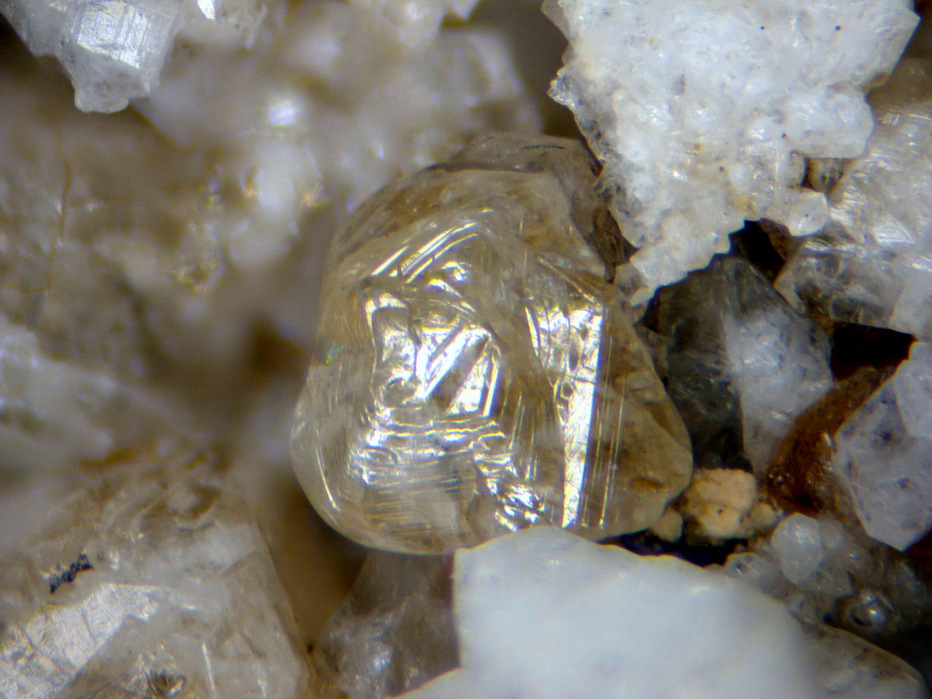
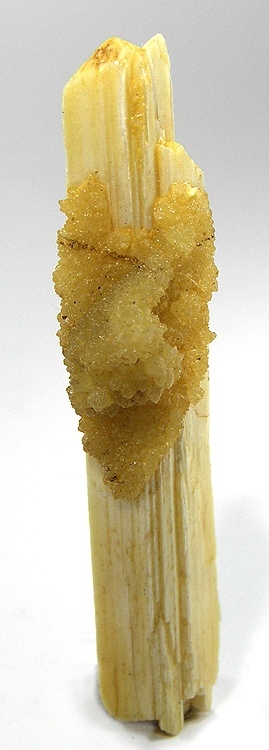
| ⓘ Laumontite Formula: CaAl2Si4O12 · 4H2O Localities: Habit: Prismatic Colour: White, buff Description: Occurs as a large crumbly mass of interlocking prisms in the contact zone of the scheelite ores; later, spectacular white to buff crystals greater than 1 foot (0.3 meters) long were found! |
| ⓘ Molybdenite Formula: MoS2 Description: Occurs as large masses. References: |
| ⓘ Pectolite Formula: NaCa2Si3O8(OH) Description: Occurs as an alteration product of wollastonite. |
| ⓘ Powellite Formula: Ca(MoO4) References: |
| ⓘ Prehnite Formula: Ca2Al2Si3O10(OH)2 Description: Occurs in veinlets with epidote. References: |
| ⓘ Quartz Formula: SiO2 |
| ⓘ 'Scapolite' |
| ⓘ Scheelite Formula: Ca(WO4) Description: Occurs accompanied by considerable molybdenite at contact granite and metamorphic rocks; also with powellite. References: |
| ⓘ Spessartine Formula: Mn2+3Al2(SiO4)3 References: |
| ⓘ Stilbite-Ca Formula: NaCa4(Si27Al9)O72 · 28H2O |
| ⓘ Thaumasite Formula: Ca3(SO4)[Si(OH)6](CO3) · 12H2O Description: Occurs as radiating clusters in the marble. |
| ⓘ Titanite Formula: CaTi(SiO4)O Colour: Yellowish Description: Occurs in vein-like chains of crystals. |
| ⓘ Vesuvianite Formula: Ca19Fe3+Al4(Al6Mg2)(◻4)◻[Si2O7]4[(SiO4)10]O(OH)9 Description: Occurs in the contact zone. References: |
| ⓘ Wollastonite Formula: Ca3(Si3O9) Description: Occurs sometimes being partly replaced by pectolite. References: |
Gallery:

List of minerals arranged by Strunz 10th Edition classification
| Group 2 - Sulphides and Sulfosalts | |||
|---|---|---|---|
| ⓘ | Bornite | 2.BA.15 | Cu5FeS4 |
| ⓘ | Chalcopyrite | 2.CB.10a | CuFeS2 |
| ⓘ | Bismuthinite | 2.DB.05 | Bi2S3 |
| ⓘ | Molybdenite | 2.EA.30 | MoS2 |
| Group 3 - Halides | |||
| ⓘ | Fluorite | 3.AB.25 | CaF2 |
| Group 4 - Oxides and Hydroxides | |||
| ⓘ | Quartz | 4.DA.05 | SiO2 |
| Group 5 - Nitrates and Carbonates | |||
| ⓘ | Calcite | 5.AB.05 | CaCO3 |
| Group 7 - Sulphates, Chromates, Molybdates and Tungstates | |||
| ⓘ | Thaumasite | 7.DG.15 | Ca3(SO4)[Si(OH)6](CO3) · 12H2O |
| ⓘ | Powellite | 7.GA.05 | Ca(MoO4) |
| ⓘ | Scheelite | 7.GA.05 | Ca(WO4) |
| ⓘ | Ferrimolybdite | 7.GB.30 | Fe2(MoO4)3 · nH2O |
| Group 9 - Silicates | |||
| ⓘ | Grossular | 9.AD.25 | Ca3Al2(SiO4)3 |
| ⓘ | Spessartine | 9.AD.25 | Mn2+3Al2(SiO4)3 |
| ⓘ | Titanite | 9.AG.15 | CaTi(SiO4)O |
| ⓘ | Epidote | 9.BG.05a | (CaCa)(AlAlFe3+)O[Si2O7][SiO4](OH) |
| ⓘ | Vesuvianite | 9.BG.35 | Ca19Fe3+Al4(Al6Mg2)(◻4)◻[Si2O7]4[(SiO4)10]O(OH)9 |
| ⓘ | Diopside | 9.DA.15 | CaMgSi2O6 |
| ⓘ | Hedenbergite | 9.DA.15 | CaFe2+Si2O6 |
| ⓘ | Hastingsite | 9.DE.15 | NaCa2(Fe2+4Fe3+)(Si6Al2)O22(OH)2 |
| ⓘ | Pectolite | 9.DG.05 | NaCa2Si3O8(OH) |
| ⓘ | Wollastonite | 9.DG.05 | Ca3(Si3O9) |
| ⓘ | Prehnite | 9.DP.20 | Ca2Al2Si3O10(OH)2 |
| ⓘ | Clinochlore | 9.EC.55 | Mg5Al(AlSi3O10)(OH)8 |
| ⓘ | Laumontite | 9.GB.10 | CaAl2Si4O12 · 4H2O |
| ⓘ | Stilbite-Ca | 9.GE.10 | NaCa4(Si27Al9)O72 · 28H2O |
| Unclassified | |||
| ⓘ | 'Biotite' | - | K(Fe2+/Mg)2(Al/Fe3+/Mg/Ti)([Si/Al/Fe]2Si2O10)(OH/F)2 |
| ⓘ | 'Andradite-Grossular Series' | - | |
| ⓘ | 'Scapolite' | - | |
List of minerals for each chemical element
| H | Hydrogen | |
|---|---|---|
| H | ⓘ Biotite | K(Fe2+/Mg)2(Al/Fe3+/Mg/Ti)([Si/Al/Fe]2Si2O10)(OH/F)2 |
| H | ⓘ Clinochlore | Mg5Al(AlSi3O10)(OH)8 |
| H | ⓘ Epidote | (CaCa)(AlAlFe3+)O[Si2O7][SiO4](OH) |
| H | ⓘ Ferrimolybdite | Fe2(MoO4)3 · nH2O |
| H | ⓘ Hastingsite | NaCa2(Fe42+Fe3+)(Si6Al2)O22(OH)2 |
| H | ⓘ Laumontite | CaAl2Si4O12 · 4H2O |
| H | ⓘ Pectolite | NaCa2Si3O8(OH) |
| H | ⓘ Prehnite | Ca2Al2Si3O10(OH)2 |
| H | ⓘ Thaumasite | Ca3(SO4)[Si(OH)6](CO3) · 12H2O |
| H | ⓘ Vesuvianite | Ca19Fe3+Al4(Al6Mg2)(◻4)◻[Si2O7]4[(SiO4)10]O(OH)9 |
| H | ⓘ Stilbite-Ca | NaCa4(Si27Al9)O72 · 28H2O |
| C | Carbon | |
| C | ⓘ Calcite | CaCO3 |
| C | ⓘ Thaumasite | Ca3(SO4)[Si(OH)6](CO3) · 12H2O |
| O | Oxygen | |
| O | ⓘ Biotite | K(Fe2+/Mg)2(Al/Fe3+/Mg/Ti)([Si/Al/Fe]2Si2O10)(OH/F)2 |
| O | ⓘ Calcite | CaCO3 |
| O | ⓘ Clinochlore | Mg5Al(AlSi3O10)(OH)8 |
| O | ⓘ Diopside | CaMgSi2O6 |
| O | ⓘ Epidote | (CaCa)(AlAlFe3+)O[Si2O7][SiO4](OH) |
| O | ⓘ Ferrimolybdite | Fe2(MoO4)3 · nH2O |
| O | ⓘ Grossular | Ca3Al2(SiO4)3 |
| O | ⓘ Hastingsite | NaCa2(Fe42+Fe3+)(Si6Al2)O22(OH)2 |
| O | ⓘ Hedenbergite | CaFe2+Si2O6 |
| O | ⓘ Laumontite | CaAl2Si4O12 · 4H2O |
| O | ⓘ Pectolite | NaCa2Si3O8(OH) |
| O | ⓘ Powellite | Ca(MoO4) |
| O | ⓘ Prehnite | Ca2Al2Si3O10(OH)2 |
| O | ⓘ Quartz | SiO2 |
| O | ⓘ Scheelite | Ca(WO4) |
| O | ⓘ Spessartine | Mn32+Al2(SiO4)3 |
| O | ⓘ Thaumasite | Ca3(SO4)[Si(OH)6](CO3) · 12H2O |
| O | ⓘ Titanite | CaTi(SiO4)O |
| O | ⓘ Vesuvianite | Ca19Fe3+Al4(Al6Mg2)(◻4)◻[Si2O7]4[(SiO4)10]O(OH)9 |
| O | ⓘ Wollastonite | Ca3(Si3O9) |
| O | ⓘ Stilbite-Ca | NaCa4(Si27Al9)O72 · 28H2O |
| O | ⓘ Andradite-Grossular Series | |
| F | Fluorine | |
| F | ⓘ Biotite | K(Fe2+/Mg)2(Al/Fe3+/Mg/Ti)([Si/Al/Fe]2Si2O10)(OH/F)2 |
| F | ⓘ Fluorite | CaF2 |
| Na | Sodium | |
| Na | ⓘ Hastingsite | NaCa2(Fe42+Fe3+)(Si6Al2)O22(OH)2 |
| Na | ⓘ Pectolite | NaCa2Si3O8(OH) |
| Na | ⓘ Stilbite-Ca | NaCa4(Si27Al9)O72 · 28H2O |
| Mg | Magnesium | |
| Mg | ⓘ Biotite | K(Fe2+/Mg)2(Al/Fe3+/Mg/Ti)([Si/Al/Fe]2Si2O10)(OH/F)2 |
| Mg | ⓘ Clinochlore | Mg5Al(AlSi3O10)(OH)8 |
| Mg | ⓘ Diopside | CaMgSi2O6 |
| Mg | ⓘ Vesuvianite | Ca19Fe3+Al4(Al6Mg2)(◻4)◻[Si2O7]4[(SiO4)10]O(OH)9 |
| Al | Aluminium | |
| Al | ⓘ Biotite | K(Fe2+/Mg)2(Al/Fe3+/Mg/Ti)([Si/Al/Fe]2Si2O10)(OH/F)2 |
| Al | ⓘ Clinochlore | Mg5Al(AlSi3O10)(OH)8 |
| Al | ⓘ Epidote | (CaCa)(AlAlFe3+)O[Si2O7][SiO4](OH) |
| Al | ⓘ Grossular | Ca3Al2(SiO4)3 |
| Al | ⓘ Hastingsite | NaCa2(Fe42+Fe3+)(Si6Al2)O22(OH)2 |
| Al | ⓘ Laumontite | CaAl2Si4O12 · 4H2O |
| Al | ⓘ Prehnite | Ca2Al2Si3O10(OH)2 |
| Al | ⓘ Spessartine | Mn32+Al2(SiO4)3 |
| Al | ⓘ Vesuvianite | Ca19Fe3+Al4(Al6Mg2)(◻4)◻[Si2O7]4[(SiO4)10]O(OH)9 |
| Al | ⓘ Stilbite-Ca | NaCa4(Si27Al9)O72 · 28H2O |
| Al | ⓘ Andradite-Grossular Series | |
| Si | Silicon | |
| Si | ⓘ Biotite | K(Fe2+/Mg)2(Al/Fe3+/Mg/Ti)([Si/Al/Fe]2Si2O10)(OH/F)2 |
| Si | ⓘ Clinochlore | Mg5Al(AlSi3O10)(OH)8 |
| Si | ⓘ Diopside | CaMgSi2O6 |
| Si | ⓘ Epidote | (CaCa)(AlAlFe3+)O[Si2O7][SiO4](OH) |
| Si | ⓘ Grossular | Ca3Al2(SiO4)3 |
| Si | ⓘ Hastingsite | NaCa2(Fe42+Fe3+)(Si6Al2)O22(OH)2 |
| Si | ⓘ Hedenbergite | CaFe2+Si2O6 |
| Si | ⓘ Laumontite | CaAl2Si4O12 · 4H2O |
| Si | ⓘ Pectolite | NaCa2Si3O8(OH) |
| Si | ⓘ Prehnite | Ca2Al2Si3O10(OH)2 |
| Si | ⓘ Quartz | SiO2 |
| Si | ⓘ Spessartine | Mn32+Al2(SiO4)3 |
| Si | ⓘ Thaumasite | Ca3(SO4)[Si(OH)6](CO3) · 12H2O |
| Si | ⓘ Titanite | CaTi(SiO4)O |
| Si | ⓘ Vesuvianite | Ca19Fe3+Al4(Al6Mg2)(◻4)◻[Si2O7]4[(SiO4)10]O(OH)9 |
| Si | ⓘ Wollastonite | Ca3(Si3O9) |
| Si | ⓘ Stilbite-Ca | NaCa4(Si27Al9)O72 · 28H2O |
| Si | ⓘ Andradite-Grossular Series | |
| S | Sulfur | |
| S | ⓘ Bismuthinite | Bi2S3 |
| S | ⓘ Bornite | Cu5FeS4 |
| S | ⓘ Chalcopyrite | CuFeS2 |
| S | ⓘ Molybdenite | MoS2 |
| S | ⓘ Thaumasite | Ca3(SO4)[Si(OH)6](CO3) · 12H2O |
| K | Potassium | |
| K | ⓘ Biotite | K(Fe2+/Mg)2(Al/Fe3+/Mg/Ti)([Si/Al/Fe]2Si2O10)(OH/F)2 |
| Ca | Calcium | |
| Ca | ⓘ Calcite | CaCO3 |
| Ca | ⓘ Diopside | CaMgSi2O6 |
| Ca | ⓘ Epidote | (CaCa)(AlAlFe3+)O[Si2O7][SiO4](OH) |
| Ca | ⓘ Fluorite | CaF2 |
| Ca | ⓘ Grossular | Ca3Al2(SiO4)3 |
| Ca | ⓘ Hastingsite | NaCa2(Fe42+Fe3+)(Si6Al2)O22(OH)2 |
| Ca | ⓘ Hedenbergite | CaFe2+Si2O6 |
| Ca | ⓘ Laumontite | CaAl2Si4O12 · 4H2O |
| Ca | ⓘ Pectolite | NaCa2Si3O8(OH) |
| Ca | ⓘ Powellite | Ca(MoO4) |
| Ca | ⓘ Prehnite | Ca2Al2Si3O10(OH)2 |
| Ca | ⓘ Scheelite | Ca(WO4) |
| Ca | ⓘ Thaumasite | Ca3(SO4)[Si(OH)6](CO3) · 12H2O |
| Ca | ⓘ Titanite | CaTi(SiO4)O |
| Ca | ⓘ Vesuvianite | Ca19Fe3+Al4(Al6Mg2)(◻4)◻[Si2O7]4[(SiO4)10]O(OH)9 |
| Ca | ⓘ Wollastonite | Ca3(Si3O9) |
| Ca | ⓘ Stilbite-Ca | NaCa4(Si27Al9)O72 · 28H2O |
| Ca | ⓘ Andradite-Grossular Series | |
| Ti | Titanium | |
| Ti | ⓘ Biotite | K(Fe2+/Mg)2(Al/Fe3+/Mg/Ti)([Si/Al/Fe]2Si2O10)(OH/F)2 |
| Ti | ⓘ Titanite | CaTi(SiO4)O |
| Mn | Manganese | |
| Mn | ⓘ Spessartine | Mn32+Al2(SiO4)3 |
| Fe | Iron | |
| Fe | ⓘ Biotite | K(Fe2+/Mg)2(Al/Fe3+/Mg/Ti)([Si/Al/Fe]2Si2O10)(OH/F)2 |
| Fe | ⓘ Bornite | Cu5FeS4 |
| Fe | ⓘ Chalcopyrite | CuFeS2 |
| Fe | ⓘ Epidote | (CaCa)(AlAlFe3+)O[Si2O7][SiO4](OH) |
| Fe | ⓘ Ferrimolybdite | Fe2(MoO4)3 · nH2O |
| Fe | ⓘ Hastingsite | NaCa2(Fe42+Fe3+)(Si6Al2)O22(OH)2 |
| Fe | ⓘ Hedenbergite | CaFe2+Si2O6 |
| Fe | ⓘ Vesuvianite | Ca19Fe3+Al4(Al6Mg2)(◻4)◻[Si2O7]4[(SiO4)10]O(OH)9 |
| Fe | ⓘ Andradite-Grossular Series | |
| Cu | Copper | |
| Cu | ⓘ Bornite | Cu5FeS4 |
| Cu | ⓘ Chalcopyrite | CuFeS2 |
| Mo | Molybdenum | |
| Mo | ⓘ Ferrimolybdite | Fe2(MoO4)3 · nH2O |
| Mo | ⓘ Molybdenite | MoS2 |
| Mo | ⓘ Powellite | Ca(MoO4) |
| W | Tungsten | |
| W | ⓘ Scheelite | Ca(WO4) |
| Bi | Bismuth | |
| Bi | ⓘ Bismuthinite | Bi2S3 |
Other Databases
| Link to USGS MRDS: | 10008713 |
|---|
Localities in this Region
- California
- Inyo County
- Bishop Mining District (Tungsten Hills Mining District)
- Scheelite
- Pine Creek Mine
- Scheelite
- Bishop Mining District (Tungsten Hills Mining District)
- Inyo County
Other Regions, Features and Areas containing this locality
North AmericaContinent
North America PlateTectonic Plate
- Mojave DomainDomain
- Sierra Nevada BatholithVolcanic Arc
USA
- Sierra NevadaMountain Range
This page contains all mineral locality references listed on mindat.org. This does not claim to be a complete list. If you know of more minerals from this site, please register so you can add to our database. This locality information is for reference purposes only. You should never attempt to
visit any sites listed in mindat.org without first ensuring that you have the permission of the land and/or mineral rights holders
for access and that you are aware of all safety precautions necessary.
References
Quick NavTopCommoditiesMineral ListRock TypesOther DatabasesLocalities in RegionOther RegionsReferences

Pine Creek Mine, Scheelite, Bishop Mining District, Inyo County, California, USA