
Abelsonite
A valid IMA mineral species
This page is currently not sponsored. Click here to sponsor this page.


About Abelsonite
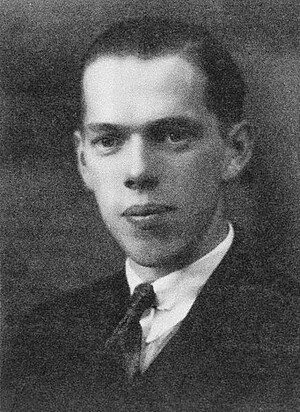
Philip Hauge Abelson
Formula:
Ni(C31H32N4)
Colour:
Pink-purple, dark greyish purple, pale purplish red, reddish brown
Lustre:
Adamantine, Sub-Metallic
Hardness:
2 - 3
Specific Gravity:
1.33 - 1.48
Crystal System:
Triclinic
Name:
For American physicist Philip Hauge Abelson (27 April 1913, Tacoma, Washington, USA - 1 August 2004, Bethesda, Maryland, USA). He was co-discoverer of element 93 (neptunium), editor of the periodical Science (1962-1984), and director of the Carnegie Institution of Washington's Geophysical Laboratory (1953-1971).
Type Locality:
Chemically a nickel porphyrine derivative, classified as deoxophylloerythroetioporphyrin. Unique combination of elements; the only organonickel mineral known. Formed at depth (Milton et al., 1978), likely from a chlorophyll (but likely not the chlorophyll-d) (Storm et al., 1984).
Abelsonite is accompanied by one or more structurally-related, nickel porphyrin compounds; the surrounding shale contains other Ni porphyrins, which represent a series of more extended homologues.
Structure details (Storm et al., 1984): (1) methyl groups in the 2, 3, 7, 12, and 18 positions, (2) ethyl group in the 8 and 17 positions. According to Milton et al.(1978) the molecules in abelsonite are not planar. The substitution pattern in the mineral is genetically related to a typical chlorophyll. The potential precursor to abelsonite is 17-desethyl, 17-propionic acid.
Worth of notice is an unnamed mineral coded as 'UM1984-14-CH:ClNOV', which is a natural vanadyl deoxophylloerythroetioporphyrin, the second known metalloporphyrin mineral, although not isostructural with abelsonite.
Abelsonite is accompanied by one or more structurally-related, nickel porphyrin compounds; the surrounding shale contains other Ni porphyrins, which represent a series of more extended homologues.
Structure details (Storm et al., 1984): (1) methyl groups in the 2, 3, 7, 12, and 18 positions, (2) ethyl group in the 8 and 17 positions. According to Milton et al.(1978) the molecules in abelsonite are not planar. The substitution pattern in the mineral is genetically related to a typical chlorophyll. The potential precursor to abelsonite is 17-desethyl, 17-propionic acid.
Worth of notice is an unnamed mineral coded as 'UM1984-14-CH:ClNOV', which is a natural vanadyl deoxophylloerythroetioporphyrin, the second known metalloporphyrin mineral, although not isostructural with abelsonite.
Unique Identifiers
Mindat ID:
1
Long-form identifier:
mindat:1:1:1:5
IMA Classification of Abelsonite
Approved
IMA Formula:
Ni2+C31H32N4
Approval year:
1975
First published:
1978
Classification of Abelsonite
10.CA.20
10 : ORGANIC COMPOUNDS
C : Miscellaneous Organic Minerals
A : Miscellaneous Organic Minerals
10 : ORGANIC COMPOUNDS
C : Miscellaneous Organic Minerals
A : Miscellaneous Organic Minerals
Dana 7th ed.:
50.4.9.1
50.4.9.1
50 : ORGANIC COMPOUNDS
4 : Miscellaneous
50 : ORGANIC COMPOUNDS
4 : Miscellaneous
32.15
32 : Hydrocarbons, Resins and other Organic Compounds
32 : Hydrocarbons, Resins and other Organic Compounds
Mineral Symbols
As of 2021 there are now IMA–CNMNC approved mineral symbols (abbreviations) for each mineral species, useful for tables and diagrams.
| Symbol | Source | Reference for Standard |
|---|---|---|
| Abl | IMA–CNMNC | Warr, L.N. (2021). IMA–CNMNC approved mineral symbols. Mineralogical Magazine, 85(3), 291-320. doi:10.1180/mgm.2021.43 |
Physical Properties of Abelsonite
Adamantine, Sub-Metallic
Transparency:
Translucent
Colour:
Pink-purple, dark greyish purple, pale purplish red, reddish brown
Streak:
Pink
Hardness:
2 - 3 on Mohs scale
Cleavage:
Poor/Indistinct
Probable on {111}.
Probable on {111}.
Density:
1.33 - 1.48 g/cm3 (Measured) 1.45 g/cm3 (Calculated)
Optical Data of Abelsonite
Type:
Biaxial
Chemistry of Abelsonite
Mindat Formula:
Ni(C31H32N4)
Element Weights:
Elements listed:
Crystallography of Abelsonite
Crystal System:
Triclinic
Class (H-M):
1 - Pinacoidal
Space Group:
P1
Cell Parameters:
a = 8.4416(5) Å, b = 10.8919(70) Å, c = 7.2749(40) Å
α = 90.465(2)°, β = 113.158(2)°, γ = 78.080(2)°
α = 90.465(2)°, β = 113.158(2)°, γ = 78.080(2)°
Ratio:
a:b:c = 0.775 : 1 : 0.668
Unit Cell V:
599.74 ų (Calculated from Unit Cell)
Z:
1
Comment:
Data at 100 K (Hummer et al., 2017).
Crystal Structure
Load
Unit Cell | Unit Cell Packed
2x2x2 | 3x3x3 | 4x4x4
Unit Cell | Unit Cell Packed
2x2x2 | 3x3x3 | 4x4x4
Show
Big Balls | Small Balls | Just Balls | Spacefill
Polyhedra Off | Si Polyhedra | All Polyhedra
Remove metal-metal sticks
Big Balls | Small Balls | Just Balls | Spacefill
Polyhedra Off | Si Polyhedra | All Polyhedra
Remove metal-metal sticks
Display Options
Black Background | White Background
Perspective On | Perspective Off
2D | Stereo | Red-Blue | Red-Cyan
Black Background | White Background
Perspective On | Perspective Off
2D | Stereo | Red-Blue | Red-Cyan
View
CIF File Best | x | y | z | a | b | c
CIF File Best | x | y | z | a | b | c
Rotation
Stop | Start
Stop | Start
Labels
Console Off | On | Grey | Yellow
Console Off | On | Grey | Yellow
Data courtesy of the American Mineralogist Crystal Structure Database. Click on an AMCSD ID to view structure
| ID | Species | Reference | Link | Year | Locality | Pressure (GPa) | Temp (K) |
|---|---|---|---|---|---|---|---|
| 0020838 | Abelsonite | Hummer D R, Noll B C, Hazen R M, Downs R T (2017) Crystal structure of abelsonite, the only known crystalline geoporphyrin American Mineralogist 102 1129-1132 | 2017 | Green River formation, Uintah County, Utah, USA | 0 | 100 |
CIF Raw Data - click here to close
X-Ray Powder Diffraction
Powder Diffraction Data:
| d-spacing | Intensity |
|---|---|
| 10.9 Å | (100) |
| 7.63 Å | (50) |
| 6.85 Å | (5) |
| 6.63 Å | (30) |
| 5.79 Å | (40) |
| 5.51 Å | (35) |
| 4.90 Å | (10) |
| 4.39 Å | (10) |
| 3.77 Å | (80) |
| 3.14 Å | (40) |
| 2.99 Å | (5) |
| 2.60 Å | (5) |
| 2.29 Å | (5) |
| 2.21 Å | (5) |
| 1.55 Å | (5) |
Geological Environment
Paragenetic Mode(s):
| Paragenetic Mode | Earliest Age (Ga) |
|---|---|
| Stage 7: Great Oxidation Event | <2.4 |
| 47c : [Carbonates, phosphates, borates, nitrates] | |
| Stage 10a: Neoproterozoic oxygenation/terrestrial biosphere | <0.6 |
| 50 : Coal and/or oil shale minerals | <0.36 |
Geological Setting:
Small aggregates, to 1 cm, of thin laths or
plates. Of secondary origin on fracture surfaces in oil shale.
plates. Of secondary origin on fracture surfaces in oil shale.
Type Occurrence of Abelsonite
General Appearance of Type Material:
Aggregates of platy crystals; as patches, sometimes over 2 mm in diameter.
Place of Conservation of Type Material:
The Natural History Museum, London, England, number 1979,135.
National Museum of Natural History, Washington, D.C., USA, numbers 143566, 145712.
National Museum of Natural History, Washington, D.C., USA, numbers 143566, 145712.
Geological Setting of Type Material:
Mahogany Zone oil shale; found in six stratigraphical zones ( M9, M7, M2, L6, L0, and K1); its genesis is connected with unique geochemical conditions of Lake Uinta; likely formed due to chlorophyll diagenesis; abelsonite's relatively insoluble precursor was likely transported by an aqueous solution towards sediments of favorable lithology.
Synonyms of Abelsonite
Other Language Names for Abelsonite
Czech:Abelsonit
Dutch:Abelsoniet
French:Abelsonite
German:Abelsonit
Italian:Abelsonite
Latvian:Ābelsonīts
Norwegian:Abelsonitt
Portuguese:Abelsonita
Spanish:Abelsonita
Related Minerals - Strunz-mindat Grouping
| 10.CA. | Allantoin | C4H6N4O3 |
| 10.CA. | Pabellóndepicaite | Cu2+2(N3C2H2)2(NH3)2(NO3)Cl · 2H2O |
| 10.CA. | Bojarite | Cu3(N3C2H2)3(OH)Cl2 · 6H2O |
| 10.CA. | Natrosulfatourea | Na2(SO4)[CO(NH2)2] |
| 10.CA. | 'Tholins' | (C,H,N) |
| 10.CA. | Fuchunite | Ba(C2H3O3)2(C2H4O3)2 |
| 10.CA.05 | Refikite | C20H32O2 |
| 10.CA.10 | Flagstaffite | C10H22O3 |
| 10.CA.15 | Hoelite | C14H8O2 |
| 10.CA.25 | Kladnoite | C6H4(CO)2NH |
| 10.CA.30 | 'Tinnunculite (of Chesnokov & Shcherbakova)' | C10H12N8O8 |
| 10.CA.30 | Guanine | C5H5N5O |
| 10.CA.35 | Urea | CO(NH2)2 |
| 10.CA.40 | Uricite | C5H4N4O3 |
| 10.CA.45 | Chanabayaite | CuCl(N3C2H2)(NH3) · 0.25H2O |
| 10.CA.50 | Triazolite | NaCu2(N3C2H2)2(NH3)2Cl3 · 4H2O |
| 10.CA.55 | Ernstburkeite | Mg(CH3SO3)2 · 12H2O |
| 10.CA.60 | Joanneumite | Cu(C3N3O3H2)2(NH3)2 |
| 10.CA.65 | Tinnunculite | C5H4N4O3 · 2H2O |
| 10.CA.70 | 'Dopplerite' |
Other Information
IR Spectrum:
bands [cm-1]: 2970, 2915, 2860 (C-H stretching); 620w, 602w, 535w, 512w, 441s, 392w
Notes:
UV-Vis bands [nm]: 392, 510, 550 in benzene or 390, 512, and 552 in acetone (suggestible for deoxophylloerythroetioporphyrin with an isocyclic ring); also 618 band present, suggesting presence of some free-base porphyrin
Health Risks:
No information on health risks for this material has been entered into the database. You should always treat mineral specimens with care.
Internet Links for Abelsonite
mindat.org URL:
https://www.mindat.org/min-1.html
Please feel free to link to this page.
Please feel free to link to this page.
Search Engines:
External Links:
Mineral Dealers:
References for Abelsonite
Reference List:
Milton, Charles, Dwornik, Edward J., Estep-Barnes, Patricia A., Finkelman, Robert B., Pabst, Adolf, Palmer, Susan (1978) Abelsonite, nickel porphyrin, a new mineral from the Green River Formation, Utah. American Mineralogist, 63 (9-10) 930-937
Storm, C. B.; Krane, J.; Skjetne, T.; Telnaes, N.; Branthaver, J. F.; Baker, e. W. (1984) The Structure of Abelsonite. Science, 223 (4640). p.1075-1076. doi:10.1126/science.223.4640.1075
Miller, SA; Hambley, TW; Taylor, JC (1984) Crystal and molecular structure of a natural vanadyl porphyrin. Australian Journal of Chemistry, 37 (4). 761-766 doi:10.1071/ch9840761(Abs. in: Dunn, P.J., Fleischer, M., Langley, R.H., Shigley, J.E., Zilczer, J.A. (1988): New mineral names. American Mineralogist: 70: 881)
Mason, G.M., Trudell, L.G., Branthaver, J.F. (1989) Review of the stratigraphic distribution and diagenetic history of abelsonite. Organic Geochemistry, 14 (6). 585-594 doi:10.1016/0146-6380(89)90038-7
Localities for Abelsonite
Showing 10 localities.
 symbol to view information about a locality.
The
symbol to view information about a locality.
The Locality List
 - This locality has map coordinates listed.
- This locality has estimated coordinates.
ⓘ - Click for references and further information on this occurrence.
? - Indicates mineral may be doubtful at this locality.
- This locality has map coordinates listed.
- This locality has estimated coordinates.
ⓘ - Click for references and further information on this occurrence.
? - Indicates mineral may be doubtful at this locality.
 - Good crystals or important locality for species.
 - World class for species or very significant.
(TL) - Type Locality for a valid mineral species.
(FRL) - First Recorded Locality for everything else (eg varieties).
- World class for species or very significant.
(TL) - Type Locality for a valid mineral species.
(FRL) - First Recorded Locality for everything else (eg varieties).
All localities listed without proper references should be considered as questionable.
USA | |
| Mineralogical Society of America - ... |
| Milton (1977) | |
| Milton et al. (1978) |
| Milton et al. (1978) | |
| Milton et al. (1978) | |
| Milton et al. (1978) | |
| Milton et al. (1978) | |
| Milton et al. (1978) | |
| Milton et al. (1978) | |
| Milton et al. (1978) |
Quick NavTopAbout AbelsoniteUnique IdentifiersIMA Classification Classification Mineral SymbolsPhysical Properties Optical Data Chemistry Crystallography Crystal StructureX-Ray Powder DiffractionGeological EnvironmentType Occurrence SynonymsOther LanguagesStrunz-MindatOther InformationInternet Links References Localities Locality List

Uintah County, Utah, USA