
Mission pit, Mission complex, San Xavier, Pima Mining District, Sierrita Mountains, Pima County, Arizona, USAi
| Regional Level Types | |
|---|---|
| Mission pit | Pit |
| Mission complex | Complex |
| San Xavier | - not defined - |
| Pima Mining District | Mining District |
| Sierrita Mountains | Mountain Range |
| Pima County | County |
| Arizona | State |
| USA | Country |
This page is currently not sponsored. Click here to sponsor this page.


Latitude & Longitude (WGS84):
31° 59' 31'' North , 111° 3' 48'' West
Latitude & Longitude (decimal):
Type:
Köppen climate type:
Nearest Settlements:
| Place | Population | Distance |
|---|---|---|
| Sahuarita | 25,707 (2017) | 10.8km |
| Summit | 5,372 (2011) | 13.4km |
| East Sahuarita | 1,622 (2006) | 13.8km |
| Valencia West | 9,355 (2011) | 16.3km |
| Green Valley | 21,391 (2011) | 16.7km |
Nearest Clubs:
Local clubs are the best way to get access to collecting localities
Local clubs are the best way to get access to collecting localities
| Club | Location | Distance |
|---|---|---|
| Old Pueblo Lapidary Club | Tucson, Arizona | 29km |
| Tucson Gem and Mineral Society | Tucson, Arizona | 29km |
Other/historical names associated with this locality:
Mission Mine [old]; East Pima Mine; Mission Porphyry Copper deposit
A large surface producer Cu-Ag-Zn-Mo-Pb-Au-Sn-W-Fluorspar-Cd-Sn-W-PGE mine located in East-central sec. 36, T16S, R12E & West-central sec. 31, T16S, R13E, G&SRM, 17 miles S of Tucson, on private land. Discovered by geologists of ASARCO in 1953. Owned and operated by the American Smelting & Refining Corporation (ASARCO).
ASARCO geologists discovered this deposit by drilling through about 200 feet of valley gravels in 1953. By 1961, a major new open-pit mine was opened, and a mill was constructed.
Mineralization is a skarn-related copper porphyry deposit with seams and disseminations of copper carbonates and sulfides with minor zinc, lead and molybdenum minerals in a pyrometasomatic deposit in altered, complexly folded, and faulted Paleozoic limestone and Triassic sedimentary and volcanic formations intruded by Laramide and Tertiary intrusives. There is a thin secondary enrichment zone. The host rock unit is the Scherrer Formation. The ore zone is 1,609.3 meters long, 804.65 meters wide, depth to top of 60.96 meters, depth to bottom of 213.36 meters, at 152.4 meters thick, and is flat-lying. Ore control was tactite and hornfels sedimentary units, particularly limy units, less in argillite; contact of the Papago Formation with underlying Paleozoic sedimentary rocks; low-angle thrust faults. Ore concentration was hydrothermal-metasomatic fluids migrating through altered porphyry, tactite, and hornfels. Alteration includes tactite, hornfels, leaching and enrichment confined to a thin layer.
There was a 40 foot thick zone of supergene enrichment clays, malachite, native copper; oxidation occurred to about 200 feet along some faults; there was also a calcite zone 20 feet thick. Late fluorite in calcite-scheelite-galena-pyrite. PGM recovered as a by-product at the smelter. The bulk of the replacement ore occurred in garnet and pyrozene tactites. There was a 2 mile wide alteration halo.
Local structures include thrust and normal faults; an NW-trending anticline.
Discovery of this deposit was by scout drilling. Initial production rate was 15,000-20,000 tons Cu ore/day after investment of $34 million; expansion: $13.1 million. ASARCO approved spending of $94 million in February of 1989 to increase capacity at Mission and to refurbish the adjacent Pima mill and concentrator that it bought for approximately $6 million. Mill capacity: 41,000 short tons/day.
Workings are a large open pit operation overall 2,225.04 meters long, 2,194.56 meters wide and 301.75 meters deep. The above figures represent the merged product of the Mission, Pima, and Eisenhower Mines into a single, large open pit. Produced over 77,600,000 tons of ore from 1961 through 1972. This ore averages about 0.7% Cu, 0.13 oz. Ag/T and considerable by-product zinc, molybdenum and lead. Very little gold.
Reserve-Resource 1978 estimate excludes contribution of 31.5 million tons to the Eisenhower Mining Co. in September, 1985. ASARCO acquired the adjacent Pima property with 39 million tons of ore. It obtained another 14 million tons of reserves in April, 1987, when it bought the Eisenhower operation. In late 1987 it acquired an additional 14 million tons of reserves with the undeveloped Mineral Hill property. These purchases boosted Mission's reserves by 56%. Purchase of the Helvetica property, 15 miles east of the Mission complex, added 280 million tons of sulfide ore grading 0.6% Cu and 23 million tons at 0.8%.
Select Mineral List Type
Standard Detailed Gallery Strunz Chemical ElementsCommodity List
This is a list of exploitable or exploited mineral commodities recorded at this locality.Mineral List
30 valid minerals.
Rock Types Recorded
Note: data is currently VERY limited. Please bear with us while we work towards adding this information!
Select Rock List Type
Alphabetical List Tree DiagramDetailed Mineral List:
| ⓘ Actinolite Formula: ◻Ca2(Mg4.5-2.5Fe0.5-2.5)Si8O22(OH)2 Colour: Blue-green Description: Small veinlets, commonly 1/16 to 1 inch wide, not everywhere having a medially disposed stringer of pyrite and chalcopyrite, in hornfels, western part of the Mission orebody. |
| ⓘ Andradite Formula: Ca3Fe3+2(SiO4)3 Colour: Pale olive-green Description: Primary constituent of tactite formed in Paleozoic limestones. References: |
| ⓘ Anhydrite Formula: CaSO4 References: |
| ⓘ Azurite Formula: Cu3(CO3)2(OH)2 |
| ⓘ 'Biotite' Formula: K(Fe2+/Mg)2(Al/Fe3+/Mg/Ti)([Si/Al/Fe]2Si2O10)(OH/F)2 |
| ⓘ Bornite Formula: Cu5FeS4 References: |
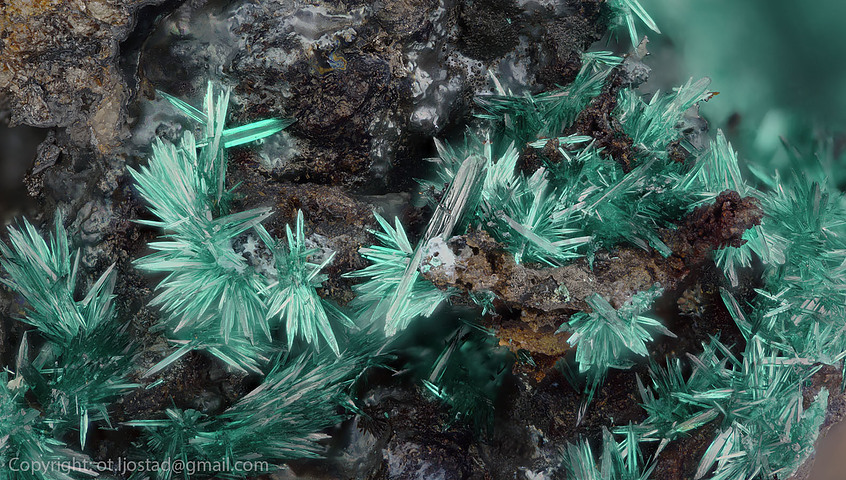
| ⓘ Brochantite Formula: Cu4(SO4)(OH)6 Habit: Well-formed crystals |
| ⓘ Calcite Formula: CaCO3 |
| ⓘ Chalcocite Formula: Cu2S |
| ⓘ Chalcopyrite Formula: CuFeS2 Description: Principal ore mineral. References: |
| ⓘ 'Chlorite Group' |
| ⓘ Chrysocolla Formula: Cu2-xAlx(H2-xSi2O5)(OH)4 · nH2O, x < 1 |
| ⓘ 'Clay minerals' |
| ⓘ Cubanite Formula: CuFe2S3 |
| ⓘ Cuprite Formula: Cu2O |
| ⓘ Cuprite var. Chalcotrichite Formula: Cu2O |
| ⓘ Diopside Formula: CaMgSi2O6 Description: Most abundant mineral in the hornfels host rock. References: |
| ⓘ Dolomite Formula: CaMg(CO3)2 Description: Occurs as micro-crystals with fluorite. |
| ⓘ Fluorite Formula: CaF2 Description: Occurs as micro-crystals with dolomite and tetrahedrite. |
| ⓘ Galena Formula: PbS |
| ⓘ 'Garnet Group' Formula: X3Z2(SiO4)3 |
| ⓘ Gypsum Formula: CaSO4 · 2H2O Description: Occurs as massive gypsum. |
| ⓘ Gypsum var. Selenite Formula: CaSO4 · 2H2O Description: Occurs as colorless crystallized material enclosing copper and rarely chalcotrichite; occurs as tiny crystals lining fractures in massive anhydrite and as free-growing crystals in cavities in the marble. |
| ⓘ Hematite Formula: Fe2O3 Description: Large areas of dark-colored hematite films and stains in white marble. References: |
| ⓘ Jarosite Formula: KFe3+3(SO4)2(OH)6 |
| ⓘ 'Limonite' |
| ⓘ Magnetite Formula: Fe2+Fe3+2O4 |
| ⓘ Malachite Formula: Cu2(CO3)(OH)2 |
| ⓘ Molybdenite Formula: MoS2 Description: Large masses (to 3 feet [1 meter] diameter observed) of molybdenite in marble. References: |
| ⓘ Muscovite Formula: KAl2(AlSi3O10)(OH)2 |
| ⓘ Muscovite var. Sericite Formula: KAl2(AlSi3O10)(OH)2 |
| ⓘ Native Copper Formula: Cu |
| ⓘ Pyrite Formula: FeS2 |
| ⓘ 'Pyroxene Group' Formula: ADSi2O6 |
| ⓘ Scheelite Formula: Ca(WO4) Fluorescence: Bright light blue (SW UV). Description: Occurs disseminated in massive anhydrite and marble. References: |
| ⓘ Sphalerite Formula: ZnS |
| ⓘ Sphalerite var. Marmatite Formula: (Zn,Fe)S Colour: Black Description: Masses of crystalline material in a matrix of snow-white wollastonite and marble. References: |
| ⓘ 'Tetrahedrite Subgroup' Formula: Cu6(Cu4C2+2)Sb4S12S |
| ⓘ Tremolite Formula: ◻Ca2Mg5(Si8O22)(OH)2 Description: Occurs in the hornfels host rock. References: |
| ⓘ Witherite Formula: BaCO3 Description: Occurs as micro-crystals. |
| ⓘ Wollastonite Formula: Ca3(Si3O9) Colour: Snow-white Fluorescence: Dim to medium-bright golden-yellow to orange-yellow (SW UV). Description: Occurs as large masses hosting the ore sulfide minerals (skarn). Radial-fibrous cross-sections with sulfides in the interstitial spaces of the fibers. Also as clean, snow-white masses with associated black marmatite (most fluorescent material). References: |
Gallery:

List of minerals arranged by Strunz 10th Edition classification
| Group 1 - Elements | |||
|---|---|---|---|
| ⓘ | Native Copper | 1.AA.05 | Cu |
| Group 2 - Sulphides and Sulfosalts | |||
| ⓘ | Chalcocite | 2.BA.05 | Cu2S |
| ⓘ | Bornite | 2.BA.15 | Cu5FeS4 |
| ⓘ | Sphalerite | 2.CB.05a | ZnS |
| ⓘ | var. Marmatite | 2.CB.05a | (Zn,Fe)S |
| ⓘ | Chalcopyrite | 2.CB.10a | CuFeS2 |
| ⓘ | Cubanite | 2.CB.55a | CuFe2S3 |
| ⓘ | Galena | 2.CD.10 | PbS |
| ⓘ | Molybdenite | 2.EA.30 | MoS2 |
| ⓘ | Pyrite | 2.EB.05a | FeS2 |
| ⓘ | 'Tetrahedrite Subgroup' | 2.GB.05 | Cu6(Cu4C2+2)Sb4S12S |
| Group 3 - Halides | |||
| ⓘ | Fluorite | 3.AB.25 | CaF2 |
| Group 4 - Oxides and Hydroxides | |||
| ⓘ | Cuprite var. Chalcotrichite | 4.AA.10 | Cu2O |
| ⓘ | 4.AA.10 | Cu2O | |
| ⓘ | Magnetite | 4.BB.05 | Fe2+Fe3+2O4 |
| ⓘ | Hematite | 4.CB.05 | Fe2O3 |
| Group 5 - Nitrates and Carbonates | |||
| ⓘ | Calcite | 5.AB.05 | CaCO3 |
| ⓘ | Dolomite | 5.AB.10 | CaMg(CO3)2 |
| ⓘ | Witherite | 5.AB.15 | BaCO3 |
| ⓘ | Azurite | 5.BA.05 | Cu3(CO3)2(OH)2 |
| ⓘ | Malachite | 5.BA.10 | Cu2(CO3)(OH)2 |
| Group 7 - Sulphates, Chromates, Molybdates and Tungstates | |||
| ⓘ | Anhydrite | 7.AD.30 | CaSO4 |
| ⓘ | Brochantite | 7.BB.25 | Cu4(SO4)(OH)6 |
| ⓘ | Jarosite | 7.BC.10 | KFe3+3(SO4)2(OH)6 |
| ⓘ | Gypsum | 7.CD.40 | CaSO4 · 2H2O |
| ⓘ | var. Selenite | 7.CD.40 | CaSO4 · 2H2O |
| ⓘ | Scheelite | 7.GA.05 | Ca(WO4) |
| Group 9 - Silicates | |||
| ⓘ | Andradite | 9.AD.25 | Ca3Fe3+2(SiO4)3 |
| ⓘ | Diopside | 9.DA.15 | CaMgSi2O6 |
| ⓘ | Actinolite | 9.DE.10 | ◻Ca2(Mg4.5-2.5Fe0.5-2.5)Si8O22(OH)2 |
| ⓘ | Tremolite | 9.DE.10 | ◻Ca2Mg5(Si8O22)(OH)2 |
| ⓘ | Wollastonite | 9.DG.05 | Ca3(Si3O9) |
| ⓘ | Muscovite | 9.EC.15 | KAl2(AlSi3O10)(OH)2 |
| ⓘ | var. Sericite | 9.EC.15 | KAl2(AlSi3O10)(OH)2 |
| ⓘ | Chrysocolla | 9.ED.20 | Cu2-xAlx(H2-xSi2O5)(OH)4 · nH2O, x < 1 |
| Unclassified | |||
| ⓘ | 'Biotite' | - | K(Fe2+/Mg)2(Al/Fe3+/Mg/Ti)([Si/Al/Fe]2Si2O10)(OH/F)2 |
| ⓘ | 'Chlorite Group' | - | |
| ⓘ | 'Clay minerals' | - | |
| ⓘ | 'Limonite' | - | |
| ⓘ | 'Pyroxene Group' | - | ADSi2O6 |
| ⓘ | 'Garnet Group' | - | X3Z2(SiO4)3 |
List of minerals for each chemical element
| H | Hydrogen | |
|---|---|---|
| H | ⓘ Actinolite | ◻Ca2(Mg4.5-2.5Fe0.5-2.5)Si8O22(OH)2 |
| H | ⓘ Azurite | Cu3(CO3)2(OH)2 |
| H | ⓘ Biotite | K(Fe2+/Mg)2(Al/Fe3+/Mg/Ti)([Si/Al/Fe]2Si2O10)(OH/F)2 |
| H | ⓘ Brochantite | Cu4(SO4)(OH)6 |
| H | ⓘ Chrysocolla | Cu2-xAlx(H2-xSi2O5)(OH)4 · nH2O, x < 1 |
| H | ⓘ Gypsum | CaSO4 · 2H2O |
| H | ⓘ Jarosite | KFe33+(SO4)2(OH)6 |
| H | ⓘ Malachite | Cu2(CO3)(OH)2 |
| H | ⓘ Muscovite | KAl2(AlSi3O10)(OH)2 |
| H | ⓘ Tremolite | ◻Ca2Mg5(Si8O22)(OH)2 |
| H | ⓘ Gypsum var. Selenite | CaSO4 · 2H2O |
| H | ⓘ Muscovite var. Sericite | KAl2(AlSi3O10)(OH)2 |
| C | Carbon | |
| C | ⓘ Azurite | Cu3(CO3)2(OH)2 |
| C | ⓘ Calcite | CaCO3 |
| C | ⓘ Dolomite | CaMg(CO3)2 |
| C | ⓘ Malachite | Cu2(CO3)(OH)2 |
| C | ⓘ Witherite | BaCO3 |
| O | Oxygen | |
| O | ⓘ Actinolite | ◻Ca2(Mg4.5-2.5Fe0.5-2.5)Si8O22(OH)2 |
| O | ⓘ Andradite | Ca3Fe23+(SiO4)3 |
| O | ⓘ Anhydrite | CaSO4 |
| O | ⓘ Azurite | Cu3(CO3)2(OH)2 |
| O | ⓘ Biotite | K(Fe2+/Mg)2(Al/Fe3+/Mg/Ti)([Si/Al/Fe]2Si2O10)(OH/F)2 |
| O | ⓘ Brochantite | Cu4(SO4)(OH)6 |
| O | ⓘ Calcite | CaCO3 |
| O | ⓘ Cuprite var. Chalcotrichite | Cu2O |
| O | ⓘ Chrysocolla | Cu2-xAlx(H2-xSi2O5)(OH)4 · nH2O, x < 1 |
| O | ⓘ Cuprite | Cu2O |
| O | ⓘ Diopside | CaMgSi2O6 |
| O | ⓘ Dolomite | CaMg(CO3)2 |
| O | ⓘ Gypsum | CaSO4 · 2H2O |
| O | ⓘ Hematite | Fe2O3 |
| O | ⓘ Jarosite | KFe33+(SO4)2(OH)6 |
| O | ⓘ Magnetite | Fe2+Fe23+O4 |
| O | ⓘ Malachite | Cu2(CO3)(OH)2 |
| O | ⓘ Muscovite | KAl2(AlSi3O10)(OH)2 |
| O | ⓘ Scheelite | Ca(WO4) |
| O | ⓘ Tremolite | ◻Ca2Mg5(Si8O22)(OH)2 |
| O | ⓘ Witherite | BaCO3 |
| O | ⓘ Wollastonite | Ca3(Si3O9) |
| O | ⓘ Gypsum var. Selenite | CaSO4 · 2H2O |
| O | ⓘ Muscovite var. Sericite | KAl2(AlSi3O10)(OH)2 |
| O | ⓘ Pyroxene Group | ADSi2O6 |
| O | ⓘ Garnet Group | X3Z2(SiO4)3 |
| F | Fluorine | |
| F | ⓘ Biotite | K(Fe2+/Mg)2(Al/Fe3+/Mg/Ti)([Si/Al/Fe]2Si2O10)(OH/F)2 |
| F | ⓘ Fluorite | CaF2 |
| Mg | Magnesium | |
| Mg | ⓘ Actinolite | ◻Ca2(Mg4.5-2.5Fe0.5-2.5)Si8O22(OH)2 |
| Mg | ⓘ Biotite | K(Fe2+/Mg)2(Al/Fe3+/Mg/Ti)([Si/Al/Fe]2Si2O10)(OH/F)2 |
| Mg | ⓘ Diopside | CaMgSi2O6 |
| Mg | ⓘ Dolomite | CaMg(CO3)2 |
| Mg | ⓘ Tremolite | ◻Ca2Mg5(Si8O22)(OH)2 |
| Al | Aluminium | |
| Al | ⓘ Biotite | K(Fe2+/Mg)2(Al/Fe3+/Mg/Ti)([Si/Al/Fe]2Si2O10)(OH/F)2 |
| Al | ⓘ Chrysocolla | Cu2-xAlx(H2-xSi2O5)(OH)4 · nH2O, x < 1 |
| Al | ⓘ Muscovite | KAl2(AlSi3O10)(OH)2 |
| Al | ⓘ Muscovite var. Sericite | KAl2(AlSi3O10)(OH)2 |
| Si | Silicon | |
| Si | ⓘ Actinolite | ◻Ca2(Mg4.5-2.5Fe0.5-2.5)Si8O22(OH)2 |
| Si | ⓘ Andradite | Ca3Fe23+(SiO4)3 |
| Si | ⓘ Biotite | K(Fe2+/Mg)2(Al/Fe3+/Mg/Ti)([Si/Al/Fe]2Si2O10)(OH/F)2 |
| Si | ⓘ Chrysocolla | Cu2-xAlx(H2-xSi2O5)(OH)4 · nH2O, x < 1 |
| Si | ⓘ Diopside | CaMgSi2O6 |
| Si | ⓘ Muscovite | KAl2(AlSi3O10)(OH)2 |
| Si | ⓘ Tremolite | ◻Ca2Mg5(Si8O22)(OH)2 |
| Si | ⓘ Wollastonite | Ca3(Si3O9) |
| Si | ⓘ Muscovite var. Sericite | KAl2(AlSi3O10)(OH)2 |
| Si | ⓘ Pyroxene Group | ADSi2O6 |
| Si | ⓘ Garnet Group | X3Z2(SiO4)3 |
| S | Sulfur | |
| S | ⓘ Anhydrite | CaSO4 |
| S | ⓘ Bornite | Cu5FeS4 |
| S | ⓘ Brochantite | Cu4(SO4)(OH)6 |
| S | ⓘ Chalcopyrite | CuFeS2 |
| S | ⓘ Chalcocite | Cu2S |
| S | ⓘ Cubanite | CuFe2S3 |
| S | ⓘ Galena | PbS |
| S | ⓘ Gypsum | CaSO4 · 2H2O |
| S | ⓘ Jarosite | KFe33+(SO4)2(OH)6 |
| S | ⓘ Molybdenite | MoS2 |
| S | ⓘ Pyrite | FeS2 |
| S | ⓘ Sphalerite | ZnS |
| S | ⓘ Tetrahedrite Subgroup | Cu6(Cu4C22+)Sb4S12S |
| S | ⓘ Gypsum var. Selenite | CaSO4 · 2H2O |
| S | ⓘ Sphalerite var. Marmatite | (Zn,Fe)S |
| K | Potassium | |
| K | ⓘ Biotite | K(Fe2+/Mg)2(Al/Fe3+/Mg/Ti)([Si/Al/Fe]2Si2O10)(OH/F)2 |
| K | ⓘ Jarosite | KFe33+(SO4)2(OH)6 |
| K | ⓘ Muscovite | KAl2(AlSi3O10)(OH)2 |
| K | ⓘ Muscovite var. Sericite | KAl2(AlSi3O10)(OH)2 |
| Ca | Calcium | |
| Ca | ⓘ Actinolite | ◻Ca2(Mg4.5-2.5Fe0.5-2.5)Si8O22(OH)2 |
| Ca | ⓘ Andradite | Ca3Fe23+(SiO4)3 |
| Ca | ⓘ Anhydrite | CaSO4 |
| Ca | ⓘ Calcite | CaCO3 |
| Ca | ⓘ Diopside | CaMgSi2O6 |
| Ca | ⓘ Dolomite | CaMg(CO3)2 |
| Ca | ⓘ Fluorite | CaF2 |
| Ca | ⓘ Gypsum | CaSO4 · 2H2O |
| Ca | ⓘ Scheelite | Ca(WO4) |
| Ca | ⓘ Tremolite | ◻Ca2Mg5(Si8O22)(OH)2 |
| Ca | ⓘ Wollastonite | Ca3(Si3O9) |
| Ca | ⓘ Gypsum var. Selenite | CaSO4 · 2H2O |
| Ti | Titanium | |
| Ti | ⓘ Biotite | K(Fe2+/Mg)2(Al/Fe3+/Mg/Ti)([Si/Al/Fe]2Si2O10)(OH/F)2 |
| Fe | Iron | |
| Fe | ⓘ Actinolite | ◻Ca2(Mg4.5-2.5Fe0.5-2.5)Si8O22(OH)2 |
| Fe | ⓘ Andradite | Ca3Fe23+(SiO4)3 |
| Fe | ⓘ Biotite | K(Fe2+/Mg)2(Al/Fe3+/Mg/Ti)([Si/Al/Fe]2Si2O10)(OH/F)2 |
| Fe | ⓘ Bornite | Cu5FeS4 |
| Fe | ⓘ Chalcopyrite | CuFeS2 |
| Fe | ⓘ Cubanite | CuFe2S3 |
| Fe | ⓘ Hematite | Fe2O3 |
| Fe | ⓘ Jarosite | KFe33+(SO4)2(OH)6 |
| Fe | ⓘ Magnetite | Fe2+Fe23+O4 |
| Fe | ⓘ Pyrite | FeS2 |
| Fe | ⓘ Sphalerite var. Marmatite | (Zn,Fe)S |
| Cu | Copper | |
| Cu | ⓘ Azurite | Cu3(CO3)2(OH)2 |
| Cu | ⓘ Bornite | Cu5FeS4 |
| Cu | ⓘ Brochantite | Cu4(SO4)(OH)6 |
| Cu | ⓘ Chalcopyrite | CuFeS2 |
| Cu | ⓘ Chalcocite | Cu2S |
| Cu | ⓘ Cuprite var. Chalcotrichite | Cu2O |
| Cu | ⓘ Chrysocolla | Cu2-xAlx(H2-xSi2O5)(OH)4 · nH2O, x < 1 |
| Cu | ⓘ Cubanite | CuFe2S3 |
| Cu | ⓘ Cuprite | Cu2O |
| Cu | ⓘ Native Copper | Cu |
| Cu | ⓘ Malachite | Cu2(CO3)(OH)2 |
| Cu | ⓘ Tetrahedrite Subgroup | Cu6(Cu4C22+)Sb4S12S |
| Zn | Zinc | |
| Zn | ⓘ Sphalerite | ZnS |
| Zn | ⓘ Sphalerite var. Marmatite | (Zn,Fe)S |
| Mo | Molybdenum | |
| Mo | ⓘ Molybdenite | MoS2 |
| Sb | Antimony | |
| Sb | ⓘ Tetrahedrite Subgroup | Cu6(Cu4C22+)Sb4S12S |
| Ba | Barium | |
| Ba | ⓘ Witherite | BaCO3 |
| W | Tungsten | |
| W | ⓘ Scheelite | Ca(WO4) |
| Pb | Lead | |
| Pb | ⓘ Galena | PbS |
Other Databases
| Link to USGS MRDS: | 10111429 |
|---|
Other Regions, Features and Areas containing this locality
Mexico
- Sierra Madre OccidentalMountain Range
North AmericaContinent
- Sonoran DesertDesert
North America PlateTectonic Plate
- Basin and Range BasinsBasin
- Mazatzal DomainDomain
- Southern Basin and RangeWide Rift
This page contains all mineral locality references listed on mindat.org. This does not claim to be a complete list. If you know of more minerals from this site, please register so you can add to our database. This locality information is for reference purposes only. You should never attempt to
visit any sites listed in mindat.org without first ensuring that you have the permission of the land and/or mineral rights holders
for access and that you are aware of all safety precautions necessary.
References
Anthony, John W., Williams, Sidney A., Bideaux, Richard A., Grant, Raymond W. (1995) Mineralogy of Arizona (3rd ed.). University of Arizona Press.pages 111, 146, 166, 185, 205, 207, 224, 242, 402, 421

Mission pit, Mission complex, San Xavier, Pima Mining District, Sierrita Mountains, Pima County, Arizona, USA