
Akatoreite
A valid IMA mineral species
This page is currently not sponsored. Click here to sponsor this page.
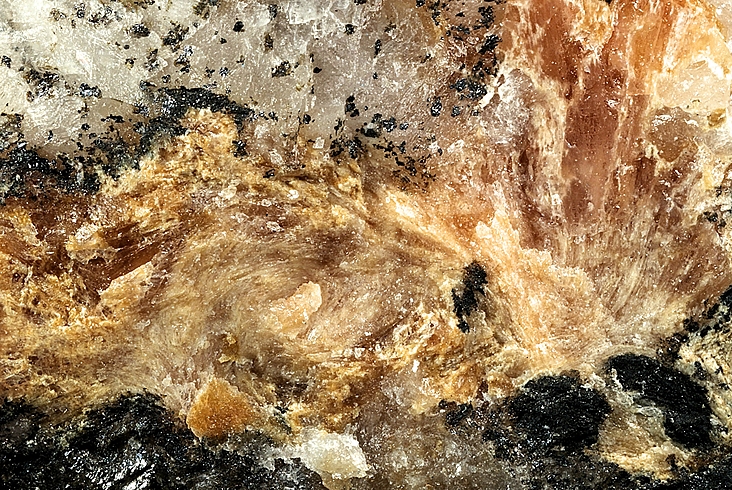


About Akatoreite
Formula:
Mn2+9Al2Si8O24(OH)8
Colour:
Yellow-orange to orange-brown
Lustre:
Vitreous
Hardness:
6
Specific Gravity:
3.48
Crystal System:
Triclinic
Name:
Named after its discovery locality at Akatore in New Zealand.
Type Locality:
Unique Identifiers
Mindat ID:
68
Long-form identifier:
mindat:1:1:68:6
IMA Classification of Akatoreite
Approved
Approval year:
1969
Classification of Akatoreite
9.BH.15
9 : SILICATES (Germanates)
B : Sorosilicates
H : Sorosilicates with Si3O10, Si4O11, etc. anions; cations in tetrahedral [4] and greater coordination
9 : SILICATES (Germanates)
B : Sorosilicates
H : Sorosilicates with Si3O10, Si4O11, etc. anions; cations in tetrahedral [4] and greater coordination
57.2.3.1
57 : SOROSILICATES Si3O10 Groups and Larger Noncyclic Groups
2 : Insular Si3O10 and Larger Noncyclic Groups with [Si4O13] groups
57 : SOROSILICATES Si3O10 Groups and Larger Noncyclic Groups
2 : Insular Si3O10 and Larger Noncyclic Groups with [Si4O13] groups
16.16.8
16 : Silicates Containing Aluminum and other Metals
16 : Aluminosilicates of Mn
16 : Silicates Containing Aluminum and other Metals
16 : Aluminosilicates of Mn
Mineral Symbols
As of 2021 there are now IMA–CNMNC approved mineral symbols (abbreviations) for each mineral species, useful for tables and diagrams.
| Symbol | Source | Reference for Standard |
|---|---|---|
| Akt | IMA–CNMNC | Warr, L.N. (2021). IMA–CNMNC approved mineral symbols. Mineralogical Magazine, 85(3), 291-320. doi:10.1180/mgm.2021.43 |
Physical Properties of Akatoreite
Vitreous
Transparency:
Transparent
Colour:
Yellow-orange to orange-brown
Streak:
Yellowish white
Hardness:
6 on Mohs scale
Cleavage:
Perfect
Good on {010} , poor on {012}
Good on {010} , poor on {012}
Density:
3.48 g/cm3 (Measured) 3.47 g/cm3 (Calculated)
Optical Data of Akatoreite
Type:
Biaxial (+)
RI values:
nα = 1.698 nβ = 1.704 nγ = 1.72
2V:
Measured: 65° , Calculated: 64°
Max. Birefringence:
δ = 0.022
Based on recorded range of RI values above.
Based on recorded range of RI values above.
Interference Colours:
The colours simulate birefringence patterns seen in thin section under crossed polars. They do not take into account mineral colouration or opacity.
Michel-Levy Bar The default colours simulate the birefringence range for a 30 µm thin-section thickness. Adjust the slider to simulate a different thickness.
Grain Simulation You can rotate the grain simulation to show how this range might look as you rotated a sample under crossed polars.
The colours simulate birefringence patterns seen in thin section under crossed polars. They do not take into account mineral colouration or opacity.
Michel-Levy Bar The default colours simulate the birefringence range for a 30 µm thin-section thickness. Adjust the slider to simulate a different thickness.
Grain Simulation You can rotate the grain simulation to show how this range might look as you rotated a sample under crossed polars.
Surface Relief:
Moderate
Dispersion:
relatively strong
Pleochroism:
Visible
Comments:
X = colorless; Y = pale yellow; Z = light canary-yellow
Chemistry of Akatoreite
Mindat Formula:
Mn2+9Al2Si8O24(OH)8
Element Weights:
Common Impurities:
Ti,Fe,Mg,Ca
Crystallography of Akatoreite
Crystal System:
Triclinic
Class (H-M):
1 - Pinacoidal
Space Group:
P1
Cell Parameters:
a = 8.337(2) Å, b = 10.367(2) Å, c = 7.629(1) Å
α = 104.46(1)°, β = 93.81(2)°, γ = 104.18(1)°
α = 104.46(1)°, β = 93.81(2)°, γ = 104.18(1)°
Ratio:
a:b:c = 0.804 : 1 : 0.736
Unit Cell V:
613.28 ų (Calculated from Unit Cell)
Z:
1
Morphology:
Rarely as sheaves, to 1 cm, of radiating prisms, elongated and striated parallel[100] ; fibrous, fine granular, massive.
Twinning:
Twinning: On {021} twin axis perpindicular
{021}, lamellar in thin section.
{021}, lamellar in thin section.
Crystal Structure
Load
Unit Cell | Unit Cell Packed
2x2x2 | 3x3x3 | 4x4x4
Unit Cell | Unit Cell Packed
2x2x2 | 3x3x3 | 4x4x4
Show
Big Balls | Small Balls | Just Balls | Spacefill
Polyhedra Off | Si Polyhedra | All Polyhedra
Remove metal-metal sticks
Big Balls | Small Balls | Just Balls | Spacefill
Polyhedra Off | Si Polyhedra | All Polyhedra
Remove metal-metal sticks
Display Options
Black Background | White Background
Perspective On | Perspective Off
2D | Stereo | Red-Blue | Red-Cyan
Black Background | White Background
Perspective On | Perspective Off
2D | Stereo | Red-Blue | Red-Cyan
View
CIF File Best | x | y | z | a | b | c
CIF File Best | x | y | z | a | b | c
Rotation
Stop | Start
Stop | Start
Labels
Console Off | On | Grey | Yellow
Console Off | On | Grey | Yellow
Data courtesy of the American Mineralogist Crystal Structure Database. Click on an AMCSD ID to view structure
| ID | Species | Reference | Link | Year | Locality | Pressure (GPa) | Temp (K) |
|---|---|---|---|---|---|---|---|
| 0005298 | Akatoreite | Burns P C, Hawthorne F C (1993) Edge-sharing MnO4 tetrahedra in the structure of akatoreite, Mn9Al2Si8O24(OH)8 The Canadian Mineralogist 31 321-329 |  | 1993 | 0 | 293 |
CIF Raw Data - click here to close
X-Ray Powder Diffraction
Powder Diffraction Data:
| d-spacing | Intensity |
|---|---|
| 4.665 Å | (100) |
| 3.310 Å | (90) |
| 2.214 Å | (80) |
| 9.681 Å | (60) |
| 3.466 Å | (50) |
| 3.063 Å | (50) |
| 2.866 Å | (50) |
Geological Environment
Paragenetic Mode(s):
| Paragenetic Mode | Earliest Age (Ga) |
|---|---|
| Stage 3a: Earth’s earliest Hadean crust | >4.50 |
| 9 : Lava/xenolith minerals (hornfels, sanidinite facies) | |
| High-? alteration and/or metamorphism | |
| 32 : Ba/Mn/Pb/Zn deposits, including metamorphic deposits |
Geological Setting:
in manganiferous potassium-rich felsic metavolcanics (Norberg, Sweden).
Type Occurrence of Akatoreite
General Appearance of Type Material:
Rarely as sheaves, to 1 cm, of radiating prisms; fibrous granular, massive.
Place of Conservation of Type Material:
University of Otago, Dunedin; Geological Survey of New Zealand, Lower Hutt, New Zealand; National Museum of Natural History, Washington, D.C., USA, 137285, 142541.
Geological Setting of Type Material:
In a manganiferous metachert and carbonate lens in schists
Associated Minerals at Type Locality:
Synonyms of Akatoreite
Other Language Names for Akatoreite
Dutch:Akatoreiet
French:Akatoréite
German:Akatoreit
Italian:Akatoreite
Latvian:Akatoreīts
Norwegian:Akatoreitt
Russian:Акатореит
Spanish:Akatoreita
Common Associates
Associations Based on Photo Data:
| 3 photos of Akatoreite associated with Rhodonite | CaMn3Mn[Si5O15] |
| 2 photos of Akatoreite associated with Rhodochrosite | MnCO3 |
| 1 photo of Akatoreite associated with Piemontite | (CaCa)(AlAlMn3+)O[Si2O7][SiO4](OH) |
| 1 photo of Akatoreite associated with Quartz | SiO2 |
| 1 photo of Akatoreite associated with Pyrolusite | Mn4+O2 |
| 1 photo of Akatoreite associated with Alabandite | MnS |
Related Minerals - Strunz-mindat Grouping
| 9.BH. | Bunnoite | Mn2+6AlSi6O18(OH)3 |
| 9.BH.05 | Aminoffite | Ca3(BeOH)2Si3O10 |
| 9.BH.10 | Kinoite | Ca2Cu2(H2O)2[Si3O10] |
| 9.BH.20 | Fencooperite | Ba6Fe3+3Si8O23(CO3)2Cl3 · H2O |
Other Information
Health Risks:
No information on health risks for this material has been entered into the database. You should always treat mineral specimens with care.
Internet Links for Akatoreite
mindat.org URL:
https://www.mindat.org/min-68.html
Please feel free to link to this page.
Please feel free to link to this page.
Search Engines:
External Links:
Mineral Dealers:
References for Akatoreite
Reference List:
Read, Peter B., Reay, Anthony (1971) Akatoreite, a new manganese silicate from eastern Otago, New Zealand. American Mineralogist, 56 (3-4) 416-426
Localities for Akatoreite
Showing 5 localities.
 symbol to view information about a locality.
The
symbol to view information about a locality.
The Locality List
 - This locality has map coordinates listed.
- This locality has estimated coordinates.
ⓘ - Click for references and further information on this occurrence.
? - Indicates mineral may be doubtful at this locality.
- This locality has map coordinates listed.
- This locality has estimated coordinates.
ⓘ - Click for references and further information on this occurrence.
? - Indicates mineral may be doubtful at this locality.
 - Good crystals or important locality for species.
 - World class for species or very significant.
(TL) - Type Locality for a valid mineral species.
(FRL) - First Recorded Locality for everything else (eg varieties).
- World class for species or very significant.
(TL) - Type Locality for a valid mineral species.
(FRL) - First Recorded Locality for everything else (eg varieties).
All localities listed without proper references should be considered as questionable.
Austria | |
| Kolitsch et al. (2019) |
Italy | |
| Piccoli et al. (2007) +1 other reference |
Japan | |
| The Mineral Species of Japan (5th ed) +1 other reference |
New Zealand (TL) | |
| Read et al. (1971) +1 other reference |
Sweden | |
| Ounchanum et al. (1987) |
Quick NavTopAbout AkatoreiteUnique IdentifiersIMA Classification Classification Mineral SymbolsPhysical Properties Optical Data Chemistry Crystallography Crystal StructureX-Ray Powder DiffractionGeological EnvironmentType Occurrence SynonymsOther LanguagesCommon AssociatesStrunz-MindatOther InformationInternet Links References Localities Locality List

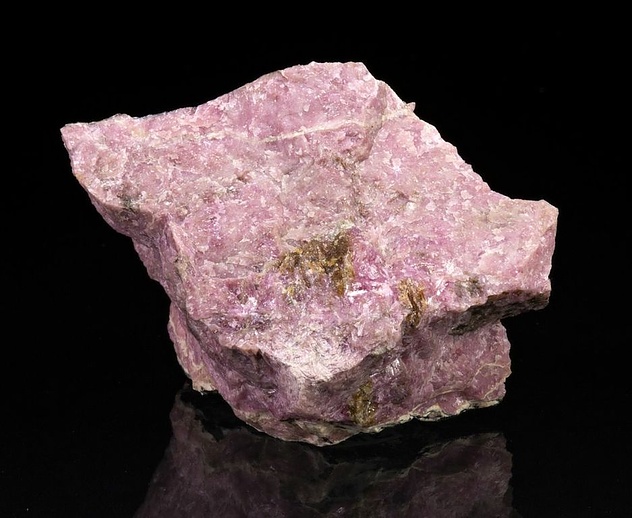
Maniglia Mt. Mine, Bellino, Cuneo Province, Piedmont, Italy