
Anthoinite
A valid IMA mineral species - grandfathered
This page is currently not sponsored. Click here to sponsor this page.
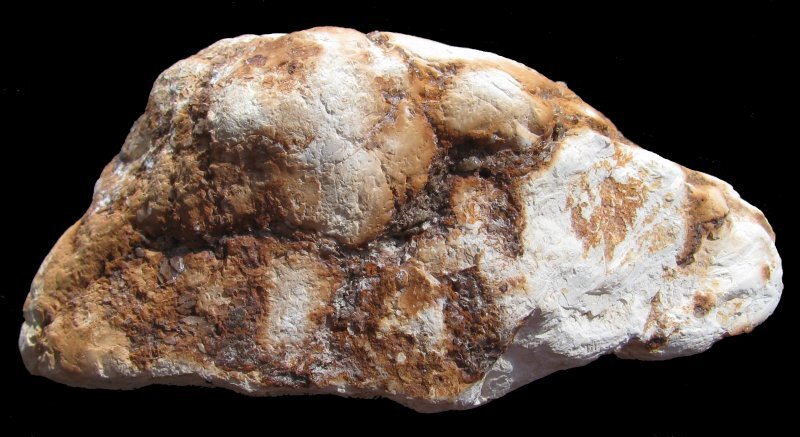


About Anthoinite
Formula:
AlWO3(OH)3
Colour:
White (when free of iron)
Lustre:
Dull
Hardness:
1
Specific Gravity:
4.78 - 4.87
Crystal System:
Triclinic
Name:
For Raymond Anthoine (Charleroi, Hainaut province, Belgium, May 12 1888 - Brussels, June 4 1971), Belgian mining engineer who wrote on prospecting of alluvial deposits.
Type Locality:
This page provides mineralogical data about Anthoinite.
Unique Identifiers
Mindat ID:
252
Long-form identifier:
mindat:1:1:252:7
Similar Names
| Anthonyite | A valid IMA mineral species | Cu(OH,Cl)2 · 3H2O |
IMA Classification of Anthoinite
Approved, 'Grandfathered' (first described prior to 1959)
IMA Formula:
AlW6+O3(OH)3
Classification of Anthoinite
7.GB.35
7 : SULFATES (selenates, tellurates, chromates, molybdates, wolframates)
G : Molybdates, Wolframates and Niobates
B : With additional anions and/or H2O
7 : SULFATES (selenates, tellurates, chromates, molybdates, wolframates)
G : Molybdates, Wolframates and Niobates
B : With additional anions and/or H2O
48.3.3.1
48 : ANHYDROUS MOLYBDATES AND TUNGSTATES
3 : Basic Anhydrous Molybdates and Tungstates
48 : ANHYDROUS MOLYBDATES AND TUNGSTATES
3 : Basic Anhydrous Molybdates and Tungstates
27.4.4
27 : Sulphites, Chromates, Molybdates and Tungstates
4 : Tungstates
27 : Sulphites, Chromates, Molybdates and Tungstates
4 : Tungstates
Mineral Symbols
As of 2021 there are now IMA–CNMNC approved mineral symbols (abbreviations) for each mineral species, useful for tables and diagrams.
| Symbol | Source | Reference for Standard |
|---|---|---|
| Atn | IMA–CNMNC | Warr, L.N. (2021). IMA–CNMNC approved mineral symbols. Mineralogical Magazine, 85(3), 291-320. doi:10.1180/mgm.2021.43 |
Physical Properties of Anthoinite
Dull
Transparency:
Translucent
Colour:
White (when free of iron)
Streak:
White
Hardness:
1 on Mohs scale
Cleavage:
Perfect
On one direction.
On one direction.
Density:
4.78 - 4.87 g/cm3 (Measured) 4.84 g/cm3 (Calculated)
Optical Data of Anthoinite
Type:
Biaxial
RI values:
n = 1.81 - 1.82
Birefringence:
noted under high magnification
Surface Relief:
Very High (positive)
Relative to Canada balsam mounting medium (n ≈ 1.537).
Relative to Canada balsam mounting medium (n ≈ 1.537).
This shows the grain boundary and Becke line effect under plane-polarised
light, based on the contrast between this mineral's average refractive
index and the mounting medium. It does not take into account mineral
colouration.
In focus
Dispersion:
r > v
Comments:
Measured 2V not determined.
Chemistry of Anthoinite
Mindat Formula:
AlWO3(OH)3
Element Weights:
Elements listed:
Crystallography of Anthoinite
Crystal System:
Triclinic
Class (H-M):
1 - Pinacoidal
Cell Parameters:
a = 8.196(1) Å, b = 9.187(1) Å, c = 11.316(1) Å
α = 92.82(1)°, β = 94.08(1)°, γ = 90.23(1)°
α = 92.82(1)°, β = 94.08(1)°, γ = 90.23(1)°
Ratio:
a:b:c = 0.892 : 1 : 1.232
Unit Cell V:
848.84 ų (Calculated from Unit Cell)
Z:
8
Morphology:
Crystals platy, flattened on {010}. Commonly as powdery or chalky masses and as pseudomorphs after large scheelite crystals.
Comment:
Space-group setting I-1.
Crystal Structure
Load
Unit Cell | Unit Cell Packed
2x2x2 | 3x3x3 | 4x4x4
Unit Cell | Unit Cell Packed
2x2x2 | 3x3x3 | 4x4x4
Show
Big Balls | Small Balls | Just Balls | Spacefill
Polyhedra Off | Si Polyhedra | All Polyhedra
Remove metal-metal sticks
Big Balls | Small Balls | Just Balls | Spacefill
Polyhedra Off | Si Polyhedra | All Polyhedra
Remove metal-metal sticks
Display Options
Black Background | White Background
Perspective On | Perspective Off
2D | Stereo | Red-Blue | Red-Cyan
Black Background | White Background
Perspective On | Perspective Off
2D | Stereo | Red-Blue | Red-Cyan
View
CIF File Best | x | y | z | a | b | c
CIF File Best | x | y | z | a | b | c
Rotation
Stop | Start
Stop | Start
Labels
Console Off | On | Grey | Yellow
Console Off | On | Grey | Yellow
Data courtesy of the American Mineralogist Crystal Structure Database. Click on an AMCSD ID to view structure
| ID | Species | Reference | Link | Year | Locality | Pressure (GPa) | Temp (K) |
|---|---|---|---|---|---|---|---|
| 0018557 | Anthoinite | Grey I E, Madsen I C, Mills S J, Hatert F, Peterson V K, Bastow T J (2010) A new type of cubic-stacked layer structure in anthoinite, AlWO3(OH)3 American Mineralogist 95 639-645 |  | 2010 | Mt Misobo Mine, Democratic Republic of the Congo | 0 | 293 |
CIF Raw Data - click here to close
X-Ray Powder Diffraction
Powder Diffraction Data:
| d-spacing | Intensity |
|---|---|
| 5.63 Å | (100) |
| 4.19 Å | (83) |
| 3.058 Å | (71) |
| 3.97 Å | (69) |
| 2.462 Å | (61) |
| 4.33 Å | (37) |
| 4.12 Å | (35) |
Locality:
Comments:
Material from Nyamulilo Mine, Uganda; sample shows preferred orientation
Geological Environment
Paragenetic Mode(s):
| Paragenetic Mode | Earliest Age (Ga) |
|---|---|
| Near-surface Processes | |
| 23 : Subaerial aqueous alteration by non-redox-sensitive fluids (see also #47) | |
| 26 : Hadean detrital minerals | |
| High-? alteration and/or metamorphism | |
| 31 : Thermally altered carbonate, phosphate, and iron formations |
Geological Setting:
altered skarn (Kara Mine, Tasmania)
Type Occurrence of Anthoinite
General Appearance of Type Material:
powdery to chalky masses, and pseudomorphs after large scheelite crystals; as platy crystals to a few mm
Place of Conservation of Type Material:
Royal Museum for Central Africa, Tervuren, Belgium (No. 2.426)
Geological Setting of Type Material:
Sn-W placers, W-bearing quartz veins
Associated Minerals at Type Locality:
Other Language Names for Anthoinite
Dutch:Anthoiniet
French:Anthoinite
German:Anthoinit
Norwegian:Anthoinitt
Simplified Chinese:水钨铝矿
Spanish:Anthoinita
Common Associates
Associations Based on Photo Data:
| 6 photos of Anthoinite associated with Ferberite | FeWO4 |
| 5 photos of Anthoinite associated with Quartz | SiO2 |
| 5 photos of Anthoinite associated with Mpororoite | WAlO3(OH)3 · 2(H2O) |
| 5 photos of Anthoinite associated with Hydrokenoelsmoreite | ◻2W2O6(H2O) |
| 4 photos of Anthoinite associated with Scheelite | Ca(WO4) |
| 4 photos of Anthoinite associated with Magnetite | Fe2+Fe3+2O4 |
| 3 photos of Anthoinite associated with 'Ferritungstite' | ◻2(W,Fe3+)2(O,OH)6(H2O) |
| 3 photos of Anthoinite associated with 'Reinite' | FeWO4 |
Related Minerals - Strunz-mindat Grouping
| 7.GB. | Stunorthropite | (NH4)4[Mo2O6(MoO4)2] |
| 7.GB. | Hartkoppeite | Ca4Mn2+Mo6+6As5+4O32(OH)2(H2O)14 · 5H2O |
| 7.GB. | Wangpuite | K3(PO4)(Mo12O36) |
| 7.GB. | Alexearlite | Hg3S2(MoO4) |
| 7.GB. | Ootannite | Th4+2W6+4O16 · 5H2O |
| 7.GB. | Natromolybdite | Na2MoO4 · 2H2O |
| 7.GB. | Marsaalamite-(Y) | Y(MoO4)(OH) |
| 7.GB.05 | Lindgrenite | Cu3(MoO4)2(OH)2 |
| 7.GB.10 | Szenicsite | Cu3(MoO4)(OH)4 |
| 7.GB.15 | 'UM1999-38-WO:CrV' | (V, Cr, W, O, H) [V:Cr:W ratio about 2:1:3] |
| 7.GB.15 | Huenite | Cu4(MoO4)3(OH)2 |
| 7.GB.15 | Cuprotungstite | Cu2(WO4)(OH)2 |
| 7.GB.20 | Phyllotungstite | (H2O,M)x(W,Fe)(O,OH)3 · yH2O (M = Ca, Cs, Pb or K) |
| 7.GB.25 | Rankachite | Ca0.5(V4+,V5+)(W6+,Fe3+)2O8(OH) · 2H2O |
| 7.GB.30 | Ferrimolybdite | Fe2(MoO4)3 · nH2O |
| 7.GB.35 | Mpororoite | WAlO3(OH)3 · 2(H2O) |
| 7.GB.40 | Obradovicite-KCu | [K2(H2O)17Cu(H2O)6][Mo8As2Fe3+3O34(OH)3] |
| 7.GB.45 | Paramendozavilite | [KAl4(H2O)30][Mo12P6Fe3+6O60(OH)13] |
| 7.GB.45 | Mendozavilite-NaFe | [Na2(H2O)15Fe3+(H2O)6][Mo8P2Fe3+3O35(OH)2] |
| 7.GB.45 | Obradovicite-NaCu | Na2(H2O)17Cu(H2O)6][Mo8As2Fe3+3O34(OH)3] |
| 7.GB.45 | Obradovicite-NaNa | [Na2(H2O)16Na(H2O)6][Mo8As2Fe3+3O33(OH)4] |
| 7.GB.50 | Tancaite-(Ce) | FeCe(MoO4)3 · 3H2O |
| 7.GB.50 | Mendozavilite-NaCu | [Na2(H2O)15Cu(H2O)6][Mo8P2Fe3+3O34(OH)3] |
| 7.GB.50 | Mendozavilite-KCa | [K2(H2O)15Ca(H2O)6][Mo8P2Fe3+3O34(OH)3] |
| 7.GB.60 | Peterandresenite | Mn4Nb6O19 · 14H2O |
| 7.GB.60 | Hansesmarkite | Ca2Mn2Nb6O19 · 20H2O |
| 7.GB.60 | Melcherite | Ba2Na2Mg[Nb6O19] · 6H2O |
| 7.GB.65 | Ichnusaite | Th(MoO4)2 · 3H2O |
| 7.GB.70 | Markascherite | Cu3(MoO4)(OH)4 |
| 7.GB.75 | Nuragheite | Th(MoO4)2 · H2O |
| 7.GB.80 | Ophirite | Ca2Mg4[Zn2Mn3+2(H2O)2(Fe3+W9O34)2] · 46H2O |
Other Information
Notes:
Slowly attacked by HCl and HNO3; readily soluble in strong KOH solution.
Forms pseudomorphs after Scheelite crystals.
Forms pseudomorphs after Scheelite crystals.
Health Risks:
No information on health risks for this material has been entered into the database. You should always treat mineral specimens with care.
Internet Links for Anthoinite
mindat.org URL:
https://www.mindat.org/min-252.html
Please feel free to link to this page.
Please feel free to link to this page.
Search Engines:
External Links:
Mineral Dealers:
References for Anthoinite
Reference List:
Sahama, Th. G. (1981) The secondary tungsten minerals, a review. The Mineralogical Record, 12 (2) 81-87
Matsubara, Satoshi, Kato, Akira, Nagashima, Kozo (1984) Mpororoite and anthoinite from the Kara mine, Tasmania. Mineralogical Magazine, 48 (348) 397-400 doi:10.1180/minmag.1984.048.348.10
Dunn, Pete J., Ferraiolo, James A., Fleischer, Michael, Gobel, Volker, Grice, Joel D., Langley, Richard H., Shigley, James E., Vanko, David A., Zilczer, Janet A. (1985) New mineral names. American Mineralogist, 70 (11-12) 1329-1335
Grey, I. E., Madsen, I. C., Mills, S. J., Hatert, F., Peterson, V. K., Bastow, T. J. (2010) A new type of cubic-stacked layer structure in anthoinite, AlWO3(OH)3. American Mineralogist, 95 (4) 639-645 doi:10.2138/am.2010.3377
SHIMOBAYASHI, Norimasa, OHNISHI, Masayuki, TSURUTA, Kenji (2012) Secondary tungsten minerals in quartz veins in the Ishidera area, Wazuka, Kyoto Prefecture, Japan: anthoinite, mpororoite, and Fe-free hydrokenoelsmoreite. Journal of Mineralogical and Petrological Sciences, 107 (1) 33-38 doi:10.2465/jmps.111020f
Localities for Anthoinite
Showing 15 localities.
 symbol to view information about a locality.
The
symbol to view information about a locality.
The Locality List
 - This locality has map coordinates listed.
- This locality has estimated coordinates.
ⓘ - Click for references and further information on this occurrence.
? - Indicates mineral may be doubtful at this locality.
- This locality has map coordinates listed.
- This locality has estimated coordinates.
ⓘ - Click for references and further information on this occurrence.
? - Indicates mineral may be doubtful at this locality.
 - Good crystals or important locality for species.
 - World class for species or very significant.
(TL) - Type Locality for a valid mineral species.
(FRL) - First Recorded Locality for everything else (eg varieties).
- World class for species or very significant.
(TL) - Type Locality for a valid mineral species.
(FRL) - First Recorded Locality for everything else (eg varieties).
All localities listed without proper references should be considered as questionable.
Australia | |
| Whitehead +2 other references |
Canada | |
| Ercit et al. (1994) +1 other reference |
DR Congo | |
| Mineralogical Society of America - ... +1 other reference |
| Buttgenbach (1947) | |
| Varlamoff (1947) +1 other reference |
Japan | |
| SHIMOBAYASHI et al. (2012) |
Rwanda | |
| J. W. Anthony et al.: Handbook of Mineralogy (1997) |
| Matsubara et al. (1984) +1 other reference |
| - (1991) | |
| Jedwab et al. (1979) +2 other references |
| De Clercq et al. (2008) +4 other references |
Uganda | |
| J. W. Anthony et al.: Handbook of Mineralogy (1997) |
| Matsubara et al. (1984) +1 other reference | |
| J. W. Anthony et al.: "Handbook of Mineralogy" (1997) |
| v. Knorring et al. (1972) |
Quick NavTopAbout AnthoiniteUnique IdentifiersSimilar NamesIMA Classification Classification Mineral SymbolsPhysical Properties Optical Data Chemistry Crystallography Crystal StructureX-Ray Powder DiffractionGeological EnvironmentType Occurrence Other LanguagesCommon AssociatesStrunz-MindatOther InformationInternet Links References Localities Locality List

Gifurwe Mines, Gifurwe, Rusarabuge, Burera District, Northern Province, Rwanda