
Petrogale Cave, Madura Roadhouse, Dundas Shire, Western Australia, Australiai
| Regional Level Types | |
|---|---|
| Petrogale Cave | Cave |
| Madura Roadhouse | Community |
| Dundas Shire | Shire |
| Western Australia | State |
| Australia | Country |
This page is currently not sponsored. Click here to sponsor this page.


Latitude & Longitude (WGS84):
31° 52' 9'' South , 127° 23' 19'' East
Latitude & Longitude (decimal):
Type:
Köppen climate type:
Petrogale is the genus name for rock wallaby.
The cave is 36 kilometres east of the Madura roadhouse on the edge of the scarp. It appears would be difficult to find, forming only a small sinkhole on the surface before opening out into a chamber further in.
The cave was discovered by Peter Bridge in a Western Australian Museum expedition in 1973. The new species archerite had been found at Murra-el-Evelyn Cave, but not in sufficient quantities to make a positive identification. A search was then undertaken for other caves which could contain the species. On the way back to Perth, the landrover was wrecked in a rollover, Bridge bemoaning the damage to his specimens.
At the surface it forms only a minor sinkhole, and there appears no easy access to the location. Once through the narrow sinkhole, it opens into a chamber with old calcite decorations. The mineralization was found at the far end of the cave, through several long chambers and tight clefts. Bats are wonderful creatures but keep a messy home. The species were formed from guano of the Chalinolobus morio bat, of which only a few were seen, but possibly more inhabit the cave seasonally. The floor of the cave was covered in dry guano dust, as any fresh material is devoured by coprophagic insects.
The walls show convoluted crusts and stalactites of the minerals. The stalactites are mainly composed of biphosphammite, with some other minerals (calcite and guanine), where they join the wall or ceiling. Some stalactites are composed mainly of aphthitalite.
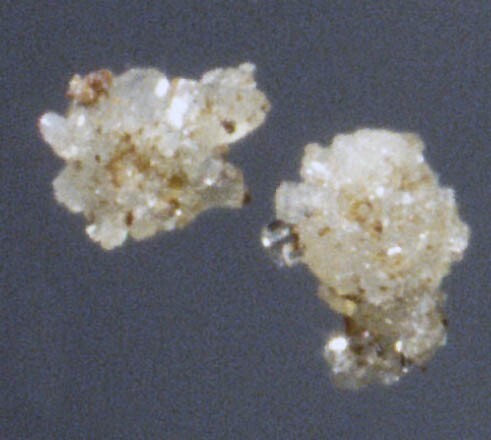
Archerite was found in only a few samples as small tetragonal crystals to 2 mm long, and buff to clear coloured crusts, associated with biphosphammite, aphthitalite and guanine.
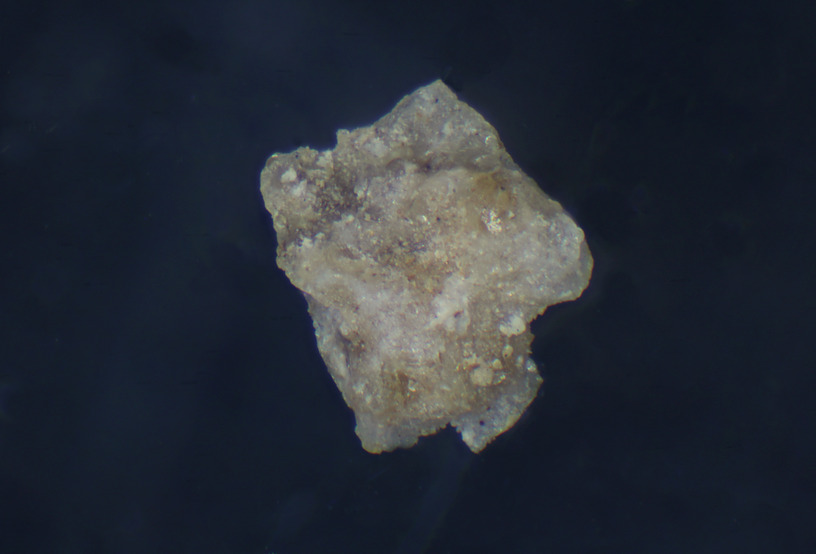
Mundrabillaite is named after the pastoral station on which the caves are located, and was discovered during Peter Bridge's 1973 visit, but only studied and IMA approved in 1983. It comes as tiny crystals associated with archerite, bisphosphammite, aphthitalite, halite, syngenite, stercorite, newberyite, calcite, and an unknown phosphate. The crystals are colourless, with an earthy lustre, white streak, soft and fragile.
Select Mineral List Type
Standard Detailed Gallery Strunz Chemical ElementsMineral List
14 valid minerals. 2 (TL) - type locality of valid minerals.
Rock Types Recorded
Note: data is currently VERY limited. Please bear with us while we work towards adding this information!
Select Rock List Type
Alphabetical List Tree DiagramDetailed Mineral List:
| ⓘ Aphthitalite Formula: (K,Na)3Na(SO4)2 |
| ⓘ Archerite (TL) Formula: (K,NH4)(H2PO4) Type Locality: Habit: Archerite is tetragonal with second order prisms and pyramids. Colour: Buff to clear. Description: Type material is stored in the collections of the Mineral Division, Government Chemical
Laboratories, Perth, Western Australia.
Bridge states that "Archerite occurs on only a few samples in the form of small tetragonal crystals up to 2 mm in length and crusts of a buff to clear colour. The specimens containing archerite are stalactites, with minor amounts occurring in the convoluted wall crusts, which are mainly aphthitalite".
There is no distinct cleavage and the mineral is relatively soft with a white streak and is water-soluble. |
| ⓘ Biphosphammite Formula: NH4(H2PO4) |
| ⓘ Calcite Formula: CaCO3 |
| ⓘ Guanine Formula: C5H5N5O |
| ⓘ Halite Formula: NaCl |
| ⓘ Mundrabillaite (TL) Formula: (NH4)2Ca(PO3OH)2 · H2O Type Locality: Colour: Colourless Description: Mundrabillaite is colourless with an earthy lustre and white streak. Its hardness is very low and it is fragile.
Type specimens of mundrabillaite are preserved in the Government Chemical Laboratories - Perth, mineral collection as MDC 5906. |
| ⓘ Newberyite Formula: Mg(PO3OH) · 3H2O |
| ⓘ Oxammite Formula: (NH4)2(C2O4) · H2O |
| ⓘ Phoxite Formula: (NH4)2Mg2(C2O4)(PO3OH)2(H2O)4 Description: Phoxite was first reported from here by Bridge (1977) but was listed as an unknown mineral at the time. |
| ⓘ Stercorite Formula: (NH4)Na(PO3OH) · 4H2O |
| ⓘ Syngenite Formula: K2Ca(SO4)2 · H2O |
| ⓘ Weddellite Formula: Ca(C2O4) · (2.5-x)H2O |
| ⓘ Whitlockite Formula: Ca9Mg(PO4)6(PO3OH) |
Gallery:

List of minerals arranged by Strunz 10th Edition classification
| Group 3 - Halides | |||
|---|---|---|---|
| ⓘ | Halite | 3.AA.20 | NaCl |
| Group 5 - Nitrates and Carbonates | |||
| ⓘ | Calcite | 5.AB.05 | CaCO3 |
| Group 7 - Sulphates, Chromates, Molybdates and Tungstates | |||
| ⓘ | Aphthitalite | 7.AC.35 | (K,Na)3Na(SO4)2 |
| ⓘ | Syngenite | 7.CD.35 | K2Ca(SO4)2 · H2O |
| Group 8 - Phosphates, Arsenates and Vanadates | |||
| ⓘ | Whitlockite | 8.AC.45 | Ca9Mg(PO4)6(PO3OH) |
| ⓘ | Archerite (TL) | 8.AD.15 | (K,NH4)(H2PO4) |
| ⓘ | Biphosphammite | 8.AD.15 | NH4(H2PO4) |
| ⓘ | Newberyite | 8.CE.10 | Mg(PO3OH) · 3H2O |
| ⓘ | Stercorite | 8.CJ.05 | (NH4)Na(PO3OH) · 4H2O |
| ⓘ | Mundrabillaite (TL) | 8.CJ.10 | (NH4)2Ca(PO3OH)2 · H2O |
| Group 10 - Organic Compounds | |||
| ⓘ | Weddellite | 10.AB.40 | Ca(C2O4) · (2.5-x)H2O |
| ⓘ | Oxammite | 10.AB.55 | (NH4)2(C2O4) · H2O |
| ⓘ | Phoxite | 10.AB.60 | (NH4)2Mg2(C2O4)(PO3OH)2(H2O)4 |
| ⓘ | Guanine | 10.CA.30 | C5H5N5O |
List of minerals for each chemical element
| H | Hydrogen | |
|---|---|---|
| H | ⓘ Archerite | (K,NH4)(H2PO4) |
| H | ⓘ Biphosphammite | NH4(H2PO4) |
| H | ⓘ Guanine | C5H5N5O |
| H | ⓘ Mundrabillaite | (NH4)2Ca(PO3OH)2 · H2O |
| H | ⓘ Newberyite | Mg(PO3OH) · 3H2O |
| H | ⓘ Oxammite | (NH4)2(C2O4) · H2O |
| H | ⓘ Stercorite | (NH4)Na(PO3OH) · 4H2O |
| H | ⓘ Syngenite | K2Ca(SO4)2 · H2O |
| H | ⓘ Weddellite | Ca(C2O4) · (2.5-x)H2O |
| H | ⓘ Whitlockite | Ca9Mg(PO4)6(PO3OH) |
| H | ⓘ Phoxite | (NH4)2Mg2(C2O4)(PO3OH)2(H2O)4 |
| C | Carbon | |
| C | ⓘ Calcite | CaCO3 |
| C | ⓘ Guanine | C5H5N5O |
| C | ⓘ Oxammite | (NH4)2(C2O4) · H2O |
| C | ⓘ Weddellite | Ca(C2O4) · (2.5-x)H2O |
| C | ⓘ Phoxite | (NH4)2Mg2(C2O4)(PO3OH)2(H2O)4 |
| N | Nitrogen | |
| N | ⓘ Archerite | (K,NH4)(H2PO4) |
| N | ⓘ Biphosphammite | NH4(H2PO4) |
| N | ⓘ Guanine | C5H5N5O |
| N | ⓘ Mundrabillaite | (NH4)2Ca(PO3OH)2 · H2O |
| N | ⓘ Oxammite | (NH4)2(C2O4) · H2O |
| N | ⓘ Stercorite | (NH4)Na(PO3OH) · 4H2O |
| N | ⓘ Phoxite | (NH4)2Mg2(C2O4)(PO3OH)2(H2O)4 |
| O | Oxygen | |
| O | ⓘ Aphthitalite | (K,Na)3Na(SO4)2 |
| O | ⓘ Archerite | (K,NH4)(H2PO4) |
| O | ⓘ Biphosphammite | NH4(H2PO4) |
| O | ⓘ Calcite | CaCO3 |
| O | ⓘ Guanine | C5H5N5O |
| O | ⓘ Mundrabillaite | (NH4)2Ca(PO3OH)2 · H2O |
| O | ⓘ Newberyite | Mg(PO3OH) · 3H2O |
| O | ⓘ Oxammite | (NH4)2(C2O4) · H2O |
| O | ⓘ Stercorite | (NH4)Na(PO3OH) · 4H2O |
| O | ⓘ Syngenite | K2Ca(SO4)2 · H2O |
| O | ⓘ Weddellite | Ca(C2O4) · (2.5-x)H2O |
| O | ⓘ Whitlockite | Ca9Mg(PO4)6(PO3OH) |
| O | ⓘ Phoxite | (NH4)2Mg2(C2O4)(PO3OH)2(H2O)4 |
| Na | Sodium | |
| Na | ⓘ Aphthitalite | (K,Na)3Na(SO4)2 |
| Na | ⓘ Halite | NaCl |
| Na | ⓘ Stercorite | (NH4)Na(PO3OH) · 4H2O |
| Mg | Magnesium | |
| Mg | ⓘ Newberyite | Mg(PO3OH) · 3H2O |
| Mg | ⓘ Whitlockite | Ca9Mg(PO4)6(PO3OH) |
| Mg | ⓘ Phoxite | (NH4)2Mg2(C2O4)(PO3OH)2(H2O)4 |
| P | Phosphorus | |
| P | ⓘ Archerite | (K,NH4)(H2PO4) |
| P | ⓘ Biphosphammite | NH4(H2PO4) |
| P | ⓘ Mundrabillaite | (NH4)2Ca(PO3OH)2 · H2O |
| P | ⓘ Newberyite | Mg(PO3OH) · 3H2O |
| P | ⓘ Stercorite | (NH4)Na(PO3OH) · 4H2O |
| P | ⓘ Whitlockite | Ca9Mg(PO4)6(PO3OH) |
| P | ⓘ Phoxite | (NH4)2Mg2(C2O4)(PO3OH)2(H2O)4 |
| S | Sulfur | |
| S | ⓘ Aphthitalite | (K,Na)3Na(SO4)2 |
| S | ⓘ Syngenite | K2Ca(SO4)2 · H2O |
| Cl | Chlorine | |
| Cl | ⓘ Halite | NaCl |
| K | Potassium | |
| K | ⓘ Aphthitalite | (K,Na)3Na(SO4)2 |
| K | ⓘ Archerite | (K,NH4)(H2PO4) |
| K | ⓘ Syngenite | K2Ca(SO4)2 · H2O |
| Ca | Calcium | |
| Ca | ⓘ Calcite | CaCO3 |
| Ca | ⓘ Mundrabillaite | (NH4)2Ca(PO3OH)2 · H2O |
| Ca | ⓘ Syngenite | K2Ca(SO4)2 · H2O |
| Ca | ⓘ Weddellite | Ca(C2O4) · (2.5-x)H2O |
| Ca | ⓘ Whitlockite | Ca9Mg(PO4)6(PO3OH) |
Other Regions, Features and Areas containing this locality
Australia
- Bight BasinBasin
- Central Australian ElementCraton
- Eucla BasinBasin
Australian PlateTectonic Plate
- South Australian Craton
- Madura ProvinceShield
This page contains all mineral locality references listed on mindat.org. This does not claim to be a complete list. If you know of more minerals from this site, please register so you can add to our database. This locality information is for reference purposes only. You should never attempt to
visit any sites listed in mindat.org without first ensuring that you have the permission of the land and/or mineral rights holders
for access and that you are aware of all safety precautions necessary.
References
Bridge, P. J. (1977) Archerite, (K,NH4)H2PO4, a new mineral from Madura, Western Australia. Mineralogical Magazine, 41 (317) 33-35 doi:10.1180/minmag.1977.041.317.05

Petrogale Cave, Madura Roadhouse, Dundas Shire, Western Australia, Australia