
Natrite
A valid IMA mineral species
This page is currently not sponsored. Click here to sponsor this page.
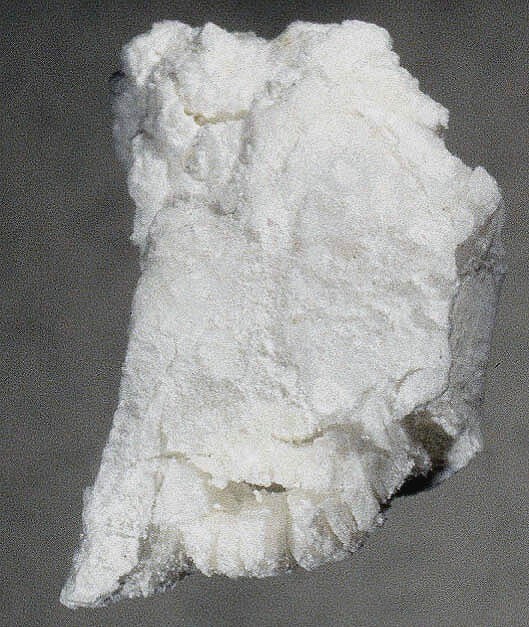
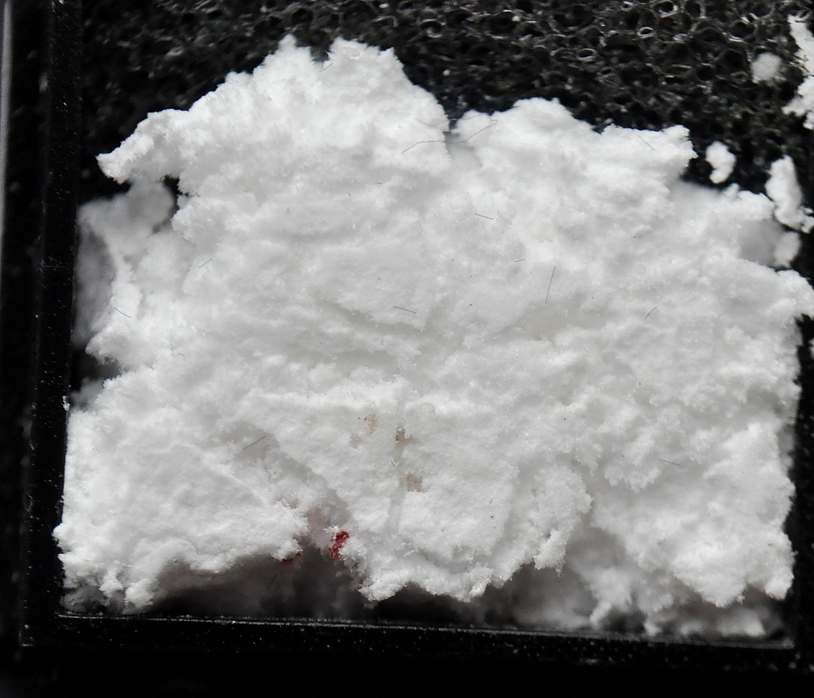
About Natrite
Formula:
Na2CO3
Colour:
Colourless, grey-white, yellowish, rose to yellow-orange
Lustre:
Vitreous, Dull
Hardness:
3½
Specific Gravity:
2.54
Crystal System:
Monoclinic
Name:
Named in 1982 by Alexander Petrovich Khomyakov for the chemical composition.
Unique Identifiers
Mindat ID:
2849
Long-form identifier:
mindat:1:1:2849:9
Similar Names
IMA Classification of Natrite
Approved
Approval year:
1981
First published:
1982
Classification of Natrite
5.AA.10
5 : CARBONATES (NITRATES)
A : Carbonates without additional anions, without H2O
A : Alkali carbonates
5 : CARBONATES (NITRATES)
A : Carbonates without additional anions, without H2O
A : Alkali carbonates
11.1.2
11 : Carbonates
1 : Carbonates of the alkali metals and ammonium
11 : Carbonates
1 : Carbonates of the alkali metals and ammonium
Mineral Symbols
As of 2021 there are now IMA–CNMNC approved mineral symbols (abbreviations) for each mineral species, useful for tables and diagrams.
| Symbol | Source | Reference for Standard |
|---|---|---|
| Nat | IMA–CNMNC | Warr, L.N. (2021). IMA–CNMNC approved mineral symbols. Mineralogical Magazine, 85(3), 291-320. doi:10.1180/mgm.2021.43 |
Pronunciation of Natrite
Pronunciation:
| Play | Recorded by | Country |
|---|---|---|
| Jolyon Ralph | United Kingdom |
Physical Properties of Natrite
Vitreous, Dull
Transparency:
Transparent
Comment:
Becoming dull on exposure
Colour:
Colourless, grey-white, yellowish, rose to yellow-orange
Streak:
White
Hardness:
3½ on Mohs scale
Hardness:
VHN100=133 - 175 - Vickers
Cleavage:
Perfect
(001) perfect, (100), (110) less perfect
(001) perfect, (100), (110) less perfect
Density:
2.54 g/cm3 (Measured) 2.55 g/cm3 (Calculated)
Optical Data of Natrite
Type:
Biaxial (-)
RI values:
nα = 1.41 nβ = 1.535 nγ = 1.543
2V:
Measured: 28° , Calculated: 26°
Max. Birefringence:
δ = 0.133
Based on recorded range of RI values above.
Based on recorded range of RI values above.
Interference Colours:
The colours simulate birefringence patterns seen in thin section under crossed polars. They do not take into account mineral colouration or opacity.
Michel-Levy Bar The default colours simulate the birefringence range for a 30 µm thin-section thickness. Adjust the slider to simulate a different thickness.
Grain Simulation You can rotate the grain simulation to show how this range might look as you rotated a sample under crossed polars. Each grain retains its interference colour (retardation) while its brightness falls to black at extinction and reaches a maximum between extinction positions.
The colours simulate birefringence patterns seen in thin section under crossed polars. They do not take into account mineral colouration or opacity.
Michel-Levy Bar The default colours simulate the birefringence range for a 30 µm thin-section thickness. Adjust the slider to simulate a different thickness.
Grain Simulation You can rotate the grain simulation to show how this range might look as you rotated a sample under crossed polars. Each grain retains its interference colour (retardation) while its brightness falls to black at extinction and reaches a maximum between extinction positions.
Surface Relief:
Moderate
Dispersion:
r > v
Optical Extinction:
Y ≃ b.
Chemistry of Natrite
Mindat Formula:
Na2CO3
Element Weights:
Elements listed:
Crystallography of Natrite
Crystal System:
Monoclinic
Class (H-M):
2/m - Prismatic
Space Group:
B2/m
Setting:
C2/m
Cell Parameters:
a = 8.905(4) Å, b = 5.237(3) Å, c = 6.045(2) Å
β = 101.35°
β = 101.35°
Ratio:
a:b:c = 1.7 : 1 : 1.154
Unit Cell V:
276.40 ų (Calculated from Unit Cell)
Z:
4
Twinning:
Fine polysynthetic twins
Crystal Structure
Load
Unit Cell | Unit Cell Packed
2x2x2 | 3x3x3 | 4x4x4
Unit Cell | Unit Cell Packed
2x2x2 | 3x3x3 | 4x4x4
Show
Big Balls | Small Balls | Just Balls | Spacefill
Polyhedra Off | Si Polyhedra | All Polyhedra
Remove metal-metal sticks
Big Balls | Small Balls | Just Balls | Spacefill
Polyhedra Off | Si Polyhedra | All Polyhedra
Remove metal-metal sticks
Display Options
Black Background | White Background
Perspective On | Perspective Off
2D | Stereo | Red-Blue | Red-Cyan
Black Background | White Background
Perspective On | Perspective Off
2D | Stereo | Red-Blue | Red-Cyan
View
CIF File Best | x | y | z | a | b | c
CIF File Best | x | y | z | a | b | c
Rotation
Stop | Start
Stop | Start
Labels
Console Off | On | Grey | Yellow
Console Off | On | Grey | Yellow
Data courtesy of the American Mineralogist Crystal Structure Database. Click on an AMCSD ID to view structure
| ID | Species | Reference | Link | Year | Locality | Pressure (GPa) | Temp (K) |
|---|---|---|---|---|---|---|---|
| 0009928 | Natrite | Dusek M, Chapuis G, Meyer M, Petricek V (2003) Sodium carbonate revisited Acta Crystallographica B59 337-352 |  | 2003 | synthetic | 0 | 295 |
| 0005044 | Natrite | Arakcheeva A, Bindi L, Pattison P, Meisser N, Chapuis G, Pekov I (2010) The incommensurately modulated structures of natural natrite at 120 and 293 K from synchrotron X-ray data American Mineralogist 95 574-581 | 2010 | Mt. Koashva, Lovozero massif, Kola peninsula, Russia | 0 | 293 | |
| 0005043 | Natrite | Arakcheeva A, Bindi L, Pattison P, Meisser N, Chapuis G, Pekov I (2010) The incommensurately modulated structures of natural natrite at 120 and 293 K from synchrotron X-ray data American Mineralogist 95 574-581 | 2010 | Mt. Koashva, Khibiny massif, Kola peninsula, Russia | 0 | 293 | |
| 0014917 | Natrite | Zubkova N V, Pushcharovsky D Y, Ivaldi G, Ferraris G, Pekov I V, Chukanov N V (2002) Crystal structure of natrite, gamma-Na2CO3 Neues Jahrbuch fur Mineralogie, Monatshefte 2002 85-96 | 2002 | Mt Koashva, Khibiny alkaline massif, Kola Peninsula, Russia | 0 | 293 | |
| 0005042 | Natrite | Arakcheeva A, Bindi L, Pattison P, Meisser N, Chapuis G, Pekov I (2010) The incommensurately modulated structures of natural natrite at 120 and 293 K from synchrotron X-ray data American Mineralogist 95 574-581 | 2010 | Mt. Koashva, Khibiny massif, Kola peninsula, Russia | 0 | 120 | |
| 0009929 | Natrite | Dusek M, Chapuis G, Meyer M, Petricek V (2003) Sodium carbonate revisited Acta Crystallographica B59 337-352 | | 2003 | synthetic | 0 | 110 |
CIF Raw Data - click here to close
X-Ray Powder Diffraction
Powder Diffraction Data:
| d-spacing | Intensity |
|---|---|
| 2.962 Å | (100) |
| 2.366 Å | (70) |
| 2.545 Å | (60) |
| 2.602 Å | (40) |
| 2.254 Å | (35) |
| 2.175 Å | (35) |
| 2.621 Å | (30) |
Comments:
Mt. Karnasurt, Kola Peninsula, Russia. Data from the type description.
Geological Environment
Paragenetic Mode(s):
| Paragenetic Mode | Earliest Age (Ga) |
|---|---|
| Near-surface Processes | |
| 25 : Evaporites (prebiotic) | |
| High-? alteration and/or metamorphism | |
| 31 : Thermally altered carbonate, phosphate, and iron formations | |
| Stage 4b: Highly evolved igneous rocks | >3.0 |
| 35 : Ultra-alkali and agpaitic igneous rocks | |
| Stage 7: Great Oxidation Event | <2.4 |
| 45b : [Other oxidized fumarolic minerals] |
Type Occurrence of Natrite
Co-Type Localities:
General Appearance of Type Material:
Grains and granular masses.
Place of Conservation of Type Material:
Geology Museum, Kola Branch, Academy of Sciences, Apatity, Russia, 5710/1.
Mining Institute, St. Petersburg, Russia, 1200/1.
A.E. Fersman Mineralogical Museum, Academy of Sciences, Moscow, Russia, 82761.
Mining Institute, St. Petersburg, Russia, 1200/1.
A.E. Fersman Mineralogical Museum, Academy of Sciences, Moscow, Russia, 82761.
Geological Setting of Type Material:
Alkaline massifs.
Associated Minerals at Type Locality:
Synonyms of Natrite
Other Language Names for Natrite
Common Associates
Associations Based on Photo Data:
| 2 photos of Natrite associated with Villiaumite | NaF |
| 1 photo of Natrite associated with Lorenzenite | Na2Ti2(Si2O6)O3 |
| 1 photo of Natrite associated with Alexkhomyakovite | K6(Ca2Na)(CO3)5Cl · 6H2O |
| 1 photo of Natrite associated with Thermonatrite | Na2CO3 · H2O |
Related Minerals - Strunz-mindat Grouping
| 5.AA.05 | Zabuyelite | Li2CO3 |
| 5.AA.10 | Gregoryite | (Na2,K2,Ca)CO3 |
| 5.AA.15 | Nahcolite | NaHCO3 |
| 5.AA.20 | Kalicinite | KHCO3 |
| 5.AA.25 | Teschemacherite | (NH4)HCO3 |
| 5.AA.30 | Wegscheiderite | Na5H3(CO3)4 |
Other Information
IR Spectrum:
The infrared spectrum of freshest material showed no bands of molecular water.
Thermal Behaviour:
Thermal analysis of carefully selected material showed a loss in weight over 20-900°C of about 1%.
Notes:
Soluble in H2O, yielding a strongly alkaline solution; surficially alters rapidly in air to thermonatrite.
Health Risks:
No information on health risks for this material has been entered into the database. You should always treat mineral specimens with care.
Internet Links for Natrite
mindat.org URL:
https://www.mindat.org/min-2849.html
Please feel free to link to this page.
Please feel free to link to this page.
Search Engines:
External Links:
Mineral Dealers:
References for Natrite
Reference List:
Zubkova, N. V., Pushcharovsky, D. Yu., Ivaldi, G., Ferraris, G., Pekov, I. V., Chukanov, N. V. (2002) Crystal structure of natrite, γ-Na2CO3. Neues Jahrbuch für Mineralogie - Monatshefte, 2002 (2) 85-96 doi:10.1127/0028-3649/2002/2002-0085
Localities for Natrite
Showing 23 localities.
 symbol to view information about a locality.
The
symbol to view information about a locality.
The Locality List
 - This locality has map coordinates listed.
- This locality has estimated coordinates.
ⓘ - Click for references and further information on this occurrence.
? - Indicates mineral may be doubtful at this locality.
- This locality has map coordinates listed.
- This locality has estimated coordinates.
ⓘ - Click for references and further information on this occurrence.
? - Indicates mineral may be doubtful at this locality.
 - Good crystals or important locality for species.
 - World class for species or very significant.
(TL) - Type Locality for a valid mineral species.
(FRL) - First Recorded Locality for everything else (eg varieties).
- World class for species or very significant.
(TL) - Type Locality for a valid mineral species.
(FRL) - First Recorded Locality for everything else (eg varieties).
All localities listed without proper references should be considered as questionable.
Antarctica | |
| Liu et al. (2015) |
Austria | |
| Niedermayr et al. (1995) |
| Exel (1993) |
| Strasser (1989) |
| Spötl (1989) |
| Exel (1993) |
Canada | |
| Horváth et al. (1990) |
China | |
| Fang et al. (2024) |
Italy | |
| Russo +1 other reference |
| |
Russia | |
| Golovin et al. (2023) |
| |
| Mandarino (1997) +2 other references |
| Can Min (2002) +2 other references |
| Pekov et al. (2004) | |
| [World of Stones 95:5-6 |
| Khomyakov (1982) +2 other references |
| Khomyakov (1982) +3 other references |
| Pekov (1998) | |
South Africa | |
| Giuliani et al. (2012) +1 other reference |
| Abersteiner et al. (2024) |
USA | |
| - (2005) |
| Feth et al. (1961) |
Quick NavTopAbout NatriteUnique IdentifiersSimilar NamesIMA Classification Classification Mineral SymbolsPronunciation Physical Properties Optical Data Chemistry Crystallography Crystal StructureX-Ray Powder DiffractionGeological EnvironmentType Occurrence SynonymsOther LanguagesCommon AssociatesStrunz-MindatOther InformationInternet Links References Localities Locality List

Lovozero Massif, Murmansk Oblast, Russia