
Maxfield Mine, Argenta, Big Cottonwood Mining District, Salt Lake County, Utah, USAi
| Regional Level Types | |
|---|---|
| Maxfield Mine | Mine (Inactive) |
| Argenta | Town (Former) |
| Big Cottonwood Mining District | Mining District |
| Salt Lake County | County |
| Utah | State |
| USA | Country |
This page is currently not sponsored. Click here to sponsor this page.





Latitude & Longitude (WGS84):
40° 38' 36'' North , 111° 41' 2'' West
Latitude & Longitude (decimal):
Type:
Mine (Inactive) - last checked 2023
Deposit first discovered:
1867
Köppen climate type:
Nearest Settlements:
| Place | Population | Distance |
|---|---|---|
| Alta | 390 (2017) | 7.2km |
| Snowbird | 383 (2013) | 7.3km |
| Mount Olympus | 6,748 (2006) | 10.0km |
| Cottonwood Heights | 34,343 (2017) | 11.0km |
| Holladay | 30,864 (2017) | 12.2km |
Nearest Clubs:
Local clubs are the best way to get access to collecting localities
Local clubs are the best way to get access to collecting localities
| Club | Location | Distance |
|---|---|---|
| Rockhounders Outreach for Community Knowledge | Sandy, Utah | 18km |
| Mineral Collectors of Utah | Salt Lake City, Utah | 22km |
| Wasatch Gem Society | Salt Lake City, Utah | 22km |
| Timpanogos Gem & Mineral Society | Provo, Utah | 46km |
Other/historical names associated with this locality:
Bullion Chief Lease; James Drain Tunnel
The former mine and lumber mill has a long operating history dating back to the 1860s when the maxfield brothers scouted the area for a potential mine and lumber mill. It wasn't until the mid-late 1900s that the site became a feasible area for exploration. The original lode claim was filed in 1871 by the Maxfield brothers and then was sold to Mr. Price for $80.00 and a pack of mules in 1879. By 1904, over $1,000,000 worth of gold and silver had been collected from the mine. In 1929 the new mine operator was blinded by a blast but still operated the mine for another 30 years before shutting down for good. In 1985, two brothers spent two days lost in the mine, which consists of a virtual maze of tunnels and shafts. The men survived by drinking water off the floor and exercising to keep their body temperatures up. They were found by search and rescue officers acting on a hunch the missing men might be in the mine.
"Another incident occurred in 1988 on July 11, 16-year-old John Mazuran and two friends were hiking in the old Maxfield Mine in Big Cottonwood Canyon. The trio had ventured almost a half mile into the tunnel when they decided to explore a vertical shaft that descended to a lower level.
About 60 feet down, Mazuran lost his footing and slid 100 feet to the bottom of the shaft. He tried to climb back up, but the wet rock provided no footing. His friends had no rope to pull him out. Mazuran was lucky. He was hiking with friends who were able to climb out of the shaft and summon deputy sheriffs to rescue him." -(https://www.deseret.com/1988/8/4/18774008/state-aims-to-seal-off-abandoned-mines-and-hazards-therein)
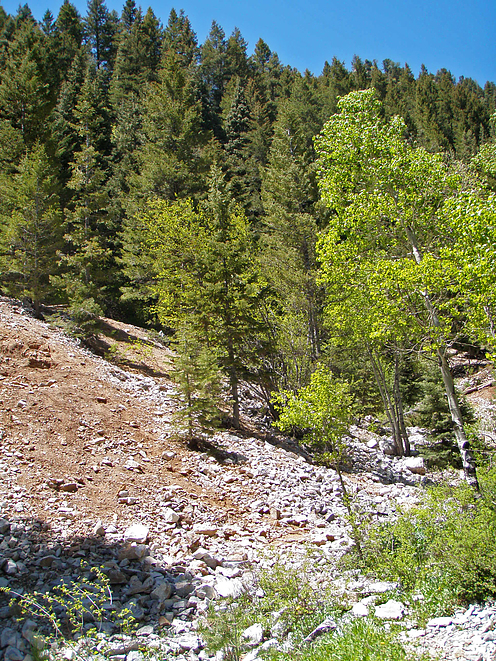
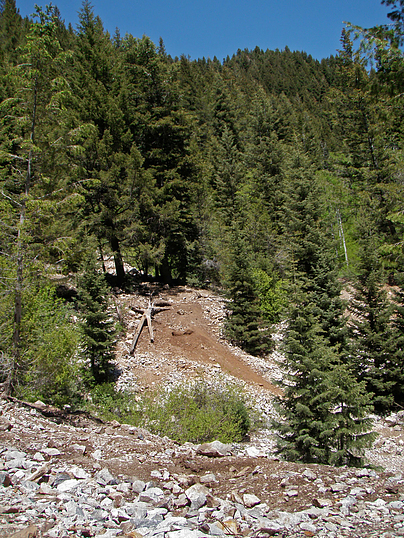
This mine is located 50 yards north of the big cottonwood canyon road 6.8 miles from the base of the canyon. The hike to the old tailings piles takes about 10 minutes. The first tailings pile on the left side of the trail (which is very apparent upon arrival) contains specimens of euhedral pyrite and galena as well as well-formed vitreous euhedral quartz crystals ranging from 1cm-10cm. While most specimens are found inside the tailings piles, there are still some naturally occurring pockets surrounding the tailings piles that contain combinations of many of the minerals reported for this locality. The largest such chain of quartz pockets was re-discovered by Jake, Nathan, and Robbie.
A few specimens of stibnite-included quartz (assayed at the University of Utah) have been recovered from the mine tailings over the last 15 years, these specimens are very visually appealing usually with water-clear quartz with acicular stibnite inclusions consisting of individual needles of stibnite. Some specimens contain one or two needles of stibnite around .25cm-.75cm while some specimens contain vortexes of stibnite consisting of 50+ stibnite crystals. Stibnite included quartz ranges in length from 1cm-10cm.
A major discovery of a pocket system was made by Jake Liston in the fall of 2015, when he was able to recover multiple plates of quartz with large cathedral habit (elestial habit) quartz crystals (1.5in+) with the help of his digging partners Nathan and Robert. Some of these plates consisted of 30 plus large crystals as well as hundreds of separate smaller specimens containing 1-5 quartz crystals (3in+) sometimes in a double-terminated fashion. Many of these specimens of disappeared into black hole collections but there are some images online.
In July of 2021, a pocket of stibnite included quartz was discovered east of the tailings piles by Maxwell Novetzke and his digging partner Christian Shackelford. The discovery consisted of a collapsed pocket where around 50 nice specimens of large stibnite included quartz (1 in.+), as well as 3 clusters of stibnite included quartz that consisted of 15 plus euhedral crystals included richly with acicular stibnite clusters. There was also a hand full of double-terminated clear quartz included with acicular stibnite as well. Since this discovery, there have been three or so smaller pockets of stibnite included quartz with smaller crystals (<2.5cm) found by Christian, Maxwell, and Jake.
Select Mineral List Type
Standard Detailed Gallery Strunz Chemical ElementsCommodity List
This is a list of exploitable or exploited mineral commodities recorded at this locality.Mineral List
16 valid minerals.
Detailed Mineral List:
| ⓘ 'Alaskaite' |
| ⓘ Calcite Formula: CaCO3 |
| ⓘ Chrysocolla Formula: Cu2-xAlx(H2-xSi2O5)(OH)4 · nH2O, x < 1 References: Alexander Wong CollectionIdentified by Alexander Wong: Visual Identification |
| ⓘ Diopside Formula: CaMgSi2O6 |
| ⓘ Dyscrasite Formula: Ag3Sb |
| ⓘ Epidote Formula: (CaCa)(AlAlFe3+)O[Si2O7][SiO4](OH) |
| ⓘ Galena Formula: PbS |
| ⓘ 'Garnet Group' Formula: X3Z2(SiO4)3 |
| ⓘ Hemimorphite Formula: Zn4Si2O7(OH)2 · H2O References: Alexander Wong CollectionIdentified by Alexander Wong: Visual Identification |
| ⓘ 'Limonite' |
| ⓘ Malachite Formula: Cu2(CO3)(OH)2 |
| ⓘ 'Mica Group' |
| ⓘ Native Gold Formula: Au |
| ⓘ Native Silver Formula: Ag |
| ⓘ Pyrite Formula: FeS2 |
| ✪ Quartz Formula: SiO2 Habit: Prismatic, Trigonal, Needle Colour: Clear Description: Quartz crystals can be found throughout the tailings piles at Maxfield Mine commonly in association with sulfide minerals such as galena, stibnite, sphalerite and pyrite. |
| ⓘ Sepiolite Formula: Mg4(Si6O15)(OH)2 · 6H2O |
| ⓘ Sphalerite Formula: ZnS References: |
| ✪ Stibnite Formula: Sb2S3 Habit: Acicular, Massive Colour: Silver - Gray Description: Massive tibnite is common throughout the Mill A and B forks in mineralized zones containing other sulfides. However, exceptional specimens of acicular stibnite can be found preserved in clear euhedral quartz in very scarce pockets in the area. |
| ⓘ 'Tetrahedrite Subgroup' Formula: Cu6(Cu4C2+2)Sb4S12S References: |
| ⓘ Wollastonite Formula: Ca3(Si3O9) |

List of minerals arranged by Strunz 10th Edition classification
| Group 1 - Elements | |||
|---|---|---|---|
| ⓘ | Native Gold | 1.AA.05 | Au |
| ⓘ | Native Silver | 1.AA.05 | Ag |
| Group 2 - Sulphides and Sulfosalts | |||
| ⓘ | Dyscrasite | 2.AA.35 | Ag3Sb |
| ⓘ | Sphalerite | 2.CB.05a | ZnS |
| ⓘ | Galena | 2.CD.10 | PbS |
| ⓘ | Stibnite | 2.DB.05 | Sb2S3 |
| ⓘ | Pyrite | 2.EB.05a | FeS2 |
| ⓘ | 'Tetrahedrite Subgroup' | 2.GB.05 | Cu6(Cu4C2+2)Sb4S12S |
| Group 4 - Oxides and Hydroxides | |||
| ⓘ | Quartz | 4.DA.05 | SiO2 |
| Group 5 - Nitrates and Carbonates | |||
| ⓘ | Calcite | 5.AB.05 | CaCO3 |
| ⓘ | Malachite | 5.BA.10 | Cu2(CO3)(OH)2 |
| Group 9 - Silicates | |||
| ⓘ | Hemimorphite | 9.BD.10 | Zn4Si2O7(OH)2 · H2O |
| ⓘ | Epidote | 9.BG.05a | (CaCa)(AlAlFe3+)O[Si2O7][SiO4](OH) |
| ⓘ | Diopside | 9.DA.15 | CaMgSi2O6 |
| ⓘ | Wollastonite | 9.DG.05 | Ca3(Si3O9) |
| ⓘ | Chrysocolla | 9.ED.20 | Cu2-xAlx(H2-xSi2O5)(OH)4 · nH2O, x < 1 |
| ⓘ | Sepiolite | 9.EE.25 | Mg4(Si6O15)(OH)2 · 6H2O |
| Unclassified | |||
| ⓘ | 'Alaskaite' | - | |
| ⓘ | 'Limonite' | - | |
| ⓘ | 'Mica Group' | - | |
| ⓘ | 'Garnet Group' | - | X3Z2(SiO4)3 |
List of minerals for each chemical element
| H | Hydrogen | |
|---|---|---|
| H | ⓘ Chrysocolla | Cu2-xAlx(H2-xSi2O5)(OH)4 · nH2O, x < 1 |
| H | ⓘ Epidote | (CaCa)(AlAlFe3+)O[Si2O7][SiO4](OH) |
| H | ⓘ Hemimorphite | Zn4Si2O7(OH)2 · H2O |
| H | ⓘ Malachite | Cu2(CO3)(OH)2 |
| H | ⓘ Sepiolite | Mg4(Si6O15)(OH)2 · 6H2O |
| C | Carbon | |
| C | ⓘ Calcite | CaCO3 |
| C | ⓘ Malachite | Cu2(CO3)(OH)2 |
| O | Oxygen | |
| O | ⓘ Calcite | CaCO3 |
| O | ⓘ Chrysocolla | Cu2-xAlx(H2-xSi2O5)(OH)4 · nH2O, x < 1 |
| O | ⓘ Diopside | CaMgSi2O6 |
| O | ⓘ Epidote | (CaCa)(AlAlFe3+)O[Si2O7][SiO4](OH) |
| O | ⓘ Hemimorphite | Zn4Si2O7(OH)2 · H2O |
| O | ⓘ Malachite | Cu2(CO3)(OH)2 |
| O | ⓘ Quartz | SiO2 |
| O | ⓘ Sepiolite | Mg4(Si6O15)(OH)2 · 6H2O |
| O | ⓘ Wollastonite | Ca3(Si3O9) |
| O | ⓘ Garnet Group | X3Z2(SiO4)3 |
| Mg | Magnesium | |
| Mg | ⓘ Diopside | CaMgSi2O6 |
| Mg | ⓘ Sepiolite | Mg4(Si6O15)(OH)2 · 6H2O |
| Al | Aluminium | |
| Al | ⓘ Chrysocolla | Cu2-xAlx(H2-xSi2O5)(OH)4 · nH2O, x < 1 |
| Al | ⓘ Epidote | (CaCa)(AlAlFe3+)O[Si2O7][SiO4](OH) |
| Si | Silicon | |
| Si | ⓘ Chrysocolla | Cu2-xAlx(H2-xSi2O5)(OH)4 · nH2O, x < 1 |
| Si | ⓘ Diopside | CaMgSi2O6 |
| Si | ⓘ Epidote | (CaCa)(AlAlFe3+)O[Si2O7][SiO4](OH) |
| Si | ⓘ Hemimorphite | Zn4Si2O7(OH)2 · H2O |
| Si | ⓘ Quartz | SiO2 |
| Si | ⓘ Sepiolite | Mg4(Si6O15)(OH)2 · 6H2O |
| Si | ⓘ Wollastonite | Ca3(Si3O9) |
| Si | ⓘ Garnet Group | X3Z2(SiO4)3 |
| S | Sulfur | |
| S | ⓘ Galena | PbS |
| S | ⓘ Pyrite | FeS2 |
| S | ⓘ Sphalerite | ZnS |
| S | ⓘ Stibnite | Sb2S3 |
| S | ⓘ Tetrahedrite Subgroup | Cu6(Cu4C22+)Sb4S12S |
| Ca | Calcium | |
| Ca | ⓘ Calcite | CaCO3 |
| Ca | ⓘ Diopside | CaMgSi2O6 |
| Ca | ⓘ Epidote | (CaCa)(AlAlFe3+)O[Si2O7][SiO4](OH) |
| Ca | ⓘ Wollastonite | Ca3(Si3O9) |
| Fe | Iron | |
| Fe | ⓘ Epidote | (CaCa)(AlAlFe3+)O[Si2O7][SiO4](OH) |
| Fe | ⓘ Pyrite | FeS2 |
| Cu | Copper | |
| Cu | ⓘ Chrysocolla | Cu2-xAlx(H2-xSi2O5)(OH)4 · nH2O, x < 1 |
| Cu | ⓘ Malachite | Cu2(CO3)(OH)2 |
| Cu | ⓘ Tetrahedrite Subgroup | Cu6(Cu4C22+)Sb4S12S |
| Zn | Zinc | |
| Zn | ⓘ Hemimorphite | Zn4Si2O7(OH)2 · H2O |
| Zn | ⓘ Sphalerite | ZnS |
| Ag | Silver | |
| Ag | ⓘ Dyscrasite | Ag3Sb |
| Ag | ⓘ Native Silver | Ag |
| Sb | Antimony | |
| Sb | ⓘ Dyscrasite | Ag3Sb |
| Sb | ⓘ Stibnite | Sb2S3 |
| Sb | ⓘ Tetrahedrite Subgroup | Cu6(Cu4C22+)Sb4S12S |
| Au | Gold | |
| Au | ⓘ Native Gold | Au |
| Pb | Lead | |
| Pb | ⓘ Galena | PbS |
Other Regions, Features and Areas containing this locality
- Idaho-Wyoming Thrust Belt–Greater Green River BasinBasin
- Middle Rocky MountainsOrogenic Belt
- Mojave DomainDomain
- Oquirrh BasinBasin
USA
- Wasatch Range (Wasatch Mountains)Mountain Range
This page contains all mineral locality references listed on mindat.org. This does not claim to be a complete list. If you know of more minerals from this site, please register so you can add to our database. This locality information is for reference purposes only. You should never attempt to
visit any sites listed in mindat.org without first ensuring that you have the permission of the land and/or mineral rights holders
for access and that you are aware of all safety precautions necessary.

Maxfield Mine, Argenta, Big Cottonwood Mining District, Salt Lake County, Utah, USA