
Champion Copper Mine, Aniseed Valley, Nelson Region, New Zealandi
| Regional Level Types | |
|---|---|
| Champion Copper Mine | Mine (Abandoned) |
| Aniseed Valley | Valley |
| Nelson Region | Region |
| New Zealand | Country |
This page is currently not sponsored. Click here to sponsor this page.
Latitude & Longitude (WGS84):
41° 22' 16'' South , 173° 17' 22'' East
Latitude & Longitude (decimal):
Type:
Mine (Abandoned) - last checked 2021
Köppen climate type:
Nearest Settlements:
| Place | Population | Distance |
|---|---|---|
| Richmond | 14,000 (2011) | 9.8km |
| Nelson | 59,200 (2014) | 11.2km |
| Brightwater | 1,677 (2011) | 14.5km |
| Wakefield | 1,663 (2011) | 20.2km |
| Mapua | 1,819 (2011) | 20.8km |
An abandoned copper mine. The mine is part of a mineral belt stretching from D'Urville Island in the north, south-west to the Wairau River. Dun Mountain a few kilometres to the north-east is the type locality for dunite, while rodingite is named after the Roding River in the vicinity of the Champion mine and smelter.
[grid reference New Zealand Map Series 1, S20, 638168]
Railton et al. (1990) listed two Champion mines but they seem to be identical and the details have been merged.
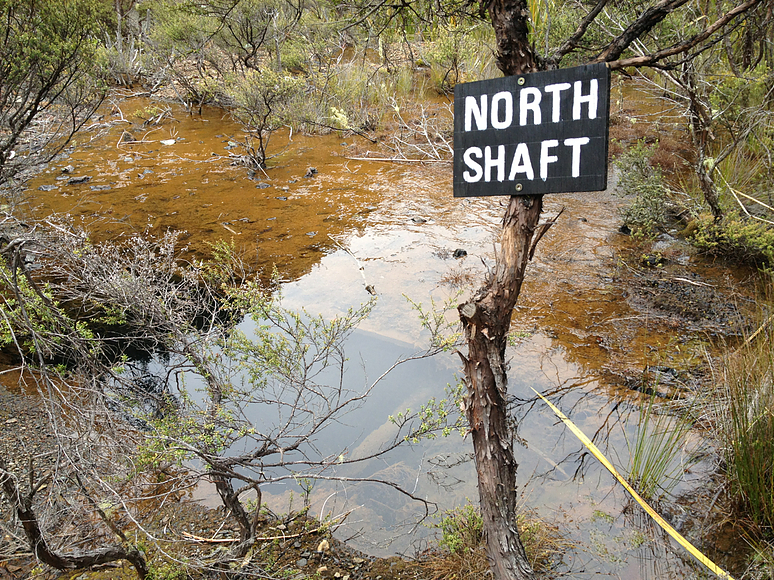
"The various levels and shafts are easy to find. Care should be taken to keep well away from the South Shaft, which is open. Similarly, the various levels into the Champion and Doctor's Lodes on the west side of Champion Creek, plus the Creek Level below the tramway on the east side of the creek, are largely untimbered and most are exceedingly dangerous. The 46m North Shaft is now flooded, with water flowing from it and presents little danger.
On both sides of the creek are the remains of ore dumps, where the ore was sorted prior to its despatch to the smelter. Like ore from all the mines in the Mineral Belt, it was mainly composed of rich secondary copper minerals and native copper. However, unlike the other mines where the secondary ore soon gave way to discontinuous lenses of lean primary ore, comprising predominantly the iron sulphide pyrrhotite, in the Champion Mine secondary ore persisted to at least the lowest point in the mine. The reason for this can be explained in part by the greater maturity of the valley surrounding the mine. The limestone and the mafic igneous rocks downstream have restricted the downward cutting of Champion Creek and this is reflected by the gentle gradient of the creek at the mine. Consequently the primary ore was exposed for a greater length of time, allowing abundant secondary ores to form. It is also likely that the primary ore was slightly more copper-rich than elsewhere in the Mineral Belt.
"Champion Creek is also one of the best localities to observe rodingite dikes within serpentinite forming the creek bed upstream of the North Shaft." (Railton et al., 1990).
Copper was discovered here by Fred Straford in 1881, while out goat shooting.
The Champion Copper Company was formed which discovered the rich Doctor's Lode. A shaft was sunk in 1884 to 150 feet, and another nearby in 1886. Tramways, a smelter and other infrastructure was erected, before the full extent (or lack thereof) of ore was investigated. In 1886, the mine closed, blamed on low copper prices, and a lack of capital.
The mine lay idle, and much of the smelter and tramway were destroyed by bushfires.
In 1903, the Maoriland Copper Company re-opened the mine, with shafts un-watered and being re-timbered including the North Shaft, a new tramway and smelter erected. The mine closed again in 1909, blamed on a poor access road, and insufficient ore reserves, although it was alleged the whole enterprise was a share speculating bubble.
The mine is part of a mineral belt stretching from D'Urville Island in the north, south-west to the Wairau River. Dun Mountain a few kilometres to the north-east is the type locality for dunite, while rodingite is named after the Roding River in the vicinity of the Champion mine and smelter.
Native copper, with copper sulphides and oxides are found near the surface, however at depth the lode turns into pyrrhotite, with only trace copper. The nearby United Mine was worked in conjunction with the Champion Mine. There were three lodes called Champion, United and Maitai. At Champion, copper was found in a 4 foot thick vein of soft serpentine, between walls of compact serpentine, with native copper 'lumps' with adhering copper sulphides and oxides found near the hanging wall, and on the footwall masses of magnetite, pyrrhotite, and copper sulphides.
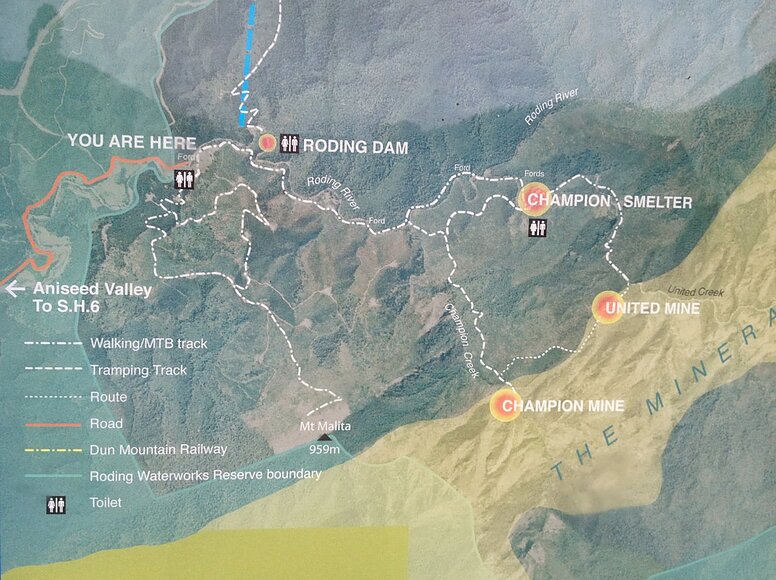
Access is by leaving State Highway 6 at Hope, which is just south of Richmond, and travelling the long winding Aniseed Valley Road to its terminus, with a caretaker's cottage, and dam. There is a fairly easy walk upstream to the smelter site with various metallic relics, and stone walls. It is quite civilised with a picnic table and toilet.
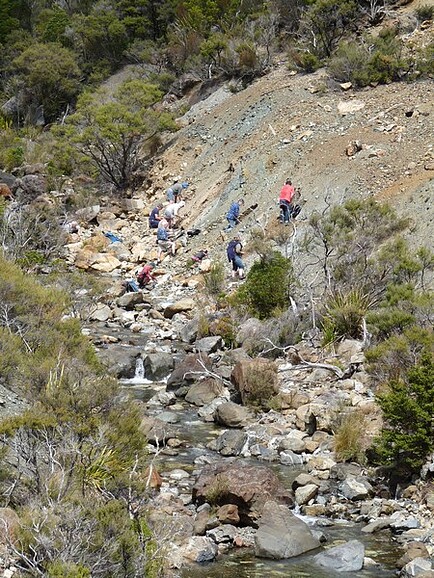
A steep walk uphill, in part across slippery mullock heaps goes to the Champion and United mines, showing access tunnels, and oxidised ore.
Malachite is said to be common on the dumps in the past, with native copper and other secondary copper species such as blue azurite, green
brochantite, deep red cuprite (often in the middle of rocks), sky-blue chrysocolla, dull grey chalcocite etc. by digging down. This came originally from the upper levels containing oxidised ore. Cupriferous pyrrhotite was found below the water level, and could feasibly also be on the dumps, as tiny irregular streaks and patches in shattered serpentine. The pyrrhotite frequently has a black coating of unnamed iron sulphides. Serpentine from the lower levels was blackish, frequently with a bronze coating of unnamed iron sulphides, also containing copper.
Mcguinnessite was found on the dumps in early 1981, as bluish-green to very pale bluish-green crusts and spherical aggregates, on serpentine. Tiny opaque grains of magnetite or hematite were noted within the mcguinnessite.
Aragonite crystals are found in the Aniseed Valley, however the source (Stott, F.) provides no further location details. Grossular garnet has been found in the Roding River nearby to the mine.
[grid reference New Zealand Map Series 1, S20, 638168]
Railton et al. (1990) listed two Champion mines but they seem to be identical and the details have been merged.
"The various levels and shafts are easy to find. Care should be taken to keep well away from the South Shaft, which is open. Similarly, the various levels into the Champion and Doctor's Lodes on the west side of Champion Creek, plus the Creek Level below the tramway on the east side of the creek, are largely untimbered and most are exceedingly dangerous. The 46m North Shaft is now flooded, with water flowing from it and presents little danger.
On both sides of the creek are the remains of ore dumps, where the ore was sorted prior to its despatch to the smelter. Like ore from all the mines in the Mineral Belt, it was mainly composed of rich secondary copper minerals and native copper. However, unlike the other mines where the secondary ore soon gave way to discontinuous lenses of lean primary ore, comprising predominantly the iron sulphide pyrrhotite, in the Champion Mine secondary ore persisted to at least the lowest point in the mine. The reason for this can be explained in part by the greater maturity of the valley surrounding the mine. The limestone and the mafic igneous rocks downstream have restricted the downward cutting of Champion Creek and this is reflected by the gentle gradient of the creek at the mine. Consequently the primary ore was exposed for a greater length of time, allowing abundant secondary ores to form. It is also likely that the primary ore was slightly more copper-rich than elsewhere in the Mineral Belt.
"Champion Creek is also one of the best localities to observe rodingite dikes within serpentinite forming the creek bed upstream of the North Shaft." (Railton et al., 1990).
Copper was discovered here by Fred Straford in 1881, while out goat shooting.
The Champion Copper Company was formed which discovered the rich Doctor's Lode. A shaft was sunk in 1884 to 150 feet, and another nearby in 1886. Tramways, a smelter and other infrastructure was erected, before the full extent (or lack thereof) of ore was investigated. In 1886, the mine closed, blamed on low copper prices, and a lack of capital.
The mine lay idle, and much of the smelter and tramway were destroyed by bushfires.
In 1903, the Maoriland Copper Company re-opened the mine, with shafts un-watered and being re-timbered including the North Shaft, a new tramway and smelter erected. The mine closed again in 1909, blamed on a poor access road, and insufficient ore reserves, although it was alleged the whole enterprise was a share speculating bubble.
The mine is part of a mineral belt stretching from D'Urville Island in the north, south-west to the Wairau River. Dun Mountain a few kilometres to the north-east is the type locality for dunite, while rodingite is named after the Roding River in the vicinity of the Champion mine and smelter.
Native copper, with copper sulphides and oxides are found near the surface, however at depth the lode turns into pyrrhotite, with only trace copper. The nearby United Mine was worked in conjunction with the Champion Mine. There were three lodes called Champion, United and Maitai. At Champion, copper was found in a 4 foot thick vein of soft serpentine, between walls of compact serpentine, with native copper 'lumps' with adhering copper sulphides and oxides found near the hanging wall, and on the footwall masses of magnetite, pyrrhotite, and copper sulphides.
Access is by leaving State Highway 6 at Hope, which is just south of Richmond, and travelling the long winding Aniseed Valley Road to its terminus, with a caretaker's cottage, and dam. There is a fairly easy walk upstream to the smelter site with various metallic relics, and stone walls. It is quite civilised with a picnic table and toilet.
A steep walk uphill, in part across slippery mullock heaps goes to the Champion and United mines, showing access tunnels, and oxidised ore.
Malachite is said to be common on the dumps in the past, with native copper and other secondary copper species such as blue azurite, green
brochantite, deep red cuprite (often in the middle of rocks), sky-blue chrysocolla, dull grey chalcocite etc. by digging down. This came originally from the upper levels containing oxidised ore. Cupriferous pyrrhotite was found below the water level, and could feasibly also be on the dumps, as tiny irregular streaks and patches in shattered serpentine. The pyrrhotite frequently has a black coating of unnamed iron sulphides. Serpentine from the lower levels was blackish, frequently with a bronze coating of unnamed iron sulphides, also containing copper.
Mcguinnessite was found on the dumps in early 1981, as bluish-green to very pale bluish-green crusts and spherical aggregates, on serpentine. Tiny opaque grains of magnetite or hematite were noted within the mcguinnessite.
Aragonite crystals are found in the Aniseed Valley, however the source (Stott, F.) provides no further location details. Grossular garnet has been found in the Roding River nearby to the mine.
Select Mineral List Type
Standard Detailed Gallery Strunz Chemical ElementsCommodity List
This is a list of exploitable or exploited mineral commodities recorded from this region.Mineral List
Mineral list contains entries from the region specified including sub-localities23 valid minerals.
Rock Types Recorded
Rock list contains entries from the region specified including sub-localities
Select Rock List Type
Alphabetical List Tree DiagramDetailed Mineral List:
| ⓘ Antlerite Formula: Cu3(SO4)(OH)4 References: |
| ⓘ Aragonite Formula: CaCO3 |
| ⓘ Atacamite Formula: Cu2(OH)3Cl References: |
| ⓘ Brochantite Formula: Cu4(SO4)(OH)6 |
| ⓘ Chalcanthite Formula: CuSO4 · 5H2O |
| ⓘ Chalcocite Formula: Cu2S References: |
| ⓘ Chalcopyrite Formula: CuFeS2 References: |
| ⓘ Chrysocolla Formula: Cu2-xAlx(H2-xSi2O5)(OH)4 · nH2O, x < 1 |
| ⓘ Chrysotile Formula: Mg3(Si2O5)(OH)4 References: Robert James McKelvey Collection and photoIdentified by Ralph S Bottrill: Visual Identification |
| ⓘ Connellite Formula: Cu19(SO4)(OH)32Cl4 · 3H2O References: |
| ⓘ Cuprite Formula: Cu2O |
| ⓘ Cuprite var. Chalcotrichite Formula: Cu2O |
| ⓘ Cyanotrichite Formula: Cu4Al2(SO4)(OH)12 · 2H2O References: |
| ⓘ Epidote Formula: (CaCa)(AlAlFe3+)O[Si2O7][SiO4](OH) References: |
| ⓘ Fayalite Formula: Fe2+2(SiO4) References: |
| ⓘ Grossular Formula: Ca3Al2(SiO4)3 References: |
| ⓘ Gypsum Formula: CaSO4 · 2H2O References: |
| ⓘ Gypsum var. Selenite Formula: CaSO4 · 2H2O References: |
| ⓘ Hematite Formula: Fe2O3 References: |
| ⓘ Langite Formula: Cu4(SO4)(OH)6 · 2H2O References: |
| ⓘ Malachite Formula: Cu2(CO3)(OH)2 |
| ⓘ Mcguinnessite Formula: (Mg,Cu)2(CO3)(OH)2 |
| ⓘ Native Copper Formula: Cu |
| ⓘ 'Pumpellyite Subgroup' Formula: Ca2XAl2[Si2O6(OH)][SiO4](OH)2A References: |
| ⓘ Pyrrhotite Formula: Fe1-xS |
| ⓘ 'Serpentine Subgroup' Formula: D3[Si2O5](OH)4 |
| ⓘ Vesuvianite Formula: Ca19Fe3+Al4(Al6Mg2)(◻4)◻[Si2O7]4[(SiO4)10]O(OH)9 References: |
Gallery:

List of minerals arranged by Strunz 10th Edition classification
| Group 1 - Elements | |||
|---|---|---|---|
| ⓘ | Native Copper | 1.AA.05 | Cu |
| Group 2 - Sulphides and Sulfosalts | |||
| ⓘ | Chalcocite | 2.BA.05 | Cu2S |
| ⓘ | Chalcopyrite | 2.CB.10a | CuFeS2 |
| ⓘ | Pyrrhotite | 2.CC.10 | Fe1-xS |
| Group 3 - Halides | |||
| ⓘ | Atacamite | 3.DA.10a | Cu2(OH)3Cl |
| ⓘ | Connellite | 3.DA.25 | Cu19(SO4)(OH)32Cl4 · 3H2O |
| Group 4 - Oxides and Hydroxides | |||
| ⓘ | Cuprite var. Chalcotrichite | 4.AA.10 | Cu2O |
| ⓘ | 4.AA.10 | Cu2O | |
| ⓘ | Hematite | 4.CB.05 | Fe2O3 |
| Group 5 - Nitrates and Carbonates | |||
| ⓘ | Aragonite | 5.AB.15 | CaCO3 |
| ⓘ | Malachite | 5.BA.10 | Cu2(CO3)(OH)2 |
| ⓘ | Mcguinnessite | 5.BA.10 | (Mg,Cu)2(CO3)(OH)2 |
| Group 7 - Sulphates, Chromates, Molybdates and Tungstates | |||
| ⓘ | Antlerite | 7.BB.15 | Cu3(SO4)(OH)4 |
| ⓘ | Brochantite | 7.BB.25 | Cu4(SO4)(OH)6 |
| ⓘ | Chalcanthite | 7.CB.20 | CuSO4 · 5H2O |
| ⓘ | Gypsum | 7.CD.40 | CaSO4 · 2H2O |
| ⓘ | var. Selenite | 7.CD.40 | CaSO4 · 2H2O |
| ⓘ | Langite | 7.DD.10 | Cu4(SO4)(OH)6 · 2H2O |
| ⓘ | Cyanotrichite | 7.DE.10 | Cu4Al2(SO4)(OH)12 · 2H2O |
| Group 9 - Silicates | |||
| ⓘ | Chrysotile | 9.00. | Mg3(Si2O5)(OH)4 |
| ⓘ | Fayalite | 9.AC.05 | Fe2+2(SiO4) |
| ⓘ | Grossular | 9.AD.25 | Ca3Al2(SiO4)3 |
| ⓘ | Epidote | 9.BG.05a | (CaCa)(AlAlFe3+)O[Si2O7][SiO4](OH) |
| ⓘ | Vesuvianite | 9.BG.35 | Ca19Fe3+Al4(Al6Mg2)(◻4)◻[Si2O7]4[(SiO4)10]O(OH)9 |
| ⓘ | Chrysocolla | 9.ED.20 | Cu2-xAlx(H2-xSi2O5)(OH)4 · nH2O, x < 1 |
| Unclassified | |||
| ⓘ | 'Pumpellyite Subgroup' | - | Ca2XAl2[Si2O6(OH)][SiO4](OH)2A |
| ⓘ | 'Serpentine Subgroup' | - | D3[Si2O5](OH)4 |
List of minerals for each chemical element
| H | Hydrogen | |
|---|---|---|
| H | ⓘ Antlerite | Cu3(SO4)(OH)4 |
| H | ⓘ Atacamite | Cu2(OH)3Cl |
| H | ⓘ Brochantite | Cu4(SO4)(OH)6 |
| H | ⓘ Chalcanthite | CuSO4 · 5H2O |
| H | ⓘ Chrysotile | Mg3(Si2O5)(OH)4 |
| H | ⓘ Chrysocolla | Cu2-xAlx(H2-xSi2O5)(OH)4 · nH2O, x < 1 |
| H | ⓘ Connellite | Cu19(SO4)(OH)32Cl4 · 3H2O |
| H | ⓘ Cyanotrichite | Cu4Al2(SO4)(OH)12 · 2H2O |
| H | ⓘ Epidote | (CaCa)(AlAlFe3+)O[Si2O7][SiO4](OH) |
| H | ⓘ Gypsum | CaSO4 · 2H2O |
| H | ⓘ Langite | Cu4(SO4)(OH)6 · 2H2O |
| H | ⓘ Malachite | Cu2(CO3)(OH)2 |
| H | ⓘ Mcguinnessite | (Mg,Cu)2(CO3)(OH)2 |
| H | ⓘ Pumpellyite Subgroup | Ca2XAl2[Si2O6(OH)][SiO4](OH)2A |
| H | ⓘ Vesuvianite | Ca19Fe3+Al4(Al6Mg2)(◻4)◻[Si2O7]4[(SiO4)10]O(OH)9 |
| H | ⓘ Gypsum var. Selenite | CaSO4 · 2H2O |
| H | ⓘ Serpentine Subgroup | D3[Si2O5](OH)4 |
| C | Carbon | |
| C | ⓘ Aragonite | CaCO3 |
| C | ⓘ Malachite | Cu2(CO3)(OH)2 |
| C | ⓘ Mcguinnessite | (Mg,Cu)2(CO3)(OH)2 |
| O | Oxygen | |
| O | ⓘ Antlerite | Cu3(SO4)(OH)4 |
| O | ⓘ Aragonite | CaCO3 |
| O | ⓘ Atacamite | Cu2(OH)3Cl |
| O | ⓘ Brochantite | Cu4(SO4)(OH)6 |
| O | ⓘ Chalcanthite | CuSO4 · 5H2O |
| O | ⓘ Chrysotile | Mg3(Si2O5)(OH)4 |
| O | ⓘ Cuprite var. Chalcotrichite | Cu2O |
| O | ⓘ Chrysocolla | Cu2-xAlx(H2-xSi2O5)(OH)4 · nH2O, x < 1 |
| O | ⓘ Connellite | Cu19(SO4)(OH)32Cl4 · 3H2O |
| O | ⓘ Cuprite | Cu2O |
| O | ⓘ Cyanotrichite | Cu4Al2(SO4)(OH)12 · 2H2O |
| O | ⓘ Epidote | (CaCa)(AlAlFe3+)O[Si2O7][SiO4](OH) |
| O | ⓘ Fayalite | Fe22+(SiO4) |
| O | ⓘ Grossular | Ca3Al2(SiO4)3 |
| O | ⓘ Gypsum | CaSO4 · 2H2O |
| O | ⓘ Hematite | Fe2O3 |
| O | ⓘ Langite | Cu4(SO4)(OH)6 · 2H2O |
| O | ⓘ Malachite | Cu2(CO3)(OH)2 |
| O | ⓘ Mcguinnessite | (Mg,Cu)2(CO3)(OH)2 |
| O | ⓘ Pumpellyite Subgroup | Ca2XAl2[Si2O6(OH)][SiO4](OH)2A |
| O | ⓘ Vesuvianite | Ca19Fe3+Al4(Al6Mg2)(◻4)◻[Si2O7]4[(SiO4)10]O(OH)9 |
| O | ⓘ Gypsum var. Selenite | CaSO4 · 2H2O |
| O | ⓘ Serpentine Subgroup | D3[Si2O5](OH)4 |
| Mg | Magnesium | |
| Mg | ⓘ Chrysotile | Mg3(Si2O5)(OH)4 |
| Mg | ⓘ Mcguinnessite | (Mg,Cu)2(CO3)(OH)2 |
| Mg | ⓘ Vesuvianite | Ca19Fe3+Al4(Al6Mg2)(◻4)◻[Si2O7]4[(SiO4)10]O(OH)9 |
| Al | Aluminium | |
| Al | ⓘ Chrysocolla | Cu2-xAlx(H2-xSi2O5)(OH)4 · nH2O, x < 1 |
| Al | ⓘ Cyanotrichite | Cu4Al2(SO4)(OH)12 · 2H2O |
| Al | ⓘ Epidote | (CaCa)(AlAlFe3+)O[Si2O7][SiO4](OH) |
| Al | ⓘ Grossular | Ca3Al2(SiO4)3 |
| Al | ⓘ Pumpellyite Subgroup | Ca2XAl2[Si2O6(OH)][SiO4](OH)2A |
| Al | ⓘ Vesuvianite | Ca19Fe3+Al4(Al6Mg2)(◻4)◻[Si2O7]4[(SiO4)10]O(OH)9 |
| Si | Silicon | |
| Si | ⓘ Chrysotile | Mg3(Si2O5)(OH)4 |
| Si | ⓘ Chrysocolla | Cu2-xAlx(H2-xSi2O5)(OH)4 · nH2O, x < 1 |
| Si | ⓘ Epidote | (CaCa)(AlAlFe3+)O[Si2O7][SiO4](OH) |
| Si | ⓘ Fayalite | Fe22+(SiO4) |
| Si | ⓘ Grossular | Ca3Al2(SiO4)3 |
| Si | ⓘ Pumpellyite Subgroup | Ca2XAl2[Si2O6(OH)][SiO4](OH)2A |
| Si | ⓘ Vesuvianite | Ca19Fe3+Al4(Al6Mg2)(◻4)◻[Si2O7]4[(SiO4)10]O(OH)9 |
| Si | ⓘ Serpentine Subgroup | D3[Si2O5](OH)4 |
| S | Sulfur | |
| S | ⓘ Antlerite | Cu3(SO4)(OH)4 |
| S | ⓘ Brochantite | Cu4(SO4)(OH)6 |
| S | ⓘ Chalcopyrite | CuFeS2 |
| S | ⓘ Chalcanthite | CuSO4 · 5H2O |
| S | ⓘ Chalcocite | Cu2S |
| S | ⓘ Connellite | Cu19(SO4)(OH)32Cl4 · 3H2O |
| S | ⓘ Cyanotrichite | Cu4Al2(SO4)(OH)12 · 2H2O |
| S | ⓘ Gypsum | CaSO4 · 2H2O |
| S | ⓘ Langite | Cu4(SO4)(OH)6 · 2H2O |
| S | ⓘ Pyrrhotite | Fe1-xS |
| S | ⓘ Gypsum var. Selenite | CaSO4 · 2H2O |
| Cl | Chlorine | |
| Cl | ⓘ Atacamite | Cu2(OH)3Cl |
| Cl | ⓘ Connellite | Cu19(SO4)(OH)32Cl4 · 3H2O |
| Ca | Calcium | |
| Ca | ⓘ Aragonite | CaCO3 |
| Ca | ⓘ Epidote | (CaCa)(AlAlFe3+)O[Si2O7][SiO4](OH) |
| Ca | ⓘ Grossular | Ca3Al2(SiO4)3 |
| Ca | ⓘ Gypsum | CaSO4 · 2H2O |
| Ca | ⓘ Pumpellyite Subgroup | Ca2XAl2[Si2O6(OH)][SiO4](OH)2A |
| Ca | ⓘ Vesuvianite | Ca19Fe3+Al4(Al6Mg2)(◻4)◻[Si2O7]4[(SiO4)10]O(OH)9 |
| Ca | ⓘ Gypsum var. Selenite | CaSO4 · 2H2O |
| Fe | Iron | |
| Fe | ⓘ Chalcopyrite | CuFeS2 |
| Fe | ⓘ Epidote | (CaCa)(AlAlFe3+)O[Si2O7][SiO4](OH) |
| Fe | ⓘ Fayalite | Fe22+(SiO4) |
| Fe | ⓘ Hematite | Fe2O3 |
| Fe | ⓘ Pyrrhotite | Fe1-xS |
| Fe | ⓘ Vesuvianite | Ca19Fe3+Al4(Al6Mg2)(◻4)◻[Si2O7]4[(SiO4)10]O(OH)9 |
| Cu | Copper | |
| Cu | ⓘ Antlerite | Cu3(SO4)(OH)4 |
| Cu | ⓘ Atacamite | Cu2(OH)3Cl |
| Cu | ⓘ Brochantite | Cu4(SO4)(OH)6 |
| Cu | ⓘ Chalcopyrite | CuFeS2 |
| Cu | ⓘ Chalcanthite | CuSO4 · 5H2O |
| Cu | ⓘ Chalcocite | Cu2S |
| Cu | ⓘ Cuprite var. Chalcotrichite | Cu2O |
| Cu | ⓘ Chrysocolla | Cu2-xAlx(H2-xSi2O5)(OH)4 · nH2O, x < 1 |
| Cu | ⓘ Connellite | Cu19(SO4)(OH)32Cl4 · 3H2O |
| Cu | ⓘ Cuprite | Cu2O |
| Cu | ⓘ Cyanotrichite | Cu4Al2(SO4)(OH)12 · 2H2O |
| Cu | ⓘ Native Copper | Cu |
| Cu | ⓘ Langite | Cu4(SO4)(OH)6 · 2H2O |
| Cu | ⓘ Malachite | Cu2(CO3)(OH)2 |
| Cu | ⓘ Mcguinnessite | (Mg,Cu)2(CO3)(OH)2 |
Localities in this Region
- Nelson Region
- Aniseed Valley
- Champion Copper Mine
- Aniseed Valley
Other Regions, Features and Areas containing this locality
Australian PlateTectonic Plate
- Taranaki ProvinceVolcanic Arc
New Zealand
- South IslandIsland
- Southern AlpsMountain Range
This page contains all mineral locality references listed on mindat.org. This does not claim to be a complete list. If you know of more minerals from this site, please register so you can add to our database. This locality information is for reference purposes only. You should never attempt to
visit any sites listed in mindat.org without first ensuring that you have the permission of the land and/or mineral rights holders
for access and that you are aware of all safety precautions necessary.
References
Lauder, W.R. (1965) The Geology of Dun Mountain, Nelson, New Zealand. New Zealand Journal of Geology and Geophysics, 8 (1) 3-34 doi:10.1080/00288306.1965.10422128

Champion Copper Mine, Aniseed Valley, Nelson Region, New Zealand