成瀬講義録 “Style—Toward Clarity and Grace”(25)英語の歴史 ー “inkhorn”文体の蔓延

(↑のつづき)
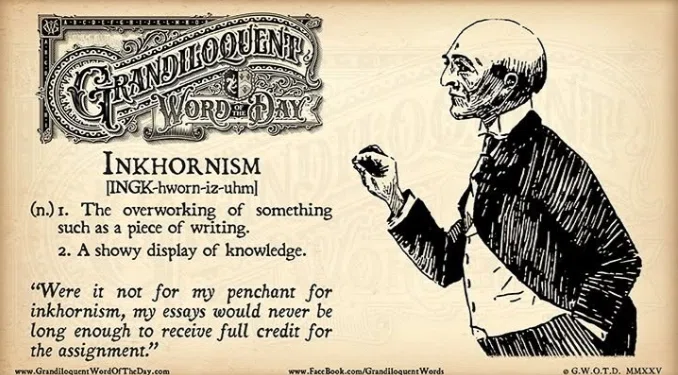
And of course once we learn these words, who among us can resist using them when we want to sound learned and authoritative? Writers began to surrender to that temptation well before the middle of the sixteenth century, but it was about then that many English writers became so enamored with an erudite vocabulary that they began deliberately to lard their prose with exotic Latinisms, a kind of writing that came to be known as the “inkhorn” style and was mocked as pretentious and incomprehensible by those critics for whom English had become a special passion. This impulse toward an elevated diction has proved quite durable; it accounts for the difference today between “The adolescents who had effectuated forcible entry into the domicile were apprehended” and “We caught the kids who broke into the house.”
そして、ひとたびこうした語彙を習得したならば、自分を博識だとか権威者だとか思わせたいときにはどうしてもこれらの語彙を利用しないではいられなくなるのも、人情として当然である。
こうした兆候は、かなり以前から英語の書き手のなかにみられるものだが、しかしこれが顕著に現れてくるのは、16世紀中葉以降のことである。
この頃から一部の英語の書き手は、見慣れないラテン語系語彙をわざと多用した仰々しい文章をつくりはじめる。
こうした文体には“inkhorn”[1]という呼び名がつけられ、英語に情熱を注ぐ批評家たちからは「気取っている」「ちんぷんかんぷん」といった嘲りの対象となった。
だがこうした「高尚なる表現」を求める心理は現在に至るまで決して失われてはいない。
“The adolescents who had effectuated forcible entry into the domicile were apprehended”
(当該居住地に強制的進入を実行した青年達が逮捕された)
と
“We caught the kids who broke into the house.”
(我々は家に押し入った子供をつかまえた)
という2つの表現が、いまもなお用いられているのである。
[1] 角製のインク入れ。おもに学者が使っていたので、学者ぶった言い回しという意味に使われる。
☆☆☆
理不尽に耐えて耐えて習得したものであれば、それをできるだけ頻繁に使いたくなるのは人情というもの。
イギリス人だって日本人だって同じです。
こうして、
英語にはラテン語系語彙満載の文章が、日本語には漢語満載の文章が、世の中に蔓延することになった
のです。
(つづきは↓)
☆☆☆
☆☆☆
「ことさきく|成瀬由紀雄の日英文章・翻訳教室」では、このほかにも日本と日本人、英語・日本語・翻訳その他に関するコンテンツを数多くアップしてあります。総数は1900本を超えています。
いくつものマガジンを設定していますのでぜひチェックしてみてください
