
成瀬講義録 “Style—Toward Clarity and Grace”(24)英語の歴史ーーゲルマン・ラテンの二重語彙の代償

(↑のつづき)
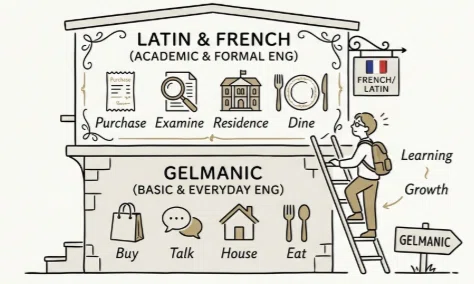
But this flexibility has come with a price. Since the language of political cultural, scientific, and economic affairs is based on largely on Romance words, those of us who aspire to participate have had to learn a vocabulary separate from that which we learned through the first five or ten years of our lives. Just as we have to spend a good deal of time in school learning the idiosyncracies of our spelling system and of “good” grammar, so must we spend time learning words not rooted in our daily experience. Five-year-olds know the meaning of between, over, across, and before, but fifteen-year-olds have to learn the meaning of intra-, supra-, trans-, and ante-. To those of us already in an educated community, that vocabulary seems natural, not the least difficult. But if it were as natural to acquire as we think, publishers would not profit from selling books and tapes promising us Word Power in Thirty Days.
だがその一方で、こうした豊かな表現力を手に入れたことで英語使用者は代わりに大きな代償も支払うことになった。
現代英語においては政治、文化、科学、経済といった分野での使用語彙のほとんどがロマンス(ラテン語、フランス語)系語彙である。従ってこれらの分野を目指す人々は子供の頃に身につけた日常的な語彙とはまったく別の語彙群を新たに習得しなければならないのである。
ちょうど小学校や中学校において英語特有のスペリング体系やあの伝統的“規範”文法を長時間をかけて習わなければならないように、英語使用者は日常の体験とは無関係の新しい語彙群を習得していかなければならない。
between, over, across, and beforeの意味ならば5歳の子供でも知っているが、15歳にもなるとintra-, supra-, trans-, and ante-の意味を新たに習得していかなければならない。
知識層に属する人々はこうした語彙群に違和感を感じないだろうし、それが難しいなどとは夢にも思わないだろう。しかし、もしもその習得がそれほど簡単なものならば、“Word Power in Thirty Days”などといったタイトルの本やテープで出版社が儲けるなどという事態は起こらないはずだ。
英語ネイティブは、土着の言葉だけではなく思春期からはラテン語系の新しい語彙層を学ばなければならないのでたいへんだ、とWilliamsさんはここでいっているのです。
けれども、漢語だけでなく洋語まで習得しなければならない「三重言語国家」に生きる我々日本人からみれば、そんな苦労なんて苦労のうちに入りません。

なにしろ我々は、ある大学教授によると、そうした三重の言い回しの習得に失敗すると一生文章が書けなくなる、という恐るべき民族なんですから。
「Word Power in Thirty Days」ですって? あまい!
日本では、漢字の書き順までが問われるのです。
こうした理不尽にずっと耐えつづけてきた日本人に対して、世界中の人々がぜひもっと暖かい目を向けてほしいものです。
(つづきは↓)
☆☆☆
☆☆☆
「ことさきく|成瀬由紀雄の日英文章・翻訳教室」では、このほかにも日本と日本人、英語・日本語・翻訳その他に関するコンテンツを数多くアップしてあります。総数は1900本を超えています。
いくつものマガジンを設定していますのでぜひチェックしてみてください。
