
Crestmoreite
This page is currently not sponsored. Click here to sponsor this page.

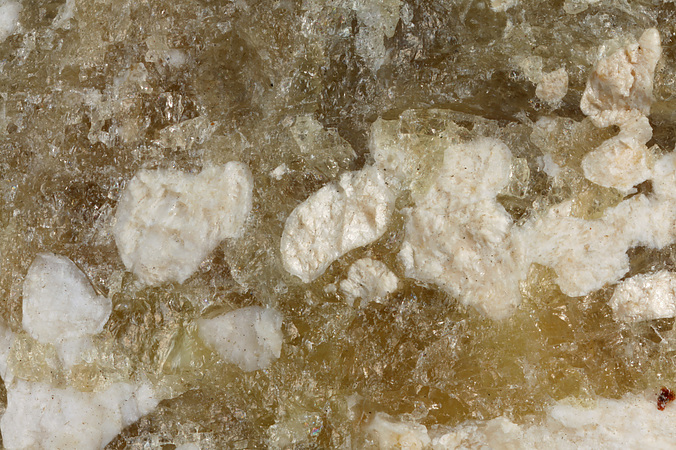

About Crestmoreite
Lustre:
Vitreous
Hardness:
3
Crystal System:
Monoclinic
Name:
Named after its locality.
A Mixture Of:
Originally reported from Crestmore quarries, Crestmore, Riverside Co., California, USA. Taylor (1953) showed that crestmoreite is a submicroscopic intergrowth of "wilkeite" and tobermorite
Unique Identifiers
Mindat ID:
6892
Long-form identifier:
mindat:1:1:6892:1
Pronunciation of Crestmoreite
Pronunciation:
| Play | Recorded by | Country |
|---|---|---|
| Jolyon Ralph | United Kingdom |
Physical Properties of Crestmoreite
Vitreous
Hardness:
3 on Mohs scale
Crystallography of Crestmoreite
Crystal System:
Monoclinic
Other Language Names for Crestmoreite
German:Crestmoreit
Spanish:Crestmoreita
Common Associates
Associations Based on Photo Data:
| 7 photos of Crestmoreite associated with Vesuvianite | Ca19Fe3+Al4(Al6Mg2)(◻4)◻[Si2O7]4[(SiO4)10]O(OH)9 |
| 3 photos of Crestmoreite associated with 'Wilkeite' | Ca5(SiO4)1.5(SO4)1.5OH |
| 3 photos of Crestmoreite associated with Monticellite | CaMg(SiO4) |
| 2 photos of Crestmoreite associated with Calcite | CaCO3 |
Other Information
Health Risks:
No information on health risks for this material has been entered into the database. You should always treat mineral specimens with care.
Internet Links for Crestmoreite
mindat.org URL:
https://www.mindat.org/min-6892.html
Please feel free to link to this page.
Please feel free to link to this page.
Search Engines:
Mineral Dealers:
References for Crestmoreite
Localities for Crestmoreite
Showing 3 localities.
 symbol to view information about a locality.
The
symbol to view information about a locality.
The Locality List
 - This locality has map coordinates listed.
- This locality has estimated coordinates.
ⓘ - Click for references and further information on this occurrence.
? - Indicates mineral may be doubtful at this locality.
- This locality has map coordinates listed.
- This locality has estimated coordinates.
ⓘ - Click for references and further information on this occurrence.
? - Indicates mineral may be doubtful at this locality.
 - Good crystals or important locality for species.
 - World class for species or very significant.
(TL) - Type Locality for a valid mineral species.
(FRL) - First Recorded Locality for everything else (eg varieties).
- World class for species or very significant.
(TL) - Type Locality for a valid mineral species.
(FRL) - First Recorded Locality for everything else (eg varieties).
All localities listed without proper references should be considered as questionable.
USA | |
| Woodford et al. (1941) |
| Woodford et al. (1941) | |
| Woodford et al. (1941) |

Crestmore quarries, Crestmore, Jurupa Valley, Riverside County, California, USA