
Béhierite
A valid IMA mineral species
This page kindly sponsored by Sylvain Jaques

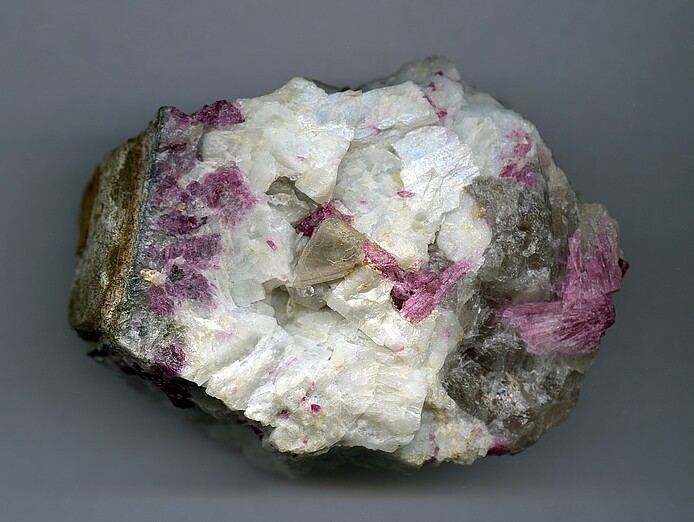


About Béhierite
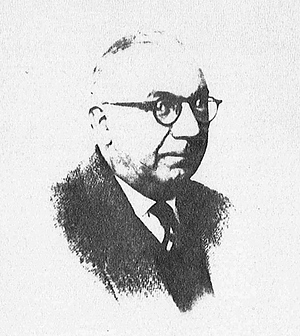
Jean Béhier
Formula:
Ta(BO4)
Colour:
Greyish pink; pale lilac; colorless to white
Lustre:
Adamantine
Hardness:
7 - 7½
Specific Gravity:
7.86
Crystal System:
Tetragonal
Name:
Named after Jean Jacques Francis Béhier (2 March 1903, Paris, France - 11 May 1965, Tsaratanana district, Betsiboka, Madagascar), French mineralogist at the Service Géologique (Geological Survey) of Madagascar, who found the mineral in 1959 when he was examining material collected in 1953.
Béhier was a self-taught mineralogist who brought together a collection of more than 5,000 pieces divided into three parts: French minerals, European minerals and Malagasy minerals. This collection was established thanks to his numerous field surveys and numerous exchanges carried out from 1925 to 1965.
Jean Béhier was a member of the Société française de minéralogie (French Mineralogical Society) from 1931, he became a prospector and teacher for the Commissariat à l'énergie atomique (CEA, Atomic Energy Commission) after the Second World War, shortly after its creation on October 18, 1945.
In 1946, he was assigned to the Malagasy CEA and then to the Geological Service in Madagascar in 1953. He was of great help in the development of Madagascar's mining industry. He described numerous mineral species there and published numerous articles and works from 1949 to 1962. Then, he reorganized and expanded the collection of the Geological Service of Madagascar. In 1951, he made a long stay in mainland France, where he resumed his field research work. He returned to Madagascar in 1952 where he resumed his initial work. In August and September 1956 he was assigned to the reorganization of the mineralogy museum of Maputo (Lourenço Marques at the time) in Mozambique. Béhier, in collaboration with the analytical laboratories of Madagascar, France and Washington, described approximately 70 new mineral species from Madagascar, including hibonite. Until his death in 1965, he also worked on the organization and improvement of the National Museum of Geology and the Mineralogy Laboratory of the Geological Survey. He was responsible for establishing the list of mineral species prohibited for export, listed in the Mining Law. This list was officially established to protect Madagascar's rare minerals, but in reality Béhier probably did this so that he would be the only person legally authorized to export minerals to museums and mineral collectors outside of Madagascar.
His work was crowned by the discovery of two new mineral species, hibonite and béhierite. Béhierite, a new mineral species that he discovered and described in Madagascar, was named in his honour in 1961. A large part of his collection was acquired in 2001 by various collectors.
On May 11, 1965, as he was preparing to return to France, he was killed in a plane crash in the northeast of Madagascar.
Béhier was a self-taught mineralogist who brought together a collection of more than 5,000 pieces divided into three parts: French minerals, European minerals and Malagasy minerals. This collection was established thanks to his numerous field surveys and numerous exchanges carried out from 1925 to 1965.
Jean Béhier was a member of the Société française de minéralogie (French Mineralogical Society) from 1931, he became a prospector and teacher for the Commissariat à l'énergie atomique (CEA, Atomic Energy Commission) after the Second World War, shortly after its creation on October 18, 1945.
In 1946, he was assigned to the Malagasy CEA and then to the Geological Service in Madagascar in 1953. He was of great help in the development of Madagascar's mining industry. He described numerous mineral species there and published numerous articles and works from 1949 to 1962. Then, he reorganized and expanded the collection of the Geological Service of Madagascar. In 1951, he made a long stay in mainland France, where he resumed his field research work. He returned to Madagascar in 1952 where he resumed his initial work. In August and September 1956 he was assigned to the reorganization of the mineralogy museum of Maputo (Lourenço Marques at the time) in Mozambique. Béhier, in collaboration with the analytical laboratories of Madagascar, France and Washington, described approximately 70 new mineral species from Madagascar, including hibonite. Until his death in 1965, he also worked on the organization and improvement of the National Museum of Geology and the Mineralogy Laboratory of the Geological Survey. He was responsible for establishing the list of mineral species prohibited for export, listed in the Mining Law. This list was officially established to protect Madagascar's rare minerals, but in reality Béhier probably did this so that he would be the only person legally authorized to export minerals to museums and mineral collectors outside of Madagascar.
His work was crowned by the discovery of two new mineral species, hibonite and béhierite. Béhierite, a new mineral species that he discovered and described in Madagascar, was named in his honour in 1961. A large part of his collection was acquired in 2001 by various collectors.
On May 11, 1965, as he was preparing to return to France, he was killed in a plane crash in the northeast of Madagascar.
The tantalum analogue of schiavinatoite. The second mineral with essential tantalum and boron after holtite.
Possibly crystallochemically related to xenotime-(Y) (Ondrejka et al., 2022).
Possibly crystallochemically related to xenotime-(Y) (Ondrejka et al., 2022).
Name Encoding
ASCII-7:
Behierite
Unique Identifiers
Mindat ID:
602
Long-form identifier:
mindat:1:1:602:8
Similar Names
IMA Classification of Béhierite
Approved
IMA Formula:
Ta5+BO4
First published:
1960
Classification of Béhierite
6.AC.15
6 : BORATES
A : Monoborates
C : B(O,OH)4, without and with additional anions; 1(T), 1(T)+OH, etc
6 : BORATES
A : Monoborates
C : B(O,OH)4, without and with additional anions; 1(T), 1(T)+OH, etc
24.1.2.1
24 : ANHYDROUS BORATES
1 : A2XO4
24 : ANHYDROUS BORATES
1 : A2XO4
9.6.6
9 : Borates
6 : Borates of Ti, Sn and Ta
9 : Borates
6 : Borates of Ti, Sn and Ta
Mineral Symbols
As of 2021 there are now IMA–CNMNC approved mineral symbols (abbreviations) for each mineral species, useful for tables and diagrams.
| Symbol | Source | Reference for Standard |
|---|---|---|
| Béh | IMA–CNMNC | Warr, L.N. (2021). IMA–CNMNC approved mineral symbols. Mineralogical Magazine, 85(3), 291-320. doi:10.1180/mgm.2021.43 |
Physical Properties of Béhierite
Adamantine
Transparency:
Transparent
Colour:
Greyish pink; pale lilac; colorless to white
Streak:
White
Hardness:
7 - 7½ on Mohs scale
Hardness Data:
Measured
Cleavage:
Distinct/Good
{110} and {010}
{110} and {010}
Fracture:
Sub-Conchoidal
Density:
7.86(5) g/cm3 (Measured) 7.91 g/cm3 (Calculated)
Optical Data of Béhierite
Type:
Uniaxial (+)
Comments:
nω and nε > 2
Chemistry of Béhierite
Mindat Formula:
Ta(BO4)
Elements listed:
Chemical Analysis
Oxide wt%:
| 1 | 2 | |
|---|---|---|
| Ta2O5 | 81.88 % | 63.95 % |
| Nb2O5 | 3.19 % | 21.73 % |
| B2O3 | 13.70 % | 15.77 % |
| Total: | 98.77 % | 101.45 % |
Empirical formulas:
| Sample ID | Empirical Formula |
|---|---|
| 1 | (Ta0.939Nb0.061)1.000B1.000O4.000 |
| 2 | (Ta0.64Nb0.36)Σ=1.00BO4 |
Sample references:
| ID | Locality | Reference | Notes |
|---|---|---|---|
| 1 | Animikie Red Ace pegmatite, Pine River pegmatites, Fern, Florence County, Wisconsin, USA | ||
| 2 | Antsongombato gem mine, Antsentsindrano, Anosiarivo Manapa, Betafo District, Vakinankaratra, Madagascar | Analysis from a selected point (nr 13) in a behierite-schiavinatoite crystal |
Crystallography of Béhierite
Crystal System:
Tetragonal
Class (H-M):
4/mmm(4/m2/m2/m) - Ditetragonal Dipyramidal
Space Group:
I41/amd
Cell Parameters:
a = 6.206(5) Å, c = 5.472(5) Å
Ratio:
a:c = 1 : 0.882
Unit Cell V:
210.75 ų (Calculated from Unit Cell)
Z:
4
Morphology:
Pseudo-octahedral crystals. Forms: {011}
X-Ray Powder Diffraction
Powder Diffraction Data:
| d-spacing | Intensity |
|---|---|
| 4.10 Å | (100) |
| 3.10 Å | (71) |
| 2.327 Å | (71) |
| 2.478 Å | (50) |
| 1.600 Å | (50) |
| 1.93 Å | (35) |
Comments:
Very close to schiavinatoite.
Geological Environment
Paragenetic Mode(s):
| Paragenetic Mode | Earliest Age (Ga) |
|---|---|
| Stage 4b: Highly evolved igneous rocks | >3.0 |
| 34 : Complex granite pegmatites |
Type Occurrence of Béhierite
General Appearance of Type Material:
4 grayish-pink pseudo-octahedral crystals, 0.5 to 7.0 mm in size.
Place of Conservation of Type Material:
National Museum of Natural History, Washington, D.C., USA, 139602.
Geological Setting of Type Material:
A complex LCT granite pegmatite hosted in a marble
Associated Minerals at Type Locality:
Synonyms of Béhierite
Other Language Names for Béhierite
Common Associates
Associations Based on Photo Data:
| 9 photos of Béhierite associated with Tourmaline | AD3G6(T6O18)(BO3)3X3Z |
| 8 photos of Béhierite associated with Quartz | SiO2 |
| 6 photos of Béhierite associated with Elbaite | Na(Li1.5Al1.5)Al6(Si6O18)(BO3)3(OH)3(OH) |
| 6 photos of Béhierite associated with Schiavinatoite | Nb(BO4) |
| 4 photos of Béhierite associated with Albite | Na(AlSi3O8) |
| 4 photos of Béhierite associated with 'Rubellite' | |
| 2 photos of Béhierite associated with K Feldspar | |
| 2 photos of Béhierite associated with Rhodizite | KBe4Al4(B11Be)O28 |
| 2 photos of Béhierite associated with Danburite | CaB2Si2O8 |
| 2 photos of Béhierite associated with 'Manganese-bearing Fluorapatite' | (Ca,Mn2+)5(PO4)3(F,Cl,OH) or Ca5([P,Mn5+]O4)3(F,Cl,OH) |
Related Minerals - Strunz-mindat Grouping
| 6.AC.05 | Sinhalite | MgAl(BO4) |
| 6.AC.10 | Pseudosinhalite | Mg2Al3(BO3)2(OH)O3 |
| 6.AC.15 | Schiavinatoite | Nb(BO4) |
| 6.AC.20 | Frolovite | Ca[B(OH)4]2 |
| 6.AC.25 | Hexahydroborite | Ca[B(OH)4]2 · 2H2O or CaB2O4 · 6H2O |
| 6.AC.30 | Henmilite | Ca2Cu[B(OH)4]2(OH)4 |
| 6.AC.35 | Bandylite | Cu[B(OH)4]Cl |
| 6.AC.40 | Teepleite | Na2[B(OH)4]Cl |
| 6.AC.45 | Moydite-(Y) | Y[B(OH)4](CO3) |
| 6.AC.50 | Carboborite | Ca2Mg[B(OH)4]2(CO3)2 · 4H2O |
| 6.AC.55 | Sulfoborite | Mg3[B(OH)4]2(SO4)(OH,F)2 |
| 6.AC.60 | Lüneburgite | Mg3[B2(OH)6](PO4)2 · 6H2O |
| 6.AC.65 | Seamanite | Mn2+3[B(OH)4](PO4)(OH)2 |
| 6.AC.70 | Cahnite | Ca2[B(OH)4](AsO4) |
Other Information
Notes:
Insoluble in hot or cold acids.
Health Risks:
No information on health risks for this material has been entered into the database. You should always treat mineral specimens with care.
Internet Links for Béhierite
mindat.org URL:
https://www.mindat.org/min-602.html
Please feel free to link to this page.
Please feel free to link to this page.
Search Engines:
External Links:
Mineral Dealers:
References for Béhierite
Reference List:
Behier, Jean (1960) Travaux minéralogiques, in Rapport Annuel du Service géologique pour 1960. Rapport Annuel du Service géologique, 1960. 181-199 Abstract in American Mineralogist 46 (1961), 767-8]
IMA (1967) International Mineralogical Association: Commission on New Minerals and Mineral Names. Mineralogical Magazine and Journal of the Mineralogical Society, 36 (277) 131-136 doi:10.1180/minmag.1967.036.277.20
Range, Klaus-Jürgen, Wildenauer, Manfred, Heyns, Anton M. (1988) Extrem kurze nichtbindende Sauerstoff-Sauerstoff-Abstände: Die Kristallstrukturen von NbBO4, NaNb3O8 und NaTa3O8. Angewandte Chemie, 100 (7). 973-975 doi:10.1002/ange.19881000721
Heyns, A.M., Range, K.-J., Wildenauer, M. (1990) The vibrational spectra of NbBO4, TaBO4, NaNb3O8 and NaTa3O8. Spectrochimica Acta Part A: Molecular Spectroscopy, 46 (11). 1621-1628 doi:10.1016/0584-8539(90)80274-3
Hålenius, U., Hatert, F., Pasero, M., Mills, S. J. (2015) New minerals and nomenclature modifications approved in 2015, CNMNC Newsletter no 28. Mineralogical Magazine, 79 (7) 1859-1864 doi:10.1180/minmag.2015.079.7.18
Ondrejka, Martin, Molnárová, Alexandra, Putiš, Marián, Bačík, Peter, Uher, Pavel, Voleková, Bronislava, Milovská, Stanislava, Mikuš, Tomáš, Pukančík, Libor (2022) Hellandite-(Y)–hingganite-(Y)–fluorapatite retrograde coronae: a novel type of fluid-induced dissolution–reprecipitation breakdown of xenotime-(Y) in the metagranites of Fabova Hoľa, Western Carpathians, Slovakia. Mineralogical Magazine, 86 (4) 586-605 doi:10.1180/mgm.2022.7
Localities for Béhierite
Showing 12 localities.
 symbol to view information about a locality.
The
symbol to view information about a locality.
The Locality List
 - This locality has map coordinates listed.
- This locality has estimated coordinates.
ⓘ - Click for references and further information on this occurrence.
? - Indicates mineral may be doubtful at this locality.
- This locality has map coordinates listed.
- This locality has estimated coordinates.
ⓘ - Click for references and further information on this occurrence.
? - Indicates mineral may be doubtful at this locality.
 - Good crystals or important locality for species.
 - World class for species or very significant.
(TL) - Type Locality for a valid mineral species.
(FRL) - First Recorded Locality for everything else (eg varieties).
- World class for species or very significant.
(TL) - Type Locality for a valid mineral species.
(FRL) - First Recorded Locality for everything else (eg varieties).
All localities listed without proper references should be considered as questionable.
Madagascar | |
| Falster et al. (2002) |
| Cempírek et al. (2025) |
| Bruno Tesseron (Mineralphil Madagascar) | |
| Larsen (2003) +1 other reference | |
| Mrose et al. (1961) +1 other reference |
| Pezzotta (2007) |
| Pezzotta (2007) | |
| Pezzotta (2007) | |
| Agakhanov et al. (2021) | |
| Demartin et al. (2001) |
USA | |
| Rocks & Min. (2002) |
| Falster et al. (2002) |
Quick NavTopAbout BéhieriteName EncodingUnique IdentifiersSimilar NamesIMA Classification Classification Mineral SymbolsPhysical Properties Optical Data Chemistry Chemical AnalysisCrystallography X-Ray Powder DiffractionGeological EnvironmentType Occurrence SynonymsOther LanguagesCommon AssociatesStrunz-MindatOther InformationInternet Links References Localities Locality List

Manjaka, Sahatany Valley, Ibity, Antsirabe II District, Vakinankaratra, Madagascar