
Native Tantalum
Valid as an unnamed mineral
This page is currently not sponsored. Click here to sponsor this page.
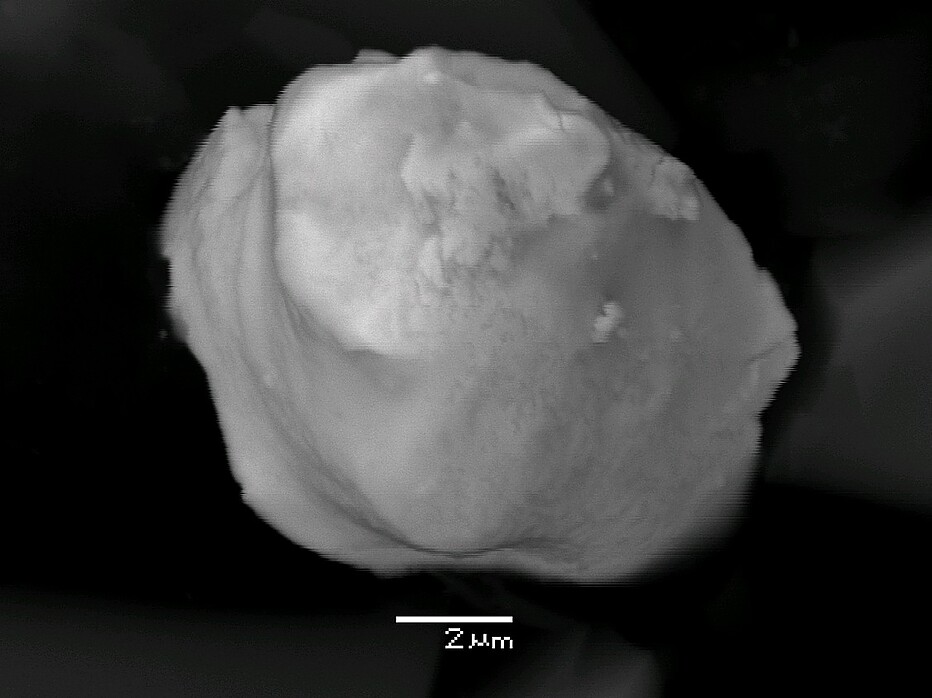
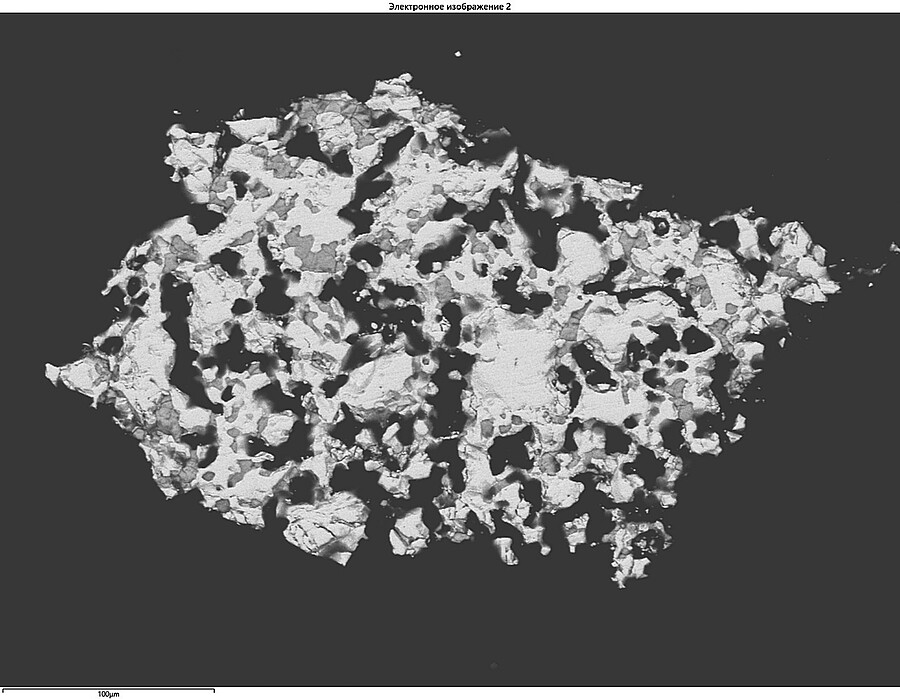
About Native Tantalum
Formula:
Ta
Colour:
Grey, blue-grey
Lustre:
Metallic
Crystal System:
Isometric
Don't mix with the "native" tantalum from Nizhnyi Tagil (Middle Ural) has been found to be TaC: Jedwab, J. (1990): Native ruthenium in tantalum carbide concentrates from the Ural Mountains, USSR. Mineralogy and Petrology, 1990, 43, 137-146.
Unique Identifiers
Mindat ID:
7329
Long-form identifier:
mindat:1:1:7329:1
IMA Classification of Native Tantalum
IMA status notes:
Unnamed (probably valid)
Approval history:
Unnamed, but probably valid.
Classification of Native Tantalum
1.AH.15
1 : ELEMENTS (Metals and intermetallic alloys; metalloids and nonmetals; carbides, silicides, nitrides, phosphides)
A : Metals and Intermetallic Alloys
H : Miscellaneous Elements, alloys
1 : ELEMENTS (Metals and intermetallic alloys; metalloids and nonmetals; carbides, silicides, nitrides, phosphides)
A : Metals and Intermetallic Alloys
H : Miscellaneous Elements, alloys
Dana 7th ed.:
1.1.37.1
Pronunciation of Native Tantalum
Pronunciation:
| Play | Recorded by | Country |
|---|---|---|
| Jolyon Ralph | United Kingdom |
Physical Properties of Native Tantalum
Optical Data of Native Tantalum
Type:
Isotropic
Chemistry of Native Tantalum
Mindat Formula:
Ta
Element Weights:
| Element | % weight |
|---|---|
| Ta | 100.000 % |
Calculated from ideal end-member formula.
Elements listed:
Crystallography of Native Tantalum
Crystal System:
Isometric
Synonyms of Native Tantalum
Other Language Names for Native Tantalum
Common Associates
Associations Based on Photo Data:
| 2 photos of Native Tantalum associated with Kimrobinsonite | (Ta,Nb)(OH)5-2x(O,CO3)x ; x near 1.2 |
Related Minerals - Strunz-mindat Grouping
| 1.AH. | Decagonite | Al71Ni24Fe5 |
| 1.AH. | Wangxibinite | TiFe |
| 1.AH. | Tomamaeite | Cu3Pt |
| 1.AH. | Orthocuproplatinum | Pt3Cu |
| 1.AH. | Barkovite | Ni1.5Sn |
| 1.AH. | Mitrofanovite | Pt3Te4 |
| 1.AH.10 | 'Native Cerium' | Ce |
Other Information
Health Risks:
No information on health risks for this material has been entered into the database. You should always treat mineral specimens with care.
Internet Links for Native Tantalum
mindat.org URL:
https://www.mindat.org/min-7329.html
Please feel free to link to this page.
Please feel free to link to this page.
Search Engines:
Mineral Dealers:
References for Native Tantalum
Reference List:
Localities for Native Tantalum
Showing 11 localities.
 symbol to view information about a locality.
The
symbol to view information about a locality.
The Locality List
 - This locality has map coordinates listed.
- This locality has estimated coordinates.
ⓘ - Click for references and further information on this occurrence.
? - Indicates mineral may be doubtful at this locality.
- This locality has map coordinates listed.
- This locality has estimated coordinates.
ⓘ - Click for references and further information on this occurrence.
? - Indicates mineral may be doubtful at this locality.
 - Good crystals or important locality for species.
 - World class for species or very significant.
(TL) - Type Locality for a valid mineral species.
(FRL) - First Recorded Locality for everything else (eg varieties).
- World class for species or very significant.
(TL) - Type Locality for a valid mineral species.
(FRL) - First Recorded Locality for everything else (eg varieties).
All localities listed without proper references should be considered as questionable.
China | |
| Xu et al. (2009) |
Greenland | |
| Pavel M. Kartashov analytical data (2011) |
Pacific Ocean | |
| Astakhova et al. (2014) |
Russia | |
| chemistry and genesis et al. (in Russian) +1 other reference |
| [AmMin 84:992] +1 other reference |
| [AmMin 84:993] |
| 6th orogenic lherzolite conference 2014 ... +2 other references |
Thailand | |
| amdis.bgl.esdm.go.id (2016) |
Ukraine | |
| Shatalov (2017) |
Zimbabwe | |
| Tyndale-Biscoe (1951) |
The Moon | |
| Mokhov A.V. et al. (2009) |

Kuannersuit Plateau, Ilímaussaq complex, Kujalleq, Greenland