
Pillow lava
A rock subtype
This page is currently not sponsored. Click here to sponsor this page.


About Pillow lava
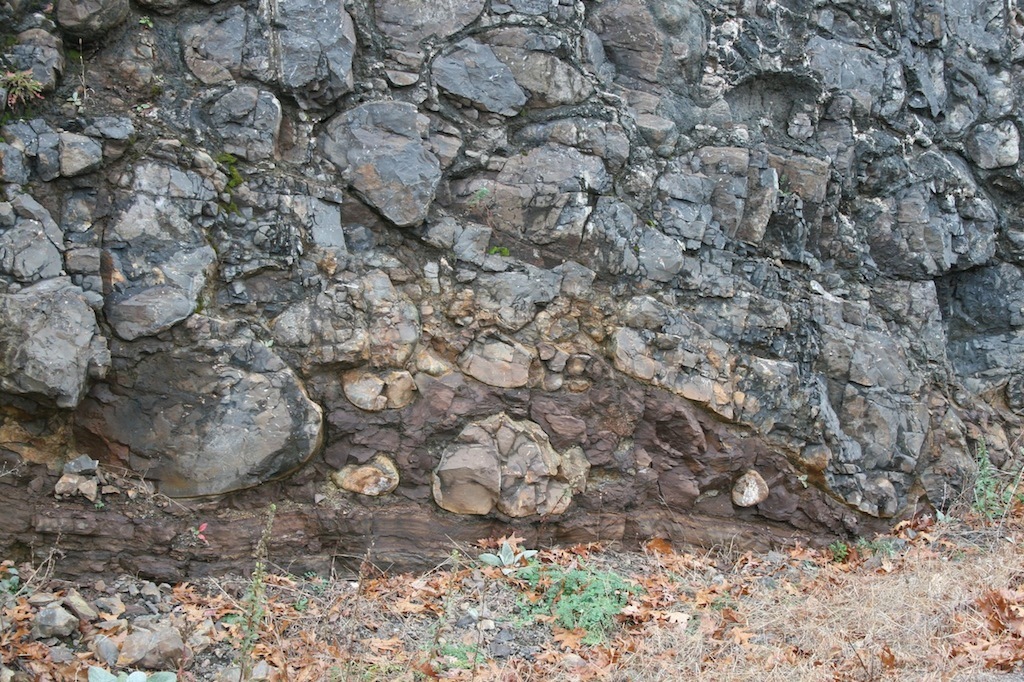
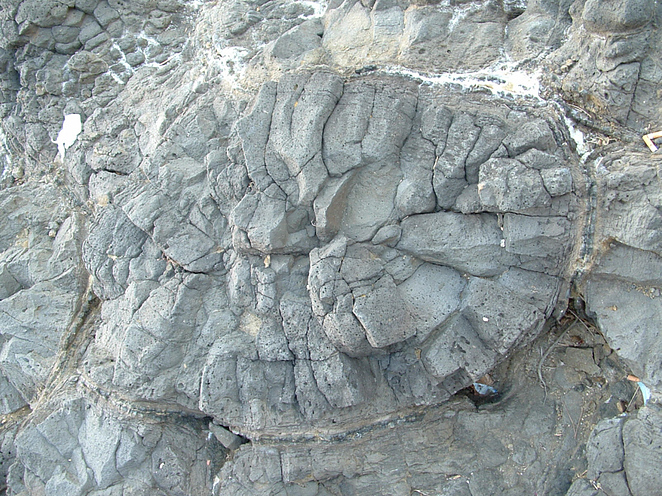
A morphological description rather than a rock species, but included here because of its importance.
Pillow lava forms where lava erupts into water - most notably mid-ocean ridges and marine hotspot volcanoes, but they can also be formed by eruptions into fresh water.
Mostly basaltic in composition, but andesite, komatiite, picrite, boninite, basaltic andesite, andesite, dacite and even rhyolite pillow lavas are known.
They form as the lava cools on contact with water to form a lobe with a thin glassy skin, which then expands until the pressure of lava forces the skin to break allowing the lava to escape and start a new lobe, or pillow.
Metamorphosed and metasomatically altered pillow lavas are encountered in many ophiolite complexes (ophiolite suites).
Pillow lava forms where lava erupts into water - most notably mid-ocean ridges and marine hotspot volcanoes, but they can also be formed by eruptions into fresh water.
Mostly basaltic in composition, but andesite, komatiite, picrite, boninite, basaltic andesite, andesite, dacite and even rhyolite pillow lavas are known.
They form as the lava cools on contact with water to form a lobe with a thin glassy skin, which then expands until the pressure of lava forces the skin to break allowing the lava to escape and start a new lobe, or pillow.
Metamorphosed and metasomatically altered pillow lavas are encountered in many ophiolite complexes (ophiolite suites).
Unique Identifiers
Mindat ID:
52417
Long-form identifier:
mindat:1:1:52417:1
Classification of Pillow lava
Internet Links for Pillow lava
mindat.org URL:
https://www.mindat.org/min-52417.html
Please feel free to link to this page.
Please feel free to link to this page.

Pillow lava locality, Meriden, New Haven County, Connecticut, USA