
Vote for your favorite mineral in #MinCup26! - Azurite vs. Smithsonite
It's carbonate-vs-carbonate to kick off Mineral Cup 2026 with copper-rich Azurite against zinc-rich Smithsonite.
Log InRegister
Quick Links : The Mindat ManualThe Rock H. Currier Digital LibraryMindat Newsletter [Free Download]
Home PageAbout MindatThe Mindat ManualHistory of MindatCopyright StatusWho We AreContact UsAdvertise on Mindat
Donate to MindatCorporate SponsorshipSponsor a PageSponsored PagesMindat AdvertisersAdvertise on Mindat
Learning CenterWhat is a mineral?The most common minerals on earthInformation for EducatorsMindat ArticlesThe ElementsThe Rock H. Currier Digital LibraryGeologic TimeExplore Fossils
Minerals by PropertiesMinerals by ChemistryMineral Visual ExplorerAdvanced Locality SearchRandom MineralRandom LocalitySearch by minIDLocalities Near MeSearch ArticlesSearch GlossaryMore Search Options
Search For:
Mineral Name:
Locality Name:
Keyword(s):
 
The Mindat ManualAdd a New PhotoRate PhotosLocality Edit ReportCoordinate Completion ReportAdd Glossary Item
Mining CompaniesStatisticsUsersMineral MuseumsClubs & OrganizationsMineral Shows & EventsThe Mindat DirectoryDevice SettingsThe Mineral QuizTime Machine
Photo SearchPhoto GalleriesSearch by ColorPhoto Colour ExplorerNew Photos TodayNew Photos YesterdayMembers' Photo GalleriesPast Photo of the Day GalleryPhotography

Keratophyre

A rock subtype
This page is currently not sponsored. Click here to sponsor this page.
Name:
From the Greek keras = horn
A term originally used for a quartz-bearing orthoclase-plagioclase rock with a dense groundmass, but later used for albitized felsic extrusive rocks consisting essentially of albite with minor mafic minerals, often altered to chlorite. Potassic keratophyres are also recognized in which the feldspar is orthoclase. Commonly associated with spilites and interbedded with marine sediments.

A name generally applied to all salic extrusive and hypabyssal rocks characterized by the presence of albite or albite-oligoclase and chlorite, epidote, and calcite, generally of secondary origin.
Ref: AGI


Hide all sections | Show all sections

Unique IdentifiersHide

Mindat ID:
50647
Long-form identifier:
mindat:1:1:50647:6

Classification of KeratophyreHide

QAPF_V_7.png

Trachyte appears in field 7 in the QAPF diagram.
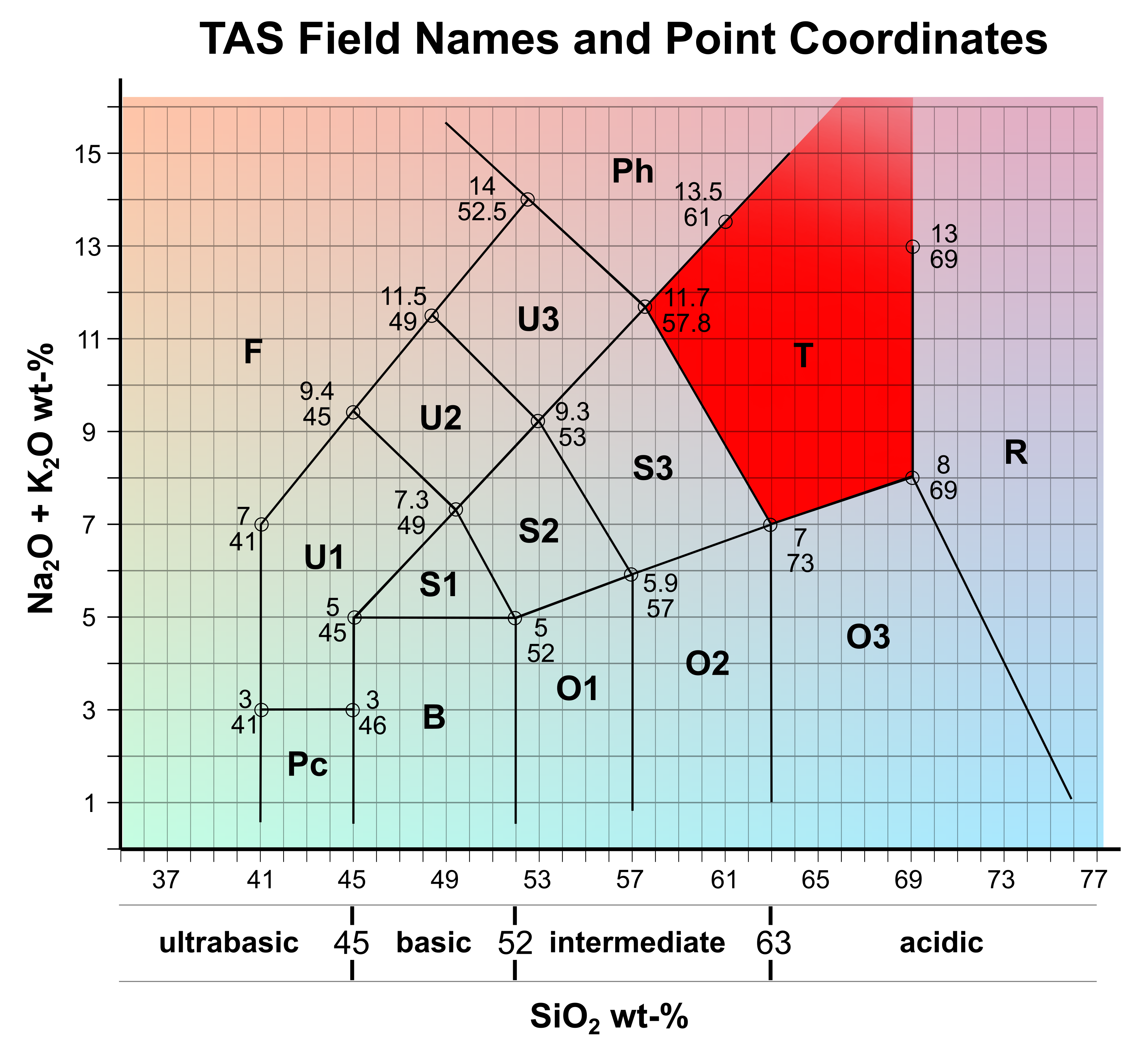
TAS_T.png

Trachyte is found in field T in the TAS diagram.

Other Language Names for KeratophyreHide

German:Keratophyr

Common AssociatesHide

Associated Minerals Based on Photo Data:
1 photo of Keratophyre associated with PyriteFeS2
1 photo of Keratophyre associated with Amphibole SupergroupAB2C5((Si,Al,Ti)8O22)(OH,F,Cl,O)2
1 photo of Keratophyre associated with Garnet GroupX3Z2(SiO4)3
1 photo of Keratophyre associated with Feldspar Group

Internet Links for KeratophyreHide

References for KeratophyreHide

Quick NavTopUnique IdentifiersClassification Other LanguagesCommon AssociatesInternet Links References
 
and/or  
Mindat.org® is an outreach project of the Hudson Institute of Mineralogy, a 501(c)(3) not-for-profit organization. Mindat® and mindat.org® are registered trademarks of the Hudson Institute of Mineralogy.
Copyright © mindat.org and the Hudson Institute of Mineralogy 1993-2026, except where stated. Most political location boundaries are © OpenStreetMap contributors. Mindat.org relies on the contributions of thousands of members and supporters. Founded in 2000 by Jolyon Ralph and Ida Chau.
Content on this site may not be used to train, fine-tune, or otherwise develop artificial intelligence or machine learning models without prior written permission - see our Terms & Conditions.
To cite: Ralph, J., Von Bargen, D., Martynov, P., Zhang, J., Que, X., Prabhu, A., Morrison, S. M., Li, W., Chen, W., & Ma, X. (2025). Mindat.org: The open access mineralogy database to accelerate data-intensive geoscience research. American Mineralogist, 110(6), 833–844. doi:10.2138/am-2024-9486.
Privacy Policy - Terms & Conditions - Contact Us / DMCA issues - Report a bug/vulnerability Current server date and time: September 1, 2026 13:24:33 Page updated: February 4, 2026 00:58:19
Go to top of page