
Fei Cui Jade
A rock subtype
This page is currently not sponsored. Click here to sponsor this page.


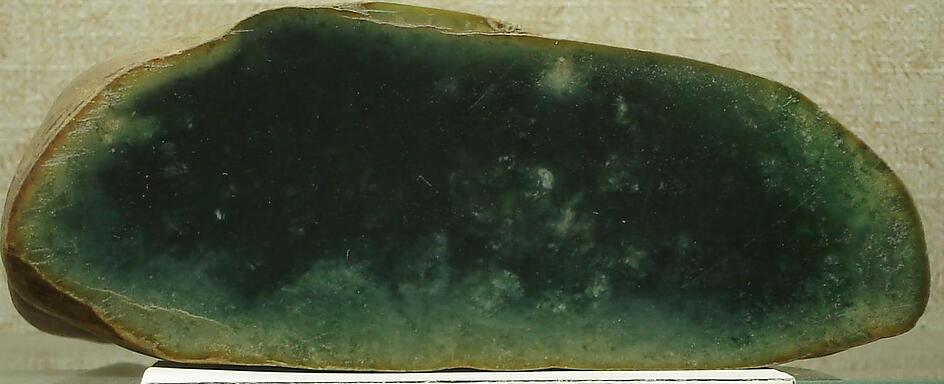


About Fei Cui Jade
The chinese name (in pinyin) for what was previously called jadeite-jade.
The name Fei Cui however covers a range of compositions of jade that include the minerals jadeite, omphacite and kosmochlor.
It is a polycrystalline aggregate of one or more of the above clinopyroxenes with a compact structure.
The name pyroxene jade may be a more appropriate western synonym than jadeite-jade.
Fei cui refers to a polycrystalline aggregate predominantly composed of jadeite, or jadeite together with other Na-rich and Na-Ca pyroxenes (e.g., omphacite, kosmochlor, etc.). China’s national standard GB/T 16553-2017 defines fei cui as a jade composed of jadeite, whereas the GAHK fei cui standard adopts a broader definition that includes jadeite together with other Na-rich and Na-Ca pyroxenes (e.g., omphacite, kosmochlor, etc.). the broader GAHK definition, which defines fei cui as “an historic Chinese name for a structurally tough ornamental aggregate composed solely or principally of any of the following or any combination of the following jadeite, omphacite, and kosmochlor, and potentially a small amount of other minerals”. The GAHK standard does not specify a precise volume percentage threshold for the dominant mineral; rather, it uses the qualitative term ‘principally’. In gemological practice, this flexible definition accommodates the compositional complexity and diversity of natural fei cui. It is important to distinguish between the gemmological term “fei cui” and the petrological term “jadeitite”. Jadeitite is a rock composed predominantly of jadeite, whereas fei cui is a broader category that may include omphacite and kosmochlor as major constituents. Studies have shown that fei cui from Guatemala exhibits a wide compositional range that varies with color type and mining areas, with some varieties being jadeite-dominant and others being omphacite-dominant. Fei cui from Russia, particularly from the Polar Urals, is typically jadeitic with distinct metamorphic textures related to its subduction-zone origin. Material from Kazakhstan is characterized by coarser grain sizes and unique interstitial textures, with compositions ranging from jadeite to omphacite. A comparative study of jadeite, omphacite and kosmochlor jades from Myanmar further demonstrated the compositional variability among these pyroxene jades. Consequently, visually similar samples may contain different mineral components; for example, some vivid green fei cui traditionally considered to be nearly pure jadeite may in fact be dominated by omphacite. However, such omphacite-dominant fei cui is not a recent phenomenon; vivid green omphacite with visual appearance and gemmological properties similar to jadeite has long been identified in Myanmar fei cui.
The name Fei Cui however covers a range of compositions of jade that include the minerals jadeite, omphacite and kosmochlor.
It is a polycrystalline aggregate of one or more of the above clinopyroxenes with a compact structure.
The name pyroxene jade may be a more appropriate western synonym than jadeite-jade.
Fei cui refers to a polycrystalline aggregate predominantly composed of jadeite, or jadeite together with other Na-rich and Na-Ca pyroxenes (e.g., omphacite, kosmochlor, etc.). China’s national standard GB/T 16553-2017 defines fei cui as a jade composed of jadeite, whereas the GAHK fei cui standard adopts a broader definition that includes jadeite together with other Na-rich and Na-Ca pyroxenes (e.g., omphacite, kosmochlor, etc.). the broader GAHK definition, which defines fei cui as “an historic Chinese name for a structurally tough ornamental aggregate composed solely or principally of any of the following or any combination of the following jadeite, omphacite, and kosmochlor, and potentially a small amount of other minerals”. The GAHK standard does not specify a precise volume percentage threshold for the dominant mineral; rather, it uses the qualitative term ‘principally’. In gemological practice, this flexible definition accommodates the compositional complexity and diversity of natural fei cui. It is important to distinguish between the gemmological term “fei cui” and the petrological term “jadeitite”. Jadeitite is a rock composed predominantly of jadeite, whereas fei cui is a broader category that may include omphacite and kosmochlor as major constituents. Studies have shown that fei cui from Guatemala exhibits a wide compositional range that varies with color type and mining areas, with some varieties being jadeite-dominant and others being omphacite-dominant. Fei cui from Russia, particularly from the Polar Urals, is typically jadeitic with distinct metamorphic textures related to its subduction-zone origin. Material from Kazakhstan is characterized by coarser grain sizes and unique interstitial textures, with compositions ranging from jadeite to omphacite. A comparative study of jadeite, omphacite and kosmochlor jades from Myanmar further demonstrated the compositional variability among these pyroxene jades. Consequently, visually similar samples may contain different mineral components; for example, some vivid green fei cui traditionally considered to be nearly pure jadeite may in fact be dominated by omphacite. However, such omphacite-dominant fei cui is not a recent phenomenon; vivid green omphacite with visual appearance and gemmological properties similar to jadeite has long been identified in Myanmar fei cui.
Unique Identifiers
Mindat ID:
50397
Long-form identifier:
mindat:1:1:50397:4
Classification of Fei Cui Jade
Sub-divisions of Fei Cui Jade
- Fei Cui Jade
Synonyms of Fei Cui Jade
Internet Links for Fei Cui Jade
mindat.org URL:
https://www.mindat.org/min-50397.html
Please feel free to link to this page.
Please feel free to link to this page.
References for Fei Cui Jade
Reference List:
Localities for Fei Cui Jade
Showing 7 localities.
 symbol to view information about a locality.
The
symbol to view information about a locality.
The Locality List
 - This locality has map coordinates listed.
- This locality has estimated coordinates.
ⓘ - Click for references and further information on this occurrence.
? - Indicates mineral may be doubtful at this locality.
- This locality has map coordinates listed.
- This locality has estimated coordinates.
ⓘ - Click for references and further information on this occurrence.
? - Indicates mineral may be doubtful at this locality.
 - Good crystals or important locality for species.
 - World class for species or very significant.
(TL) - Type Locality for a valid mineral species.
(FRL) - First Recorded Locality for everything else (eg varieties).
- World class for species or very significant.
(TL) - Type Locality for a valid mineral species.
(FRL) - First Recorded Locality for everything else (eg varieties).
All localities listed without proper references should be considered as questionable.
Guatemala | |
| [Jadeite Jade] Huang et al. (2024) |
| [Jadeite Jade, Omphacite Fei Cui] Li et al. (2023) +1 other reference | |
Kazakhstan | |
| Zhu et al. (2026) |
Myanmar | |
| [Jadeite Jade] |
Russia | |
| Meng et al. (2016) |

Hpakant, Hpakant-Tawmaw Jade Tract, Hpakant Township, Mohnyin District, Kachin State, Myanmar