Vote for your favorite mineral in #MinCup26! - Sphalerite vs. Anorthite
Both zinc ore Sphalerite and calcium plagioclase feldspar Anorthite have perfect cleavage that will split cleanly if you hit them with a hammer, but only one can claim a larger split of your votes!
Log InRegister
Quick Links : The Mindat ManualThe Rock H. Currier Digital LibraryMindat Newsletter [Free Download]
Home PageAbout MindatThe Mindat ManualHistory of MindatCopyright StatusWho We AreContact UsAdvertise on Mindat
Donate to MindatCorporate SponsorshipSponsor a PageSponsored PagesMindat AdvertisersAdvertise on Mindat
Learning CenterWhat is a mineral?The most common minerals on earthInformation for EducatorsMindat ArticlesThe ElementsThe Rock H. Currier Digital LibraryGeologic TimeExplore Fossils
Minerals by PropertiesMinerals by ChemistryMineral Visual ExplorerAdvanced Locality SearchRandom MineralRandom LocalitySearch by minIDLocalities Near MeSearch ArticlesSearch GlossaryMore Search Options
Search For:
Mineral Name:
Locality Name:
Keyword(s):
 
The Mindat ManualAdd a New PhotoRate PhotosLocality Edit ReportCoordinate Completion ReportAdd Glossary Item
Mining CompaniesStatisticsUsersMineral MuseumsClubs & OrganizationsMineral Shows & EventsThe Mindat DirectoryDevice SettingsThe Mineral QuizTime Machine
Photo SearchPhoto GalleriesSearch by ColorPhoto Colour ExplorerNew Photos TodayNew Photos YesterdayMembers' Photo GalleriesPast Photo of the Day GalleryPhotography

Sinter

A rock classification type
This page is currently not sponsored. Click here to sponsor this page.
Hide all sections | Show all sections

About SinterHide

Name:
Etymol: German sinter, cinder.
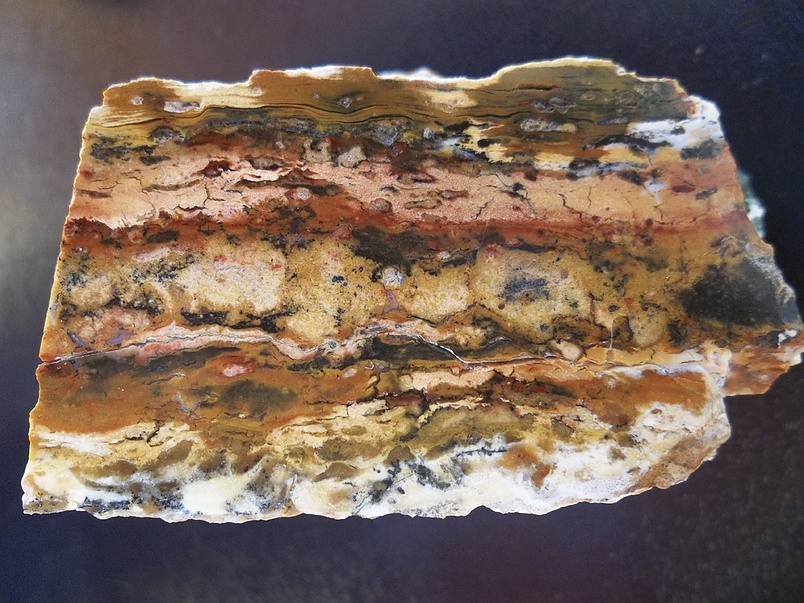
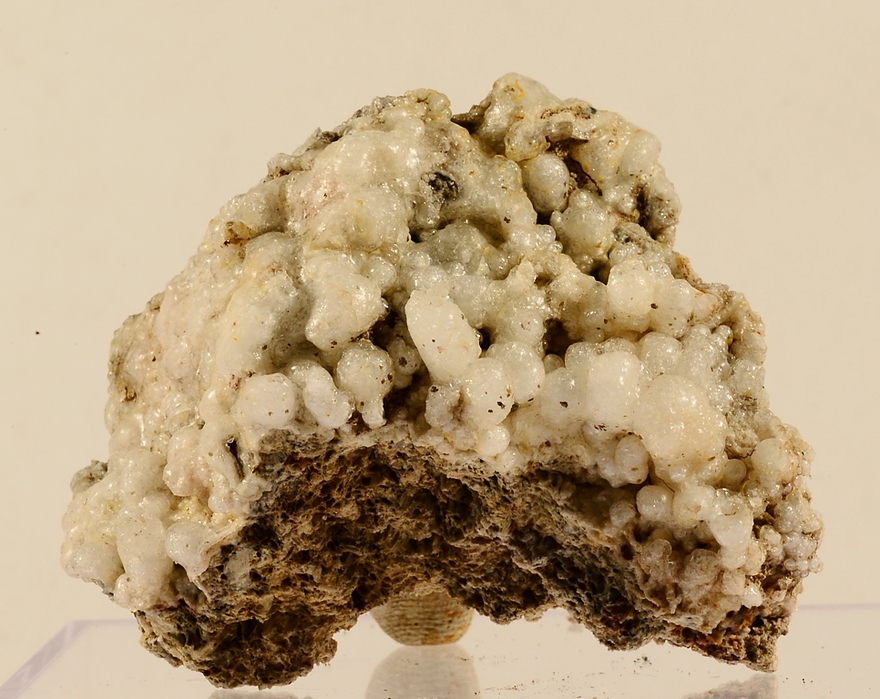
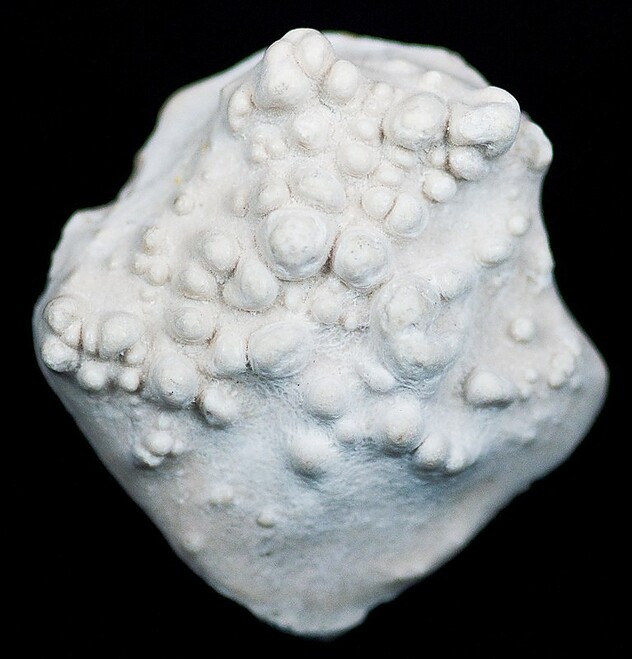
Usually denotes a lightweight, porous, white opaline siliceous-rock.

Also used for any chemical sedimentary rock deposited as a hard incrustation on rocks or on the ground by precipitation from hot or cold mineral waters in springs, lakes, or streams; specif. siliceous sinter and calcareous sinter (travertine). The term is indefinite and should be modified by the proper compositional adj., although when used alone it usually signifies siliceous sinter.

Compare with: tufa


Unique IdentifiersHide

Mindat ID:
49378
Long-form identifier:
mindat:1:1:49378:3

Classification of SinterHide

Sub-divisions of SinterHide

Mineralogy of SinterHide

Non-essential minerals - these minerals are common, sometimes major components, but are not always present:
Silica > OpalSiO2 · nH2O
Silica > Opal-CSiO2 · nH2O
Silica > Opal-CTSiO2 · nH2O
Silica > QuartzSiO2

Common AssociatesHide

Associations Based on Photo Data:
9 photos of Sinter associated with OpalSiO2 · nH2O
6 photos of Sinter associated with 'Opal-AN'SiO2 · nH2O
5 photos of Sinter associated with QuartzSiO2
2 photos of Sinter associated with 'Precious Opal'SiO2 · nH2O
2 photos of Sinter associated with 'Opal-A'SiO2 · nH2O
1 photo of Sinter associated with 'Hyalite'SiO2 · nH2O
1 photo of Sinter associated with CalciteCaCO3
1 photo of Sinter associated with 'Opal-C'SiO2 · nH2O
1 photo of Sinter associated with Native SulphurS8
1 photo of Sinter associated with 'Andesite'

Internet Links for SinterHide

References for SinterHide

 
and/or  
Mindat.org® is an outreach project of the Hudson Institute of Mineralogy, a 501(c)(3) not-for-profit organization. Mindat® and mindat.org® are registered trademarks of the Hudson Institute of Mineralogy.
Copyright © mindat.org and the Hudson Institute of Mineralogy 1993-2026, except where stated. Most political location boundaries are © OpenStreetMap contributors. Mindat.org relies on the contributions of thousands of members and supporters. Founded in 2000 by Jolyon Ralph and Ida Chau.
Content on this site may not be used to train, fine-tune, or otherwise develop artificial intelligence or machine learning models without prior written permission - see our Terms & Conditions.
To cite: Ralph, J., Von Bargen, D., Martynov, P., Zhang, J., Que, X., Prabhu, A., Morrison, S. M., Li, W., Chen, W., & Ma, X. (2025). Mindat.org: The open access mineralogy database to accelerate data-intensive geoscience research. American Mineralogist, 110(6), 833–844. doi:10.2138/am-2024-9486.
Privacy Policy - Terms & Conditions - Contact Us / DMCA issues - Report a bug/vulnerability Current server date and time: September 3, 2026 00:05:53 Page updated: August 27, 2026 16:42:55
Go to top of page