
Peat
A rock classification type
This page is currently not sponsored. Click here to sponsor this page.

About Peat
As a Commodity:
An unlithified heterogeneous mixture of a wide range of plant debris. It has a carbon content of less than 60% dry ash free and a volatile content of greater than 63%.
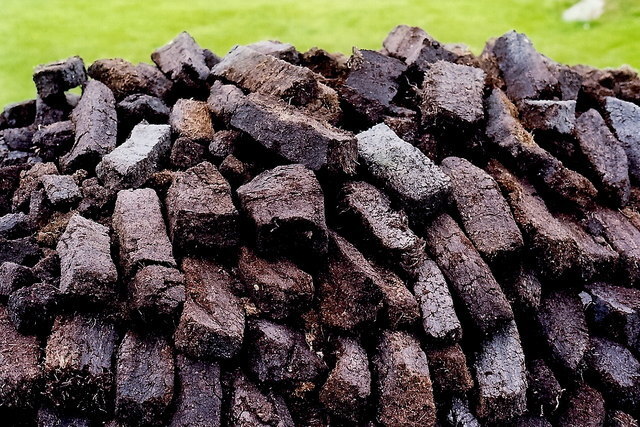
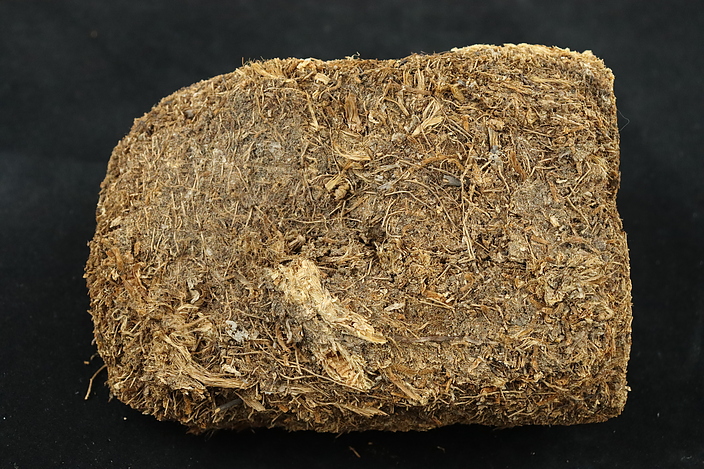
There are two types of peat, low moor (Flachmoor) and high moor (Hochmoor) peat. Low moor peat is the most common starting material in coal genesis. It therefore constitutes a caustobiolith of low diagenetic degree. Peat is formed in marshes and swamps from the dead, and partly decomposed remains of the marsh vegetation. Stagnant ground water is necessary for peat formation to protect the residual plant material from decay. Peat has a yellowish brown to brownish black color, is generally of the fibrous consistency, and can be either plastic or friable; in its natural state it can be cut; further, it has a very high moisture content (above 75%, generally above 90%). It can be distinguished from brown coal by the fact that the greater part of its moisture content can be squeezed out by pressure (e.g., in the hand). Peat also contains more plant material in a reasonably good state of preservation than brown coal. Individual plant elements, such as roots, stems, leaves, and seeds, can commonly be seen in it with the unaided eye. Failing that, treatment of peat with dilute alkali will make visible many of these plant tissues. Further, peat is richer in cellulose than brown coal (reaction with Fehling's solution). Unlike brown coal, peat still contains cellulose, protected by lignin or cutin, which gives a reaction with chlorzinc iodide. Correspondingly, peat shows under the microscope tissues that have not undergone either lignification, suberinization, or cutinization; this is not the case in brown coal. The reflectance of peat is low (about 0.3%). Microscopic examination is best undertaken with transmitted light.
Ref: Hower, James. (2002). International Handbook of Coal Petrography: Second Edition, 1963, International Committee for Coal and Organic Petrology
There are two types of peat, low moor (Flachmoor) and high moor (Hochmoor) peat. Low moor peat is the most common starting material in coal genesis. It therefore constitutes a caustobiolith of low diagenetic degree. Peat is formed in marshes and swamps from the dead, and partly decomposed remains of the marsh vegetation. Stagnant ground water is necessary for peat formation to protect the residual plant material from decay. Peat has a yellowish brown to brownish black color, is generally of the fibrous consistency, and can be either plastic or friable; in its natural state it can be cut; further, it has a very high moisture content (above 75%, generally above 90%). It can be distinguished from brown coal by the fact that the greater part of its moisture content can be squeezed out by pressure (e.g., in the hand). Peat also contains more plant material in a reasonably good state of preservation than brown coal. Individual plant elements, such as roots, stems, leaves, and seeds, can commonly be seen in it with the unaided eye. Failing that, treatment of peat with dilute alkali will make visible many of these plant tissues. Further, peat is richer in cellulose than brown coal (reaction with Fehling's solution). Unlike brown coal, peat still contains cellulose, protected by lignin or cutin, which gives a reaction with chlorzinc iodide. Correspondingly, peat shows under the microscope tissues that have not undergone either lignification, suberinization, or cutinization; this is not the case in brown coal. The reflectance of peat is low (about 0.3%). Microscopic examination is best undertaken with transmitted light.
Ref: Hower, James. (2002). International Handbook of Coal Petrography: Second Edition, 1963, International Committee for Coal and Organic Petrology
Unique Identifiers
Mindat ID:
49302
Long-form identifier:
mindat:1:1:49302:0
Classification of Peat
Sub-divisions of Peat
Pronunciation of Peat
Pronunciation:
| Play | Recorded by | Country |
|---|---|---|
| Jolyon Ralph | United Kingdom |
Internet Links for Peat
mindat.org URL:
https://www.mindat.org/min-49302.html
Please feel free to link to this page.
Please feel free to link to this page.

Donegal County, Ulster, Ireland