
Shandite
A valid IMA mineral species - grandfathered
This page is currently not sponsored. Click here to sponsor this page.


About Shandite
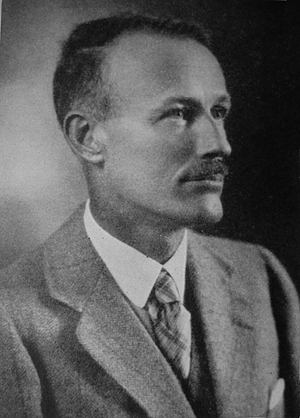
Samuel James Shand
Formula:
Ni3Pb2S2
Colour:
Brass-yellow
Lustre:
Metallic
Hardness:
4
Specific Gravity:
8.72
Crystal System:
Trigonal
Name:
Named by Paul Ramdohr in 1950 for petrologist, Samuel James Shand [October 29, 1882 Edinburgh, Scotland - April 11, 1957 Boughty Ferry, near Dundee, Scotland], professor at University of Stellenbosch, South Africa, later chair of petrography at Columbia University, New York.
Unique Identifiers
Mindat ID:
3631
Long-form identifier:
mindat:1:1:3631:9
Similar Names
| Spandite | A variety of Spessartine | Mn32+Al2(SiO4)3 |
IMA Classification of Shandite
Approved, 'Grandfathered' (first described prior to 1959)
IMA Formula:
Pb2Ni3S2
First published:
1950
Classification of Shandite
2.BE.15
2 : SULFIDES and SULFOSALTS (sulfides, selenides, tellurides; arsenides, antimonides, bismuthides; sulfarsenites, sulfantimonites, sulfbismuthites, etc.)
B : Metal Sulfides, M: S > 1: 1 (mainly 2: 1)
E : With Pb (Bi)
2 : SULFIDES and SULFOSALTS (sulfides, selenides, tellurides; arsenides, antimonides, bismuthides; sulfarsenites, sulfantimonites, sulfbismuthites, etc.)
B : Metal Sulfides, M: S > 1: 1 (mainly 2: 1)
E : With Pb (Bi)
2.3.5.1
2 : SULFIDES
3 : AmBnXp, with (m+n):p = 5:2
2 : SULFIDES
3 : AmBnXp, with (m+n):p = 5:2
3.11.6
3 : Sulphides, Selenides, Tellurides, Arsenides and Bismuthides (except the arsenides, antimonides and bismuthides of Cu, Ag and Au, which are included in Section 1)
11 : Sulphides etc. of Ni
3 : Sulphides, Selenides, Tellurides, Arsenides and Bismuthides (except the arsenides, antimonides and bismuthides of Cu, Ag and Au, which are included in Section 1)
11 : Sulphides etc. of Ni
Mineral Symbols
As of 2021 there are now IMA–CNMNC approved mineral symbols (abbreviations) for each mineral species, useful for tables and diagrams.
| Symbol | Source | Reference for Standard |
|---|---|---|
| Snd | IMA–CNMNC | Warr, L.N. (2021). IMA–CNMNC approved mineral symbols. Mineralogical Magazine, 85(3), 291-320. doi:10.1180/mgm.2021.43 |
Physical Properties of Shandite
Metallic
Transparency:
Opaque
Colour:
Brass-yellow
Hardness:
4 on Mohs scale
Cleavage:
Distinct/Good
Rhombohedral.
Rhombohedral.
Density:
8.72 g/cm3 (Measured) 8.87 g/cm3 (Calculated)
Optical Data of Shandite
Anisotropism:
Strong; gray-blue and yellow-brown
Colour in reflected light:
Cream-white
Pleochroism:
Strong
Chemistry of Shandite
Mindat Formula:
Ni3Pb2S2
Element Weights:
Elements listed:
Common Impurities:
Zn,Fe,Co,Mn
Crystallography of Shandite
Crystal System:
Trigonal
Class (H-M):
3m(32/m) - Hexagonal Scalenohedral
Space Group:
R3m
Setting:
R3m
Cell Parameters:
a = 5.591(1) Å, c = 13.579(1) Å
Ratio:
a:c = 1 : 2.429
Unit Cell V:
367.60 ų (Calculated from Unit Cell)
Z:
3
Crystal Structure
Load
Unit Cell | Unit Cell Packed
2x2x2 | 3x3x3 | 4x4x4
Unit Cell | Unit Cell Packed
2x2x2 | 3x3x3 | 4x4x4
Show
Big Balls | Small Balls | Just Balls | Spacefill
Polyhedra Off | Si Polyhedra | All Polyhedra
Remove metal-metal sticks
Big Balls | Small Balls | Just Balls | Spacefill
Polyhedra Off | Si Polyhedra | All Polyhedra
Remove metal-metal sticks
Display Options
Black Background | White Background
Perspective On | Perspective Off
2D | Stereo | Red-Blue | Red-Cyan
Black Background | White Background
Perspective On | Perspective Off
2D | Stereo | Red-Blue | Red-Cyan
View
CIF File Best | x | y | z | a | b | c
CIF File Best | x | y | z | a | b | c
Rotation
Stop | Start
Stop | Start
Labels
Console Off | On | Grey | Yellow
Console Off | On | Grey | Yellow
Data courtesy of the American Mineralogist Crystal Structure Database. Click on an AMCSD ID to view structure
| ID | Species | Reference | Link | Year | Locality | Pressure (GPa) | Temp (K) |
|---|---|---|---|---|---|---|---|
| 0000051 | Shandite | Peacock M A, McAndrew J (1950) On parkerite and shandite and the crystal structure of Ni3Pb2S2 American Mineralogist 35 425-439 |  | 1950 | 0 | 293 |
CIF Raw Data - click here to close
X-Ray Powder Diffraction
Powder Diffraction Data:
| d-spacing | Intensity |
|---|---|
| 2.794 Å | (100) |
| 2.779 Å | (98) |
| 1.971 Å | (86) |
| 3.943 Å | (84) |
| 2.281 Å | (81) |
| 1.610 Å | (42) |
| 1.759 Å | (31) |
Comments:
Synthetic
Geological Environment
Paragenetic Mode(s):
| Paragenetic Mode | Earliest Age (Ga) |
|---|---|
| High-? alteration and/or metamorphism | |
| 33 : Minerals deposited by hydrothermal metal-rich fluids (see also [#12]) |
Type Occurrence of Shandite
Associated Minerals at Type Locality:
Other Language Names for Shandite
Common Associates
Associations Based on Photo Data:
| 3 photos of Shandite associated with Heazlewoodite | Ni3S2 |
| 1 photo of Shandite associated with Sphalerite | ZnS |
| 1 photo of Shandite associated with Pentlandite | (NixFey)Σ9S8 |
| 1 photo of Shandite associated with Lizardite | Mg3(Si2O5)(OH)4 |
Related Minerals - Strunz-mindat Grouping
| 2.BE. | Dulanggouite | Bi6Te3 |
| 2.BE. | Zipserite | Bi5S4 |
| 2.BE.05 | Betekhtinite | Pb2(Cu,Fe)22-24S15 |
| 2.BE.10 | Furutobeite | (Cu,Ag)6PbS4 |
| 2.BE.15 | Rhodplumsite | Rh3Pb2S2 |
| 2.BE.20 | Parkerite | Ni3(Bi,Pb)2S2 |
| 2.BE.25 | Schlemaite | (Cu,◻)6(Pb,Bi)Se4 |
| 2.BE.30 | Pašavaite | Pd3Pb2Te2 |
Other Information
Health Risks:
No information on health risks for this material has been entered into the database. You should always treat mineral specimens with care.
Internet Links for Shandite
mindat.org URL:
https://www.mindat.org/min-3631.html
Please feel free to link to this page.
Please feel free to link to this page.
Search Engines:
External Links:
Mineral Dealers:
References for Shandite
Reference List:
Peacock, M. A., McAndrew, John (1950) On parkerite and shandite and the crystal structure of Ni3Pb2S2. American Mineralogist, 35 (5-6) 425-439
Brower, W. S., Parker, H. S., Roth, and R. S. (1974) Reexamination of synthetic parkerite and shandite. American Mineralogist, 59 (3-4) 296-301
Zabel, Manfred, Wandinger, Sigrid, Range, Klaus-Jürgen (1979) Ternäre Chalkogenide M3M2′X2 mit Shandit-Struktur / Ternary Chalcogenides M3M2′X2 with Shandite-Type Structure. Zeitschrift für Naturforschung B, 34. 238-241 doi:10.1515/znb-1979-0219
Dymek, R. F. (1987) Shandite, Ni3Pb2S2, in a serpentinized metadunite from the Isua supracrustal belt, West Greenland. The Canadian Mineralogist, 25 (2) 25-249
Localities for Shandite
Showing 27 localities.
 symbol to view information about a locality.
The
symbol to view information about a locality.
The Locality List
 - This locality has map coordinates listed.
- This locality has estimated coordinates.
ⓘ - Click for references and further information on this occurrence.
? - Indicates mineral may be doubtful at this locality.
- This locality has map coordinates listed.
- This locality has estimated coordinates.
ⓘ - Click for references and further information on this occurrence.
? - Indicates mineral may be doubtful at this locality.
 - Good crystals or important locality for species.
 - World class for species or very significant.
(TL) - Type Locality for a valid mineral species.
(FRL) - First Recorded Locality for everything else (eg varieties).
- World class for species or very significant.
(TL) - Type Locality for a valid mineral species.
(FRL) - First Recorded Locality for everything else (eg varieties).
All localities listed without proper references should be considered as questionable.
Australia | |
| Bottrill et al. (2008) |
| Bottrill et al. (2008) |
| Nickel +2 other references |
Austria | |
| Kolitsch et al. (2010) |
Canada | |
| Horváth et al. (2013) |
Czech Republic | |
| Sejkora et al. (2020) |
| Kapusta et al. (2012) |
France | |
| Y. Moëlo : "Compte-rendu de la ... +1 other reference |
Greece | |
| Bussolesi et al. (2020) |
Greenland | |
| Ulff-Møller (1989) +1 other reference |
| ULFF-MØLLER (1985) | |
| Vereshchagin et al. (2024) | |
| Dymek (1987) +1 other reference |
Iran | |
| Baccolo et al. (2019) |
Italy | |
| - (n.d.) |
| Boscardin et al. (2013) |
Japan | |
| JOURNAL OF MINERALOGY (1998) |
Russia | |
| Mekhonoshin et al. (2013) +2 other references |
| Sidorov et al. (2009) +2 other references |
| Kravtsova et al. (2002) |
South Africa | |
| Du Plessis (2019) |
Spain | |
| Gervilla et al. (1990) |
Switzerland | |
| Peretti (1986) +3 other references |
| Peretti (1986) +3 other references | |
| Peretti (1986) +3 other references | |
USA | |
| Smith and Barnes (2011) |
| Smith and Barnes (2011) +1 other reference |
Quick NavTopAbout ShanditeUnique IdentifiersSimilar NamesIMA Classification Classification Mineral SymbolsPhysical Properties Optical Data Chemistry Crystallography Crystal StructureX-Ray Powder DiffractionGeological EnvironmentType Occurrence Other LanguagesCommon AssociatesStrunz-MindatOther InformationInternet Links References Localities Locality List

Jeffrey Mine, Val-des-Sources, Les Sources RCM, Estrie, Québec, Canada