
Molysite
A valid IMA mineral species - grandfathered
This page is currently not sponsored. Click here to sponsor this page.
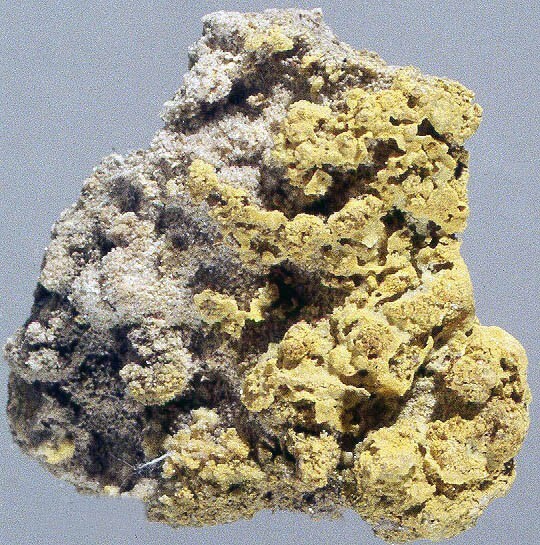
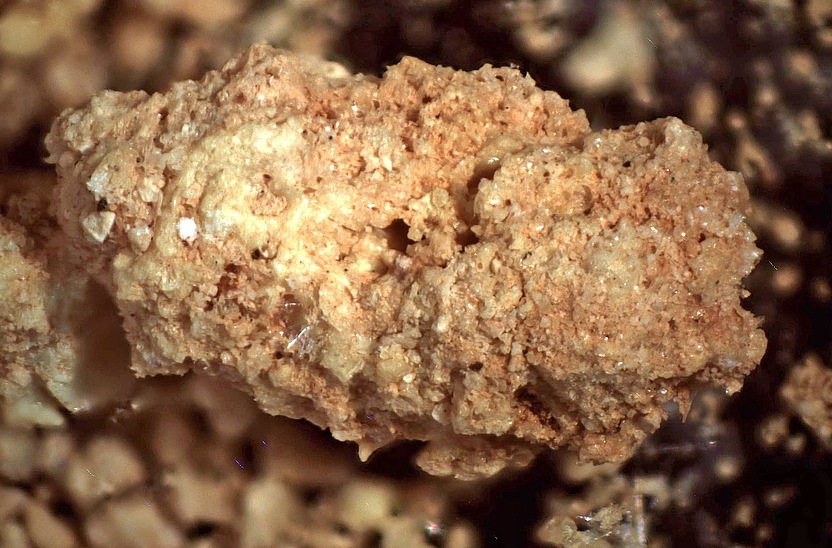
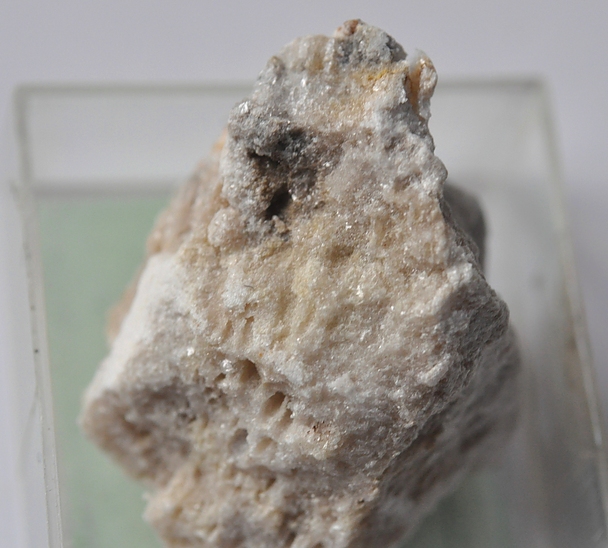
About Molysite
Formula:
FeCl3
Colour:
Yellow, brown-red, purple-red
Specific Gravity:
2.90
Crystal System:
Trigonal
Name:
From the Greek μόλυσις, a stain, in allusion to its staining the lavas of the volcanoes where it was found.
This page provides mineralogical data about Molysite.
Unique Identifiers
Mindat ID:
2749
Long-form identifier:
mindat:1:1:2749:2
Similar Names
IMA Classification of Molysite
Approved, 'Grandfathered' (first described prior to 1959)
IMA Formula:
Fe3+Cl3
Type description reference:
Classification of Molysite
3.AC.10
3 : HALIDES
A : Simple halides, without H2O
C : M:X = 1:3
3 : HALIDES
A : Simple halides, without H2O
C : M:X = 1:3
9.3.1.1
9 : NORMAL HALIDES
3 : AX3
9 : NORMAL HALIDES
3 : AX3
8.11.1
8 : Halides - Fluorides, Chlorides, Bromides and Iodides; also Fluoborates and Fluosilicates
11 : Halides of Fe and Ni
8 : Halides - Fluorides, Chlorides, Bromides and Iodides; also Fluoborates and Fluosilicates
11 : Halides of Fe and Ni
Mineral Symbols
As of 2021 there are now IMA–CNMNC approved mineral symbols (abbreviations) for each mineral species, useful for tables and diagrams.
| Symbol | Source | Reference for Standard |
|---|---|---|
| My | IMA–CNMNC | Warr, L.N. (2021). IMA–CNMNC approved mineral symbols. Mineralogical Magazine, 85(3), 291-320. doi:10.1180/mgm.2021.43 |
Physical Properties of Molysite
Transparency:
Translucent
Colour:
Yellow, brown-red, purple-red
Comment:
Soft
Cleavage:
Perfect
On {0001}.
On {0001}.
Density:
2.90 g/cm3 (Measured) 2.91 g/cm3 (Calculated)
Optical Data of Molysite
Type:
Uniaxial (-)
Chemistry of Molysite
Mindat Formula:
FeCl3
Elements listed:
Crystallography of Molysite
Crystal System:
Trigonal
Class (H-M):
3 - Rhombohedral
Space Group:
R3
Cell Parameters:
a = 6.065 Å, c = 17.42 Å
Ratio:
a:c = 1 : 2.872
Unit Cell V:
554.93 ų (Calculated from Unit Cell)
Z:
6
Morphology:
Crystals tabular {0001} with a hexagonal outline (artificial material). Massive, coatings.
Crystal Structure
Load
Unit Cell | Unit Cell Packed
2x2x2 | 3x3x3 | 4x4x4
Unit Cell | Unit Cell Packed
2x2x2 | 3x3x3 | 4x4x4
Show
Big Balls | Small Balls | Just Balls | Spacefill
Polyhedra Off | Si Polyhedra | All Polyhedra
Remove metal-metal sticks
Big Balls | Small Balls | Just Balls | Spacefill
Polyhedra Off | Si Polyhedra | All Polyhedra
Remove metal-metal sticks
Display Options
Black Background | White Background
Perspective On | Perspective Off
2D | Stereo | Red-Blue | Red-Cyan
Black Background | White Background
Perspective On | Perspective Off
2D | Stereo | Red-Blue | Red-Cyan
View
CIF File Best | x | y | z | a | b | c
CIF File Best | x | y | z | a | b | c
Rotation
Stop | Start
Stop | Start
Labels
Console Off | On | Grey | Yellow
Console Off | On | Grey | Yellow
Data courtesy of the American Mineralogist Crystal Structure Database. Click on an AMCSD ID to view structure
| ID | Species | Reference | Link | Year | Locality | Pressure (GPa) | Temp (K) |
|---|---|---|---|---|---|---|---|
| 0012857 | Molysite | Hashimoto S, Forster K, Moss S C (1988) Structure refinement of an FeCl3 crystal using a thin plate sample Journal of Applied Crystallography 22 173-180 | 1988 | synthetic | 0 | 293 |
CIF Raw Data - click here to close
X-Ray Powder Diffraction
Powder Diffraction Data:
| d-spacing | Intensity |
|---|---|
| 2.68 Å | (100) |
| 2.08 Å | (40) |
| 5.9 Å | (32) |
| 1.75 Å | (32) |
| 1.63 Å | (16) |
| 1.67 Å | (6) |
| 4.79 Å | (< 6) |
Geological Environment
Paragenetic Mode(s):
| Paragenetic Mode | Earliest Age (Ga) |
|---|---|
| Stage 7: Great Oxidation Event | <2.4 |
| 45b : [Other oxidized fumarolic minerals] | |
| Stage 10a: Neoproterozoic oxygenation/terrestrial biosphere | <0.6 |
| 50 : Coal and/or oil shale minerals | <0.36 |
| Stage 10b: Anthropogenic minerals | <10 Ka |
| 54 : Coal and other mine fire minerals (see also #51 and #56) |
Type Occurrence of Molysite
General Appearance of Type Material:
Coatings on lava.
Geological Setting of Type Material:
Active volcanic fumaroles.
Reference:
Synonyms of Molysite
Other Language Names for Molysite
Common Associates
Associations Based on Photo Data:
| 1 photo of Molysite associated with Hydrokenoralstonite | Na0.5(Al,Mg)2(F,OH)6 · H2O |
| 1 photo of Molysite associated with Native Sulphur | S8 |
Related Minerals - Strunz-mindat Grouping
| 3.AC.05 | Zharchikhite | AlF(OH)2 |
| 3.AC.15 | Fluocerite-(Ce) | CeF3 |
| 3.AC.15 | Fluocerite-(La) | LaF3 |
| 3.AC.20 | Gananite | BiF3 |
Other Information
Thermal Behaviour:
Melting point = 282°.
Notes:
Very deliquescent. Readily hydrolyzed by water to hydrous iron oxide.
Health Risks:
No information on health risks for this material has been entered into the database. You should always treat mineral specimens with care.
Internet Links for Molysite
mindat.org URL:
https://www.mindat.org/min-2749.html
Please feel free to link to this page.
Please feel free to link to this page.
Search Engines:
External Links:
Mineral Dealers:
References for Molysite
Reference List:
Wooster, Nora (1932) The Crystal Structure of Ferric Chloride FeCl3. Zeitschrift für Kristallographie, Mineralogie und Petrographie, 83 (1-6). p.35-41. doi:10.1524/zkri.1932.83.1.35
Localities for Molysite
Showing 18 localities.
 symbol to view information about a locality.
The
symbol to view information about a locality.
The Locality List
 - This locality has map coordinates listed.
- This locality has estimated coordinates.
ⓘ - Click for references and further information on this occurrence.
? - Indicates mineral may be doubtful at this locality.
- This locality has map coordinates listed.
- This locality has estimated coordinates.
ⓘ - Click for references and further information on this occurrence.
? - Indicates mineral may be doubtful at this locality.
 - Good crystals or important locality for species.
 - World class for species or very significant.
(TL) - Type Locality for a valid mineral species.
(FRL) - First Recorded Locality for everything else (eg varieties).
- World class for species or very significant.
(TL) - Type Locality for a valid mineral species.
(FRL) - First Recorded Locality for everything else (eg varieties).
All localities listed without proper references should be considered as questionable.
Antarctica | |
| Viramonte et al. (1974) |
Iceland | |
Italy (TL) | |
| Palache et al. (1951) |
| Pelloux (1927) +2 other references | |
| - (n.d.) +1 other reference |
| FOUQUÉ F.A. (1865) |
| www.mindat.org (2008) |
| ... +1 other reference |
Morocco | |
| Cheilletz (1984) |
Russia | |
| Cesnokov et al. (1998) |
| www.kscnet.ru (2019) |
| Vergasova et al. (1977) +1 other reference |
Spain | |
| Ayora Ibañez et al. (1987) |
| Ayora Ibañez et al. (1987) | |
| Ayora Ibañez et al. (1987) | |
Tonga | |
| Wendt (2013) |
USA | |
| Smith et al. (1997) |
Quick NavTopAbout MolysiteUnique IdentifiersSimilar NamesIMA Classification Classification Mineral SymbolsPhysical Properties Optical Data Chemistry Crystallography Crystal StructureX-Ray Powder DiffractionGeological EnvironmentType Occurrence SynonymsOther LanguagesCommon AssociatesStrunz-MindatOther InformationInternet Links References Localities Locality List

Sasso Pisano, Castelnuovo di Val di Cecina, Pisa Province, Tuscany, Italy