
Apache Tear
A rock subtype
This page is currently not sponsored. Click here to sponsor this page.


About Apache Tear
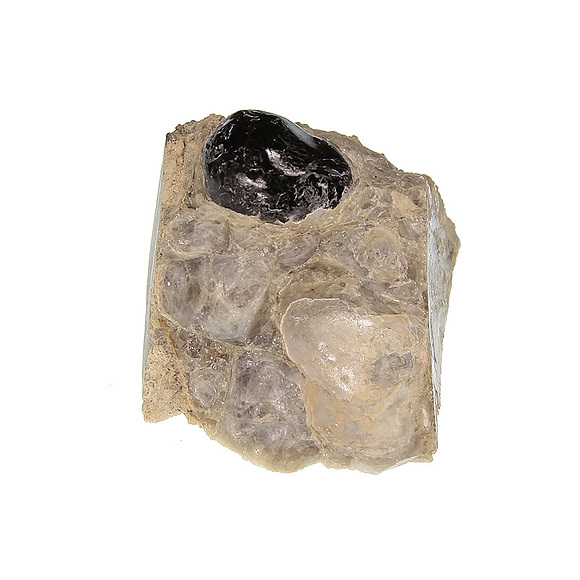
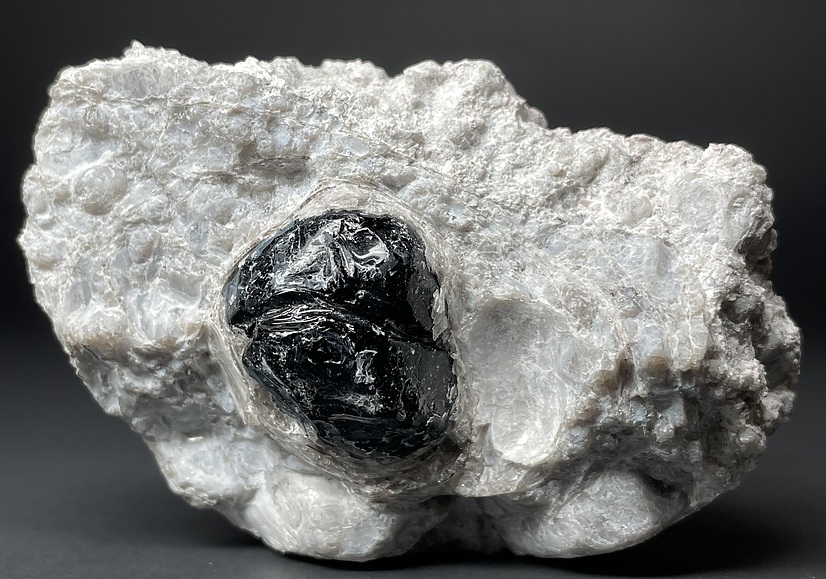
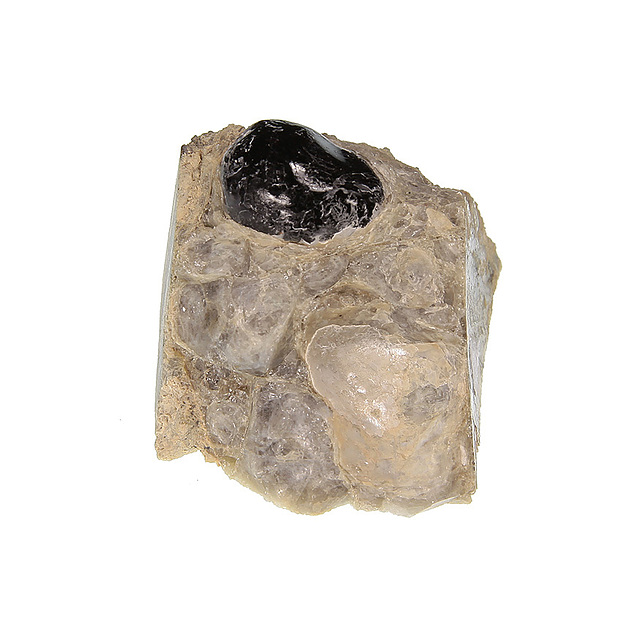
"Apache tears" originate from siliceous lava flows, lava domes or ash-flow tuffs, often in close association with or embedded in, gray perlite. The spherules occur as cores within perlite masses that typically exhibit concentrically curved, onion-skin fractures. Their formation is related to differential cooling and differing alkali and water contents. Excessive water present during cooling and quenching of rhyolitic lava causes obsidian to hydrate (i.e., water entering the glass converts it to perlite). Where perlite is incompletely hydrated, fresh obsidian cores remain as pebbles of marekanite or Apache tears.
 Visit gemdat.org for gemological information about Apache Tear.
Visit gemdat.org for gemological information about Apache Tear.Unique Identifiers
Mindat ID:
27156
Long-form identifier:
mindat:1:1:27156:1
Classification of Apache Tear
Synonyms of Apache Tear
Common Associates
Associations Based on Photo Data:
| 32 photos of Apache Tear associated with 'Obsidian' | |
| 2 photos of Apache Tear associated with 'Perlite' | |
| 2 photos of Apache Tear associated with 'Sheen Obsidian' | |
| 1 photo of Apache Tear associated with 'Mahogany Obsidian' |
Internet Links for Apache Tear
mindat.org URL:
https://www.mindat.org/min-27156.html
Please feel free to link to this page.
Please feel free to link to this page.
References for Apache Tear
Reference List:
Localities for Apache Tear
Showing 5 localities.
 symbol to view information about a locality.
The
symbol to view information about a locality.
The Locality List
 - This locality has map coordinates listed.
- This locality has estimated coordinates.
ⓘ - Click for references and further information on this occurrence.
? - Indicates mineral may be doubtful at this locality.
- This locality has map coordinates listed.
- This locality has estimated coordinates.
ⓘ - Click for references and further information on this occurrence.
? - Indicates mineral may be doubtful at this locality.
 - Good crystals or important locality for species.
 - World class for species or very significant.
(TL) - Type Locality for a valid mineral species.
(FRL) - First Recorded Locality for everything else (eg varieties).
- World class for species or very significant.
(TL) - Type Locality for a valid mineral species.
(FRL) - First Recorded Locality for everything else (eg varieties).
All localities listed without proper references should be considered as questionable.
USA | |
| G. Blair (A Falcon Guide) |
| - (2005) |
| Erik Vercammen collection |
| - (2005) |
| Mason (1976) |

Picketpost Mountain area, Superior, Pinal County, Arizona, USA