5 Tips for Walking Your Dog in the Winter
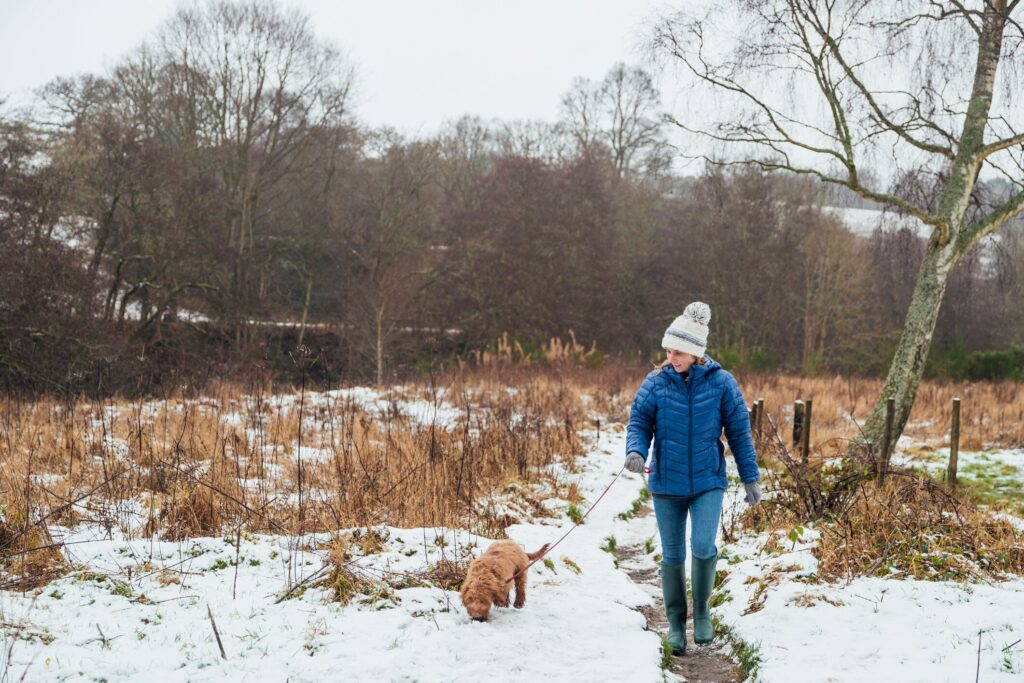
Winter is full of dog-friendly activities and adventures, yet cold weather can pose dangers for dogs of all sizes and ages. Whether you want to expend your puppy’s boundless energy or enjoy a winter stroll, it’s important to prioritize your dog’s safety and recognize when it’s just too cold to walk your dog.
As the temperatures drop, follow these safety tips for walking dogs in cold weather. When the temperature dips too low, there are plenty of indoor alternatives that will keep your dog happy, healthy, and accident-free.
What Temperature Is Too Cold To Walk Your Dog?
“When you venture outside with your dog, you should aim to be in temperatures above 32 degrees Fahrenheit,” recommends Dr. Nick Horniman, MRCVS, a veterinary surgeon and the founder of United Kingdom-based VETSbarn Veterinary Centre. He adds that pet parents should limit cold-weather walks to 30 minutes or less.
That said, what’s safe for one dog might be too cold to walk another dog. Older dogs—such as those with underlying health issues—and puppies are generally more susceptible to cold-weather problems, including frostbite and hypothermia.
Some dog breeds, such as Siberian Huskies and Bernese Mountain Dogs, are naturally adapted to cold weather due to their thick, double coats, earning them the moniker "winter dogs." Smaller dog breeds or those with thin coats are more sensitive to the chill.
Hypothermia in dogs is a life-threatening condition. Regardless of breed, age, or overall health, if you notice your dog displaying symptoms of hypothermia, take them inside and call your veterinarian immediately.
Tips for Walking Your Pup in the Cold
Pet parents might be hesitant to take their dogs outside during the cold-weather months, and rightly so. But Horniman says it’s important to safely enjoy the outdoors when you can.
Here are essential tips to keep your dog safe all season long.
1. Never Let Your Pup Off-Leash
“Letting your dog off the lead during winter can be dangerous if you're not careful,” Horniman says. For instance, your dog could inadvertently wander onto a frozen body of water that has a thin layer of ice.
Dogs may also want to explore their wintry surroundings by taste, often lapping up dangerous chemicals such as salt and antifreeze along with melting snow. Prevent potential dangers by keeping your dog securely on their leash and sticking to familiar routes.
When choosing the best leash for winter walks, consider ones with reflectors that increase visibility in low-light conditions. Leashes that offer better control and grip in slippery situations are good considerations too:
-
Prima Pets® Dual-Handle Reflective Dog Leash—In addition to five seams of reflective stitching on each side of the leash, this lead has an additional handle near the collar clip for added control.
-
Chai's Choice® Premium Outdoor Adventure Padded 3M Polyester Reflective Dog Leash—The extra padding in this reflective 3.5- or 6.5-foot leash provides a comfortable grip in cold weather.
2. Keep Their Bodies Warm
When you're starting to feel cold enough for a winter jacket, chances are your pup is starting to feel a chill too, says Dr. Danny Sack, DVM, a veterinary surgery resident and veterinarian ambassador for Big Barker. He recommends keeping a well-fitting doggy jacket on hand. It should be snug across the entire chest and back but not restrict your dog's movement.
A good winter dog jacket, such as the ones below, is especially crucial when low temps are mixed with wind or rain, and for dogs who are less tolerant to cold weather.
-
Carhartt® Chore Insulated Dog Coat—Not unlike your trusty pair of overalls, this Carhartt dog jacket is crafted from durable cotton duck canvas. It effectively repels light rain, protects against wind, and the quilted nylon lining with polyester batting ensures a comfortable and cozy fit. Additionally, the Velcro chest and belly straps make dressing your dog a breeze.
-
Frisco® Quilted Water-Resistant Reversible Insulated Dog & Cat Jacket—Combining style and functionality, this reversible winter dog jacket is available in sizes ranging from small to XX-large. The quilted jacket boasts water-resistant protection and a convenient leash hole for hassle-free winter walks.
-
PetRageous® Designs Juneau Insulated Dog Jacket—This waterproof and wind-resident dog jacket is designed to keep your dog warm during even the coldest and wettest of winter days. It also features reflective stitching for enhanced visibility in low-light conditions, such as dark winter days or foggy weather.
3. Keep Their Paws Warm and Safe
The experts we spoke to all recommend wiping dogs’ paws clean after every winter walk. “Pets become exposed to rock salt most often when they lick their paws after a walk,” explains Dr. Laura Kozlowski, DVM, an emergency veterinarian and medical director of Veterinary Emergency Group in Oak Brook, Illinois. “This is generally irritating to the feet and can cause mild vomiting and diarrhea, but it isn’t toxic in small amounts.”
After thoroughly cleaning your dog's paws with chemical-free dog wipes, carefully inspect their paw pads for any signs of dryness or cracks. Apply a moisturizing balm or petroleum jelly as necessary.
If you notice your dog excessively chewing at their paws and black or discolored spots on their toes or paw pads, consult your veterinarian, as these could be signs of frostbite.
Alternatively, you can keep your dog’s paws safe and warm with dog booties. Similar to your favorite pair of winter boots, the best winter dog booties will also minimize the risk of slips and falls. Opt for a pair that is waterproof and can withstand your pup's spirited outdoor adventures, such as the options below:
-
Bark Brite® All Weather Reflective Neoprene Dog Boots—These booties offer extended coverage up your dog's ankles, which can be especially helpful for pups with long fur who tend to collect snowballs. They come in three colors and five sizes.
-
Muttluks® Original Fleece-Lined Winter Dog Boots—With eight available sizes, you’re sure to find the perfect-fitting bootie for your dog. Crafted from a blend of waterproof and windproof polyester, leather, natural fabric, and synthetic fabrics, these fleece-lined booties ensure your dog’s paws stay comfortably dry and warm.
4. Take Short Walks During the Daytime
When the temps start to drop, Horniman recommends limiting outdoor walks to 30 minutes or less. And while getting home before the sun goes down can be tough, it’s best to walk your dog during the sunnier times of the day (8 a.m. to 3 p.m.), both for warmth and safety.
Of course, getting outside for exercise, socialization, and fresh air is important for both you and your dog's physical and mental health. When you can't get outside as much as you'd like, Sack suggests making the most of your indoor time by playing games, setting up an obstacle course, or going for more frequent but shorter walks.
"Consider participating in organized indoor dog sports like agility or flyball," he adds. And if your dog absolutely refuses to go outside to use the bathroom, you can always use disposable potty pads indoors.
5. Understand the Signs That Your Pup Is Too Cold
Hypothermia in dogs occurs when their body temperature drops below 98 F or 99 F (37 C). According to Kozlowski, signs of hypothermia in dogs include:
If you notice any of the above signs, take your dog indoors immediately and wrap them in blankets. Your dog should be evaluated by a vet as soon as possible.
Once the body temperature drops or extremities get chilly from the wet or wind, your dog is also at risk of frostbite. It’s another serious cold-weather condition in which blood flow is diverted to the core organs to keep them warm.
This can leave the tip of the tail, ears, nose, paw pads, and toes without adequate blood flow. Eventually, the tissues freeze and die.
Kozlowski says to inspect your dog for the following signs of frostbite:
-
Redness
-
Swelling
-
Blistering
-
Pain, causing pets to excessively scratch, lick, or chew
-
Darker or black color of the skin
A well-stocked winter safety kit can make all the difference in preventing these and other cold-weather mishaps.
Sack recommends always having a way to warm your pup, like a waterproof blanket or towel, and fresh clean water, even if it’s cold out.
In case of an accident, always have "gauze squares, triple antibiotic ointment, and a medical bandage," he says. Of course, what you pack in your pet emergency kit will depend on your planned activity, your dog’s special needs, and the weather that day.
Featured Image: SolStock/E+ via Getty Images
