spheroids

Symmetric cancer spheroid-fibroblast organization revealed in 3D

  • Noam Zoref
  • Maytal Avrashami
  • Yoav Shechtman
Article

Announcements

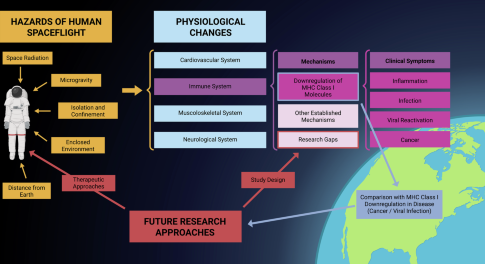
  • Astronaut

    Spaceflight is associated with persistent MHC class I suppression in astronauts, a mechanism linked to immune evasion in cancer and viral infection. This Perspective discusses risks, mechanisms and countermeasures.

  • Review image

    This review synthesizes how Gla proteins act in cardiovascular disease, with particular attention to cardiac fibrosis, through context-dependent and sometimes carboxylation-independent mechanisms, and how cross-organ insights inform future therapies.

  • structure

    The Collection welcomes studies that leverage structural biology and quantitative biophysical approaches to reveal fundamental principles underlying cancer-associated processes.

    Open for submissions
  • Reviewers' headshots

    In August, we thank co-reviewers Lucy Moleleki, of the University of Pretoria, South Africa, and Brenda Chisanga Salasini, of the University of Zambia, for their invaluable contributions to peer review.

Advertisement

  • Pathogen recognition is key to immunity, incentivizing pathogens to evolve mechanisms to prevent this. A new study by Lathram and Lages et al. shows that Staphylococcus aureus manipulates this process in a new way – by the transformation of the host’s own lipids into forms that interfere with pathogen detection.

    • Christopher N. LaRock
    Research HighlightOpen Access
  • Whole-brain models have long assumed purely cooperative brain connectivity, but Luppi et al. demonstrate that competitive couplings are a conserved feature of the mammalian connectome, markedly improving model accuracy across humans, macaques, and mice. This Comment examines the lifespan implications — from adolescent maturation of long-range competitive connections to their erosion in aging and neurodegeneration — and the framework’s translational potential for personalised brain models and clinical biomarkers.

    • Dipanjan Roy
    • Arpan Banerjee
    CommentOpen Access
  • As neuron models grow more detailed, the uncertainty behind them often collapses into single best-fit parameters, obscuring what the data support. This Comment argues for reference-grade modeling standards, with traceable provenance, declared uncertainty, and ensemble predictions, adapted from the hierarchy of standards used in analytical chemistry.

    • Alon Korngreen
    CommentOpen Access
  • Not many pathogens are as uniquely adapted as Streptococcus pyogenes to cause a variety of infections ranging from strep throat to serious flesh-eating skin infections. Yet, scientists, to date, have had limited knowledge into the extent of diseases strep caused in the past. In a new study, Valverde et al. found the signature of strep in the tooth of a mummified individual from a sea of sequencing data and traced the past of the pathogen.

    • Ananya Dash
    • Christopher N. LaRock
    Research HighlightOpen Access
  • Current preclinical models fail to capture the mechanics of oligodendrocyte myelination. Lasli et al.1 now demonstrate that the mechanical compliance of the axonal niche is a key determinant of oligodendrocyte maturation. By developing a platform that mimics the extreme mechanical softness of the central nervous system, they reveal myelination as a mechanically gated process as much as a biochemically regulated one.

    • Marco Fritzsche
    Research HighlightOpen Access
 Psychedelic Brain illustrations

Effects of Psychedelics on the Brain

In this Collection, we welcome papers investigating how psychedelic compounds affect the brain across multiple levels of organization: from molecular and cellular processes to systems level dynamics, whole brain network reconfigurations and anatomical changes.
Collection
Open for submissions

Advertisement

Nature Careers

Science jobs

Advertisement