1/1
?

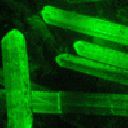
Tremolite : ◻Ca2Mg5(Si8O22)(OH)2

How to use the mindat.org media viewer

Click/touch this help panel to close it.

Welcome to the mindat.org media viewer. Here is a quick guide to some of the options available to you. Different controls are available depending on the type of media being shown (photo, video, animation, 3d image)

Controls - all media types

Zoom in and out of media using your mousewheel or with a two-finger 'resize' action on a touch device.

Use the mouse or your finger to drag the image or the view area of the image around the screen.

On mobile, double-tap the Mindat logo to hide/dim titles and buttons and open fullscreen.

< and > at the left and right hand side of the screen move forwards and backwards for the other images associated with the media you selected. Usually this is used for previous/next photo in a gallery, in an article or in search results. Keyboard shortcuts: use shift + the left and right arrow keys.

< and > in the bottom center are used for switching between the photos of the same specimen. Keyboard shortcuts: use the left and right arrow keys.

>  in the bottom center, raises the information box giving details and further options for the media,  <  at the top of this box then hides it. Keyboard shortcuts: use the up and down arrow keys.

? opens this help window. Keyboard shortcuts: use the H key or the ? key.

Other keyboard shortcuts:

1Fit image to screen
2Fill screen with image
5Display at full resolution
<Make background darker
>Make background lighter
spaceHide/dim titles and buttons

Scalebar

If the field of view (FOV) is specified for the photo, the scalebar appears in the left bottom corner of the viewer. The scalebar is draggable and resizeable. Drag the right edge to resize it. Double click will reset the scalebar to it's default size and position. If the scalebar is in default position, double click will make it circular.

Controls - Video

Video files have a standard set of video controls: - Reset to start, - Skip back, - Play, - Pause, - Skip forwards. Keyboard shortcuts: You can stop/start video play with the P key.

Controls - Animation (Spin Rotation)

Animation (usually 360 degree spin rotations) have their own controls: - enable spin mode. Note that while images are loading this option will not be available but will be automatically activated when the animation has loaded. Once active you can spin the image/change the animation by moving your mouse or finger on the image left/right or by pressing the [ or ] keys.

The button switches to move mode so that you can use your mouse/fingers to move the image around the screen as with other media types.

The button, or the P key will start playing the animation directly, you can interrupt this by using the mouse or finger on the image to regain manual movement control.

Controls - 3D Stereoscopic images

If a stereoscopic 3D image is opened in the viewer, the 3D button appears in the bottom right corner giving access to "3D settings" menu. The 3D images can be viewed in several ways:
- without any special equipment using cross-eyed or parallel-eyed method
- with stereoscope
- with anaglyph glasses.
- on a suitable 3D TV or monitor (passive 3D system)

For details about 3D refer to: Mindat manuals: Mindat Media Viewer: 3D

To enable/disable 3D stereo display of a compatible stereo pair image press the 3 key. If the left/right images are reversed on your display (this often happens in full-screen mode) press the 4 key to reverse them.

Controls - photo comparison mode

If a photo with activated comparison mode is opened in the viewer, the button appears in the bottom right corner giving access to "Comparison mode settings" menu.

Several layouts are supported: slider and side by-side comparison with up to 6 photos shown synchronously on the screen. On each of the compared photos a view selector is placed, e.g.:  Longwave UV ▼. It shows the name of currently selected view and allows to select a view for each placeholder.

Summary of all keyboard shortcuts

1Fit image to screen
2Fill screen with image
3Switch to 3D display of stereo pair
4Switch left/right images in 3D mode
5Display at full resolution
<, >Make background darker/lighter
H or ?Show/hide this help page
PPlay/Pause Video or Animation
[, ]Backwards/forwards one frame (Animation only)
spaceHide/dim titles and buttons
up arrowShow information box
down arrowHide information box
left arrowPrevious child photo
right arrowNext child photo
shift + left arrowPrevious image on the page
shift + right arrowNext image on the page


Copyright © 2010, JGW


minID: 9FQ-U0L

Tremolite : ◻Ca2Mg5(Si8O22)(OH)2

Copyright © 2010, JGW  - This image is copyrighted. Unauthorized reproduction prohibited.
Dimensions: 5 cm

prismatic terminated crystal of tremolite (or is this actinolite?). S402-175


This photo has been shown 1166 times
Photo added:12th Jan 2010
Dimensions:711x1024px (0.73 megapixels)
Camera:CANON EOS 10D

Data Identifiers

Mindat Photo ID:279900 📋 (quote this with any query about this photo)
Long-form Identifier:mindat:1:4:279900:8 📋
GUID:0 📋
Specimen MinID9FQ-U0L (note: this is not unique to this photo, it is unique to the specimen)

Discuss this Photo

PhotosActinolite - Miners Bay, Haliburton Co., Ontario, Canada

9th Jun 2012 01:47 UTCTim Jokela Jr OP

1) Can anybody that's collected here provide either a more exact locality description, or a literature reference? I cannot find Miners Bay in Sabina, Traill, Satterly, etc. Somebody help before my head explodes.


(Dave, I'm looking at you. Love your photos, btw.)


2) Very uniform looking material from here in the d-base, most being called tremolite, but two going under actinolite. I'd strongly suggest moving the two under actinolite over to tremolite. Not worthy of a big discussion on sight-ID'ing amphi/xenes, though I'd love to hear if anybody has an analysis.


3) One of the tremolites photographed is very suspicious looking; with the tabular habit, x-section, etc. of a fluororichterite from the Earle Property. Very different from Miners Bay tremolite. Perhaps somebody can look into it further.

9th Jun 2012 03:20 UTCDavid K. Joyce Expert

Hi Tim,


I've been there and can drive there but don't think that I can actually give you directions! The ocality is on the east side of the main highway near Miner's Bay. I could put you in touch with someone who probably knows the actual cross-road, if you'd like. Let me know?


Cheers,

David KJ

9th Jun 2012 04:50 UTCTim Jokela Jr OP

If it's not too much trouble, Dave, I'd really love to pin this one down. It's interesting material and I'd like to check it out some day. Drop me an email or whatever - tjokela@execulink.com


Thanks for any further info.

9th Jun 2012 17:09 UTCJeff Weissman Expert

Tim, in the old days if it was white, its tremolite, dark green its actinolite; I was just going with the flow. Pending yet another reclassification of amphiboles, there really is no justification for actinolite as a distinct species.


Has anyone analyzed this material? Would like some guidance prior to changing the species


Jeff

11th Jun 2012 19:43 UTCRichard Gunter Expert

Hi Tim:


I was at the locality in May 1978. It is on the north side of Clear Lake Road approximately 100 meters east of the highway through Miners Bay. It is not a large locality, 6 meters long by 2 meters in height, so there may not be much left of it. Olav has contacted me and I have sent him the information I have regarding the amphibole chemistry.


The occurrence is in a dark gabbro and does not resemble the classic vein-dykes of the Bancroft area. I have several other samples than the one I posted so if you are interested I can provide other photos of the paragenesis.


Richard Gunter

11th Jun 2012 20:03 UTCOlav Revheim Manager

On my inquiry, Richard sent me the following information ( I hope you don't mind me quoting part of a private message in an open forum):


"The chemical analyses I mentioned are from an enquiry I did with David Joyce. He answered my e-mail on December 17, 2009 and said: This back from M. Picard, from my inquiry at the CMN. “Our database shows for these amphiboles that there are more often tremolites than actinolites. 3 analyzed specimens gave a tremolite result and only one gave a border line tremolite-actinolite result; so you either name them tremolite-actinolite to be on the safe side or simply tremolite as being the most probable analysis result”.


There have been other amphibole analyses from the immediate area published. Analyses of clinoamphibole from the Miner’s Bay area in the 1997 CJES article has two samples of Tremolite and one sample with approximately equal Fe and Mg. These may be the analyses Picard was referring to; they have Mg:Fe ratios of 2.58, 0.93 and 1.69. All are completely Ca dominan
t."


I guess the tremolite/actinolite ratio of the uploaded photos are about right, except that we don't know which ones are tremolites and which ones are actinolites. May I suggest that following:


- We label all photos uploaded to the database as tremolite-actinolite series, how the specimens are labeled in your collection is sort of irrelevant in this context :-)


- I update the mineral entries for the locality with the information provided by Richard, stating that most of the amphiboles from this locality will be tremolites, but that some of them will be actinolites.


I think that would be the most "correct" way to deal with this, as if there ever will be a "correct" statement on amphiboles.


Any thoughts on the matter?


Olav

11th Jun 2012 21:24 UTCRichard Gunter Expert

Hi Olav:


That sounds correct, though an additional note might be included that these crystals are not colour zoned so there is no method of visually determining which part is higher in iron or magnesium.


Richard Gunter

12th Jun 2012 23:20 UTCTim Jokela Jr OP

Thanks to all for the clarifications!

9th Aug 2013 16:50 UTCRob Deveaux

Do not know if this forum is still active


I have a cottage on Clear Lake road in Miners Bay and walk by there most weeks.

If you can give me more details to where this rock is located, I can check to see if it is still there.

Is it past the curve in the road or before it.

How high off of the ground is it.

What colour of a rock should I bee looking for.


Let me know if I can help

9th Aug 2013 17:11 UTCTim Jokela Jr OP

Hey Rob - First of all, you're a lucky devil to have a bit of land up there in mineral paradise.


Secondly, scroll up and see Richard Gunter's exact description.


Basically you're looking for a dark outcrop that looks like somebody has been pounding on it; you'll see more than the usual amount of broken rock at the bottom, maybe toolmarks, signs of parking, etc. Ideally there will be openings, probably thin veins, lined with the prismatic black xls we're interested in. I haven't been up there yet, so dunno if the veins are open or are filled with calcite, which would be more normal.


I look forward to hearing your report! Hope to get up there this fall.

9th Aug 2013 18:47 UTCRichard Gunter Expert

Hi Tim and Rob:


The location is filled with Calcite, as are most in the area. My posted photo # 470400 is a "bulk sample" of the vein as it existed in 1978. There are two photos in the Miners Bay gallery that do not look like the crystals I saw: # 392354 is too transparent and has a different style of termination and # 388009 is closer to other amphiboles from the area. One of the unique features of this locality was the lack of "melted" faces on any of the crystals. All of the other amphibole localities in the Bancroft area are vein-dykes and have a different style of amphibole crystallization.

10th Aug 2013 12:53 UTCTim Jokela Jr OP

Gunter, Mindat is damn lucky to have guys like you aboard.


I for one really appreciate the info you bring!


T

10th Aug 2013 23:32 UTCAnonymous User

Many years ago, two minerals collectors, one of them now-deceased, told us where the locality for the good tremolite crystals were found in Miner's Bay. We understood it to be in the village, very near some houses and roads, and collecting there was risky, since rocks could easily roll down into people's yards, etc. I would think that getting permission would be nearly impossible, if the locality is that close to homes and streets.

Susan Robinson

12th Aug 2013 17:05 UTCRichard Gunter Expert

Hi Tim and Susan:


Tim thank you for the kind words. I get at least as much out as I put in from other knowledgeable people.


Susan the site I collected at was at the base of the very large rocky hill to the north of the cottage road. There was only about 10 meters or so between the north edge of the road and the steep side of the hill. It is possible there are houses there now but there were none when I was there.
 
and/or  
Mindat.orgÂŪ is an outreach project of the Hudson Institute of Mineralogy, a 501(c)(3) not-for-profit organization. MindatÂŪ and mindat.orgÂŪ are registered trademarks of the Hudson Institute of Mineralogy.
Copyright © mindat.org and the Hudson Institute of Mineralogy 1993-2026, except where stated. Most political location boundaries are ÂĐ OpenStreetMap contributors. Mindat.org relies on the contributions of thousands of members and supporters. Founded in 2000 by Jolyon Ralph and Ida Chau.
Content on this site may not be used to train, fine-tune, or otherwise develop artificial intelligence or machine learning models without prior written permission - see our Terms & Conditions.
To cite: Ralph, J., Von Bargen, D., Martynov, P., Zhang, J., Que, X., Prabhu, A., Morrison, S. M., Li, W., Chen, W., & Ma, X. (2025). Mindat.org: The open access mineralogy database to accelerate data-intensive geoscience research. American Mineralogist, 110(6), 833–844. doi:10.2138/am-2024-9486.
Privacy Policy - Terms & Conditions - Contact Us / DMCA issues - Report a bug/vulnerability Current server date and time: September 7, 2026 07:08:15