

Business development is all about finding ways to make a business do better and grow. It is about bringing in more money, reaching more customers, and making the business stronger through good relationships and smart plans. People in business development look at the big picture, who the customers are, who else is in the market, and what is happening in the industry. They work on getting new customers, teaming up with other businesses, and finding new areas to sell their products or services. In simpler terms, business development includes making deals, coming up with new ideas for the business, partnering with other companies, and looking for new places or people to sell to.
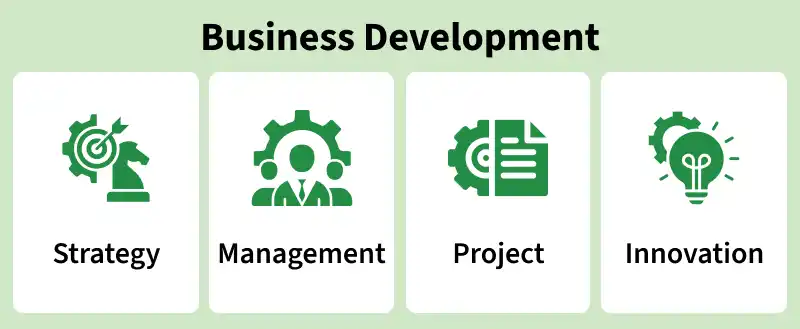
Role of Business Development
The role of business development is vital in advancing a company's growth and prosperity. It involves several essential duties such as,
1. Spotting New Prospects: A key responsibility in business development is to discover new opportunities. This can involve exploring new markets, forging partnerships, finding different approaches to engage with existing markets, or developing new products or services to better satisfy the needs of current markets.
2. Cultivating Relationships: An important aspect of business development is nurturing and maintaining connections with partners, clients, and other key players. This includes networking, managing relationships, and negotiating to create and maintain advantageous alliances.
3. Strategic Planning and Execution: Business development professionals play a significant role in strategic decision-making. They help steer the business's direction by matching business objectives with market opportunities. They also ensure these strategies are effectively put into action to achieve the company's aims.
4. Supporting Marketing and Sales: Business development supports the marketing and sales teams indirectly by identifying potential leads, enhancing product or service features, and strategizing for competitive pricing, advertising, and promotional efforts.
5. Analysing the Market: Conducting in-depth analyses of market trends, customer preferences, and the competitive environment is a critical function in business development. This analysis informs and guides business strategies.
6. Driving Innovation: Those in business development roles often encourage innovation within the company, whether through improving existing offerings or discovering new avenues for the company to explore.
Potential Areas for Business Development
Business development has several potential areas where a company can focus its efforts to foster growth and improve performance. Some key areas are,
1. Market Expansion: Exploring and entering new geographic markets or customer segments is a significant area for business development. This involves researching new areas, understanding local demands, and adapting strategies to fit different market needs.
2. Product and Service Diversification: Developing new products or enhancing existing services to meet untapped customer needs or to enter new market segments. This can involve innovation, research and development, and sometimes, collaboration with other companies or institutions.
3. Strategic Partnerships and Alliances: Forming alliances with other businesses or organisations can open up new opportunities. This can include partnerships for co-developing products, sharing resources, or joint marketing initiatives.
4. Customer Relationship Management: Strengthening relationships with existing customers and improving customer satisfaction can lead to increased sales and referrals. This might involve improved customer service strategies, loyalty programs, or personalised communication.
5. Sales and Marketing Enhancement: Refining sales strategies and marketing efforts to reach and convert more customers. This includes digital marketing, targeted advertising, sales funnel optimisation, and exploring new sales channels.
6. Operational Efficiency: Streamlining operations to reduce costs and increase productivity. This might involve adopting new technologies, improving supply chain management, or restructuring internal processes.
Process of Business Development
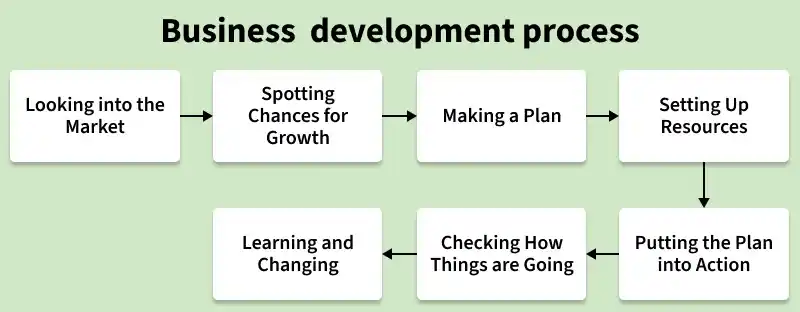
The process of business development in a company follows a set of steps, each important for finding and making the most of new growth chances. A simple and brief explanation of each stage is mentioned below,
1. Looking into the Market: This is where the company starts by really digging into the market. They look at what is currently happening, what customers want, and what other businesses are doing. This step is all about collecting information that will help in making smart decisions later.
2. Spotting Chances for Growth: With all the market information, the next step is to find where there are good opportunities to grow. This could mean finding new people to sell to, new places to do business, or even new things to sell.
3. Making a Plan: Once they know where the opportunities are, it is time to make a plan. This plan says what the goals are, who the business should be targeting, and how they are going to reach these people, like through advertising or making new products.
4. Setting Up Resources: For the plan to work, the right resources need to be in place. This means deciding on a budget, giving tasks to team members, and making sure they have all the tools they need.
5. Putting the Plan into Action: Now it is time to do everything the plan talked about. This could be starting advertising campaigns, talking to other businesses about working together, making new products, and more.
6. Checking How Things are Going: As things start to happen, it is important to keep an eye on them and see if they are working. This means watching certain key things like sales numbers or how many new customers they are getting, and seeing if they are meeting their goals.
7. Learning and Changing: The last step is about learning from what is been done and making changes if needed. The business world always changes, so it's important to stay flexible and ready to adjust the plan based on new information or changes in the market.
Creating a Business Development Plan
A good business development plan is like a guide that helps you navigate toward growth. It is all about understanding where you are, where you want to be, and how you are going to get there. Making a plan for business development is like drawing a map for your business's growth. These are the simple steps in which we can do it,
1. Set Your Goals: Start by deciding exactly what you want to achieve. Make these goals clear and something you can measure, like getting more sales or expanding into new areas. Put a time frame on these goals too.
2. Learn About Your Market: Spend time understanding your industry, what your customers want, what is currently trending, and what your competitors are doing. This information is like a treasure trove that helps you see where you can grow.
3. Find Opportunities: With all the information you've gathered, look for areas where your business can do better or new things you can do. This could mean finding new people to sell to, new places to sell in, or new products to develop.
4. Check What You Can Do: Look at what your business is good at and what might be holding it back. This step is about knowing your strengths and weaknesses, which helps in making a doable plan.
5. Make a Plan for Each Opportunity: For each growth opportunity you have found, create a specific plan. This might be a marketing plan, selling more, making new products, or working with other businesses. Make sure these plans help you reach your big goals.
6. Figure Out Resources and Money: Think about what you need to make these plans happen. This includes figuring out how many people, tools, and money you will need.
7. Decide How to Measure Success: Choose ways to check if your plans are working. This could be looking at sales numbers, how many new customers you're getting, or how much profit you're making.
8. Break It Down into Steps: Take your plans and break them down into smaller, doable actions. Assign these tasks to your team and set deadlines.
9. Start Doing It: Now, put your plan into action. Make sure everyone knows what they need to do.
10. Keep an Eye on Progress: Regularly check how things are going compared to your goals. Be ready to make changes if things aren't working as expected.
11. Learn and Improve: Use what you learn from monitoring to make your plan better. Business development keeps going, and your plan should change as your business and the market change.
Skills Needed for Business Development Jobs
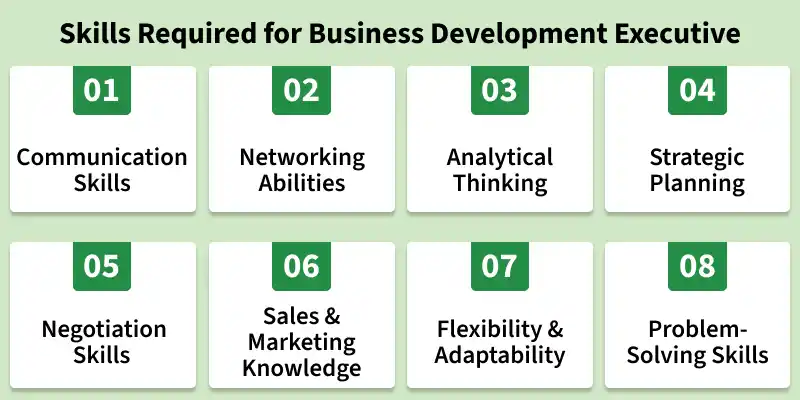
If one is interested in a job in business development, there are certain skills he needs to be successful. These skills are like tools in a toolbox, each one helping you build and grow a business effectively. Some of the essential skills are:
1. Communication Skills: Being great at talking and listening is key. You will need to explain your ideas clearly and also understand what others are saying, whether it is clients, partners, or your team.
2. Networking Abilities: This is all about making connections with people. You will need to be good at meeting new people, making them feel comfortable, and maintaining long-term relationships.
3. Analytical Thinking: You should be able to look at lots of information and make sense of it. This means understanding market trends, customer needs, and business data to make good decisions.
4. Strategic Planning: This skill involves thinking ahead and making plans. You need to be able to set goals, decide how to reach them and adjust your plans as things change.
5. Negotiation Skills: Sometimes you will need to make deals or solve problems with others. Being good at negotiation means you can find solutions that everyone is happy with.
6. Sales and Marketing Knowledge: Understanding how to sell products or services and how to tell people about them is important. This includes knowing different sales techniques and marketing strategies.
7. Flexibility and Adaptability: The business world changes a lot, so you need to be able to change with it. This means being open to new ideas and willing to change your plans when needed.
8. Problem-Solving Skills: When challenges come up, you need to be able to think of solutions. This involves being creative and thinking outside the box.
Importance of Business Development
Business development is like a tool for companies to expand, make more money, and stay competitive in their market. It is all about finding new ways to succeed and keeping the business moving forward. Business development is really important for companies because it helps them grow and become more successful,
1. Finding New Customers: Business development helps a company find new people to sell its products or services to. This means more sales and more growth
2. Entering New Markets: It's about taking the business into new areas or even to new countries. This can open up a lot of new opportunities for selling and making money.
3. Making Better Products or Services: Through business development, companies can improve what they sell or come up with new things to offer. This keeps customers happy and can attract even more customers.
4. Building Strong Relationships: It involves creating good, long-lasting relationships with customers and other businesses. This can lead to more sales and partnerships in the future.
5. Staying Ahead of Competitors: By always looking for new opportunities and improving, business development helps a company stay ahead of its competitors.
6. Increasing Profits: Ultimately, all these activities lead to more sales and higher profits. This is important for the company to keep growing and succeeding.
