Buy New
-49%
$13.85$13.85
FREE delivery Thursday, September 3 on orders shipped by Amazon over $35
Ships from: Amazon.com Sold by: Amazon.com
Used - Very Good
$6.53$6.53
FREE delivery September 4 - 9
Ships from: ThriftBooks-Dallas Sold by: ThriftBooks-Dallas
Download the free Kindle app and start reading Kindle books instantly on your smartphone, tablet, or computer - no Kindle device required.
Read instantly on your browser with Kindle for Web.
Using your mobile phone camera - scan the code below and download the Kindle app.

Follow the author
OK
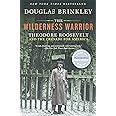
The Wilderness Warrior: Theodore Roosevelt and the Crusade for America
Purchase options and add-ons
From New York Times bestselling historian Douglas Brinkley comes a sweeping work of environmental history and an eye-opening look at the pioneering policies of President Theodore Roosevelt, avid bird-watcher, naturalist, and the founding father of America’s conservation movement.
In this groundbreaking epic Theodore Roosevelt biography, Douglas Brinkley draws on never-before-published materials to examine the life and achievements of our “naturalist president.” By setting aside more than 230 million acres of wild America for posterity between 1901 and 1909, Theodore Roosevelt made conservation a universal endeavor. This crusade for the American wilderness was perhaps the greatest U.S. presidential initiative between the Civil War and World War I. Roosevelt’s most important legacies led to the creation of the U.S. Fish and Wildlife Service and passage of the Antiquities Act in 1906, laying the groundwork for the national parks system. His executive orders saved such treasures as Devils Tower, the Grand Canyon, and the Petrified Forest.
This definitive account of our naturalist president reveals:
- The Birth of Conservation: Explore the untold story of how Roosevelt, an avid bird-watcher and naturalist, channeled his passion for the American wilderness into a revolutionary political crusade.
- A Presidential Legacy: Discover how his administration set aside more than 230 million acres of land and laid the groundwork for the National Park System, the U.S. Fish and Wildlife Service, and the Antiquities Act.
- Never-Before-Published Materials: Drawing on newly unearthed letters and journals, Brinkley offers a fresh, groundbreaking perspective on the life and achievements of America’s conservationist president.
- Epic American History: A sweeping narrative that captures a pivotal era, detailing perhaps the greatest U.S. presidential initiative between the Civil War and World War I.
- Print length960 pages
- LanguageEnglish
- PublisherHarper Perennial
- Publication dateMay 4, 2010
- Dimensions1.9 x 5.9 x 8.9 inches
- ISBN-100060565314
- ISBN-13978-0060565312
![]() |
Frequently bought together

Customers who viewed this item also viewed
- The Naturalist: Theodore Roosevelt, A Lifetime of Exploration, and the Triumph of American Natural HistoryPaperbackFREE Shipping on orders over $35 shipped by AmazonGet it as soon as Thursday, Sep 3
- Rightful Heritage: Franklin D. Roosevelt and the Land of America – A New York Times Bestselling History of Presidential ConservationHardcoverFREE ShippingOnly 1 left in stock - order soon.
- Silent Spring Revolution: John F. Kennedy, Rachel Carson, Lyndon Johnson, Richard Nixon, and the Great Environmental AwakeningPaperbackFREE Shipping on orders over $35 shipped by AmazonGet it as soon as Saturday, Sep 5Only 7 left in stock (more on the way).
- To Rescue the American Spirit: Teddy Roosevelt and the Birth of a Superpower – A New York Times Bestselling Biography of Courage and Bold Presidential Leadership (The Presidential Series, 3)HardcoverFREE Shipping on orders over $35 shipped by AmazonGet it as soon as Thursday, Sep 3
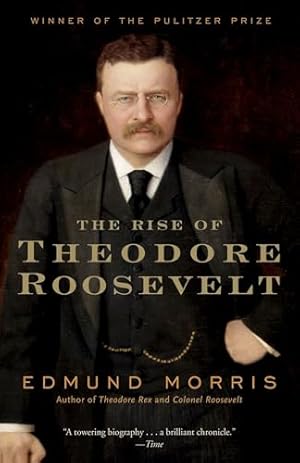
- The Rise of Theodore Roosevelt (Modern Library (Paperback))PaperbackFREE Shipping on orders over $35 shipped by AmazonGet it as soon as Thursday, Sep 3
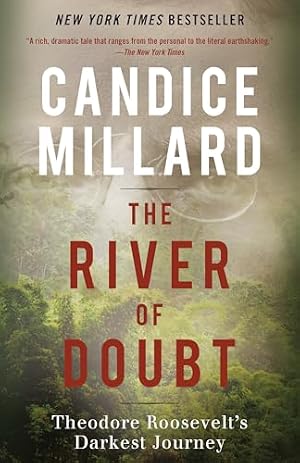
- The River of Doubt: Theodore Roosevelt's Darkest JourneyPaperbackFREE Shipping on orders over $35 shipped by AmazonGet it as soon as Thursday, Sep 3
Customers also bought or read
- Rightful Heritage: Franklin D. Roosevelt and the Land of America – A New York Times Bestselling History of Presidential Conservation
Hardcover$11.97$11.97FREE delivery Thu, Sep 3 - Silent Spring Revolution: John F. Kennedy, Rachel Carson, Lyndon Johnson, Richard Nixon, and the Great Environmental Awakening
Hardcover$17.62$17.62Delivery Sep 15 - 19 - The Naturalist: Theodore Roosevelt, A Lifetime of Exploration, and the Triumph of American Natural History
Paperback$18.64$18.64Delivery Thu, Sep 3 - The Bully Pulpit: Theodore Roosevelt and the Golden Age of Journalism
Paperback$13.99$13.99Delivery Thu, Sep 3 - Losing Eden: An Environmental History of the American West (Environment and Region in the American West)
Paperback$21.07$21.07Delivery Thu, Sep 3 - Edmund Morris's Theodore Roosevelt Trilogy Bundle: The Rise of Theodore Roosevelt, Theodore Rex, and Colonel Roosevelt
Hardcover$67.17$67.17FREE delivery Thu, Sep 3 - The Quiet World: Saving Alaska's Wilderness Kingdom, 1879-1960
Paperback$13.59$13.59Delivery Thu, Sep 3 - Leave It As It Is: A Journey Through Theodore Roosevelt's American Wilderness
Paperback$16.76$16.76Delivery Thu, Sep 3 - Beyond the Hundredth Meridian: John Wesley Powell and the Second Opening of the West
Paperback$12.70$12.70Delivery Thu, Sep 3 - In the Arena: Theodore Roosevelt in War, Peace, and Revolution
Hardcover$17.37$17.37Delivery Thu, Sep 3 - The River of Doubt: Theodore Roosevelt's Darkest Journey#1 Best SellerBrazilian History
Paperback$10.80$10.80Delivery Thu, Sep 3 - That Wild Country: An Epic Journey through the Past, Present, and Future of America's Public Lands
Paperback$10.05$10.05Delivery Thu, Sep 3 - The Crowded Hour: Theodore Roosevelt, the Rough Riders, and the Dawn of the American Century
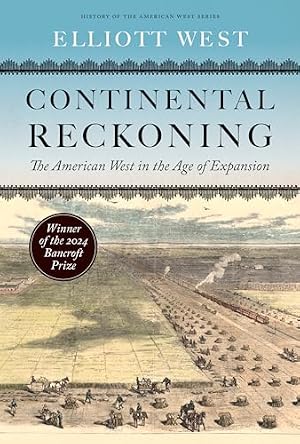
Paperback$16.83$16.83Delivery Thu, Sep 3 - Continental Reckoning: The American West in the Age of Expansion (History of the American West)
Hardcover$27.79$27.79Delivery Thu, Sep 3 - Teddy and Booker T.: How Two American Icons Blazed a Path for Racial Equality
Hardcover$10.47$10.47FREE delivery Sep 4 - 11 - Astoria: Astor and Jefferson's Lost Pacific Empire: A Tale of Ambition and Survival on the Early American Frontier ― A History of the Oregon Trail
Paperback$15.36$15.36Delivery Thu, Sep 3 - Traitor to His Class: The Privileged Life and Radical Presidency of Franklin Delano Roosevelt
Paperback$15.47$15.47Delivery Thu, Sep 3 - Guardians of the Valley: John Muir and the Friendship that Saved Yosemite
Hardcover$13.58$13.58Delivery Mon, Sep 7
Editorial Reviews
Review
“Dramatic and entertaining. . . . A grand book. . . . Brinkley is a talented chronicler of the heroic deeds of bands of brothers. . . . This compelling and impressively well-researched book is by far the best and most detailed story of the Roosevelt administration’s fight for conservation.” - Kathleen Dalton, The Boston Globe
“A stupendous new work. . . . Brinkley, one of America’s most energetic and engaging historians, uses Theodore Roosevelt’s surpassing love of animals and the outdoor life as the organizing force in The Wilderness Warrior. This is biography at its absolute finest: learned and thorough, to be sure, but also lively and surprising and adventurous―much like the man whose life it so bewitchingly chronicles. . . . With so many biographers having lined up to take a crack at Roosevelt, it’s astonishing that The Wilderness Warrior is as fresh as a sunrise. . . . Thanks to Roosevelt, we have national game preserves and national forests. And thanks to Brinkley, we have this brilliant, exhilarating portrait of a president and his unquenchable passion for the natural world.” - The Chicago Tribune
“A masterful look at TR as environmental crusader and ultimate outdoorsman. . . . An engrossing, compellingly written book. . . . Roosevelt is the very man we need today as the number of species in America continues to decline. . . . Brinkley’s Roosevelt is P.T. Barnum, Walt Whitman, and Captain Ahab all rolled into one.” - The Los Angeles Times
“Monumental. . . . Roosevelt’s energy and enthusiasm crackle off the pages.” - The Richmond Times-Dispatch
“What an absolutely perfect match between subject and writer. This is a major contribution to our understanding not only of Roosevelt but of the historic movement to save our wilderness.” - Doris Kearns Goodwin, author of Team of Rivals
“Douglas Brinkley has brought us an important, deeply researched, compellingly readable and inspiring story. Exactly a century after his Presidency, there could not be a better time to revisit and celebrate T.R.’s unfinished environmental legacy.” - Michael Beschloss, author of Presidential Courage
“In The Wilderness Warrior, Douglas Brinkley brings into relief the biography, cultural influences, and political record of the most effective conservationist in history. . . . Like the Grand Canyon that as president he more or less rescued from development and mining interests in one fell swoop, Roosevelt is one of those American treasures that can make you wonder how you missed getting around to for so long. . . .Interesting and thorough. . . . Brinkley is a veteran author on 20th century Americana.” - The San Francisco Chronicle
“An excellent book. A work that surely will rank as the most comprehensive and thoughtful study of Roosevelt’s endless love affair with nature. . . . Brinkley is at his best when documenting how Roosevelt translated his naturalism into concrete federal acts that protected vast regions of the United States from mining, timber, telegraph, and railroad interests. The depth of Brinkley’s research allows him to demonstrate how Roosevelt, like a chess master, finessed ideas through Congress.” - The Austin American-Statesman
“It is a testament to the unparalleled hugeness of his life that a nearly thousand-page biography of Theodore Roosevelt is still capable of breaking new ground. . . . Eschewing the familiar biographical notes (the Panama Canal rates barely a passing mention), Brinkley shows us how T.R.’s youthful obsession with birds, hunting and Darwinian science joined forces with his unique form of masculine patriotism to result in a very “rare instance of constructive hyper-Americanism.’” - Time
“Brinkley gives us the most insightful account yet of Roosevelt’s evolution from sickly, bird-nest-collecting schoolboy to the biggest, baddest conservationist of the 20th century. . . . Readers will close this book with a better appreciation for Roosevelt’s forward-thinking genius―and, just as satisfying, the history of the American conservationism movement in its formative years.” - Outside magazine
“Although Roosevelt’s presidency ended 100 years ago, Mr. Brinkley finds ways to make his presidential portrait a timely one. . . . The Wilderness Warrior describes a vigorously hands-on president, eager to fight more than one battle at a time. . . . Brinkley’s fervent enthusiasm for his material eventually prevails. . . . He conveys the great vigor with which Roosevelt approached his conservation mission.” - Janet Maslin, The New York Times
“To understand America, you need to appreciate Teddy Roosevelt. Doug Brinkley brilliantly uses the lens of Roosevelt’s love of nature to show why he is so influential, fascinating, and relevant to our own times. This wonderful book is as vibrant as he was.” - Walter Isaacson, author of Einstein
“No president has been a greater champion of our natural world―especially its wildlife―than Theodore Roosevelt. Now that extraordinary force of nature has his own champion in Douglas Brinkley’s stirring account of the man who turned our attention to conservation and the many glories of our American landscape.” - Ken Burns, co-author of The War
“Our greatest conservation president, Roosevelt lived much of his life in, around, and for nature―a fact that biographers have tended to ignore until Brinkley stepped forth. This new portrait of TR is one of the best we have. It is a grand portrait of a man and his era, rich in detail and infectious in enthusiasm.” - Donald Worster, author of A Passion for Nature: The Life of John Muir
“What an absolutely perfect match between subject and writer. Douglas Brinkley brings to this magnificent story of Theodore Roosevelt’s crusade on behalf of America’s national parks the same qualities that made TR so fascinating a figure―an astonishing range of knowledge, a superb narrative skill, a wonderfully vivid writing style and an inexhaustible energy. This is a major contribution to our understanding not only of Roosevelt but of the historic movement to save our wilderness.” - Doris Kearns Goodwin, author of Team of Rivals
“Douglas Brinkley has brought us an important, deeply researched, compellingly readable and inspiring story―how Theodore Roosevelt’s poignant childhood love of nature grew into a fierce Presidential commitment to preserve our national environment. No earlier historian and biographer has done such a splendid job of showing how much we all owe to T.R.’s activism as wilderness warrior. Exactly a century after his Presidency, there could not be a better time to revisit and celebrate T.R.’s unfinished environmental legacy.” - Michael Beschloss, author of Presidential Courage
From the Inside Flap
One of the Best Books of the Year
The New York Times, The Boston Globe, The Kansas City Star, The Chicago Tribune, and The St. Louis Post-Dispatch
In this monumental biography, acclaimed historian Douglas Brinkley examines the life and achievements of Theodore Roosevelt, our naturalist president, and his tireless crusade for the American wilderness--a legacy now more important than ever.
--Michael Beschloss, author of Presidential CourageFrom the Back Cover
One of the Best Books of the Year
The New York Times, The Boston Globe, The Kansas City Star, The Chicago Tribune, and The St. Louis Post-Dispatch
In this monumental biography, acclaimed historian Douglas Brinkley examines the life and achievements of Theodore Roosevelt, our "naturalist president," and his tireless crusade for the American wilderness—a legacy now more important than ever.
About the Author
Douglas Brinkley is the Katherine Tsanoff Brown Chair in Humanities and Professor of History at Rice University, presidential historian for the New-York Historical Society, trustee of the Franklin D. Roosevelt Presidential Library, and a contributing editor at Vanity Fair. The Chicago Tribune dubbed him “America’s New Past Master.” He is the recipient of such distinguished environmental leadership prizes as the Frances K. Hutchison Medal (Garden Club of America), the Robin W. Winks Award for Enhancing Public Understanding of National Parks (National Parks Conservation Association), and the U.S. Fish and Wildlife Service’s Lifetime Heritage Award. His book The Great Deluge: Hurricane Katrina, New Orleans, and the Mississippi Gulf Coast received the Robert F. Kennedy Book Award. He was awarded a Grammy for Presidential Suite and is the recipient of seven honorary doctorates in American studies. His two-volume, annotated Nixon Tapes won the Arthur S. Link–Warren F. Kuehl Prize. He lives in Austin, Texas, with his wife and three children.
Product details
- Publisher : Harper Perennial
- Publication date : May 4, 2010
- Edition : Reprint
- Language : English
- Print length : 960 pages
- ISBN-10 : 0060565314
- ISBN-13 : 978-0060565312
- Item Weight : 2.14 pounds
- Dimensions : 1.9 x 5.9 x 8.9 inches
- Best Sellers Rank: #160,600 in Books (See Top 100 in Books)
- Customer Reviews:
About the author

Dr. Douglas Brinkley is the Katherine Tsanoff Brown Chair in Humanities and Professor of History at Rice University, a CNN Presidential Historian, and a contributing editor at Vanity Fair. He has received seven honorary doctorates in American Studies. He works in many capacities in the world of public history, including for boards, museums, colleges and historical societies. Six of his books were named New York Times “Notable Books of the Year” and seven became New York Times bestsellers.
His The Great Deluge: Hurricane Katrina, New Orleans and the Mississippi Gulf Coast, 2007, received the Robert F. Kennedy Human Rights Book Award. He was personally selected by Nancy Reagan to edit President Ronald Reagan’s presidential diaries (2011). His 2012 book Cronkite won Fordham University’s Ann M. Sperber Prize for outstanding biographies. His two-volume annotated The Nixon Tapes, 2016, won the Arthur S. Link – Warren F. Kuehl Prize. He received a Grammy Award in 2017 as co-producer of Presidential Suite: Eight Variations on Freedom. The New-York Historical Society selected Brinkley in 2017 as their official U.S. Presidential Historian. He is on the Board of Trustees at Brevard College and the Franklin D. Roosevelt Presidential Library. He is a member of the Century Association, Council of Foreign Relations and James Madison Council of the Library of Congress.
He lives in Austin, Texas with his wife and three children.
Early Life and Education
Born on December 14, 1960 in Atlanta, Georgia. Brinkley’s mother, a high school English teacher, was a New Jersey native and his father, a Corning Glass Works executive, was from Pennsylvania. When Brinkley turned eight his family moved to Perrysburg, Ohio, As an undergraduate at The Ohio State University, he majored in U.S. history with a minor in Latin American studies, graduating with a B.A. in 1982. He published his first article in 1983 on the United Brotherhood of Carpenters and Joiners in America. In the summer of 1980 he spent a semester at Oxford University doing research on George Orwell. Accepting a fellowship to attend Georgetown University studying U.S. Diplomatic History, he earned his M.A. in 1983 and his PhD in 1989. During his student years he worked at used/antiquarian book stores including Second Story Books, Idle Times Books and the Phillip Collection.
Career
Brinkley’s early teaching career included teaching positions at the U.S. Naval Academy, Princeton, and Hofstra. While living in Annapolis he began researching the life and times of former Secretary of the Navy James Forrestal.. At Hofstra University he spearheaded the American Odyssey course (taking students on numerous cross-country treks where they visited historic sites and met cultural icons in including Arthur Miller, Toni Morrison, John Kenneth Galbraith, Jimmy Carter, Morris Dees, Ken Kesey, and William S. Burroughs). This class was written about in The New York Times and dozens of other newspapers. Elizabeth Gilbert (author of Eat, Pray, Love) wrote a ten-page profile about Brinkley in SPIN magazine after traveling around America with him on the natural-gas powered bus.
His 1993 book, The Majic Bus: An American Odyssey chronicled his first experience teaching this innovative on-the-road class, which became the progenitor to C-SPAN’s Yellow School Bus. The Associated Press noted that, “If you can’t tour the United States yourself, the next best thing is to go along with Douglas Brinkley aboard The Majic Bus.”
In 199x, Brinkley was appointed the Stephen E. Ambrose Professor of History and Director of the Eisenhower Center for American Studies at the University of New Orleans. During his tenure there he wrote two books with Ambrose: Rise to Globalism: American Foreign Policy Since 1938 (1998) and The Mississippi and the Making of a Nation: From the Louisiana Purchase to Today (2002).
In 2005 Brinkley was appointed Distinguished Professor of History and Director of the Roosevelt Center at Tulane University in New Orleans. Besides teaching classes on U.S. foreign policy he published important books on American culture. He edited Jack Kerouac’s diaries as Windblown World (2006) and Road Novels (2007). As literary executor of Hunter S. Thompson’s estate he edited two books of his letters Proud Highway (2012) and Fear and Loathing in America (2014). His work on civil rights includes writing Rosa Parks: A Life (2000) and his Preface for Congressman and civil rights leader John L. Lewis’ book Across the Bridge. Brinkley also wrote fourteen essays for American Heritage magazine from 1996 to 2012 on a wide-range of U.S. history topics such as Theodore Roosevelt’s love of nature, how Henry Ford’s Model T changed the world, Ronald Reagan’s small town Midwest beginnings, photographer Ansel Adams brilliantly capturing Alaska’s wilderness grandeur, and the story of unsung World War II boat builder Andrew Jackson Higgins. Click here to read the full articles.
Brinkley has also been actively involved in the environmental conservation and historic preservation community. Over the course of his conservation career, he has held board or leadership advisory roles in support of the American Museum of Natural History, Yellowstone Park Foundation, National Audubon Society and the Rockefeller-Roosevelt Conservation Roundtable. In 2015 he was awarded the Robin W. Winks Award for Enhancing Public Understanding of National Parks by the National Parks Conservation Association. In 2016 the U.S. Fish and Wildlife Service honored him with their annual Heritage Award.
Professional Accolades
Six of Dr. Brinkley’s books have been selected as The New York Times “Notable Books of the Year”: Dean Acheson: The Cold War Years (1992), Driven Patriot: The Life and Times of James Forrestal, with Townsend Hoopes (1992), The Unfinished Presidency: Jimmy Carter’s Journey Beyond the White House (1998), Wheels for the World: Henry Ford, His Company and a Century of Progress (2003), The Great Deluge: Hurricane Katrina, New Orleans, and the Mississippi Gulf Coast (2006), and The Wilderness Warrior: Theodore Roosevelt and the Crusade for America (2010).
Seven of his most recent publications have become New York Times best-sellers: The Reagan Diaries, (2007), The Great Deluge(2006), The Boys of Pointe du Hoc: Ronald Reagan, D-Day and the U.S. Army 2nd Ranger Battalion (2005), Tour of Duty: John Kerry and the Vietnam War (2004) Voices of Valor: D-Day: June 6, 1944 with Ronald J. Drez (2004), The Wilderness Warrior (2010), Cronkite (2012), and Rightful Heritage: Franklin D. Roosevelt and the Land of America (2016).
The Great Deluge (2006), was the recipient of the Robert F. Kennedy prize and a finalist for the Los Angeles Times Book award.
Brinkley won the Benjamin Franklin Award for The American Heritage History of the United States (1998) and the Theodore and Franklin Roosevelt Naval History Prize for Driven Patriot (1993). He was awarded the Business Week Book of the Year Award for Wheels for the World 2004) and was named 2004 Humanist of the Year by the Louisiana Endowment for the Humanities.
For his work as an Americanist he has received honorary doctorates from numerous institutions of higher learning including Nova Southeastern University (Fort Lauderdale, Florida); Trinity College (Hartford, Connecticut); Hofstra University (Hempstead, New York); University of Maine (Orno, Maine); St Edwards University (Austin, Texas); and Allegheny College (Allegheny, Pennsylvania). In 2002 Brinkley received Ohio State University’s Humanities Alumni Award of Distinction.
A side passion of Brinkley’s has long been jazz, folk, and rock ‘n roll music. He won a Grammy Award (Best Jazz Ensemble) in 2007 for co-producing “Presidential Suite: Eight Variations on Freedom” and was nominated for a Grammy for “Gonzo”, his collaboration with Johnny Depp on the soundtrack for an Alex Gibney documentary on Hunter S. Thompson. Other Brinkley music projects include writing the liner-notes for Chuck Berry’s last CD titled Chuck and producing Fandango at the Wall with Arturo O’Farrill.
Brinkley is also a member of the Council on Foreign Relations, Century Association, Society of American Historians, and James Madison Council of the Library of Congress. He is on the Board of Trustees at Brevard College and the Franklin D. Roosevelt Presidential Library. CNN recently honored Brinkley as “a man who knows more about the presidency than any human being alive.”
www.douglasbrinkley.com
Customer reviews
Customer Reviews, including Product Star Ratings help customers to learn more about the product and decide whether it is the right product for them.
To calculate the overall star rating and percentage breakdown by star, we don’t use a simple average. Instead, our system considers things like how recent a review is and if the reviewer bought the item on Amazon. It also analyzed reviews to verify trustworthiness.
Learn more how customers reviews work on AmazonCustomers say
Generated from the text of customer reviewsSelect to learn more
Top reviews from the United States
- 5 out of 5 stars
A tour de force on Roosevelt the Environmental Activist
Reviewed in the United States on August 1, 2009I'm sure many of you are wondering whether we really need another biography of Theodore Roosevelt. After all, there has been a spate of other biographies on the man, from Edmund Morris' Theodore Rex to Kathleen Dalton's Theodore Roosevelt: A Strenuous Life. In short, the answer is YES, this is an essential TR biography. Even if you have read all of those other books (as I have), Douglas Brinkley's The Wilderness Warrior: Theodore Roosevelt and the Crusade for America is a vital addition to our understanding of TR as a man, a politician, and an environmental activist.
Brinkley's The Wilderness Warrior argues that Teddy Roosevelt was not simply a politician who cared about nature, but that his life as a naturalist permeated his entire outlook on life and use of political power. He goes further by arguing that TR was a committed preservationist who sought to protect nature forever, not just a "utilitarian" conservationist who sought to protect natural resources for later exploitation - despite his affinity for hunting.
The first part of the book documents TR's fascination with wildlife and the outdoors as a young child. Even by the age of 10, he had established a small "museum" of his favorite wildlife specimens (which he later donated to the Smithsonian and American Museum of Natural History). Brinkley portrays a young TR excitedly studying the radula (mouthparts) of small mollusks - hardly what one would imagine as the hobby of a future president. Brinkley also digs up some less appreciated influences on young TR. For example, he shines a light on Robert B. Roosevelt, TR's "black sheep" uncle who became a prominent advocate for fish conservation in New York and probably played a key role in encouraging TR's activism. Right up until college, Brinkley recalls how TR seemed destined for a career as a biologist. However, at Harvard, he became bored with lab biology and found another avocation - politics.
The next chapters show how TR continued his passion for nature even while pursuing a political career. Some of the stories - such as his trips to the Badlands after his mother and first wife Alice both died - are well known, but Brinkley fills them with rich detail. More interesting are the events that receive scant attention in most TR biographies. Even after spending years immersed in U.S. environmental history, I never realized that TR had founded the very first nationally effective environmental advocacy NGO (the Boone and Crocket Club). Brinkley brings this group to life by recalling the personalities in the group, such as naturalist George Bird Grinnell, and the groups publications. Throughout this, TR wrote acclaimed books about the American West, his hunting exploits, and endangered species. It is fascinating to see TR heatedly debating species classification with the government biologist C. Hart Merriam, while TR was serving as Assistant Secretary of the Navy (and many biologists now agree with TR's position no less!). In short, as Brinkley makes clear, even if he had never become president, TR would have been an important historical figure in raising awareness of the natural heritage of the American West.
However, of course TR was destined to play a much greater role as president. Much of the rest of the book shows how TR used the presidency to advance what Brinkley considers the most ambitious and meaningful conservationist agenda in U.S. history. At the stroke of a pen, TR would designate vast tracts of U.S. wilderness as National Refuges. When deciding to make Pelican Island, Florida, a Federal Bird Reservation, TR simply stated "I So Declare It"! In the end, Brinkley notes that TR not only protected some of our most important natural sites, such as the Grand Canyon, but also pushed for the laws and improvised the tools that would allow future presidents to follow in his footsteps.
One things I really love about this book is that it stays focused on TR the naturalist. With a personality as engaging as Teddy Roosevelt, there is material enough to fill several biographies (not that this book is short - it's over 800 pages!). Fortunately, Brinkley never meanders too far into other aspects of TR's life, which means the book remains fresh. Every page has a new and exciting anecdote that is probably unfamiliar to all but hardcore TR fans. Furthermore, by staying so close to his theme, Brinkley shows just how deeply conservationist philosophies pervaded TR's life. For example, TR fell in love with Darwin's theories of evolution at a young age and later used them to justify his foreign policy exploits. After reading this book, I came away with a renewed appreciation of TR as a politician and a man (could you ever imagine George Bush or Barack Obama "roughing it" out West?).
On the other hand, anybody interested in U.S. political history or environmentalism will find this book a treasure trove. Brinkley provides enough background on TR and U.S. history at the time so readers can follow along. Moreover, he writes well and makes every incident an adventure. The book has everything from hunting tales to political campaigning to battle skirmishes. Rather than feeling like 800 pages, you'll wish Brinkley had added another 400.
In fact, my only criticism of the book is that Brinkley should have kept on writing. I know the poor guy had to finish the book somewhere. The book ends when TR leaves the presidency in 1908, but the adventures didn't stop there. TR took trips to East Africa and the Amazon River in Brazil on hunting and scientific expeditions. Surely these influenced TR's views of nature. Fortunately, Candice Millard's The River of Doubt: Theodore Roosevelt's Darkest Journey and TR's own African Game Trails: An Account of the African Wanderings of an American Hunter-Natrualist cover these exploits. However, I would have been interested in learning more about TR's 1912 campaign as the Bull Moose candidate from The Wilderness Warrior's conservationist perspective. Hopefully, Brinkley can add some commentary in a revised edition on these episodes and how they influenced TR's views on conservation.
In short, I can't recommend this book enough. It is something rare in biographies of famous politicians - it is both well-written and original. However, don't take my word - check out this brief excerpt from Vanity Fair earlier this summer: [...] In addition, if you like this book, you might also want to read Gifford Pinchot and the Making of Modern Environmentalism (Pioneers of Conservation), about TR's righthand man in the U.S. Forest Service.
161 people found this helpfulSending feedback...Sending feedback...HelpfulThank you for your feedback.Sorry, we failed to record your vote. Please try againThanks, we'll investigate in the next few days.Sorry, We failed to report this review. Please try again - 5 out of 5 stars
Theodore Roosevelt has been one of my favorite historical figures for almost my entire adult life
Reviewed in the United States on February 19, 2018Theodore Roosevelt has been one of my favorite historical figures for almost my entire adult life. As someone who has a hard time narrowing down my own interests (let alone reading list), the breadth and depth of his pursuits is both fascinating and reassuring. As someone who enjoys being outside in wild spaces, his efforts in preserving them has been inspiring.
He’s also one of the most intellectually challenging figures for me. Without delving too far into politics, I generally prefer the federal government to cast a smaller shadow in the average American’s life than is generally the case. TR’s progressive vision and use of the “bully pulpit” therefore give me pause, force me to reflect, and often leave me scratching my head and short of answers. However, one area where his inclinations and my beliefs intersect is in the preservation of the commons and protection of public lands.
This is the central theme of Douglas Brinkley’s Wilderness Warrior. Calling it a biography of Roosevelt, while technically accurate, sells it short. Yes, you’ll read about his somewhat sickly youth. You’ll read about his time at Harvard (and see pictures of the pretty epic sideburns he wore in his early adulthood). You’ll read about the Rough Riders and his time as a rancher. But all of this revolves around the central theme of the fondness he developed early in life, thanks in part to his Uncle Robert, for nature – and the efforts he made as governor and president on its behalf.
Brinkley is a professor at Rice University, author of almost two dozen books, and member of the Council on Foreign Affairs (which is to say, he certainly doesn’t need my review to sell his book – and not just because it’s been out for almost a decade). Among his other awards, this book earned the 2009 National Outdoor Book Award.
Not surprisingly, then, the book is thoroughly researched and richly annotated. If you’re anything like me, its notes section will make your “want to read list” have a bit of a growth spurt. It takes short detours to explore the lives and exploits of people who lived where the rubber of TR’s initiatives met the proverbial road. While those detours add a bit to the work’s heft, I felt it placed this focused biography – this exploration of but one aspect of a larger-than-life man’s multi-faceted personality – in a broader and richer context.
If there’s a downside to the book, it’s that its length and detail might make it less than accessible to a casual reader. While I’m enough of a bibliophile and history geek to have thoroughly enjoyed it, I have to admit that it’s not quite the sort of history or biography that feels more like a story. It doesn’t always move fast, and the sheer amount of information packed into it can make it at times a slightly dense read. But the reader sufficiently interested in Theodore Roosevelt, protection of wild spaces, or both, will be richly rewarded for their time.
25 people found this helpfulSending feedback...Sending feedback...HelpfulThank you for your feedback.Sorry, we failed to record your vote. Please try againThanks, we'll investigate in the next few days.Sorry, We failed to report this review. Please try again - 4 out of 5 stars
Long but Engaging, A Good and Informative Read
Reviewed in the United States on August 7, 2017The Wilderness Warrior: Theodore Roosevelt and the Crusade for America, 1858-1919 is a biography of Theodore Roosevelt that concentrates strictly on his conservationist side. Other domestic policy and foreign policy occasionally come into play, but only when it's connected to conservation policy. It is a long book, repetitive on occasion, but very readable and engaging.
“We regard Attic temples and Roman triumphal arches and Gothic cathedrals as of priceless value,” Roosevelt decreed, full of wilderness warrior fury. “But we are, as a whole, still in that low state of civilization where we do not understand that it is also vandalism wantonly to destroy or to permit the destruction of what is beautiful in nature, whether it be a cliff, a forest, or a species of mammal or bird. Here in the United States we turn our rivers and streams into sewers and dumping-grounds, we pollute the air, we destroy forests, and exterminate fishes, birds, and mammals—not to speak of vulgarizing charming landscapes with hideous advertisements.”
From childhood to adult, Brinkley covers what made Roosevelt a conservationist and sets the stage for what he was to do as a public servant and politician; you really get an idea of what made Roosevelt the unique personality he was. He then explains in detail not only what Roosevelt did but how and why; you couldn't get a much better explanation of his conservation policy. Brinkley ties in the personalities from all walks of life who helped shape and execute his policies as well. Unfortunately, the book seems to end abruptly; Brinkley writes about Roosevelts plans post-Presidency but doesn't go into them in the same detail that he did everything else. Don't think, however, that this book is a hagiography. Brinkley takes care to point out the contrast between Roosevelt's conservationism and some, but not all, of his hunting and between his conservationist policy and reclamation policy. Granted, this would have made an already long book even longer, perhaps a second volume would have been in order. The book is well researched and documented, with good maps, annexes, and end notes; the maps, however, would have served better in-line with the relevant text. They very well may have been in the print edition, but I was reading the Kindle version and the maps came after the final chapter.
"As forces of globalization run amok, Roosevelt’s stout resoluteness to protect our environment is a strong reminder of our national wilderness heritage, as well as an increasingly urgent call to arms."
Published in 2009, The Wilderness Warrior is somewhat prescient given the environmental policies of the current administration. Many times as I was reading I found myself asking what Roosevelt would think of President Trump. In the area of environmental policy, there's no doubt that Roosevelt would find our current policies and administration wanting.
I thoroughly enjoyed reading The Wilderness Warrior and learned quite a bit from it. If you're interested in nature and wildlife conservation and the origins of the forest service, our national parks and monuments, and our wildlife refuges, this book is a great place to start. If you're at all interested in what made our 26th President tick, this is a good book to read.
12 people found this helpfulSending feedback...Sending feedback...HelpfulThank you for your feedback.Sorry, we failed to record your vote. Please try againThanks, we'll investigate in the next few days.Sorry, We failed to report this review. Please try again - 5 out of 5 stars
Exhaustive Detail on Roosevelt the Political Hero of our National Parks
Reviewed in the United States on September 20, 2009Douglas Brinkley writes an incredibly detailed book on the life of TR as an environmentalist and supporter and political inspiration and creator of our national parks. Most people recognize TR as an outdoorsman and a preservationist but in this book Brinkley goes into incredible detail to write about TR's fascination with birds, all types of creatures and taxidermy from a very young age continuing throughout his life. His collection as a youth is like a small museum and as an adult accelerates with his desire for fitness and the great outdoors whether climbing the mountains in Maine, Europe or out west near his beloved Badlands of North Dakota. Not even his stint as Colonel of the Rough Riders in Cuba during war curbs his observations and writing of the local fauna and animals. Roosevelt also rubs shoulders with the greatest naturalists of his time that includes George Bird Grinnell, John Burroughs and the great forest preservationist Gifford Pinchot. From his passion for ornithology, TR recognizes the need for preservation of rare species of birds on a national level graduating to all forms of endangered species. He becomes much more than an amateur biologist to write several books and articles on nature and the history of the west among his many subjects such as his book on the naval war of 1812. TR's development as a politician, head of the NYC police, Asst. Secretary of the Navy, governor, and vice-President are covered virtually as sidelines to his naturalist development. The story of the book is TR's desire to experience and preserve America's natural resources for the good of ecology such as watersheds, limiting pollution and to limit the destruction of forests to avoid what was considering the denuding of Europe of woodlands. TR's passion never stops and although a hunter, he recognizes nature's natural battle of survival and limits his hunting to species that are not endangered. This book is fascinating particularly if you are very interested in TR's role as a preservationist and naturalist in detail. However, at over 800 written pages, the one fault that I would agree with the NY Times book review about is the need for some editing to reduce the size and detail. Thus, unless you enjoy the topic to relative exhaustion, you may find the book a bit slow going. My favorite parts of the book are about TR in the great outdoors particularly his time n his ranches in the Badlands. To think that he went hunting alone in a blizzard, having to hole up alone in a discovered lean to then hunt & cook his food and tamp back the next day is quite entertaining and amazing. I give the book 5 stars because Brinkley has a passion for the naturalist aspect of TR and after reading this book, you will know everything you need to know on this subject
10 people found this helpfulSending feedback...Sending feedback...HelpfulThank you for your feedback.Sorry, we failed to record your vote. Please try againThanks, we'll investigate in the next few days.Sorry, We failed to report this review. Please try again - 5 out of 5 stars
Bargain price
Reviewed in the United States on July 17, 2026As described
Sending feedback...Sending feedback...HelpfulThank you for your feedback.Sorry, we failed to record your vote. Please try againThanks, we'll investigate in the next few days.Sorry, We failed to report this review. Please try again - 3 out of 5 stars
Good, not great
Reviewed in the United States on February 6, 2011I enjoyed Brinkley's Wilderness Warrior, but I did not love it. In fact, sometimes reading it struck me as a chore. I am a huge TR fan, and love hiking, running, and hunting in the great outdoors. My wife and I have made trips just to visit TR related sites, so I figured this would be the book for me. While it had some fascinating insights, and detours (the parts about the game wardens in Florida risking and losing their lives to defend the bird sanctuaries was particularly interesting), it could have used significant editing. There are only so many times a reader wants to have a list of how many warblers or sparrows President Roosevelt saw on a particular day, or esoteric minutia of deviations among species members, some of this could have been summarized. Much of the beginning on his childhood was long (though the parts on his uncle Robert shed interesting insights on TR himself), but then there was nothing about his time after the Presidency! How can we not consider his trips in Africa and Latin America in a book on his life as the wilderness warrior? I also disliked how during the sections on his presidency it did not appear to be chronological but instead seemed divided by topic, such as Bird Conservation, or National Monuments). Some mention of at least the issues he was dealing with contemporaneously would also have been useful (e.g. no mention of stand-offs with the Kaiser, trust-busting, food safety regulation, etc.). In conclusion, I do not want to make it appear that I actively disliked the book, but want it to be clear that it not an easy read, nor was it as good as it likely could have been.
14 people found this helpfulSending feedback...Sending feedback...HelpfulThank you for your feedback.Sorry, we failed to record your vote. Please try againThanks, we'll investigate in the next few days.Sorry, We failed to report this review. Please try again - 5 out of 5 stars
Hopefully Just One Piece of the Tale
Reviewed in the United States on August 31, 2009Many of the other reviews cover some of the shortcomings in Brinkley's sprawling, detailed book about Teddy Roosevelt's conservation writings, interests, and achievements. To those, I will quickly add the lack of attention given to TR's post-presidency, where he presumably continued traveling, writing, and advocating but are not really covered except for a few brief paragraphs. The omission is particularly strange since the author spent so much time on the pre-presidency of TR.
But the book Brinkley has assembled is still truly impressive. It will make you want to stare at birds through binoculars, go to the nearest preserved area and hike, and hunt down TR's writings and flip through them. You will also come away impressed by TR the man, even if it is just for his endless energy and intellectual depth and not his achievements. But those achievements are, at least to me, spectacular. TR established the Forest Service, added new National Parks, created the first National Monuments, established bird preserves (a particular fascination for Brinkley), and generally set the course of federal conservation policy up until today.
In a C-SPAN Q&A episode I recommend to all those reading this book [...] and in the acknowledgements Brinkley made reference of the book being part of a series on modern conservation. I hope Brinkley follows through on this epic tale.
This is a long read, but give it a read. It is better than another of the endless general interest TR biographies.
4 people found this helpfulSending feedback...Sending feedback...HelpfulThank you for your feedback.Sorry, we failed to record your vote. Please try againThanks, we'll investigate in the next few days.Sorry, We failed to report this review. Please try again - 4 out of 5 stars
The Wilderness Warrior
Reviewed in the United States on January 16, 2017Theodore Roosevelt was. sickly as a child and perhaps it was because of this that he sought to "prove himself"as an adult, pursuing such "manly" activities as big game hunting, ranching, trekking into the wilderness, and camping in the bitter cold. As a confirmed Darwinist he was passionate about birds, documenting their color variations and their behavior. To some extent such documentation extended to other species as well. These experiences led Roosevelt more and more along the lines of conservation. Observing how various moneyed interests were
Despoiling the the wildlife, the wilderness, the pristine forests and landscapes of America, he became increasingly passionate about their conservation. Somehow he promoted this philosophy while continuing to be an avid hunter(seemingly always concerned to prove his "manliness").
Once elected President,TR found himself in a position to set aside vast tracts of the American wilderness and exceptional places of interest to be protected by the federal government for the perpetual benefit and enjoyment of all Americans. In his time there was an ongoing struggle between the conservationists and those individuals and industries who wanted to exploit America's resources for their own profit. This conflict sounds very much like the contemporary debates over the same issues. Little has changed in more than a century!
While Brinkley is thorough in his treatment of TR up through his presidency, there is little about his life and activities after that time.
4 people found this helpfulSending feedback...Sending feedback...HelpfulThank you for your feedback.Sorry, we failed to record your vote. Please try againThanks, we'll investigate in the next few days.Sorry, We failed to report this review. Please try again