浦安の舞とは?〜神道の祈りの舞

AIのサポートを受けつつ、日本の神社文化について分かりやすくまとめるシリーズです。どうぞ最後までご覧いただけますと幸いです。
With the support of AI, I have compiled an easy-to-understand introduction to Japanese shrine culture. I hope you will read through to the end.
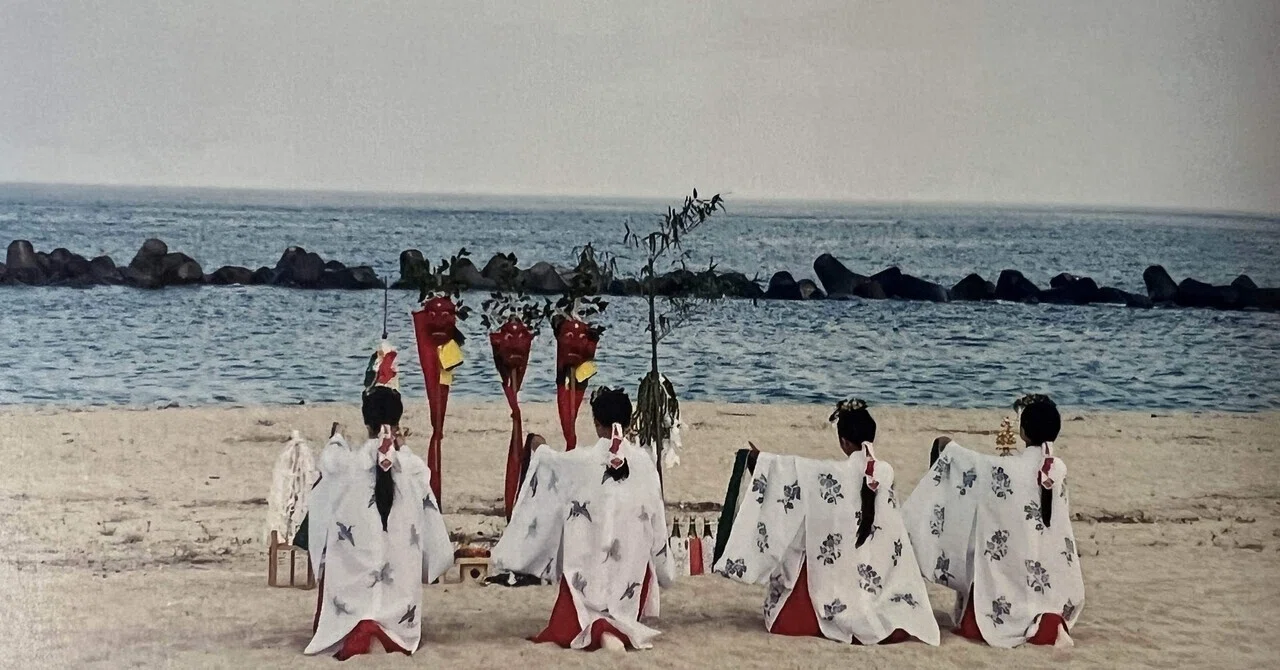
写真は、鹿児島県肝付町岸良(きしら)のなごしどんより
浦安の舞〜近代に生まれた「平和を願う心の舞」
Urayasu-no-Mai: A Modern Shinto Dance of Prayer for Peace
皇紀二千六百年奉祝会から、世界平和を祈る巫女舞へ
From the 2600th Imperial Anniversary to a Miko Dance Praying for World Peace
※本稿は、信仰の勧誘や政治的主張を目的とするものではありません。
神道文化を、歴史的・文化的資料として紹介する試みです。
This article introduces Shinto culture as historical and lived practice,
not as a call to belief or political advocacy.
はじめに|Introduction
浦安の舞は、海外では
「心安らかな世界平和を祈る日本の巫女舞」
として紹介されることの多い、現代の神楽です。
しかしその起源をたどると、1940年(昭和15年)新たに作られた、
きわめて近代的な創作神楽であることが見えてきます。
本稿では、昭和天皇の御製と「浦安」という古語の世界を手がかりに、
この舞に込められた「平和」への祈りと、
近代以降の意味の変化を Study Shinto の視点から考えてみます。
Urayasu-no-Mai is often introduced overseas as
“a Japanese miko dance that prays for peaceful and calm hearts in the world.”
However, when we trace its origin, we find that it is actually a modern Shinto dance,
newly created in 1940.
In this article, from a Study Shinto perspective,
we look at the emperor’s poem behind the dance and the old word urayasu,
and explore how a prayer for peace was placed at the center of this modern ritual.
1. 海外で紹介される浦安の舞
How Urayasu-no-Mai is introduced overseas
今日、海外向けの紹介では、浦安の舞はしばしば
「心安らかな世界平和を祈る日本の巫女舞」
と説明されます。
宗教儀礼としての性格を保ちながらも、
同時に「日本の伝統芸能・舞踊」としての側面が強調され、
国際公演や文化交流の場で上演されることも少なくありません。
Today, Urayasu-no-Mai is often introduced overseas as
“a Japanese miko dance that prays for world peace and calm hearts.”
While it remains a Shinto ritual, it is also presented as a form of
traditional Japanese dance and performing art,
and is sometimes performed at international cultural events.
2. 1940年の奉祝会と、近代神楽としての誕生
The 1940 celebration and the birth of a modern ritual
しかし、この舞は古代以来の神楽ではありません。
1940年(昭和15年)11月10日に行われた
**「皇紀二千六百年奉祝会」**に合わせて新たに制定された、
近代的な起源をもつ神楽です。
神武天皇即位を元年とする「皇紀2600年」という記念の年に、
国家的祝典の一環として、
全国の神社で共通して奉奏できる舞として構想されました。
つまり浦安の舞は、
近代国家・日本が、自らの祭祀空間に組み込んだ
記念祭祀のための創作神楽として誕生したのです。
However, this dance is not an ancient kagura passed down from old times.
It was newly created in 1940 for the national celebration held on November 10,
marking the 2600th year of the imperial era.
The aim was to establish one common dance
that could be performed at Shinto shrines across Japan
as part of this large-scale state ceremony.
In this sense, Urayasu-no-Mai began as a modern ritual dance,
designed by the modern Japanese state and placed within Shinto worship.
3. 御製(ぎょせい)と「平和」への祈り
The imperial poem and the prayer for peace
浦安の舞の中心にあるのが、昭和天皇の御製です。
この和歌がそのまま歌詞として用いられ、
旋律が付けられ、舞の所作が構成されました。
御製(原文)
天地の
神にぞ祈る
朝なぎの
海のごとくに
波たたぬ世を
この歌は、おおよそ次のような意味として理解されています。
天地のすべての神々に祈ります。
朝の凪いだ海のように、
この世の中が波風立たず、
静かで穏やかな平和な世となりますように。
戦時下という時代にあっても、
「波たたぬ世」を願う静かな祈りが、
この舞の根底に据えられていることが読み取れます。
At the center of Urayasu-no-Mai is a poem composed by the Shōwa Emperor.
This poem was used directly as the lyrics,
set to music, and expressed through the movements of the dance.
The poem (simple English rendering)
I pray to the gods of heaven and earth,
that this world may be like the calm sea at dawn—
a world with no waves.
Even in a time of war,
we can feel a quiet wish for a world without “waves,”
that is, without conflict or disturbance.
4. 「浦安」という古語が示す世界
The old word urayasu and its meaning
「浦安」という語そのものも、舞の性格をよく示しています。
古語としての「浦安」は、
「こころ安らか」「心の安寧」を意味します。
『日本書紀』に見られる
「日本は浦安の国」という表現にも象徴されるように、
本来は、争いのない、心安らかな国土への希求を帯びた言葉です。
静かに凪いだ入り江(浦)の情景と、
そこに重ねられた心の安らぎが、
言霊として舞の題名に刻み込まれています。
The word urayasu itself clearly shows the character of this dance.
In old Japanese, urayasu means
“a peaceful and calm heart” or “inner tranquility.”
In the ancient text Nihon Shoki,
Japan is described as “the land of urayasu,”
expressing a hope for a country without conflict.
The image of a quiet bay and the feeling of inner calm
are embedded in the very title of the dance.
5. 戦後の意味づけの変化
Changes in meaning after the war
制定当初、浦安の舞は
皇紀二千六百年を寿ぎ、
皇室の弥栄と国家の繁栄を祈る
祝典色の濃い神楽として構想されていました。
しかし戦後になると、
その時代的・制度的な意味づけは次第に後景に退き、
「平和祈願」「国家安泰」「地域の安寧」といった側面が
前面に押し出されるようになります。
現在では、多くの神社や解説において、
浦安の舞は
平和を願う心の舞として理解されています。
At the time of its creation, Urayasu-no-Mai was closely tied
to the imperial anniversary celebration
and prayers for the prosperity of the nation.
After the war, however,
this ideological framework became less central.
Instead, prayers for peace, national stability,
and the well-being of local communities came to the fore.
Today, the dance is widely understood
as a ritual expressing a heartfelt wish for peace.
結び|Conclusion
浦安の舞は、
古代からそのまま続いてきた神楽ではありません。
近代という時代の中で生まれ、
戦前・戦後・そして国際化の流れの中で
意味を変えながら受け継がれてきた舞です。
だからこそこの舞は、
私たちが「平和」や「心の安らぎ」という言葉を
どのように生きるのかを考えるための、
ひとつの鏡にもなり得るでしょう。
Study Shinto では、
こうした近代以降の儀礼や芸能も含めて、
日本の神道文化を立体的に捉え直していきたいと考えています。
Urayasu-no-Mai is not simply an ancient ritual passed down unchanged.
It was born in the modern era
and has continued to shift its meaning through history and globalization.
Because of this, it can serve as a mirror,
helping us reflect on how we live the ideas of
peace and inner calm today.
In Study Shinto,
we aim to understand Shinto culture in a richer,
more three-dimensional way—including modern rituals like this dance.
関連動画
https://note.com/studyshinto/n/nbdf67c0c9c30
参考リンク
浦安の舞(概要・由来)
https://ja.wikipedia.org/wiki/浦安の舞
橿原神宮|浦安の舞と御製の紹介
https://kashiharajingu.or.jp/news/13052.html
神社本庁(神道儀礼・現代神楽の背景)
https://www.jinjahoncho.or.jp
『日本書紀』と「浦安の国」
https://www.city.urayasu.lg.jp/shisei/profile/rekishi/1017592.html
文化遺産オンライン(日本書紀関連語彙)
https://bunka.nii.ac.jp
#浦安の舞 #神道 #神楽 #巫女舞 #近代神道
#昭和天皇御製 #皇紀二千六百年 #平和の祈り
#日本文化 #StudyShinto
#UrayasuNoMai #Shinto #Kagura #MikoDance
#PrayerForPeace #JapaneseCulture #StudyShinto
