Kerama Islands Scuba Diving Tours by Local Specialists – Day Trips from Naha, Okinawa, Japan
Kerama Islands Scuba Diving Tours by Local Specialists – Day Trips from Naha, Okinawa, Japan
GOLD Scuba Diving is a local diving center based in Naha, Okinawa, Japan, specializing in scuba diving tours to the Kerama Islands. We welcome certified divers from around the world and provide safe, enjoyable diving experiences led by experienced local guides who know the Kerama Islands well.
Discover Kerama Blue, Okinawa’s world-class scuba diving destination, known for its crystal-clear waters, vibrant coral reefs, and encounters with sea turtles. Departing from Naha, our daily boat diving tours take you to the breathtaking underwater world of the Kerama Islands.


600+ International Divers Every Year
Every year, we welcome more than 600 international divers to explore the beautiful underwater world of the Kerama Islands with GOLD Scuba Diving.


Highlights of Diving in the Kerama Islands
The Kerama Islands are known for their clear waters, colorful coral reefs, and abundant marine life. At GOLD Scuba Diving, we run a daily dive boat tour to the Kerama Islands, departing from Naha.
This is our most popular diving tour in Okinawa and is ideal for travelers who want to enjoy a memorable scuba diving experience in Japan.


3 Boat Dives in One Day
Our Kerama Islands tours offer up to three boat dives per day. The dive sites are decided by the captain on the morning of the trip, based on weather, wind, and sea conditions. Depending on the conditions, we may visit different sites or dive at the same location more than once.
Kerama Blue – Average Visibility of 20–30 Meters
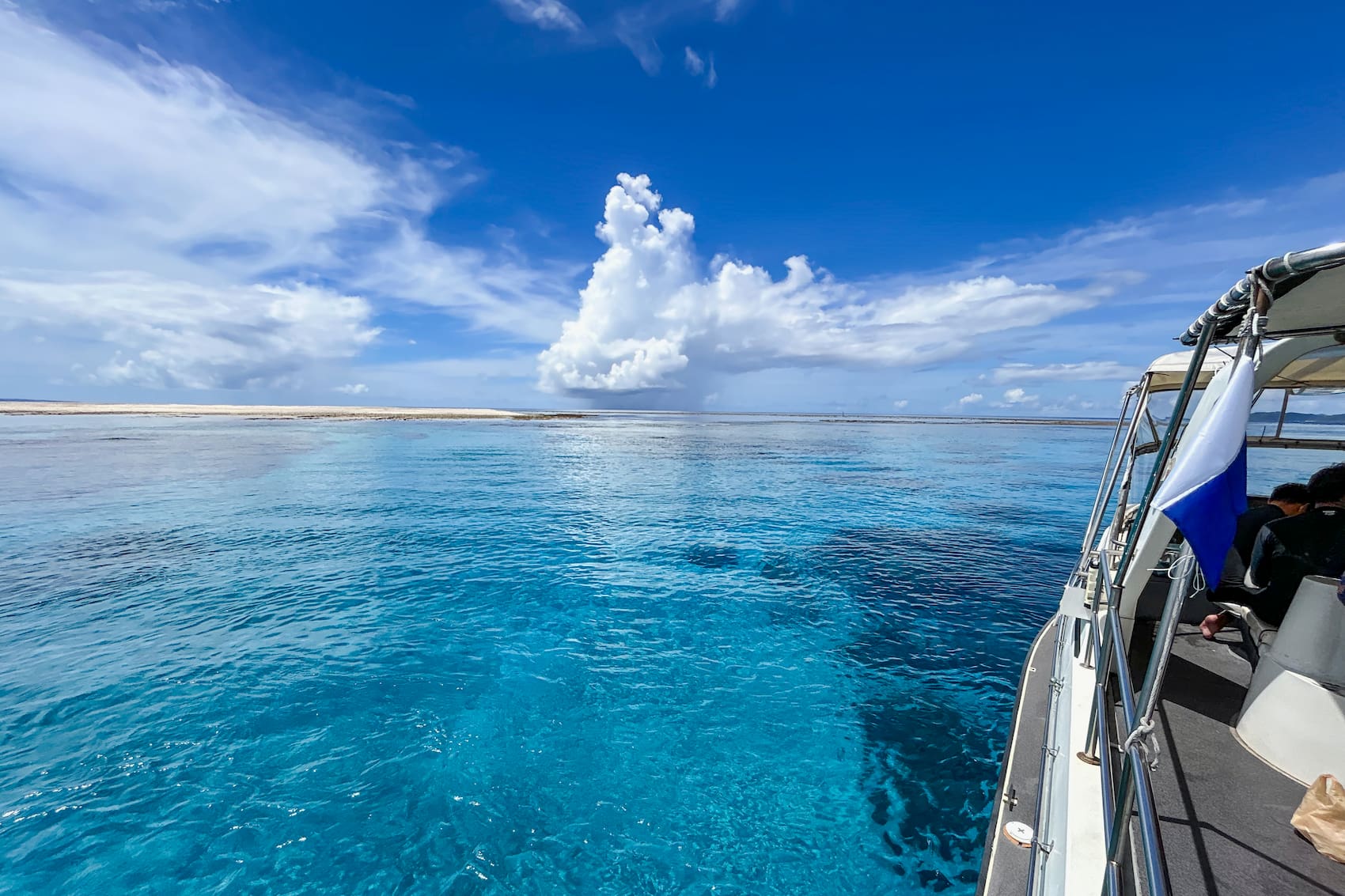
The Kerama Islands are famous for their excellent underwater visibility, often referred to as the “Kerama Blue.” The average visibility is around 20–30 meters, and on sunny days with good conditions, the water becomes exceptionally clear and beautiful.
Suitable for Certified Divers
We welcome certified divers of different experience levels, including newly certified divers. Our local guides will help you enjoy the dive sites according to the conditions of the day.
Sea Turtles and Marine Life
During diving in the Kerama Islands, encounters with sea turtles are common. You can also enjoy beautiful coral reefs and observe a variety of marine life, including sharks, sea snakes, and clownfish.
Comfortable Boat Diving from Naha
The Kerama Islands are about 40 minutes by boat from Naha. If you stay in Naha, you can easily join a diving tour to the Kerama Islands.
Year-Round Diving
Diving is available year-round in the Kerama Islands. In winter, the water temperature can drop to around 21°C, but diving is still comfortable with a thicker wetsuit or proper thermal protection.
Who Can Join
Certified divers.
Why Choose GOLD Scuba Diving in Naha?
- English available
- Kerama Islands Specialist
- Safety-First Diving
- Ideal location in Naha City, Okinawa
- Daily trips to the Kerama Islands
- Popular with overseas and international guests
- Rental Equipment Included
- Local knowledge of Kerama dive sites
- Understanding of tides, currents, and seasonal conditions
- More than 600 international divers welcomed every year
- Dedicated boat diving tours for certified divers
Perfect For:
- Certified divers
- Travelers staying in Naha
Not Ideal For:
- Non-certified divers
- Travelers looking for introductory dives
What Makes GOLD Scuba Diving Different from Other Diving Centers?
The biggest difference between GOLD Scuba Diving and many other diving centers in Naha is our specialization in scuba diving in the Kerama Islands.
Weather and sea conditions permitting, we dive in the Kerama Islands every day. Through our daily guiding experience, we have developed extensive knowledge of the characteristics of each dive site, including currents, wind directions, and changing sea conditions.
This local experience allows us to understand how to enjoy each dive site under different conditions and make the most of every diving day. While many diving shops in Naha offer a wide range of services, including introductory diving, diving courses, snorkeling, and other marine activities, GOLD Scuba Diving focuses on one thing: scuba diving in the Kerama Islands.
By concentrating on Kerama Islands diving, we dedicate our time and experience to providing quality fun diving tours for certified divers. We believe that specializing in one destination allows us to offer a different level of local knowledge and guiding experience.
Kerama Tour Prices
- 2 Dives: ¥30,000
- 3 Dives: ¥33,000
(Per person)
Rental equipment is included. Two dives are perfectly fine, and you can decide on the day whether you’d like to do two or three dives.
Included
- Rental equipment
- Boat and guide fees
- Hotel pick-up and drop-off in Naha City
Not Included
- Lunch, food, and drinks
- Towels
- Dive computer
Lunch is not provided on our diving tours. As our guests may have different dietary needs, allergies, food preferences, or vegetarian diets, we ask everyone to bring their own lunch. Water or barley tea is usually available on board the boat.
Payment Methods
We accept credit cards and Japanese yen.

Check availability and book your Kerama dive in minutes!
Fast replies and simple booking via WhatsApp
Daily Schedule / Pick-up, Drop-off

On the morning of your dive and after the tour, we provide hotel pickup and drop-off by car. Transportation is available only for hotels in Naha. As we are also picking up other guests, please be ready on time for your scheduled pickup.
Daily Schedule
6:10 – 6:35 | Hotel Pick-Up
We pick you up from your hotel in the morning.
6:40 - 7:30 | Boarding, Departure
We will prepare our diving equipment on the boat before departure.
8:30 – 13:30 | Diving – 3 Boat Dives
Once we arrive at a dive site in the Kerama Islands, we will start diving.
14:30 – 15:30 | Return to port
After returning to the port, we will drop you off at your hotel. Payment will be settled in the vehicle during the transfer.
We will send you a message with the exact morning pick-up time the day before.
What to Bring
Lunch, Change of clothes, Towel, Diving certification card, Food and Drinks
Dive Boat
The boat we usually use is relatively large compared to many dive boats in Okinawa. On sunny days, guests can relax on both the upper and lower decks, making the boat comfortable even when there are many people on board. Drinking water or tea is usually available, and hot water is also provided, which can be used for instant noodles, soup, or coffee.
We also use several other boats depending on availability, the number of guests, and booking conditions, so the boat used for your tour may vary.


Diving Procedures
Entry is made from the back of the boat. After entering the water, the entire dive team will gather at the surface. Once everyone is ready and there are no issues, we will begin our descent together. There is usually an anchor line at the back of the boat, which you may use during the descent if needed.
The dive time is approximately 40 minutes. Please inform your guide when your remaining air pressure reaches 100 bar and again at 50 bar. For safety, we will normally end the dive and return to the boat with approximately 40–50 bar remaining.


Dive Sites
Diving is generally conducted in calm, sheltered areas behind islands that are not affected by strong winds. This allows us to continue diving even on windy days, making it suitable for beginners and less experienced divers.
On windy days, the boat ride to the Kerama Islands may be a bit rough, but the dive sites themselves are usually calm and protected.
We typically choose sites with little to no current and conduct three dives using an anchored setup. If guests are experienced and conditions allow, the third dive may sometimes be conducted as a drift dive.


≫Popular Kerama Islands Dive Sites in Okinawa
High-Quality Rental Equipment
Our rental equipment consists of high-quality diving gear from reliable, well-known manufacturers. Even though it is rental equipment, we use the same quality gear that regular divers use.
In Okinawa, diving conditions can sometimes involve strong currents. For this reason, we use Japanese-made full-foot fins that provide reliable propulsion. As a general rule, we do not use boots and open-heel fins, which offer less propulsion.
For masks, we use Japanese-made single-lens models that provide a wide field of vision and a comfortable fit. Our regulators are also Japanese-made. For BCDs, we use either Japanese or international brands, provided they are properly maintained and regularly serviced.
We provide wetsuits suitable for the season and water temperature to ensure your comfort while diving.


Marine Life
Here is a brief introduction to some of the most commonly seen fish and marine life in the Kerama Islands. When diving in Kerama, be sure to look out for them!

Sea Turtles
The Kerama Islands are home to three species of sea turtles.
Coral Reefs
Diving in the Kerama Islands offers the chance to see beautiful coral reefs.

Schools of Tropical Fish
Schools of tropical fish, typical of Okinawa’s waters, are a common sight during dives.

Clownfish
Okinawa is home to six species of clownfish, and five of these species can be found around the Kerama Islands.

Whitetip reef sharks
The whitetip reef shark is the most commonly seen shark in Okinawa. It is often found resting on the reef during the day, although it may quickly swim away when approached.

Moray eels
The Kerama Islands are home to several species of moray eels, which are commonly seen during dives.

Sea snakes
Sea snakes can be seen almost everywhere in the Kerama Islands. Several species inhabit the area and are commonly encountered during dives.

Octopus
Keep an eye on the gaps between the rocks—you might be lucky enough to spot an octopus hiding there.

Broadclub cuttlefish
They are commonly found around coral reefs during their spawning season in late spring, just before summer.

Giant Trevallys
They can be spotted at certain dive sites, with large individuals reaching about 80 cm in length.

Manta rays
With a bit of luck, you may even encounter manta rays.

Stingrays
The Kerama Islands are home to a variety of ray species, which are often encountered during dives.

Lionfish
Lionfish are also commonly encountered during dives.

Whale sharks
If you’re very lucky, there is even a chance of encountering a whale shark. Sightings are reported every year.

Titan triggerfish
They are commonly encountered, but can become more aggressive during the summer spawning season, so please be cautious.

Sea goldie
They can be seen everywhere.

Zebra sharks
They are sometimes found resting on the seabed, and seeing one is considered very lucky.

Hammerhead sharks
They may occasionally approach during a safety stop, and seeing one is considered lucky.

Beautiful caves and crevices
The Kerama Islands feature several beautiful cave dive sites that offer unique underwater scenery.

Kerama Blue
With an average visibility of 20–30 meters, you can fully enjoy the crystal-clear Kerama Blue waters.
For more detailed information on marine life, please refer to this page.
≫Scuba Diving in the Kerama Islands: Marine Life Highlights
Water Temperature Guide
In the Kerama Islands, typical water and air temperatures are as follows:
Spring (March–May)
Water: 21–24°C | Air: 22–30°C
Summer (June–September)
Water: 25–29°C | Air: 25–31°C
Autumn (October–November)
Water: 25–27°C | Air: 24–29°C
Winter (December–February)
Water: 21–22°C | Air: 18–24°C

Rental wetsuits are available in 3mm and 5mm. Inner layers can also be used during colder water temperatures.
You can check the most recent water temperatures in our daily dive logs.
Important Notes
To ensure a safe and enjoyable experience with GOLD Scuba Diving, please take note of the following:
About the Dive Sites
We usually dive at locations with calm sea conditions and light winds. However, if strong winds or rough seas prevent us from choosing different dive sites, we may do consecutive dives at the same location. Thank you for your understanding.
Please note that in some cases, diving may take place at the Chibishi Islands, located between the Kerama Islands and Okinawa Main Island.
Diving Certification
All divers must show their diving certification card (C-card) before diving. Beginners are welcome on guided dives.
Weather & Sea Conditions
Dive sites may be changed or tours rescheduled due to weather or sea conditions for your safety. We will notify you as soon as possible and discuss alternative arrangements if a dive is cancelled.
Marine Life Sightings
While the Kerama Islands are known for their rich marine life, we cannot guarantee sightings of large fish or rare creatures on every dive. Marine life sightings depend on natural conditions such as weather, sea conditions, and timing. However, our experienced guides always choose the best possible dive sites of the day to provide an enjoyable and rewarding diving experience. Please note that encounters with large fish or rare marine life are part of nature and cannot be guaranteed on every dive.
Please see this page for cancellation policy and other important information.
FAQ
-
Do you offer English-speaking guides?
-
Yes. Our guides can communicate in English.
-
Is this tour suitable for travel tourists?
-
Yes. This tour is perfect for tourists visiting Okinawa who want to experience world-class scuba diving.
-
Can I join if I haven't dived in a long time?
-
Yes. Divers who have not been diving for a while are welcome to join. We generally dive at a relaxed pace, so you can take your time, regain your confidence, and enjoy the experience while refreshing your skills.
-
Can I join as a solo diver?
-
Yes. Solo divers are welcome to join our tours.
-
Can I cancel?
-
Yes, cancellations are generally possible, but conditions may apply.
Please check the details on this page: ≫Important Information
-
Can we dive even if the weather is bad?
-
Yes. Basically, diving is still possible even if it’s raining or a bit windy. We go to sheltered dive sites on the leeward side of the islands where the sea is calm, so you can enjoy diving safely. However, on windy days, the boat ride to the dive sites may be a bit rough.
-
I’m worried about seasickness.
-
If you are concerned about seasickness, please take motion sickness medication in advance.
In particular, make sure to take it on the morning of the trip, before your hotel pick-up.
Booking and Contact
Ready to enjoy unforgettable scuba diving in Okinawa?
For inquiries, please contact us via WhatsApp or the contact form. To make a reservation, please use the booking form.
Book in Advance
We try to accommodate last-minute bookings made the day before whenever possible. However, if the boat is fully booked, we may not be able to accept your reservation.
If you already have fixed travel dates, we recommend booking as early as possible.
About the Kerama Islands
The Kerama Islands are an archipelago consisting of more than 30 islands of various sizes and numerous reefs, located approximately 40 km west of Naha City, Okinawa, Japan. On March 5, 2014 (Coral Day), the area was designated as Japan's 31st national park, the Kerama Islands National Park.
The national park features a wide variety of interconnected marine and terrestrial landscapes, including exceptionally clear waters, coral reefs with a high density and diversity of coral species, breeding grounds for humpback whales, beautiful island landscapes, white sandy beaches, sea cliffs, and distinctive vegetation adapted to strong coastal winds. The park covers 3,520 hectares of land and 90,475 hectares of marine area, with the majority of its total area consisting of ocean.
Easily accessible from Okinawa's main island, the Kerama Islands can be reached by high-speed ferry from Tomari Port in Naha in approximately 35–50 minutes. Visitors can enjoy scuba diving and snorkeling in the beautiful waters known as Kerama Blue, as well as whale watching during the winter season.
Colorful coral reefs, clear waters and dramatic island landscapes
A 40-kilometer boat ride west from Naha in Okinawa takes you to the Kerama Islands, an archipelago of thirty islands in the East China Sea. Depending on the type of boat, the trip takes from just 35 minutes to two hours.
Designated a national park in 2014 for their outstanding scenic beauty, the Keramas feature landscapes that combine high drama—sheer cliffs, steep mountains, windswept plains, and dense pine forests—with the dreamy serenity of crushed-coral beaches and placid bays.
The waters around the islands are famous for their vivid color. A special term—“Kerama Blue”—has even been coined to describe their unique palette of turquoise, sapphire, opal, cobalt, and sky blue. The sparkling clarity of the water results from it being continuously filtered by the coral, the sand, and the creatures that live on the coral reefs.
The Kerama coral reefs are very special. They account for over 60% of all the reef-building coral in Japan. There are nearly 250 varieties of coral. The reefs support a wonderfully diverse ecosystem, highlights of which include damselfish, butterflyfish, sea turtles, and humpback whales.
More Information
- HOME
- Kerama Diving Tours by Local Specialists
- Dive Sites
- Best Time
- Water Temperature and Visibility
- Marine Life
- Abous Us
- Dive Log
- Price List
- Important Info
- Cancellation Policy
- Booking
